Johanna Quaas is a 100-year-old gymnast from Germany, she started competing in gymnastics at the age of 10 in 1935.
Certified by Guinness World Records as the world's oldest active competitive gymnast.
🎥 Rwanda is gaining increasing recognition on the global coffee stage
Michaëlle Kubwimana, a third-generation coffee producer, shares his experience at World of Coffee Brussels 2026 and highlights the opportunities this international event offers to Rwandan coffee producers.
#RwandaCoffee #WorldOfCoffeeBrussels2026
@Karirima1
#IGIHE⤵️⤵️
The world just paid $2 trillion for a rocket company that lost $4.9 billion last year. And the rockets are not why it lost the money. They are the only part making any.
SpaceX went public Friday, the largest IPO in history. Up 19%, a $2 trillion valuation, Elon Musk the first trillionaire. Then you open the filing.
Three businesses sit inside it. Starlink, the satellites, brought in $11.4 billion, 61% of all revenue, and $4.4 billion in profit. It is the only piece that earns a dollar. The rockets that land themselves run a small loss reinvesting in Starship. And the AI arm, Grok plus the app once called Twitter, folded in this February, lost $6.4 billion in a single year on $12.7 billion of spending.
Read that again. The satellites pay for everything. The AI loses more than the satellites make. And the AI is the part the market fell in love with.
It gets bolder. The prospectus claims a total market of $28.5 trillion, the largest any company has ever put in a filing. Larger than the GDP of the United States. That is the number underwriting a $2 trillion price tag built on a division bleeding $6 billion a year.
Now the structure. About 4% of the company trades. That sliver sets the price for all of it. Musk is locked up for 366 days and holds roughly 80% of the votes. The public bought a company they cannot steer, priced on the one segment losing the most.
This is the whole year in one ticker. The profit is satellites. The story is AI. The market bought the story.
The rockets were never the risk. The risk is a $2 trillion price resting on the one bet that has yet to make a cent.
Rwandan Youth continues to excel in technology 🇷🇼
Yesterday, two teams from Rwanda competed in the Huawei ICT Global Finals held in Shenzhen, China. The Network Track Team secured 🥇1st Prize, while the Cloud & Computing Track Team earned 🥈2nd Prize among competitors from around the world. @RwandaICT
#RwandaWorks #HuaweiICTCompetition
Congratulations to our #VisitRwanda partner Paris Saint-Germain @PSG_inside on their well-deserved UEFA @ChampionsLeague title and on being crowned champions for the second consecutive year.
Congratulations as well to @Arsenal on reaching the final and fighting with determination until the very end.
Both clubs have made their supporters proud, but tonight, PSG proved to be the better team!
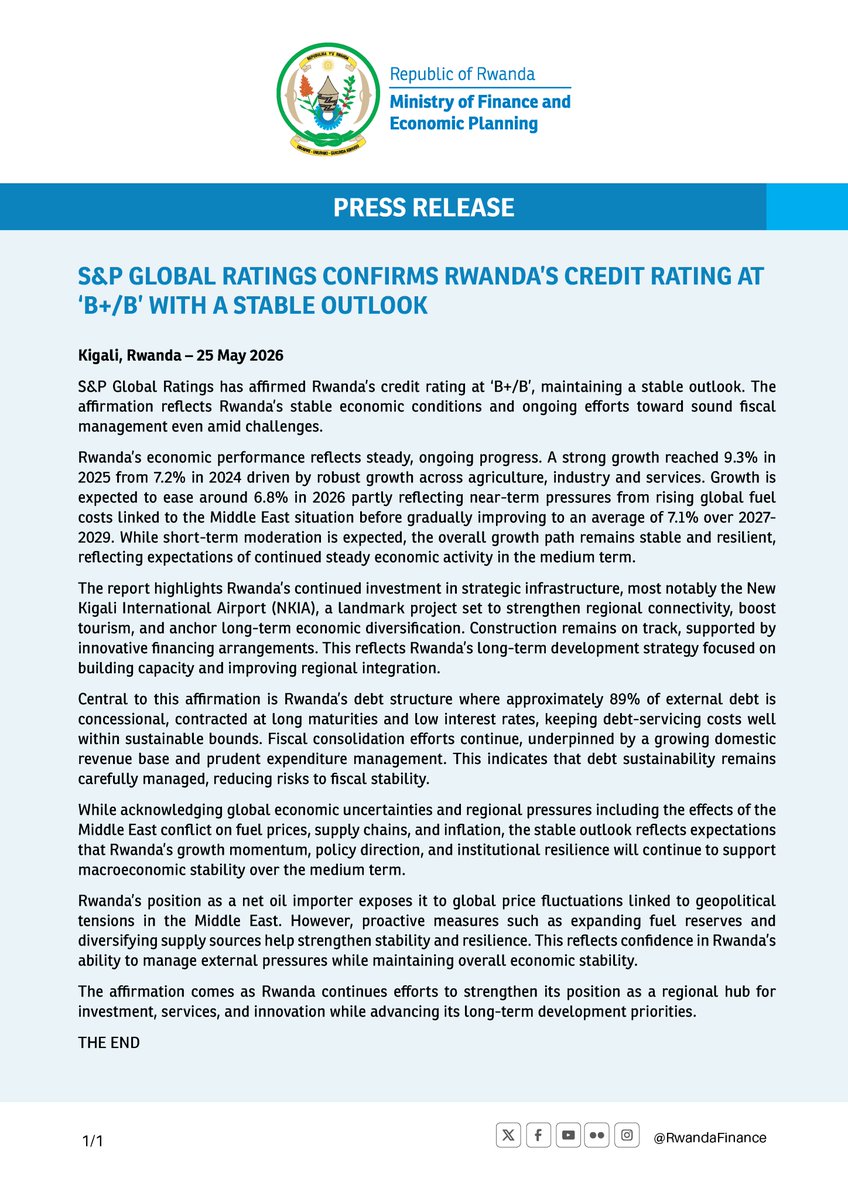
S&P Global Ratings affirmed Rwanda’s credit rating at ‘B+/B’ with a stable outlook, reflecting strong economic performance, steady growth, and continued fiscal discipline despite global and regional challenges. https://t.co/HvOswwhREo
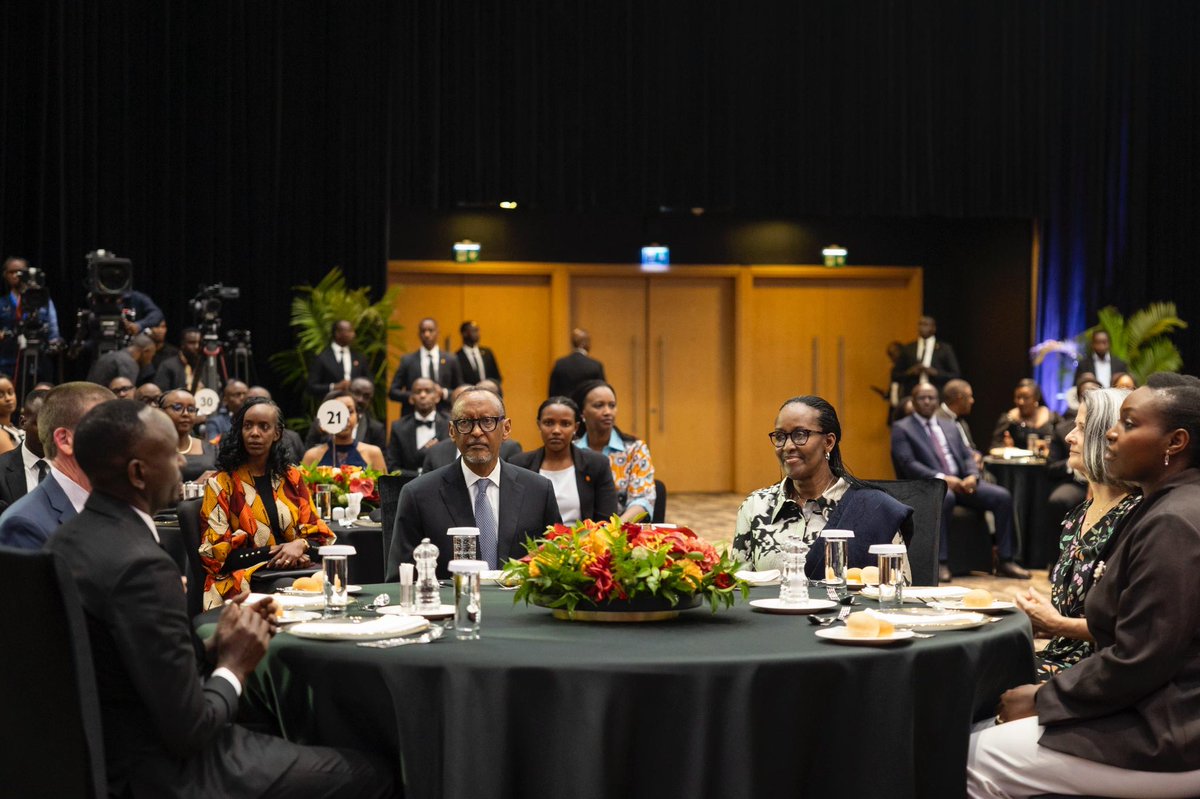
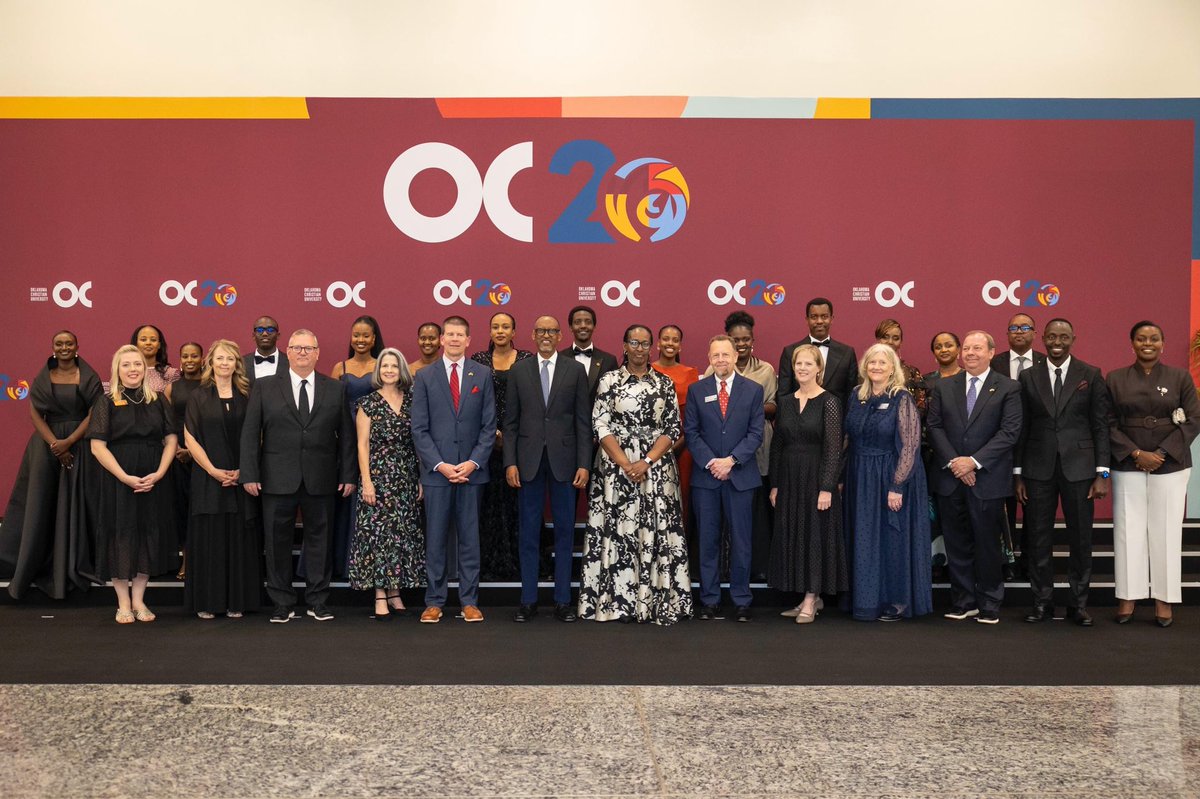
“In 2006, the first ten Rwandan students went to study at Oklahoma Christian University through the Presidential Scholars Program. Two decades later, there are more than 700 alumni who serve in strategic leadership positions, including senior government officials and executives in the private sector. Because of the success of our Presidential scholars, more universities started extending scholarship opportunities to privately funded students.
As a country, we look forward to continuing building on the achievements of our strong collaboration. Twenty-years is a special milestone. Let’s keep working together to write the next chapter of our journey.” President Kagame | Twenty-year celebration of Rwanda and Oklahoma Christian University Partnership
From Rwanda to the UK 🇷🇼🇬🇧
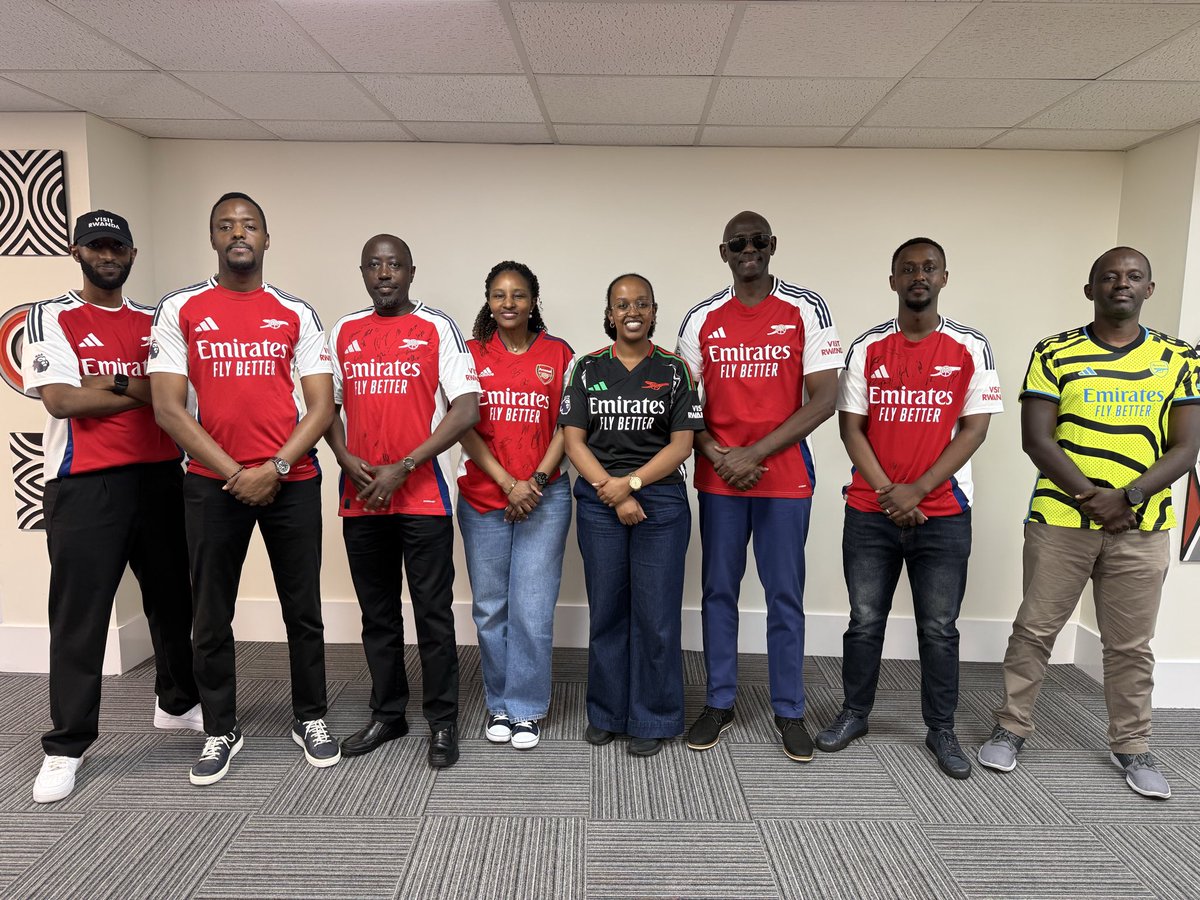
Friday dress code at the Mission as we continue celebrating @Arsenal, the Champions of England 🏆🍾
Celebrating a historic moment and a partnership that continues to connect Rwanda with millions of people around the world through #VisitRwanda.
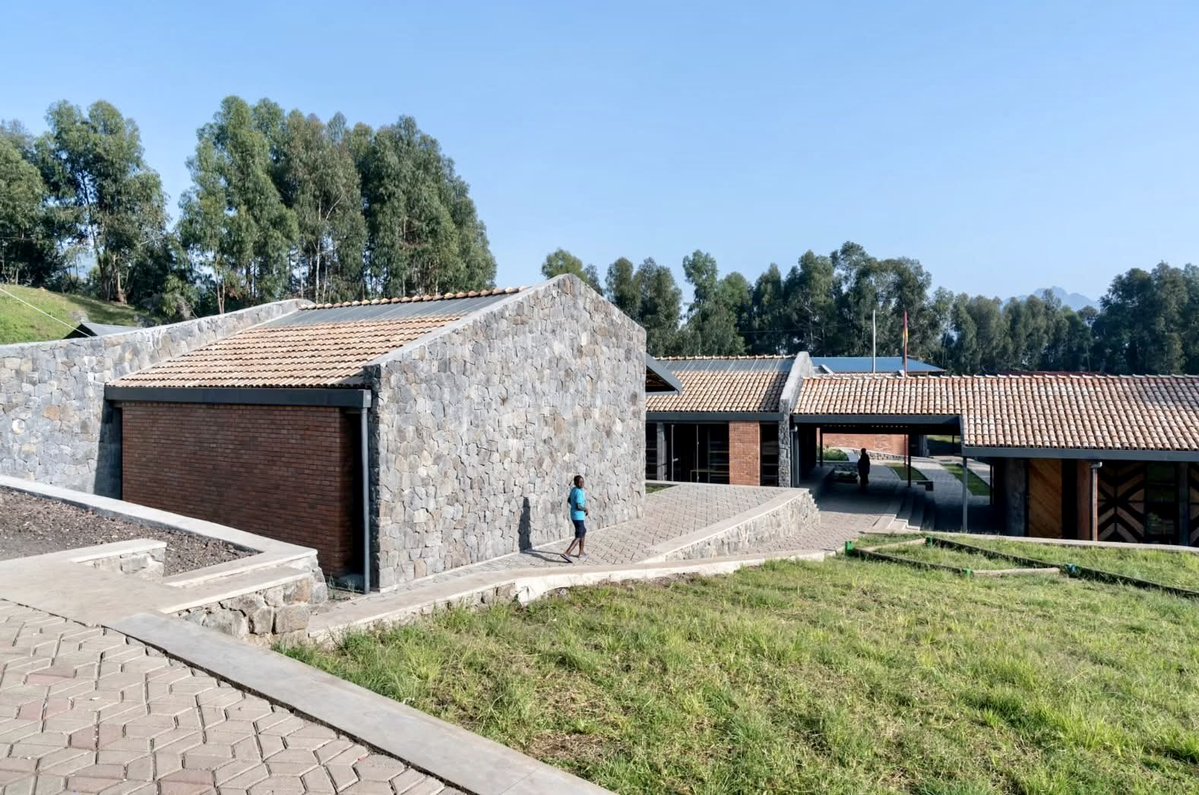
In Rwinkwavu, one of the poorest villages in Rwanda, doctors and nurses were commuting long distances to staff a hospital the community desperately needed. The answer was to build them housing and to build it from everything the land and the people already had.
The women made the bricks. The bricks built the walls. The walls now house the doctors saving lives next door. Stone quarried from the hillside for the foundations. Hand-woven eucalyptus screens wrapping the balconies, a reference to traditional Rwandan thatching, shading the corridors in the dry heat. Clay tiles forming a ventilated roof cavity that keeps the building cool and quiet enough to rest in after a twelve-hour shift. 90 percent of the labour came from Rwinkwavu residents. Women represented at least one third of hires throughout construction.
This is what it looks like when architecture treats a community as the resource and not the recipient.
Partners in Health Share Houses, Rwinkwavu, Rwanda 🇷🇼 | Sharon Davis Design | Rwanda Village Enterprise + Partners in Health + Rwandan Ministry of Health | 6,900 sq.ft | 2015 | 📷 Bruce Engel
Rwanda keeps raising the standards that most African countries are neglecting.
Ruhehe Primary School sits along a gently curving wall of local volcanic stone, paying homage to Rwandan craftsmanship. Volcanic rock on the walls. Clay roofing tiles that muffle rainfall so lessons continue through storms. Woven bamboo and bark panels filtering light and absorbing sound. 80 percent of construction materials sourced within 50 kilometres of the site. 75 percent of the budget spent inside Ruhehe Village and Musanze district. 110 local workers hired. 35 percent of them women.
Now look at what we build and call a school across most of this continent. A cement block box. Plastered over. Painted yellow on top and ox-blood red at the bottom. No ventilation strategy. No acoustic consideration. No connection to the landscape or the culture. A building that could exist anywhere and therefore belongs nowhere.
The material knowledge is here. The stone is here. The clay is here. Rwanda proved that building well does not cost more and it costs differently, and it pays back in ways a painted cement box never will.
This is not a foreign standard. This is an African one.
Ruhehe Primary School, Musanze District, Rwanda 🇷🇼 | MASS Design Group + African Design Centre | 1,120 students | 2018 | 📷 Iwan Baan
Africa and China's growth!
It is a shocking yet powerful comparison. You can look at these maps and despair, or you can wake up to what is possible in just two generations.
"Rare earth mineral is valuable. But if we value what is on the ground as a balance sheet item capable of funding and raising capital that is necessary for the exploration and production of my resources, why not do it for me too?"
President Bola Tinubu on refining items on the continent rather than foreign exploitation. #RBANews #ACF2026