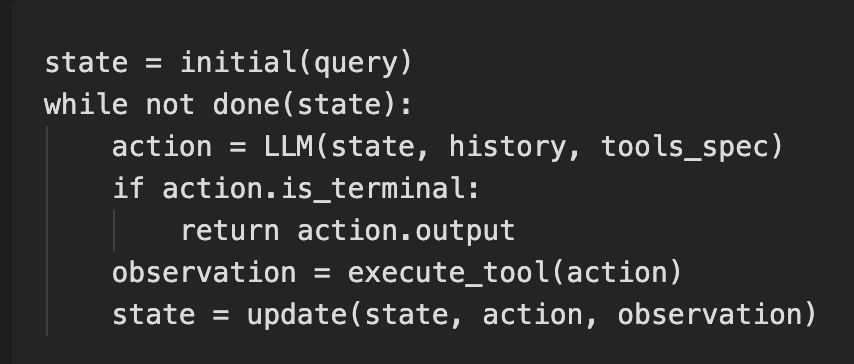
Claude Code offered me this definition of an AI agent. It's basically the OODA loop invented by the U.S. Air Force. Observe-Orient-Decide-Act. Whoever spins it faster defines reality for their adversary. Which means that smarter but inevitably slower AI agents will find themselves reacting to the world created by the faster (but not brighter) agents.
@paulg I always end up rewriting what AI wrote. The value is in broading perspective: my first draft fed to AI will surface things I didnt think about. AI's wording though does not feel mine, so rewrite.
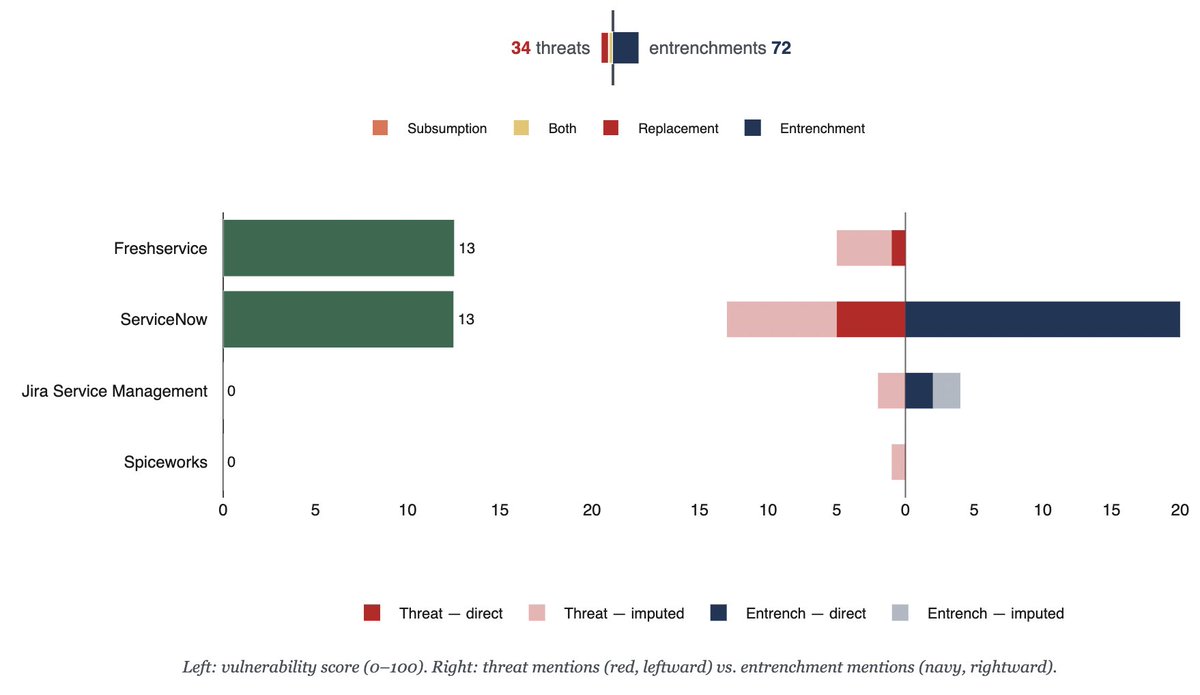
@levie When I looked at SaaS via Reddit lens (people reporting what they build), I didn't find the "SaaSpocalypse". Atlassian Jira, specifically, is entrenched way more by AI than replaced by it. Full report: https://t.co/OECymBmxnF
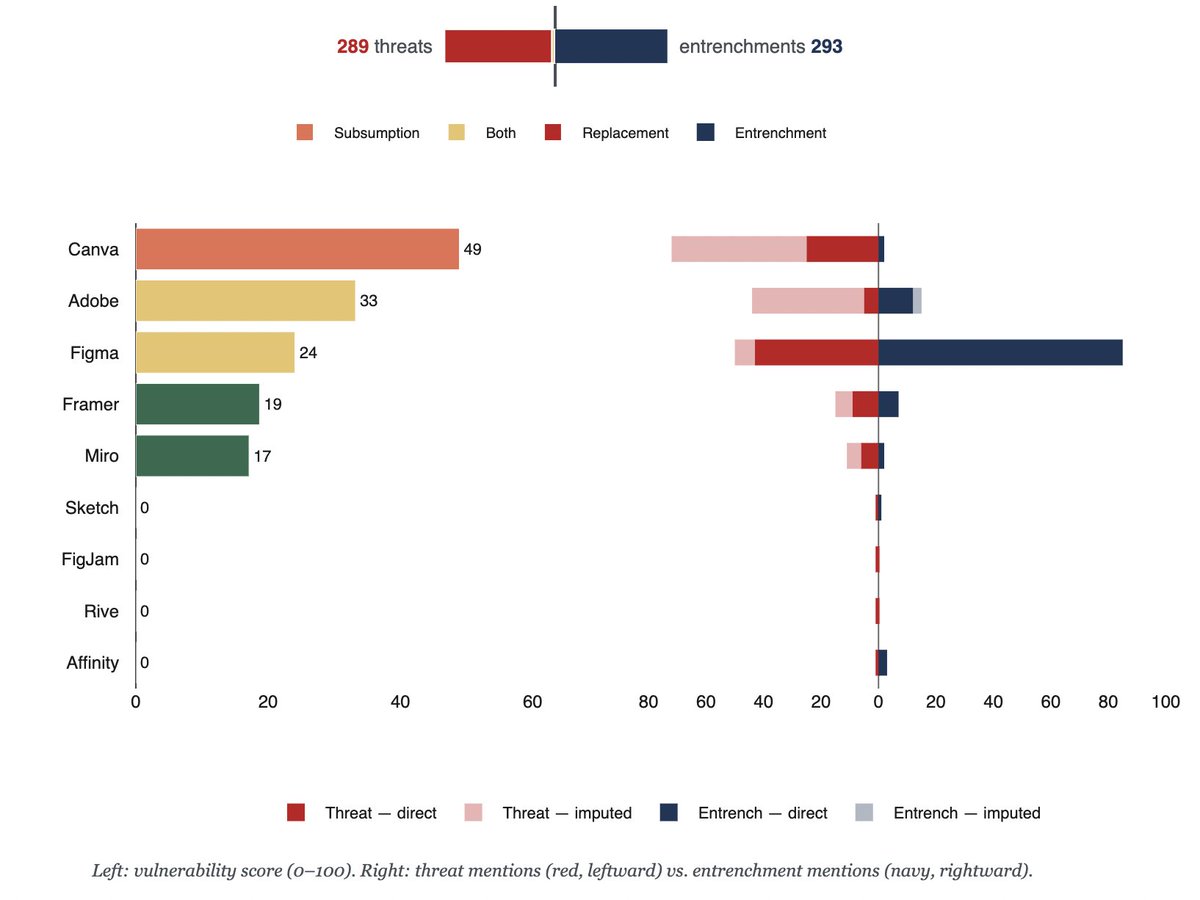
@shiri_shh Figma seems to enjoy a lot of love from AI DIY-ers. I made a report recently on AI replacing SaaS, and found a lot less replacement than expected. This doesn't account for Claude Design though. https://t.co/OECymBmxnF
@paulg Trust is the currency. Years ago, when I came to the U.S., I was surprised that you could just send an invoice and get paid. No Russian-style layered paperwork. Without experiencing a low trust society, trust is invisible to most.
@andrewchen People code a LOT around knowledge management, marketing automation, devops. But they code the most in the 'no code' segment, replacing Zapier and such. https://t.co/OECymBmxnF
The big reason Google got popular was that people didn’t want to type “http://”. The big reason ChatGPT got popular was that Google turned into a billboard.