Finally finished How China Works by Xiaohuan Lan.
It was my second book about China after Dan Wang’s Breakneck. I found it to be a great follow up because it goes it gives a high level overview of how the Chinese state is organised and goes into detail of how it raises taxes and allocates capital. Both in my view were missing from Breakneck, which is engagingly written but leans heavily on anecdotes.
It is must read for anyone wishing to understand China, but beware that the prose is rather dry and academic.
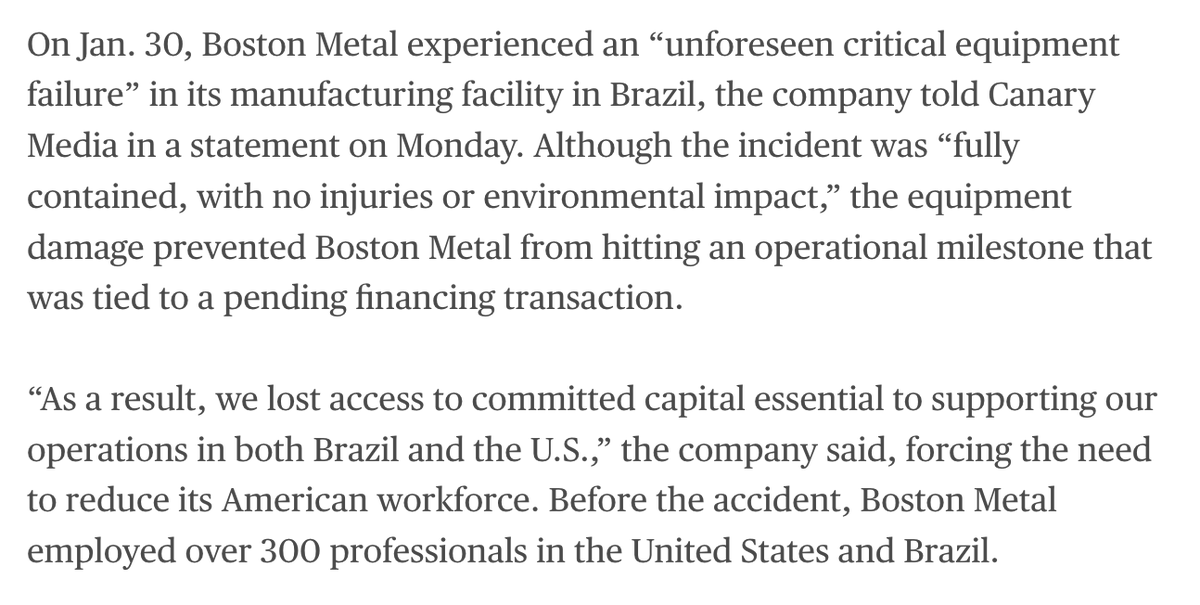
Such a crushing example of how an accident can set a company back, especially in heavy industry.
Boston Metal suffered "unforeseen critical equipment failure." No injured workers, no environmental damage. But now the green-steel startup had financing conditioned on hitting certain operational milestones that are now impossible, so it has to lay off nearly one-quarter of its global workforce.
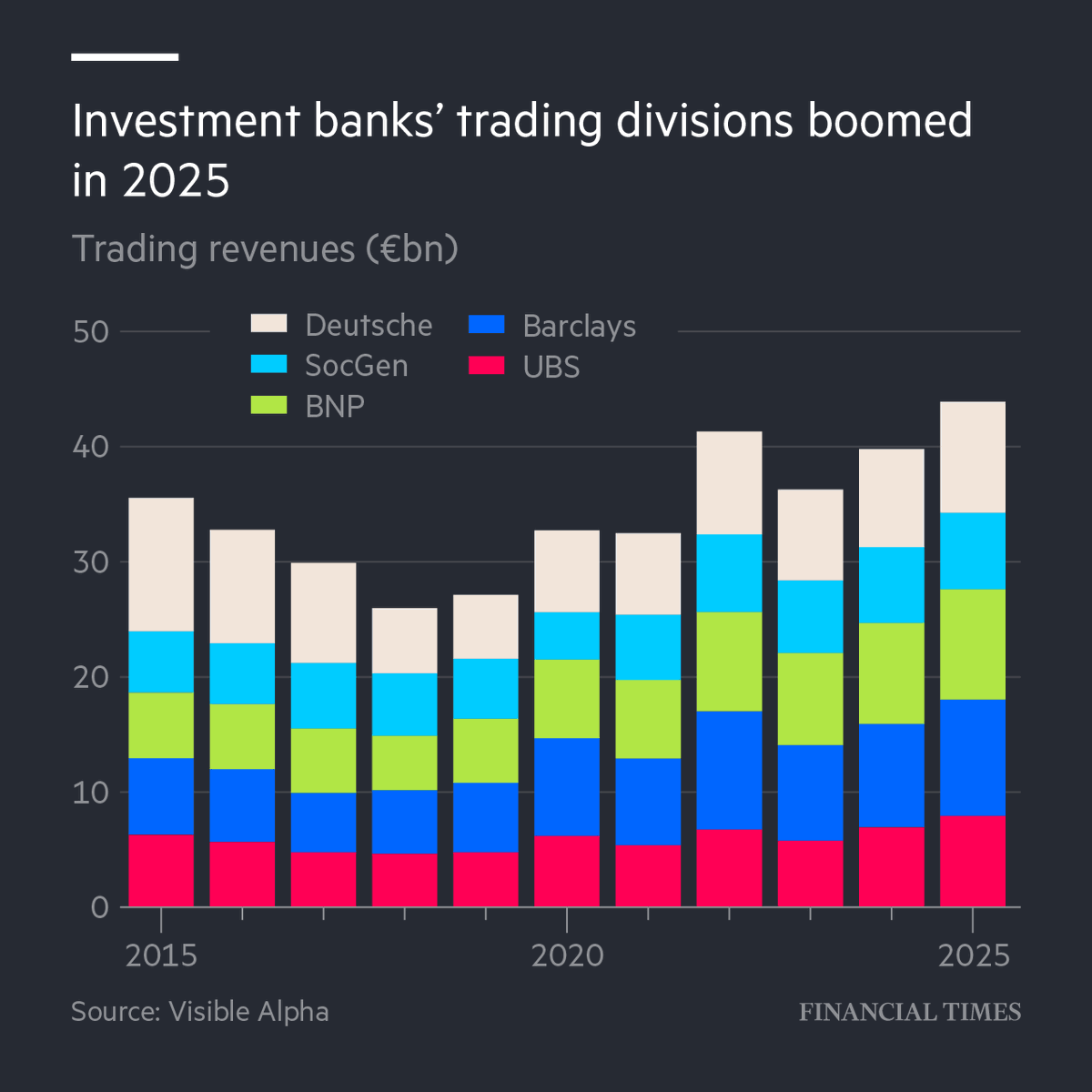
Europe’s largest investment banks reported their best collective performance in at least a decade, with a €43.9bn combined revenue last year, led by Barclays and Deutsche Bank. https://t.co/KjNmkAoqKk
Most people trading Polymarket have never heard of Sasha Stoikov.
Meanwhile, the bots taking their money are running his math on every single quote.
This is Stoikov at IAQF in 2023 - an 80-minute lecture on where market making meets market microstructure.
The actual theory from the person who built it.
He covers what textbooks skip: how optimal quotes degrade under real order flow, why inventory pressure isn't linear in practice, and what happens when your Poisson arrival assumptions meet an actual limit order book.
My full breakdown of the applied Polymarket stack: Avellaneda-Stoikov adapted for binary settlement, GLFT inventory bounds, Glosten-Milgrom adverse selection, VPIN kill switches - is in the article.
Start with Stoikov's lecture. Then read the thread.
Okay, >2-Sharpe but:
-Turnover is higher for the ML signals, so small costs can erase a lot of the edge.
-They explicitly note that Sharpe-optimised methods improve via volatility reduction.
-They winsorise data using an EWM mean/vol rule (cap/floor at 5× EWM stdev). That reduces outliers and make training and backtests look cleaner.
I believe I mentioned in the podcast or interview that the analogy MLP:USA=CIT:SG is my idea, but a "senior PM's" (actually, a HF manager). I can't mention the source, but I still can give attribution.
I know more than one people who can guess betas and correlations visually. Once I met a person (not joking) who guessed the correlation using one data point. So I decided to train my eyes. You can do it too and influence people and win friends.
Word for word, @lexfridman ‘s interview with Terry Tao is the most interesting, concept-packed podcast interview ever recorded. The underlying theme is how to ask question, as told by someone who has asked the questions.
An outstanding book, rigorous and scholarly, just read it cover to cover:
1) It thoroughly covers the entire literature: not a single statement that is not backed by multiple trials so it provides a statistical picture of the state of the science.
2) Corollary: practically, anything absent there has not been tested, which is potent information.
It is sort of reverse Peter Attia.
Seems the product of chance. But (without data) I wonder whether Buffett also took hundreds of non-bad decisions. If the left tail is bounded, and the right tail is heavy-tailed, whenever “success” happens, it will be the sum of a few terms.
So now what I would like to read is how Buffett made his bad-yet-not-terribly-bad decisions. Small size? Loss management? Despite the “for ever” moniker, he exited lots of investments.
We should study more how successful people suffer, recover and survive.