Fes esport, sí.
La resta seria estudia, llegeix a fons, coneix persones, pobles i col·lectius en lluita, enamora’t, aprèn a fer coses amb les mans de les que feien tons avis, juga cada dia, sigues pare aviat i deixa un llegat immaterial als teus. Així podràs deixar-lo al món.
Mark Fischer extensively discussed this phenomenon in his works, how there was a "slow cancelation of the future". He theorized that because capitalism places a limit on what we can imagine as an alternative to it— where a future without it is rendered both unimaginable and impossible— culture as a result loops the past endessly, instead of creating something new.
It quite literally cannot. It's forced to recycle the same cultural products. Only what capitalism produces is natural, real and permanent; nothing outside of it. So it has to keep going back.
The future is bound to the socio-political and economic limits of its current reality— what it produces cannot be so radically different. We cannot imagine a world distinct from, or beyond it, so instead we extend the present.
We keep going back to what we knew. That is why nostalgia is probably the most powerful marketing tool; it presses into something that is no longer there, but we hold onto; that we yearn for again— it exploits that bond we have to that memory/ feeling to sell us the idea that you can actually go back. Nostalgia after all in greek literally means the pain an old wound.
Fisher says modern culture shows us how actual innovation isn't really possible, instead capitalist culture is only capable of imitating what came before— so it recycles, remixes, reboots— aesthetics, music, art, fasion etc.
A past that we long for, yet we can not go back to. Waiting on a future that is promised, yet never arrives either (look up his writings on Hauntology).
🚨🚨¿Quieres entender el conflicto en Medio Oriente?
ESCUCHA a Jeffrey Sachs, economista estadounidense, analista de políticas públicas y profesor de la Universidad de Columbia. Lo explica de manera clara y sencilla 👇:
1️⃣ Derrocar a un dictador suena moralmente justo. Nadie llora por un tirano. Pero el derecho internacional no se construyó para proteger a los buenos, sino para contener a los poderosos. Por eso prohíbe la fuerza casi sin excepciones: no porque ignore la injusticia, sino porque sabe que, si cada país decide a quién “liberar” a balazos, el mundo vuelve a la ley del más fuerte.
2️⃣ El problema no es Maduro. El problema es el precedente. Cuando la fuerza militar se usa para cambiar gobiernos sin reglas claras, la soberanía deja de ser un límite y se vuelve un estorbo. Hoy es “derrocar a un dictador”; mañana será “corregir una elección”, “proteger intereses”, “restaurar el orden”. El derecho no absuelve dictaduras, pero tampoco legitima cruzadas unilaterales.
3️⃣ La pregunta incómoda no es si un tirano merece caer, sino quién decide cuándo y cómo. Porque la historia enseña algo brutal: sacar al dictador es fácil; construir justicia después, no. Y cuando la legalidad se rompe en nombre del bien, casi siempre lo que sigue no es libertad, sino caos, violencia y nuevas víctimas. El derecho existe para recordarnos eso, incluso cuando incomoda.
The real reason the US is invading Venezuela goes back to a deal Henry Kissinger made with Saudi Arabia in 1974.
And I'm going to explain why this is actually about the SURVIVAL of the US dollar itself.
Not drugs. Not terrorism. Not "democracy."
This is about the petrodollar system that has kept America the dominant economic power for 50 years.
And Venezuela just threatened to end it.
Here's what really just happened:
Venezuela has 303 billion barrels of proven oil reserves.
The largest on Earth.
More than Saudi Arabia.
20% of the entire world's oil.
But here's the part that matters:
Venezuela was actively selling that oil in Chinese yuan. Not dollars.
In 2018, Venezuela announced it would "free itself from the dollar."
They started accepting yuan, euros, rubles, anything BUT dollars for oil.
They were petitioning to join BRICS.
They were building direct payment channels with China that bypass SWIFT entirely.
And they were sitting on enough oil to fund de-dollarization for decades.
Why does this matter?
Because the entire American financial system is built on one thing:
The petrodollar.
In 1974, Henry Kissinger made a deal with Saudi Arabia:
All oil sold globally must be priced in US dollars.
In exchange, America provides military protection.
This single agreement created artificial demand for dollars worldwide.
Every country on Earth needs dollars to buy oil.
This lets America print unlimited money while other countries work for it.
It funds the military. The welfare state. The deficit spending.
The petrodollar is more important to US hegemony than aircraft carriers.
And there's a pattern of what happens to leaders who challenge it:
2000: Saddam Hussein announces Iraq will sell oil in euros instead of dollars.
2003: Invaded. Regime change. Iraq's oil immediately switched back to dollars. Saddam lynched.
The WMDs were never found because they never existed.
2009: Gaddafi proposes a gold-backed African currency called the "gold dinar" for oil trade.
Hillary Clinton's own leaked emails confirm this was the PRIMARY reason for intervention.
Email quote: "This gold was intended to establish a pan-African currency based on the Libyan golden Dinar."
2011: NATO bombs Libya. Gaddafi sodomized and murdered. Libya now has open slave markets.
"We came, we saw, he died!" Clinton laughed on camera.
The gold dinar died with him.
And now Maduro.
With FIVE TIMES more oil than Saddam and Gaddafi combined.
Actively selling in yuan.
Building payment systems outside dollar control.
Petitioning to join BRICS.
Partnered with China, Russia, and Iran.
The three countries leading global de-dollarization.
This isn't coincidence.
Challenge the petrodollar. Get regime changed.
Every. Single. Time.
Stephen Miller (US homeland security advisor) literally said it out loud two weeks ago:
"American sweat, ingenuity and toil created the oil industry in Venezuela. Its tyrannical expropriation was the largest recorded theft of American wealth and property."
He's not hiding it.
They're claiming Venezuelan oil BELONGS to America because US companies developed it 100 years ago.
By this logic, every nationalized resource in history was "theft."
But here's the DEEPER problem:
The petrodollar is already dying.
Russia sells oil in rubles and yuan since Ukraine.
Saudi Arabia is openly discussing yuan settlements.
Iran has been trading in non-dollar currencies for years.
China built CIPS, their own alternative to SWIFT with 4,800 banks in 185 countries.
BRICS is actively building payment systems that bypass the dollar entirely.
The mBridge project lets central banks settle trades instantly in local currencies.
Venezuela joining BRICS with 303 billion barrels of oil would accelerate this exponentially.
That's what this invasion is really about.
Not stopping drugs. Venezuela accounts for less than 1% of US cocaine.
Not terrorism. There's zero evidence Maduro runs a "terror organization."
Not democracy. The US supports Saudi Arabia, which has zero elections.
This is about maintaining a 50-year-old agreement that lets America print money while the world works for it.
And the consequences are terrifying:
Russia, China, and Iran are already denouncing this as "armed aggression."
China is Venezuela's biggest oil customer. They're losing billions.
BRICS nations are watching a country get invaded for trading outside the dollar.
Every nation considering de-dollarization just got the message:
Challenge the dollar and we will bomb you.
But here's the problem...
That message might accelerate de-dollarization, not stop it.
Because now every country in the Global South knows what happens if you threaten dollar hegemony.
And they're realizing the only protection is to move FASTER.
The timing is insane too:
January 3rd, 2026. Venezuela invaded. Maduro captured.
January 3rd, 1990. Panama invaded. Noriega captured.
36 years apart. Almost to the day.
Same playbook. Same "drug trafficking" excuse.
Same real reason: control of strategic resources and trade routes.
History doesn't repeat. But it rhymes.
What happens next:
Trump's press conference at Mar-a-Lago sets the narrative.
US oil companies are already lined up. Politico reported they've been approached about "returning to Venezuela."
The opposition will be installed. Oil will flow in dollars again.
Venezuela becomes another Iraq. Another Libya.
But here's what nobody's asking:
What happens when you can no longer bomb your way to dollar dominance?
When China has enough economic leverage to retaliate?
When BRICS controls 40% of global GDP and says "no more dollars"?
When the world realizes the petrodollar is maintained by violence?
America just showed its hand.
The question is whether the rest of the world folds or calls the bluff.
Because this invasion is an admission that the dollar can no longer compete on its own merits.
When you have to bomb countries to keep them using your currency, the currency is already dying.
Venezuela isn't the beginning.
It's the desperate end.
What do you think?
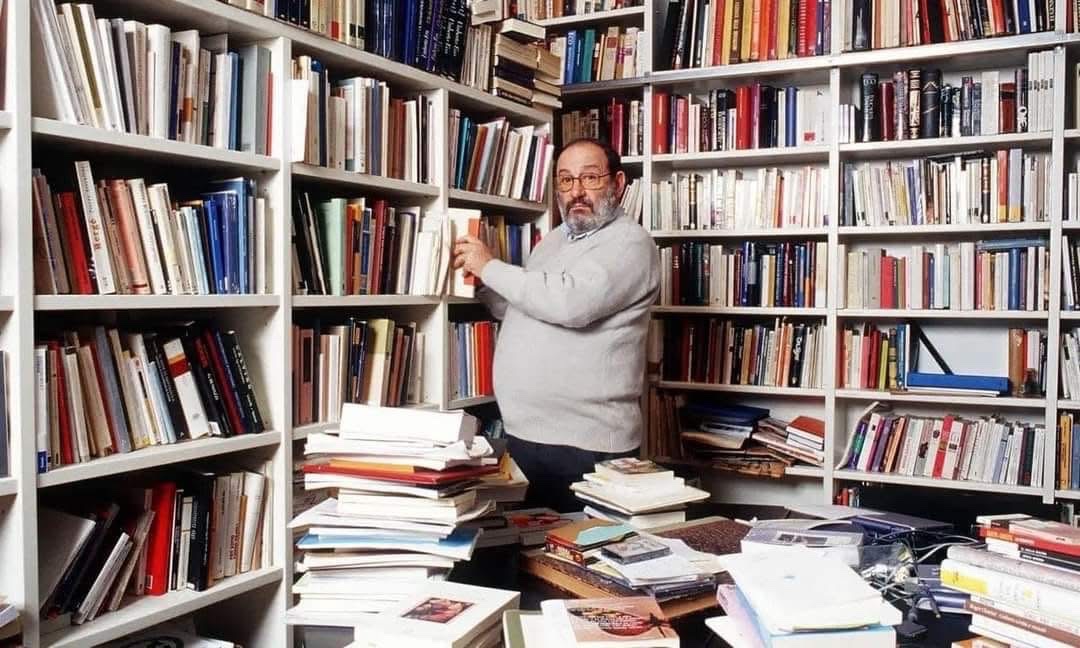
Umberto Eco, who owned 50,000 books, had this to say about home libraries:
“It is foolish to think that you have to read all the books you buy, as it is foolish to criticize those who buy more books than they will ever be able to read. It would be like saying that you should use all the cutlery or glasses or screwdrivers or drill bits you bought before buying new ones.
“There are things in life that we need to always have plenty of supplies, even if we will only use a small portion.
“If, for example, we consider books as medicine, we understand that it is good to have many at home rather than a few: when you want to feel better, then you go to the ‘medicine closet’ and choose a book. Not a random one, but the right book for that moment. That’s why you should always have a nutrition choice!
“Those who buy only one book, read only that one and then get rid of it. They simply apply the consumer mentality to books, that is, they consider them a consumer product, a good. Those who love books know that a book is anything but a commodity.”