Just another data science, plant and food enthusiast PhD student in Quantitative Ecology, questioning about how functional traits’ dimensions scale across US.
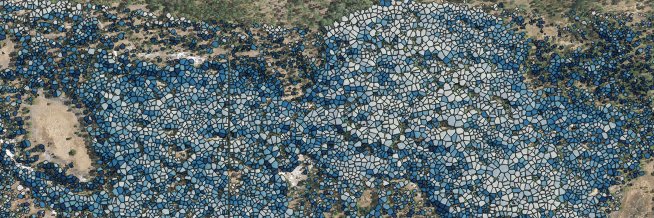
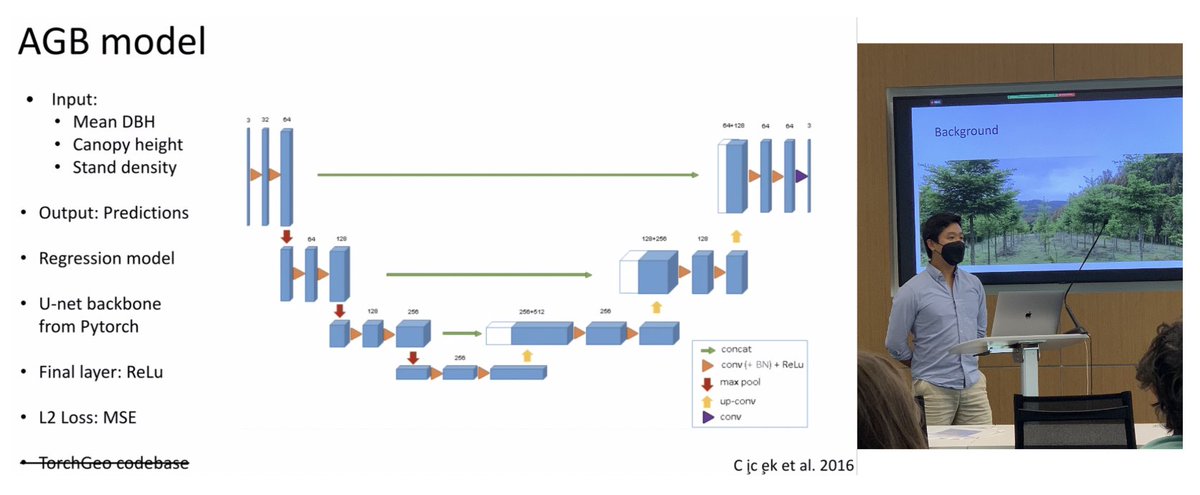
Brian Lee started to “watch trees grow” by using remote sensing and data fusion to look at above-ground biomass (AGB). He used a regression model based on a U-net backbone for his AGB model.
@L_tulipifera@onetreetwotrees True, but according to NEON field data there are few records of relatively big pinus taeda (loblolly) along with a few dozens of unidentified pines: the mystery gets even more intriguing!
@onetreetwotrees Cool! can't tell, but according to NEON field data, I bet it is a pine ("QUCO2" "QUMO4" "OXYDE" "ACRU" "PINUS" are the only sampled trees with duh > 10cm and taller than 5m)
Do you have:
- an advanced degree in life science, computer science, information technology or a data-intensive science
- programming experience
- @thecarpentries instructor certificate
- interest in science/tech
@thecarpentries & @CyVerseOrg want you!
https://t.co/836IEgzoQY
Deep learning leads us to develop new workflows for field data acquisition. This summer we’ll create tree species maps using hand-drawn polygons on tablets as training data.
Check out the new Open Traits paper in Nature Ecology and Evolution. In this manuscript, we discuss the importance of #OpenScience practices for trait-based science, and outline ways to accelerate the synthesis of trait data across the tree of life. https://t.co/33Z6EDJRSa
@enricomariutti@andsnz@Climalteranti@Caserinik La stima si riferisce al potenziale totale incremento di area forestata globale ("we found that there is room for an extra 0.9 billion hectares of canopy cover"). Il paper originario usa stime per biome, e calcola il pontenziale di stock da media per bioma per comparto di Carbon