Pediatra de Mallorca comprometido con la lactancia materna, fundador del primer banco de leche materna español. Entusiasta y lento corredor de medias maratones
"a rapid, no-cost tool for risk stratification in toddlers with pneumonia" Diagnostic accuracy of the index finger vein inspection (‘Zhiwen’) for assessing paediatric pneumonia severity https://t.co/YUmkaZ9PCp
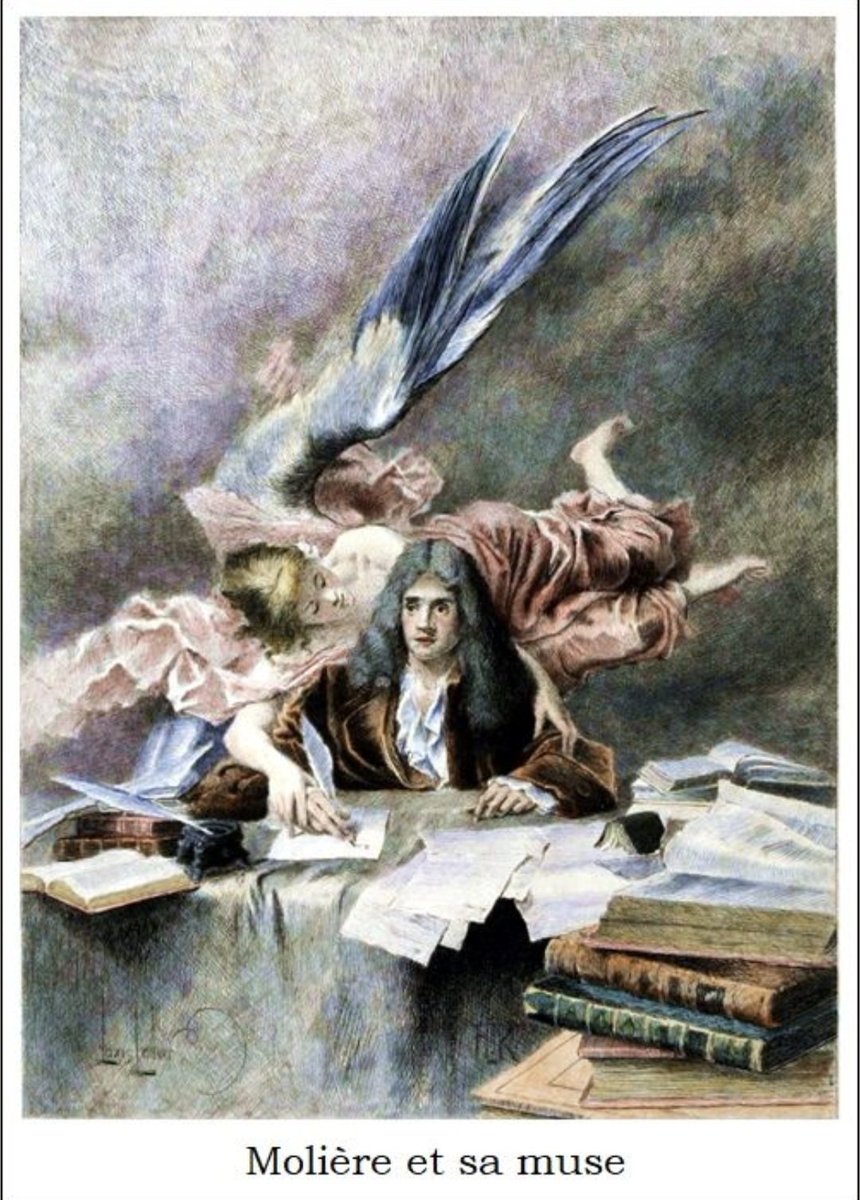
Jean-Baptiste Poquelin was born in Paris in 1622 into a family of upholsterers and royal suppliers. His father expected him to inherit the trade, to measure velvet and negotiate fabrics for the court. Fate had a darker sense of humor. The boy would end up measuring not drapery, but human folly. Later he would formulate it without sentimentality: "Writing is like prostitution. At first you do it for love, then for a few friends, and finally for money." In that sentence there is biography, philosophy, and judgment. Molière never pretended that art was innocent. It is a transaction. With the audience. With power. With time.
The birth of Molière is in fact a second birth. The first belongs to Poquelin. The second to the man who chose the stage and changed his name to spare his father’s honor. The name is a mask, and the mask is truth. He would spend his life exposing masks while wearing his own. His philosophy of life is not moralistic. It is surgical. "People do not mind being wicked. But they cannot bear being ridiculous." That is the key to his theater. He does not punish vice. He illuminates it. Laughter does the rest. "The duty of comedy is to correct man while entertaining him." Correct, not through preaching, but through a mirror.
Thirteen years of wandering across France. Uncertainty, debts, a day in prison, provincial stages, improvisation, observation. He collected human types like a botanist pressing plants between pages. From there came Tartuffe, Don Juan, The Miser, The Misanthrope. Not invented monsters, but concentrated versions of reality. "People can turn the most innocent activity into a crime." He knew this personally.
When he entered Paris and the Louvre, he did not become a court jester, but a court diagnostician. Louis XIV granted him protection and two thousand livres a year. The Church granted him prohibitions. "Doubts are more cruel than the most unpleasant truths." Tartuffe was a wound that still bleeds. Hypocrisy in cassock and powdered wig was too easily recognizable.
The women in his life were passion, scandal, and unresolved tenderness. Armande Béjart, young, beautiful, suspiciously entangled with his past. Jealousy, rumors, whispers. He knew them well. "Doubts are more cruel…" was not merely theatrical language, but lived experience. The women in his plays are intelligent, observant, often more lucid than the men who govern households and states with false severity.
Molière remained an actor to the end. His irony is sharp, but his self-irony deeper. "Of all follies, the greatest is to try to make the world a better place." It sounds like surrender, but it is sobriety. He did not wish to save the world. He wished to expose it.
His death was his final performance. February 17, 1673. He plays Argan in The Imaginary Invalid. He coughs blood. He falls. He rises. He finishes the play. The curtain falls again. "Almost all men die of their medicines, not of their diseases." His sarcasm outlived his body.
The Church refused him burial. Actors did not deserve consecrated ground. He was buried at night, without ceremony, behind the cemetery wall. Following the coffin walked those he had made laugh. La Fontaine. Boileau. Colleagues. Admirers. History.
The birth of Poquelin was biological. The birth of Molière was a cultural rupture. He turned laughter into an instrument of interrogation. He proved that "if you speak so as to be understood, you always speak well." And he left behind a simple, merciless truth:
"The envious die, but envy never does."
Molière died. Hypocrisy did not.
And that is why he remains contemporary.
🦋
The autism epidemic is a myth: The increase is only in expansive overdiagnosis of kids "on the spectrum," e.g. "Would rather be alone than with others,” “Has difficulty making friends,” and “Is regarded by other children as odd or weird.” Severe cases (no language, socially unresponsive, etc.) have decreased. By my former grad student @AdamOmaryPhD https://t.co/mS6miGWM86
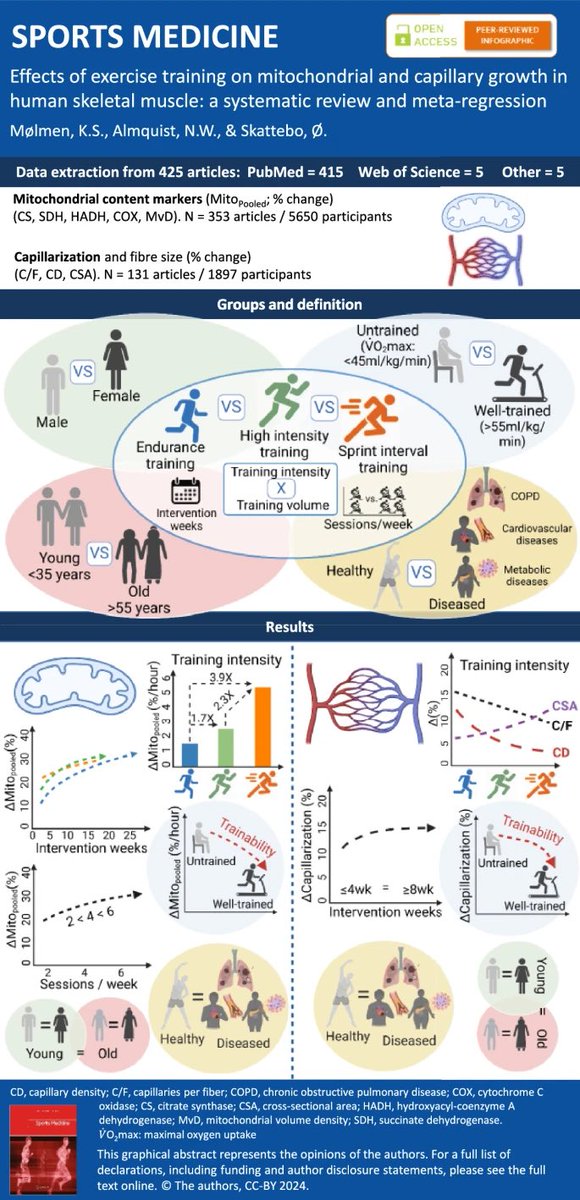
Intensity vs Volume: What Actually Builds Endurance?
Exercise science finally gives us a clear answer 👇
Here’s what a large science-backed meta-analysis found:
1. Training intensity drives mitochondrial growth
Higher intensity training led to up to 3.9x greater increases in mitochondrial content compared to lower intensity work.
2. Sprint interval training punches above its weight
Short, intense sessions produced stronger mitochondrial adaptations than longer endurance sessions.
3. Volume matters, but less than you think
More sessions help, but gains plateau faster than with increases in intensity.
4. Capillarization improves with consistency
Capillary growth increases over time, especially after 8 weeks, regardless of training style.
5. Untrained individuals adapt faster
Beginners see larger improvements than well trained athletes due to higher trainability.
6. Benefits apply across ages and health status
Young, old, healthy, and clinical populations all showed positive adaptations.
If time is limited, intensity delivers the biggest return.
Train smart, not just long.
IMPORTANT message for everyone using Gmail.
You have been automatically OPTED IN to allow Gmail to access all your private messages & attachments to train AI models.
You have to manually turn off Smart Features in the Setting menu in TWO locations.
Retweet so every is aware.
Albares es gilipollas.
En 1839, las más altas autoridades de México y España firmaron un tratado de paz y amistad jurando olvidar para siempre cualquier rencilla entre ambos países.
Cuando España abandonó México este país era mucho más grande, rico y poblado que Estados Unidos. La situación actual de México no es en modo alguno responsabilidad del Reino de España.
México no era de España, era España. México jamás fue una colonia, fue un virreinato y muy avanzado para su tiempo. Como ejemplo: La Universidad de México se fundó en 1551, casi un siglo antes que la primera universidad de Estados Unidos. España también fundó la primera universidad de América (Santo Domingo, 1538) y la primera universidad de Asia (San Ignacio en Manila, 1590), así como docenas de universidades por todo el continente donde podían estudiar tanto españoles como indígenas sin distinción. De hecho, en la universidad de Salamanca en 1556 había hasta un catedrático de raza negra (Juan Latino).
El matrimonio entre españoles e indígenas fue legal desde el primer momento de la conquista. Por hacer una comparativa: en Estados Unidos no fue legal el matrimonio interracial en todos los estados hasta 1967. Que Inglaterra, Estados Unidos o la Excelentísima Presidenta Dra. Claudia Sheinbaum nos den lecciones respecto al trato a los indígenas es cuestionable.
Las estimaciones más optimistas hablan de que solo un 1,5% de los atacantes en el asalto final a Tenochtitlan eran españoles. El resto eran pueblos indígenas aliados de los españoles que durante décadas fueron masacrados por los mexicas. Es sabido y reconocido que los españoles quisieron conservar la ciudad mientras que sus aliados indígenas trataron de arrasarla hasta los cimientos.
Después de la conquista de México, varios descendientes directos de Isabel Moctezuma, hija de Moctezuma II, se trasladaron a España. Muchos de ellos recibieron títulos nobiliarios en reconocimiento a su linaje. Fueron recibidos con respeto y todos los honores. Hoy en día viven en España más de 350 descendientes de Moctezuma. Ellos ya “perdonaron” a España todo lo que tuvieran que "perdonar" hace siglos.
Los más reputados historiadores y arqueólogos han demostrado más allá de toda duda razonable que las guerras floridas eran básicamente genocidios, por no hablar del canibalismo y la pedofilia, prácticas comunes en el periodo prehispánico. Se calcula que se sacrificó a más de 50.000 personas en el templo mayor de Tenochtitlan. De hecho, en la misma Ciudad de México se han encontrado centenares de cráneos de sacrificios de niños en Tzompantli. Andrés de Tapia, un soldado español que acompañó a Cortés en la conquista de México en 1521, habla de que vio una gigantesca torre hecha enteramente de cabezas de hombres, mujeres y niños sacrificados. En 2015 se encontró esa torre en el templo de Huey Tzompantli en Ciudad de México. Esto es solo un ejemplo de una brutalidad que ha sido acallada durante siglos y por la que jamás se ha pedido perdón. Aunque sinceramente no sabemos muy bien quién tendría que pedir perdón y a quién y por qué.
España no puede pedir disculpas a México por la conquista de México por la sencilla razón de que hace 500 años no existía México. Sea como fuere, los descendientes de los conquistadores españoles no son los españoles que viven en España, son los mexicanos que viven en México. Suena ridículo tener que explicar algo tan evidente.
Desde la independencia de México todos conocemos el trato que han recibido los indígenas y las lenguas indígenas. Las condiciones de vida, los derechos y la proporción de hablantes de los pueblos indígenas eran infinitamente mayores entonces que ahora. No culpabilicen a los españoles en pleno 2025 de ello.
"Money can buy happiness" sounds as obvious as "water is wet". Nonetheless, the claim runs counter to the long held misunderstanding that once you earn a certain amount (US$75,000 to be exact) any additional earning doesn't translate into more happiness. In The New Daily I am exploring the origins of this research claim and show in the Australian context just how happy money can make you. The chart below shows that richer people are less likely to experience poor mental health than people on lower incomes. Read the full piece here (no pay wall): https://t.co/dcp3fXoCZh
"in every society (that has been investigated) around the world, babies were historically (or are still) given food that has first been chewed for them and then spat out. Fittingly, the name for this practice is a bit of a mouthful - premastication."
@irene_gp La situación de los menores tutelados en España es muy preocupante, hay organizaciones cobrando por estos servicios como un negocio cualquiera, sin ningún control real. Los números de menores víctimas de abusos sexuales son un escándalo. Este caso es la punta del iceberg.
Writing by Hand Helps Children Learn Letters Better
A new study has shown that young children learn letters and word structures more effectively through handwriting than by using keyboards.
Researchers taught 5- to 6-year-olds unfamiliar letters and pseudowords through either manual writing or typing.
Children who wrote by hand performed significantly better in identifying, writing, and pronouncing the new letters and words, particularly with unfamiliar word sequences.
The study also tested variability, finding that freehand writing (without guides) further improved learning outcomes over guided writing or uniform keyboard fonts.
This suggests that both graphomotor skills and variability in practice contribute to stronger memory and literacy development.
Researchers concluded that handwriting should remain central in early literacy education, while digital tools should be used only to complement manual learning.
Effect of positional management and milk type on digestive health: a study on colic in preterm infants unveils that kangaroo care and human mik yield the best results. https://t.co/UFVf9t1j0j
Separation-Individuation, Margaret Mahler
Mahler's Separation–Individuation Theory describes child development as a process through distinct phases:
Normal Autistic Phase (First few weeks, later abandoned) – The infant is self-absorbed and detached, mostly sleeping. Mahler later dismissed this phase.
Normal Symbiotic Phase (Until ~5 months) – The infant is aware of the mother but does not see them as separate beings. The mother and child are experienced as one unit.
Separation–Individuation Phase – The child begins differentiating from the mother, developing a sense of self. This phase has several subphases:Hatching (First months) – The infant becomes more aware of the outside world and sees the mother as a point of reference.
Practicing (9–16 months) – Increased mobility (crawling, walking) allows the child to explore but still feel psychologically connected to the mother.
Rapprochement (15–24 months) – The child recognizes their separateness from the mother, leading to a push-and-pull dynamic. The toddler seeks independence but also reassurance. If the mother misinterprets this need, the child may develop anxiety or fear of abandonment.
Rapprochement Subphases:Beginning – The child wants to share discoveries with the mother.
Crisis – Conflict arises between seeking closeness and independence.
Solution – Language and the superego help resolve this tension.
Disruptions in separation–individuation can lead to difficulties in forming a stable sense of self in adulthood.
Caso 1️⃣
Paciente de 6 años con fiebre y cuadro catarral de 7 días de evolución asociando recientemente dolor abdominal.
A la exploración destaca discreta hipofonesis en cara posterior izquierda sin ruidos sobreañadidos ni dificultad respiratoria.