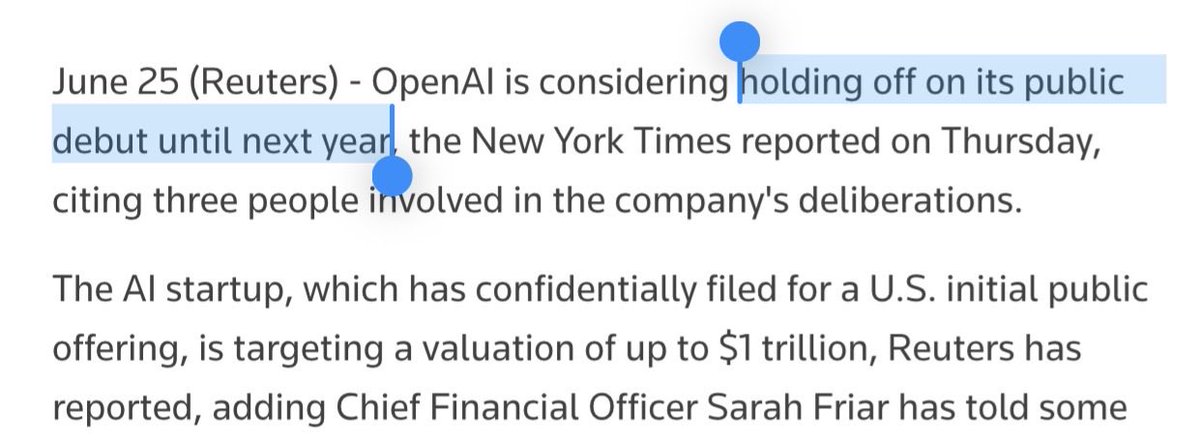
I’m not sure how OpenAI was likely holding off their IPO to 2027.
Because they had concerns about a $1T valuation 3 months ago.
Then Anthropic investors go and say **** it, lets one-up $SPCX and IPO at $2T next month?
Now that $MU to $SNDK have pulled a major recovery.
Good to have a reminder that the memory bottleneck hasn’t changed!
Same with CW lasers… substrates… or others.
But short term sentiment (depending on prices/macro) often does.
I think a lot of demand imbalances get worse than people expect:
- There’s some Japanese distributors in Nikkei today saying memory demand deficit has reached 40-60% (67-150% higher than supply). With general prices going up 50% by years end.
- $SPCX isn’t included in the $1.3T hyperscaler capex figures (I think Wells Fargo ets. ~$263b AI capex), so total capex figures might be surprising.
- $SNDK expects 80% gross margins to continue into 2030… (welcome to S&P 100)
- and once again you have long term visibility into 2031 now with companies like Samsung
Memory is very really volatile… some of my positions are up 270%+, so I find it a bit easier to hold through volatile periods.
But regardless, operating fundamentals doesn’t always align with short term price movements.
Same concept can be applied to other sectors.
So... here's my take on US / China tensions:
You have European monopolies like:
- $ASML (EUV)
- $SOI (Photonics-SOI)
- Zeiss SMT (ASML EUV supplier), Trumpf (ASML EUV laser supplier)
Japan has many near/complete monoplies like:
- TOK, JSR, ShinEstu, Fujifilm for EUV photoresist - 90-100% share
- coat/develop equiment with Tokyo Electron -90%+
- actinic EUV patterned mask inspection (Lasertec) -100% share
- EUV mask blanks (HOYA, AGC) ~93% share
- arf photoresist
- Nittobo T-Glass
- ABF film (Ajinomoto)
- lot of misc from specialty glassAGC, wafer thinning/grinding/dicing with Disco and others.
Then there's US allied countries like Taiwan eg. $TSM, Korean memory with $SKHY / Samsung.
US has EDA with Synopsys/Cadence, $LCRX / $KLA, $NVDA, and many downstream giants.
China has many chokepoints such as gallium, graphite, refined lithium, and others + benefits from cost mass production over many future supply chains (eg. robotics).
If I had to give my opinion on US / China supply chain wars:
- US is trying to achieve Western independence from China/Russia rare earths + materials supply, but took too long (should have been a priority last decade).
- China is trying to eliminate strategic chokepoint dependence and forcing US reliance on Chinese supply chains (as seen with Wf6)
It's a race on who achieves supply chain independence first to gain leverage over the other.
And fun thing is, AI acceleration kinda throws an unknown variable in terms of speeding up independence.
As well as open source efforts (eg. RISC-V), which China is heavily focusing on. So it's a weird paradox where US should theoretically support open source hardware development + open source AI, but it's also being exploited against them.
From a Chinese perspective, they're pressuring US supply chains by targeting Japan, which increases Western supply chain reliance on China.
And going down the list to eliminate competitor chokepoints internally by throwing subsidized spend into R&D. Or by acqusition as seen with China's acquisition of EU leaders like Ficontec.
America... they had all the cards initially, but I think they got too comfortable, and took too long to focus heavily on rare earths (recent funding is a good thing).
The earlier tariffs went the wrong way (socks, furniture, other exports), and pissed off allies in EU/Canada too.
Which could have been used for leverage for major chokepoints. But maybe they'll realize soon enough why allies are important.
Anyway, we'll see what happens, just my two cents about ongoing dynamics.
In an ideal world, everyone works together...
TLDR: Just some shower thoughts on how there's an unspoken race on who achieves supply chain independence first to gain leverage over the other.
China reportedly halts some rare earth shipments to US.
Not a new blanket ban, or any mention of specific rare earths.
But… if I had to guess, Japan is usually a decent indicator of what’s actively important since Japan:
- “sources virtually all of its dysprosium and terbium from China.”
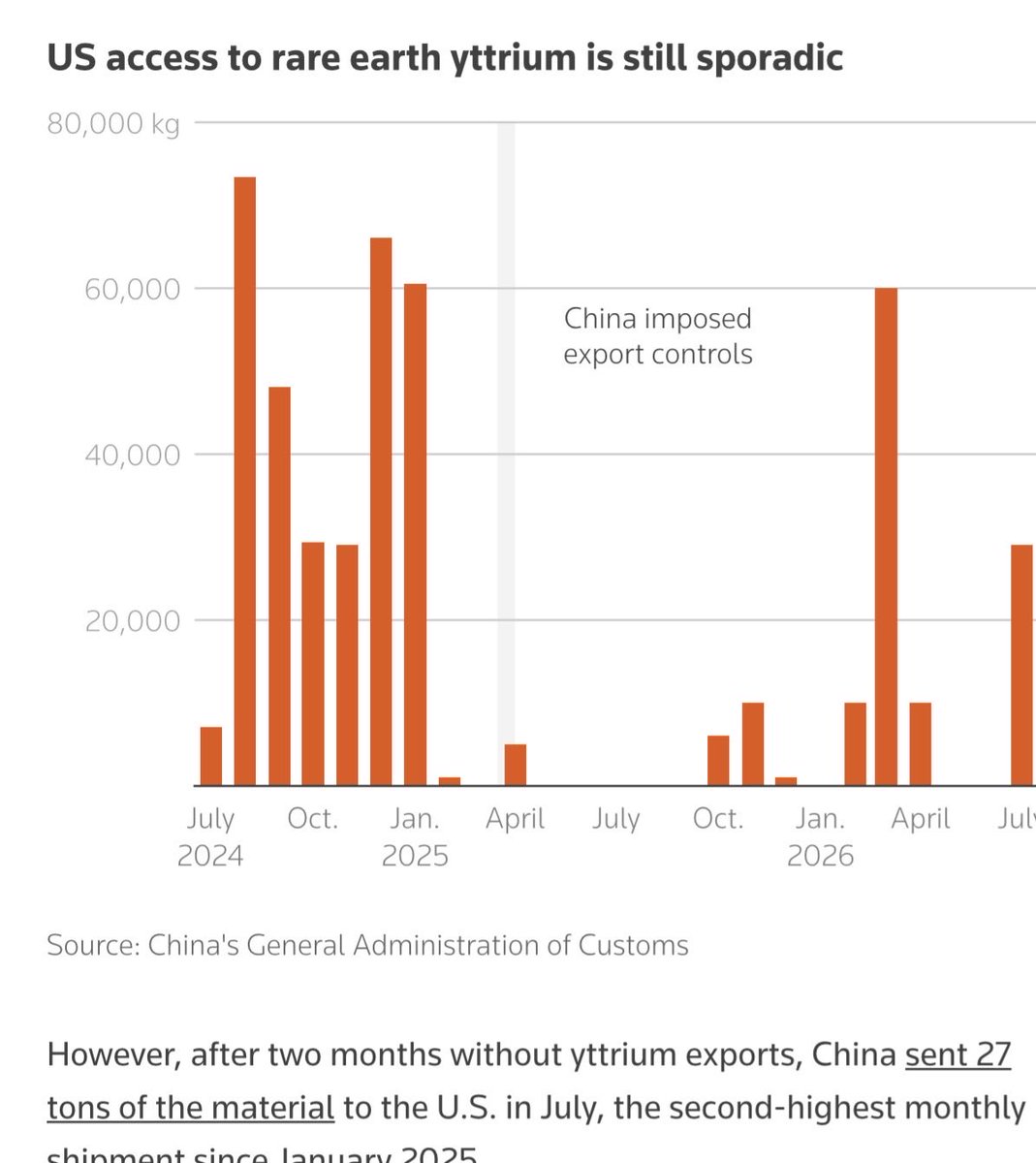
- gallium, dysprosium, terbium and yttrium from China to Japan all stood at “zero” in June.
- Shin-Etsu Chemical has reportedly suspended acceptance of new orders for magnets containing dysprosium.
- Global magnet producer Proterial had received no export licenses for Chinese dysprosium as of last month
The Reuters piece mentioned yttrium, gallium, terbium, indium phosphide, and tungsten as historical examples (doesn’t say what’s being targeted now).
On a side note, $LYC.AX is becoming one of the most important alternatives, as Japan has locked up 75% of Lynas’s medium/heavy rare-earth output. (8 tons of dysprosium + terbium in Q1)
Something fun I also read is that Japan’s deep sea resource is enormous (est. at 16 million tons of rare earth rich mud, but commercialization is post-2028)
But in the meantime, China seem to be choking off feedstock that would materially affect Japan.
Since you’ve already seen the WF6 Japanese industry stressed from tungsten related halts.
And indium/others earlier this year that is used to make InP substrates from Sumitomo/JX.
But still gradually allowing exports directly eg. $AXTI -> $LITE to allow US/China trade to continue, kinda disrupting that from time to time, then using that as leverage.
It’s interesting since Japan has so many different monopolies like ABF, so we’ll see if they do anything back.
But if I had to give a prediction, it does look like the US has a countdown timer until China becomes self-sufficient on semiconductors.
TLDR:
- rare earth disruption to US
- China actively targeting Japan for upstream feedstock (which goes to Us supply chains), probably want to focus on that
- many many second/third order effects from disruptions
- we’ll see what US/Japan wants to do back, but supply chain wars are being fought upstream.
$NVDA acquires hugging face for $12,930,300,000.
Jensen stated the reason being:
- 18M+ devs use Hugging Face
- 3M+ models, 500k+ datasets, 1M+ apps
- 200k+ companies use the platformm
- support of open weight models
this almost reminds me of $MSFT buying Github?
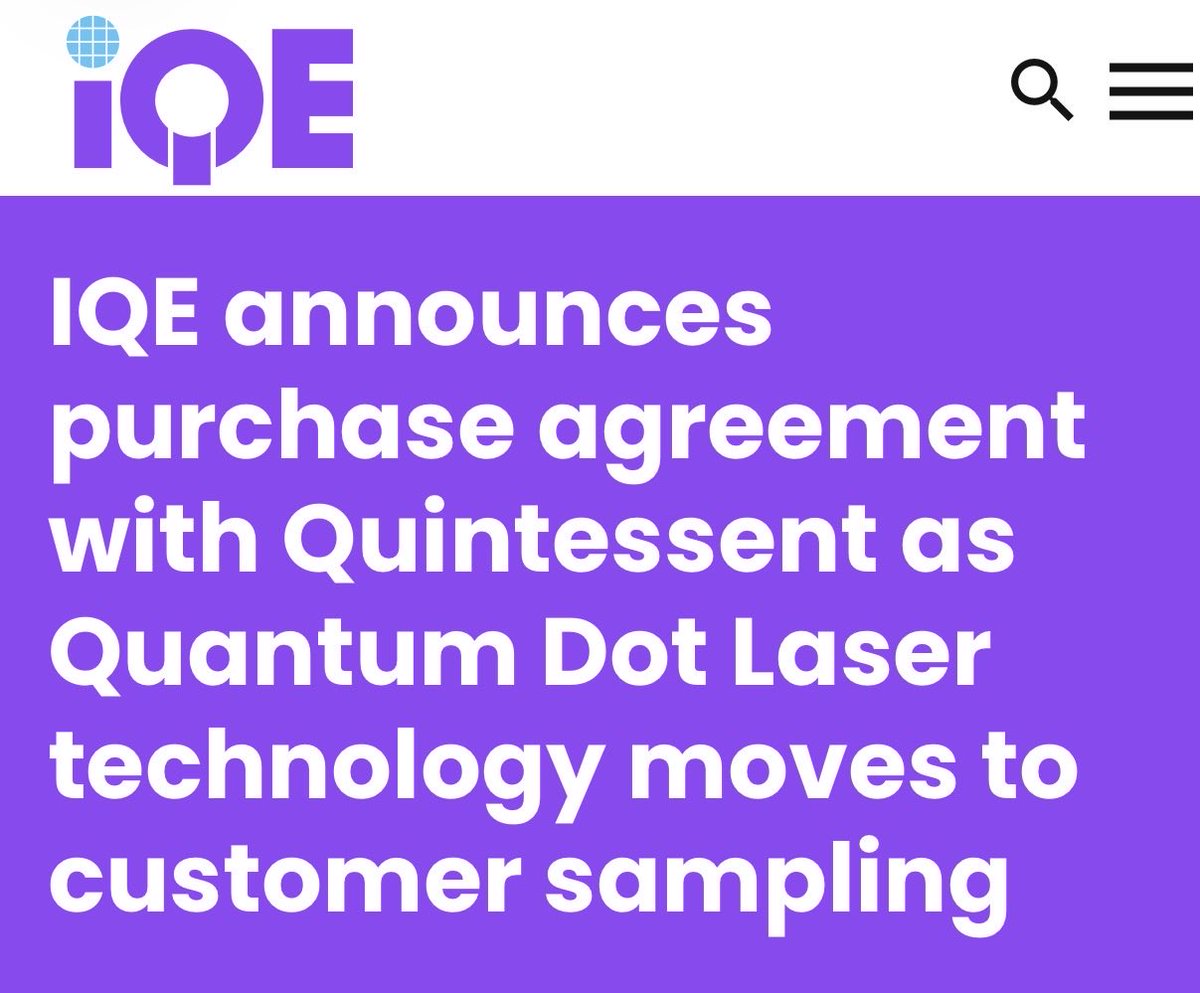
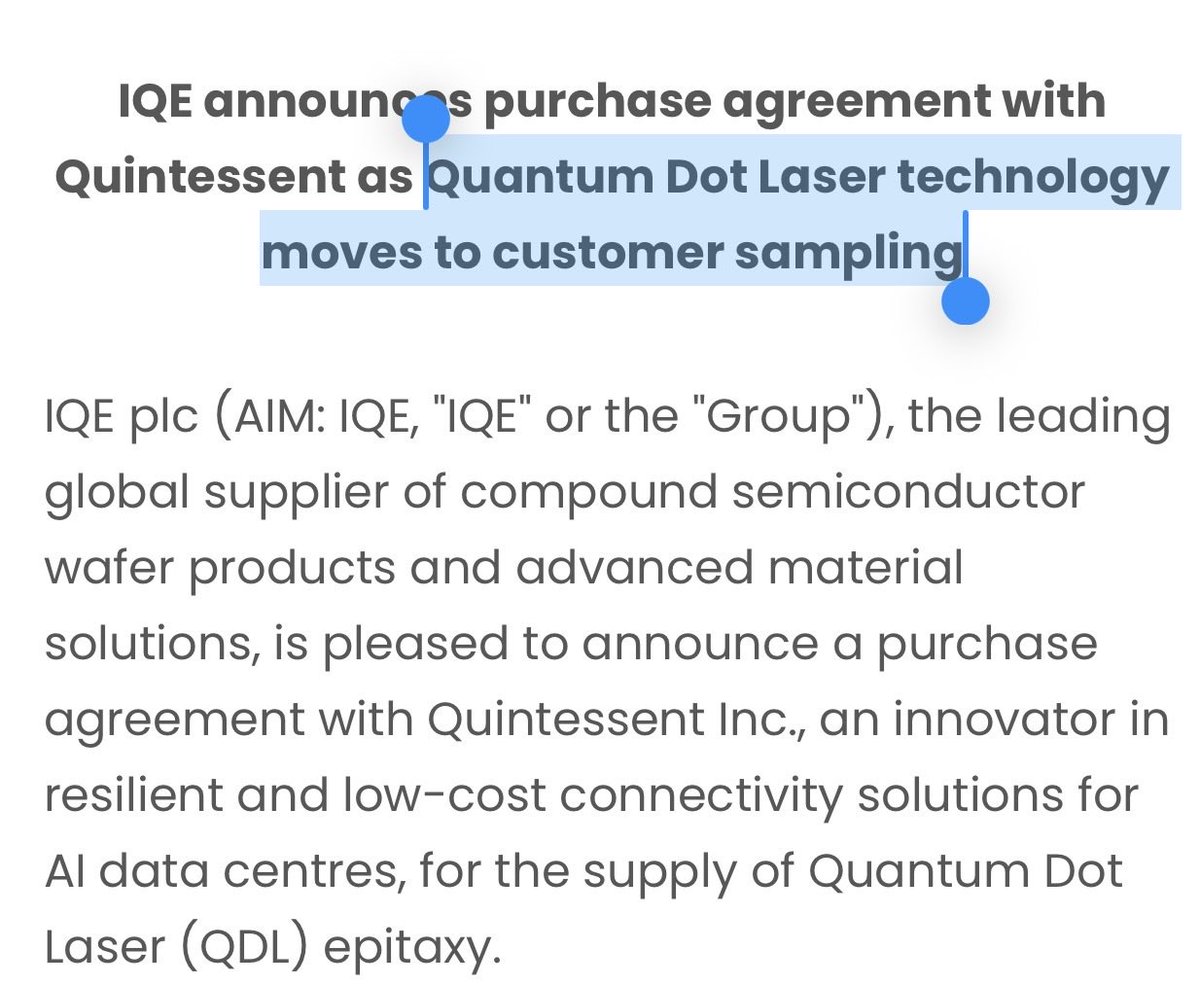
$IQE is actually a quantum dot foundry leader believe it or not.
Today IQE announced a purchase agreement with Quintessent (top player in the QD space).
“As quantum dot lasers move to customer sampling.”
Your QD bros like $ALMU, QD Laser (6613), and others might finally start to see the light of day, with broader commercialization in the next few years.
Second order effects are QD machine chokepoints like $ALRIB that might capture more attention.
But TAM is typically pretty small on the QD material epi side of things. (No disclosure over $ figure), but good news nevertheless.
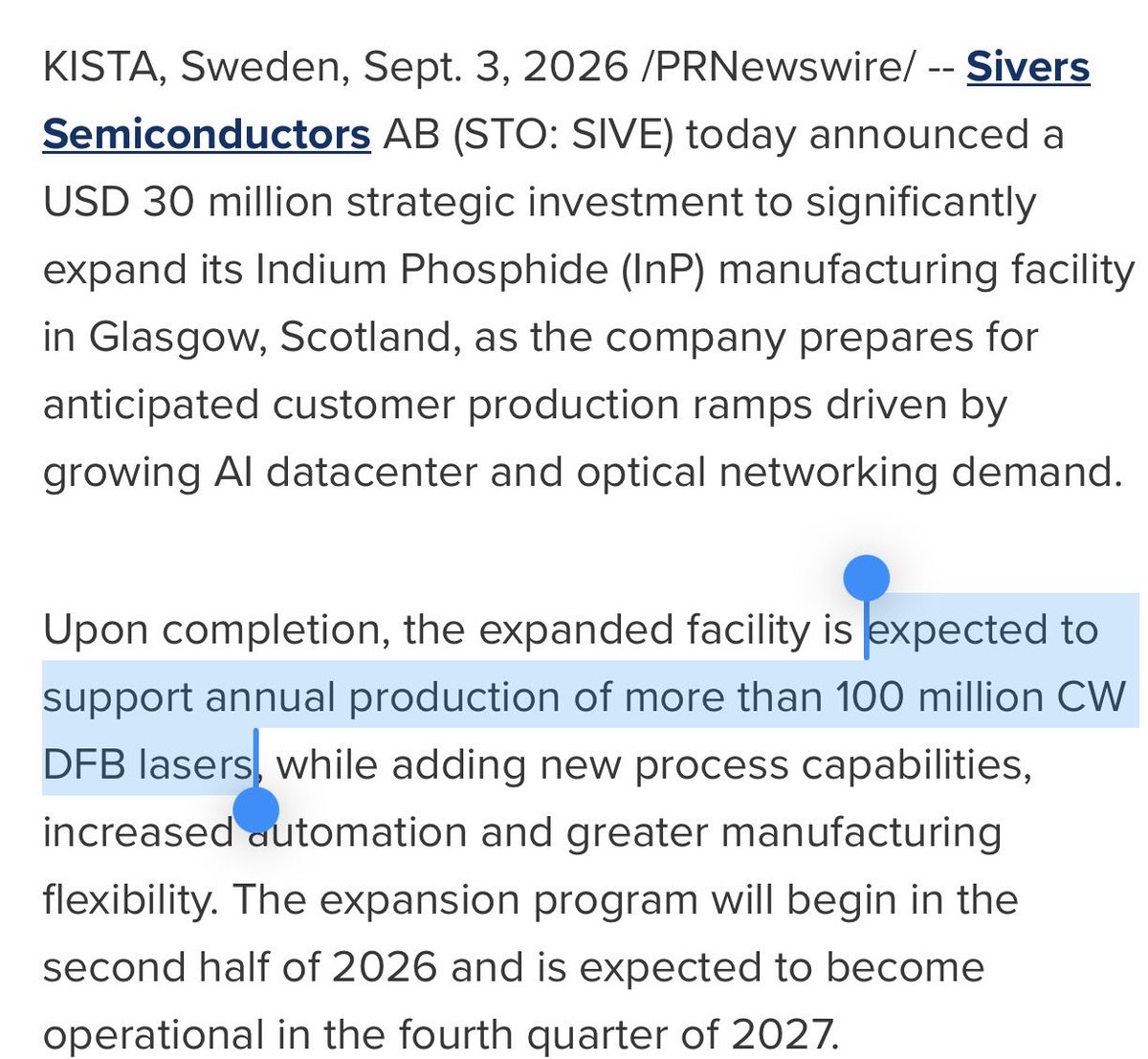
$SIVE announced today that it is expanding InP manufacturing in Glasgow.
The new capacity target is:
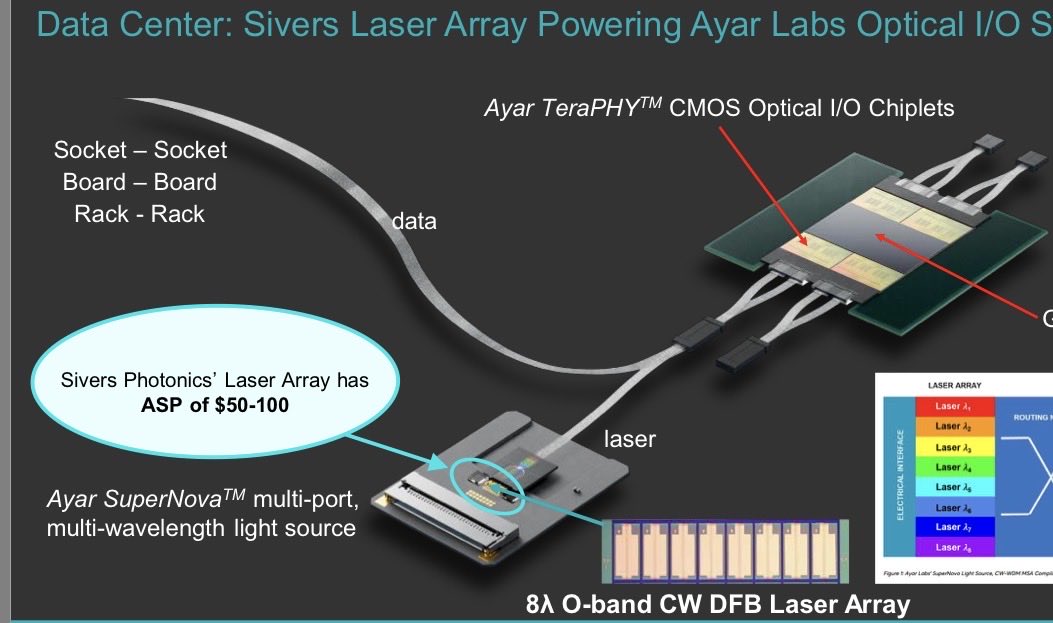
~100 million CW DFB laser annual production.
Using Sivers’ historical $50-$100 per 8-laser array pricing, the implied revenue capacity might be ~$625M-$1.25B/year (not guidance, just illustrative modeling)
I’m personally very surprised by the amount of capacity coming online from their new hybrid manufacturing model, targeted Q4 2027.
Especially during an industry shortage, mentioned by $AVGO earnings call today.
$AVGO CEO: "Demand for lasers, whether it is EML lasers, CW lasers.
Is far surpassing supply out there in the industry"
Pretty material coming from one of the largest laser suppliers in the world... Even while they 3x laser capacity.
Exciting validation for laser companies.
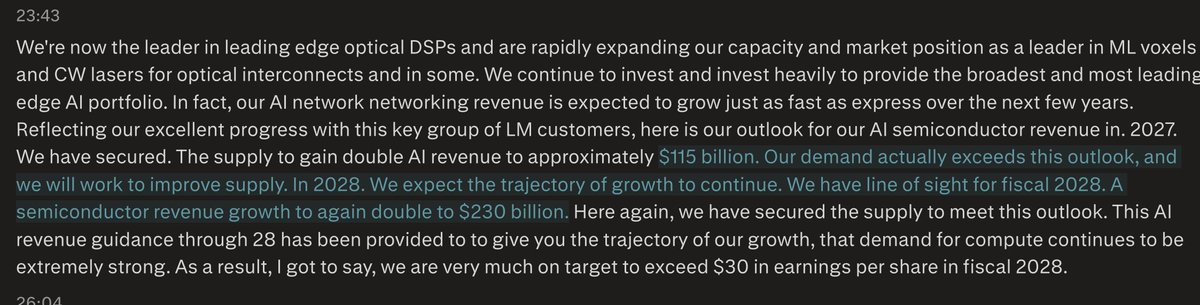
There we go, $AVGO earnings call to clarify miss. Broadcom expects:
FY27E: ~$115B (+100% growth)
FY28E: ~$230B (+100%), think analysts were modeling ~$180B.
Demand actually exceeds this outlook, and Broadcom will work to improve supply. This is way above street estimates, similar to $NVDA earnings.
"very much on target to exceed $30 in earnings per share in fiscal 2028." ~12.2x forward p/e (of $367/share)
Also just a brownie quote: "AI networking revenue is expected to grow just as fast as XPUs over the next few years."
Way more bullish forward guidance relative to next soft quarter revenue projections, think the few percent AH selloff was an overreaction.
Just my initial thoughts.
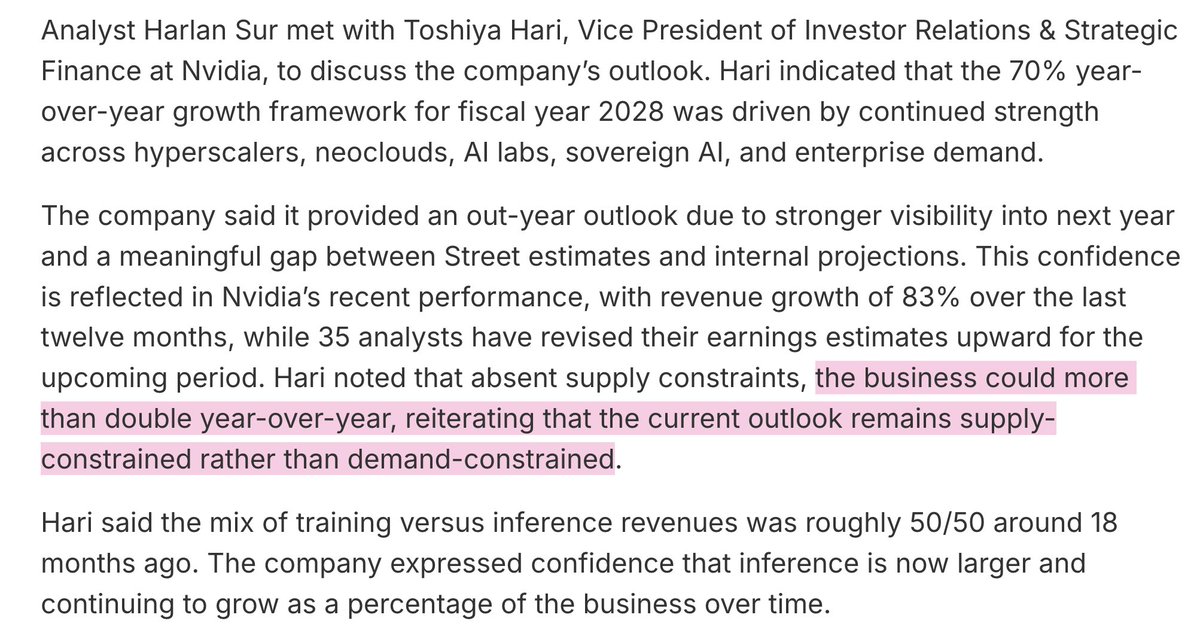
$NVDA told JP Morgan... That their revenue could increase more than 100%+ Y/Y unconstrained.
But ended up giving a ~70% growth projection because that's what Nvidia believes they can supply.
FY27 est: ~$401B revenue...
FY28: ~$682B at 70% or >$802B unconstrained.
- Nvidia IR said it gave the updated outlook because it had greater visibility + saw a meaningful gap between Street ests. and its own projections
- Inference is now larger than training after being roughly 50/50 about 18 months ago
I wonder if Nvidia will be the first $10T company... this growth is absurd.
Very interesting to notice Taiwan wildly outperform the rest of the World like US/EU.
Foci ($NVDA / $TSM FAU supplier) went from 400 -> 900 -> 400 -> 800, and recovered insanely fast from July.
Not sure if earnings like Etron or others are just absurd to not care about macro?
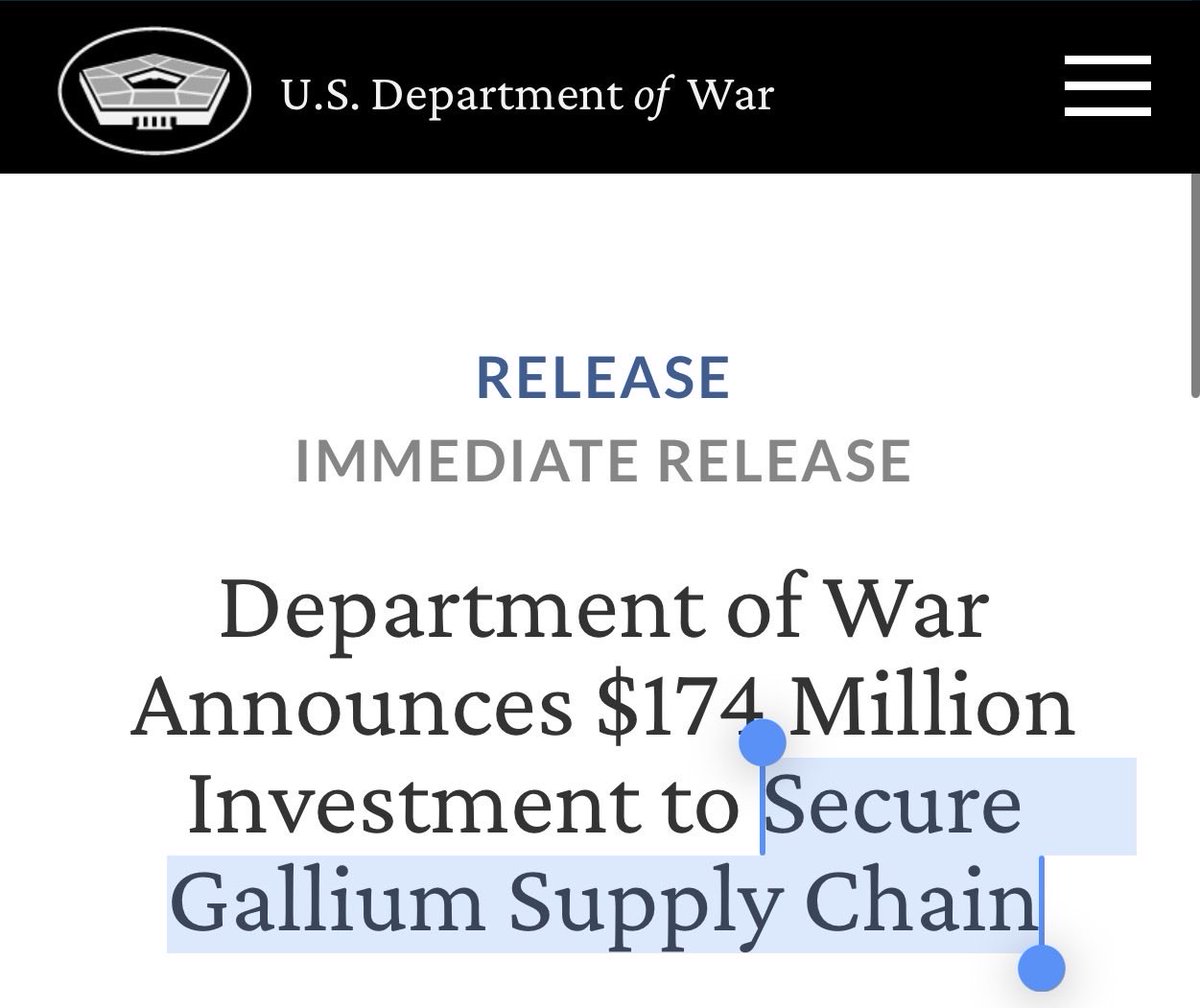
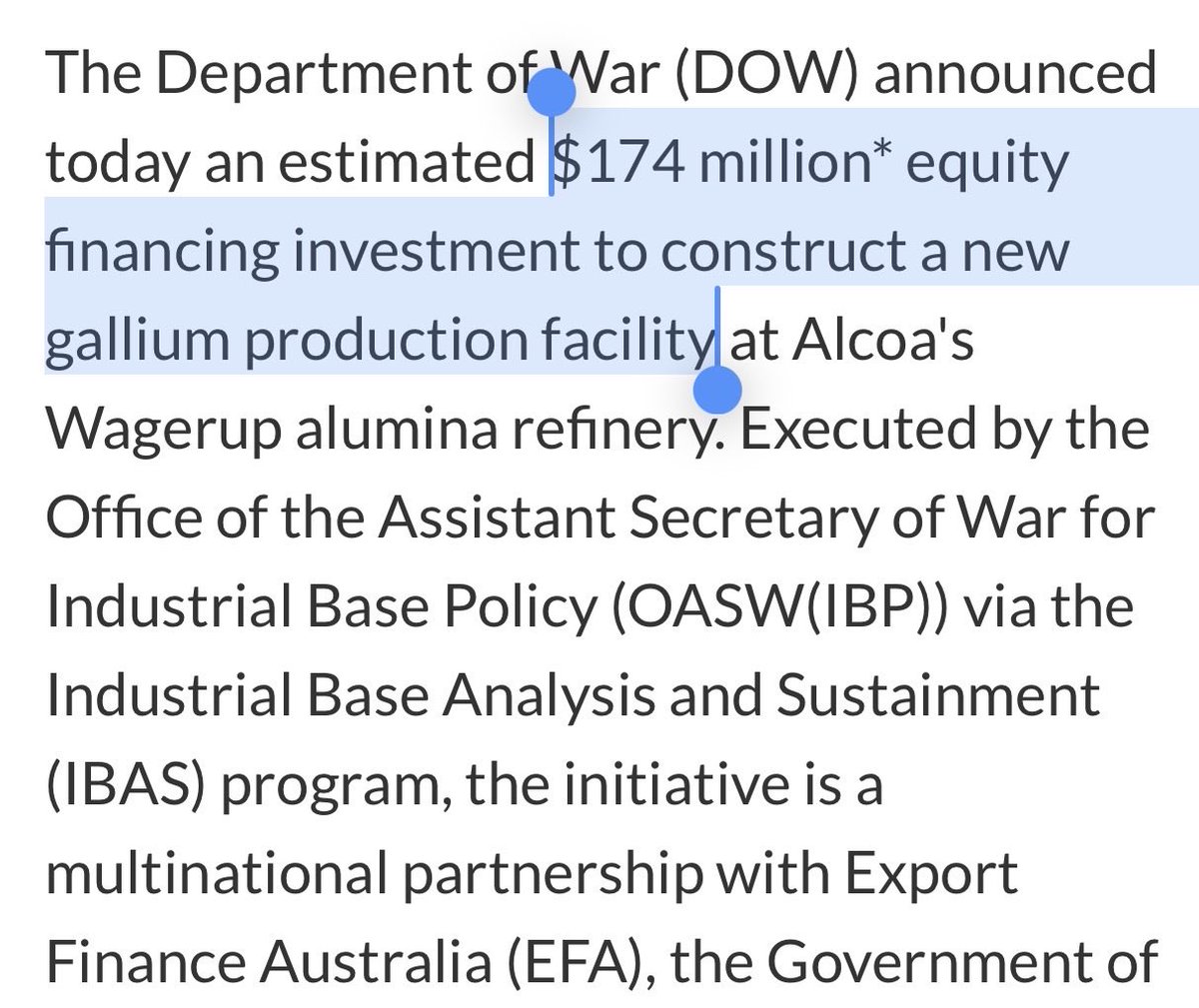
US Department of War announces $174M financing for securing Gallium Supply Chains. Beneficiaries are:
- $AA (Alcoa Corp) for Gallium production at its refinery.
- Sojitz (2768) as the Japanese JV offtake partner
Good to see US critical minerals supply chains investments.
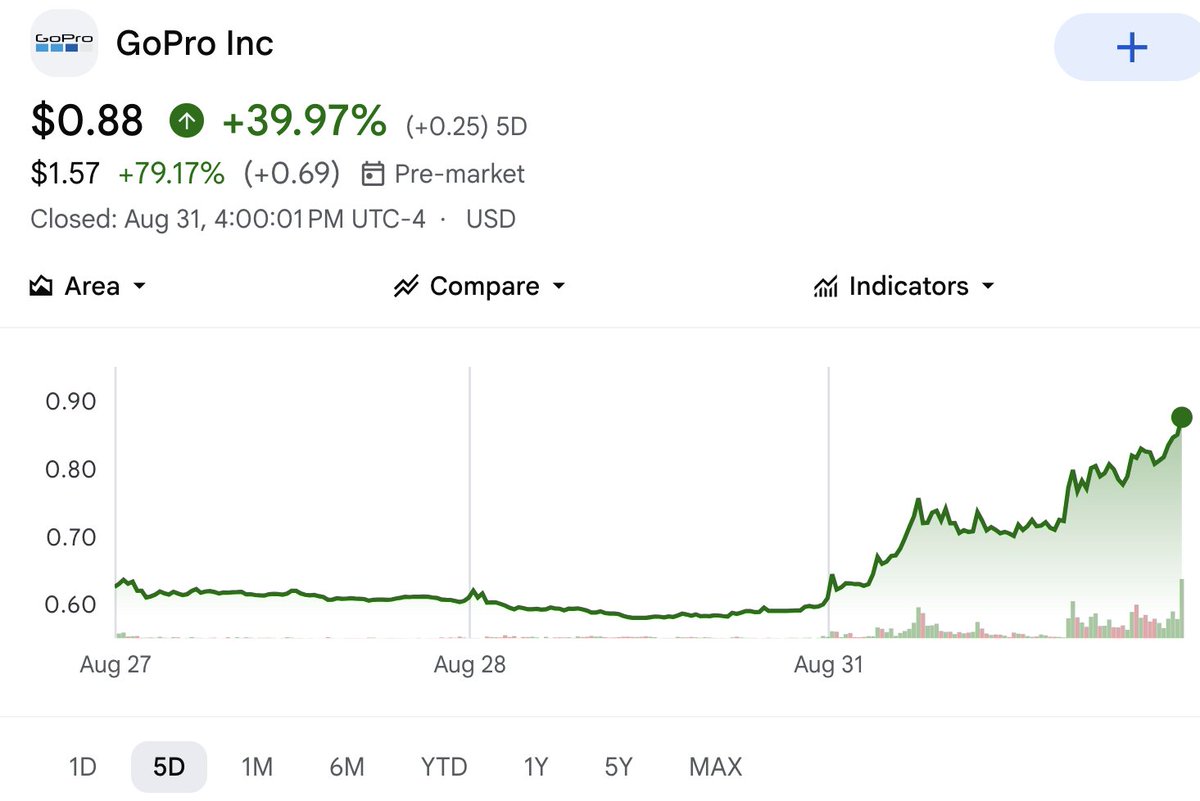
What... $GPRO is up 79.17% after planning to merge with a photonics company "Starman Optical"
To build US 800G/1.6T optical transceivers for AI data centers.
GoPro trying to compete with $AAOI was definitely not on my radar.
Just some TLDR news I found interesting:
1. $GOOGL (missed this) also invested in Mediatek alongside $NVDA for their $3.9B raise.
Google/Nvidia are goats with investments you look at $SPCX to Anthropic.
2. Samsung Electro-Mechanics discloses $778.9M MLCC deal / $CAPA (new MLCC ETF) also gives exposure now for folks without Korea/Japan/Taiwan market access.
But thing is more accelerators x MLCCs per accelerator might indicate a more future extreme bottleneck than people expect.
3. China channel checks state: planetary roller screws, 6D force sensors, and dexterous hands resist domestic substitution.
Then planetary roller screw as the top with lowest domestic substitution rate. eg. $SHA0.DE for planetary. Just interesting to hear moats I guess.
4. Samsung reportedly has ~70% of memory production capacity committed through 2031 / commodity DRAM has also fallen into short supply - Seoul Economic Daily. TrendForce expects server DRAM contract prices to rise 13-18% QoQ in 3Q26
SK Hynix also publicly stated the memory shortage lasts through 2030.
5. $CXMT has begun producing HBM3E in small quantities and reportedly claimed mass production of LPDDR6. Implications are even more positive for legacy DRAM shortages.
6. Cisco at SEMICON Taiwan said CPO is ready for mass deployment; pluggable modules will remain the market mainstay.
$MRVL also said customers are actively planning scale-up optics deployments as early as 2027
7. Wingtech -> bought Nexperia -> Netherlands effectively removed Wingtech’s control -> Wingtech is fighting back through Chinese courts.
But Nexperia got $300m of their assets frozen.
More geopolitical drama of course, always entertaining. $AAPl also explicitly accused OpenAI of destroying crucial evidence... (for more fun)
8. Not much description around ASP hikes regarding SOI substrates $SOI, but they now have 10+ customers involved with LTAs, $200m revenue described as a "floor", comments about customers more concerned about obtaining wafers than where they are manufactured.
So basically moving into capacity reservation now stages as silicon photonics takes off in 2027.
9. Some channel checks put lead times for high power MOSFETs and large area TVS diodes as high as ~52 weeks. ($STM also reportedly implemented its 3rd 2026 price increase on August 23)
10. Traditional packaging capacity could face a deficit exceeding 20% by 2027" with "wire bonding equipment" emerging as the primary bottleneck", covered this earlier this week with beneficiaries like
11. Claims that all six major ABF suppliers are booked for 2026, with 12-14 month lead times and some suppliers auctioning remaining capacity; $NVDA, $AMD and hyperscalers locking ABF capacity through 2028 and pushing suppliers to plan 2029–30 expansions.
Names like Kinsus (3189), Unimicron (3037), Nan Ya PCB (8046), Ibiden (4062), etc are all probably happy.
12. CCL leading laminated board products increased by another 10%-20%, 7th price hike this year (eg. Kingboard). Industry estimates put the HVLP4 copper-foil shortage at ~48% in 2026 / 43% in 2027, while Low-Dk/T-Glass lead times have stretched beyond 30 weeks.
13. "(GaAs) substrate materials and gallium epitaxial source materials are also facing another round of price increases in the third quarter of 2026, reportedly 5 to 6 times higher than at the early stage of the restrictions."
"China has recently eased some substrate export controls" but there's a "severe InP substrate shortage" per digitimes. Just some $AXTI related updates
14. $AMD and $AVGO reportedly booked most of Powertech's planned FOPLP capacity ahead of mid-2027 mass production
15. $INTC considering $INTC foundry for HBM4E base dies. But $SKHY responded directly that "some of the content is different from the facts".
16. "OpenAI Hoarding Tens Of Thousands Of $AAPL Mac mini and Mac Studio" for reinforcement learning. Anthropic has been renting mac mini units from $AMZN as well. Kinda sad Tim Cook retired, but dude had a goated run.
Just random interesting notes
Anthropic signs a $35B AI compute deal with $NVDA backed Lambda.
$HUT / DC, with Lambda / GPUs.
Frontier model demand is rapidly outpacing the ecosystem's ability to build capacity.
It also looks like Anthropic is securing more compute... Which neocloud/colo player is next?
$AAPL is now an important AI company apparently?
-> "OpenAI Hoarding Tens Of Thousands Of Apple Mac mini and Mac Studio" for reinforcement learning
-> Anthropic is renting Apple Mac mini units from $AMZN to complete similar AI tasks
I've never seen a company win so hard by doing nothing.
But whenever I see Apple + AI, I think of my beloved $RPI. Apparently Anthropic is working with Raspberry Pi now for their new model Hardware Standard, as of the 27th.
There's nothing yet about Anthropic/OpenAI buying Raspberry Pi devices for similar tasks, but maybe some OSINT researcher can do some digging.
$TSM Vice President of Advanced Packaging:
"Foundries can scale up the optical engine, but the real bottlenecks to large scale deployment lie elsewhere...
Including lasers, optical fiber, fiber-optic connectors, and test" (UDN)
Just some bucket ideas:
Lasers: $LITE, $SIVE, $COHR, LandMark (3081), LuxNet, Sumitomo, Furukawa
Optical fiber / FAU: Foci, Browave, $GLW, Sumitomo
Fiber Optic / CPO Connectors: BizLink, $GLW , Fujikura, Nextronics, COXOC
CPO testing: MPI (6223), Advantest, $FORM, Msscorps, $KEYS, Chroma
(disclosure: exposure to theme above, individual names not named by TSMC)
There are others I like as well, such as ShunSin, which now has explicit TSMC COUPE exposure but probably belongs under a different category like packaging/integration.
eg. "Foxconn unit ShunSin confirms TSMC COUPE partnership"
I don't think there's anything too new vs. H1, aside from ongoing news (eg. FAU looks like there will have a demand imbalance in 2027, from a report last week).
But it's helpful to reiterate overall beneficiaries from time to time...
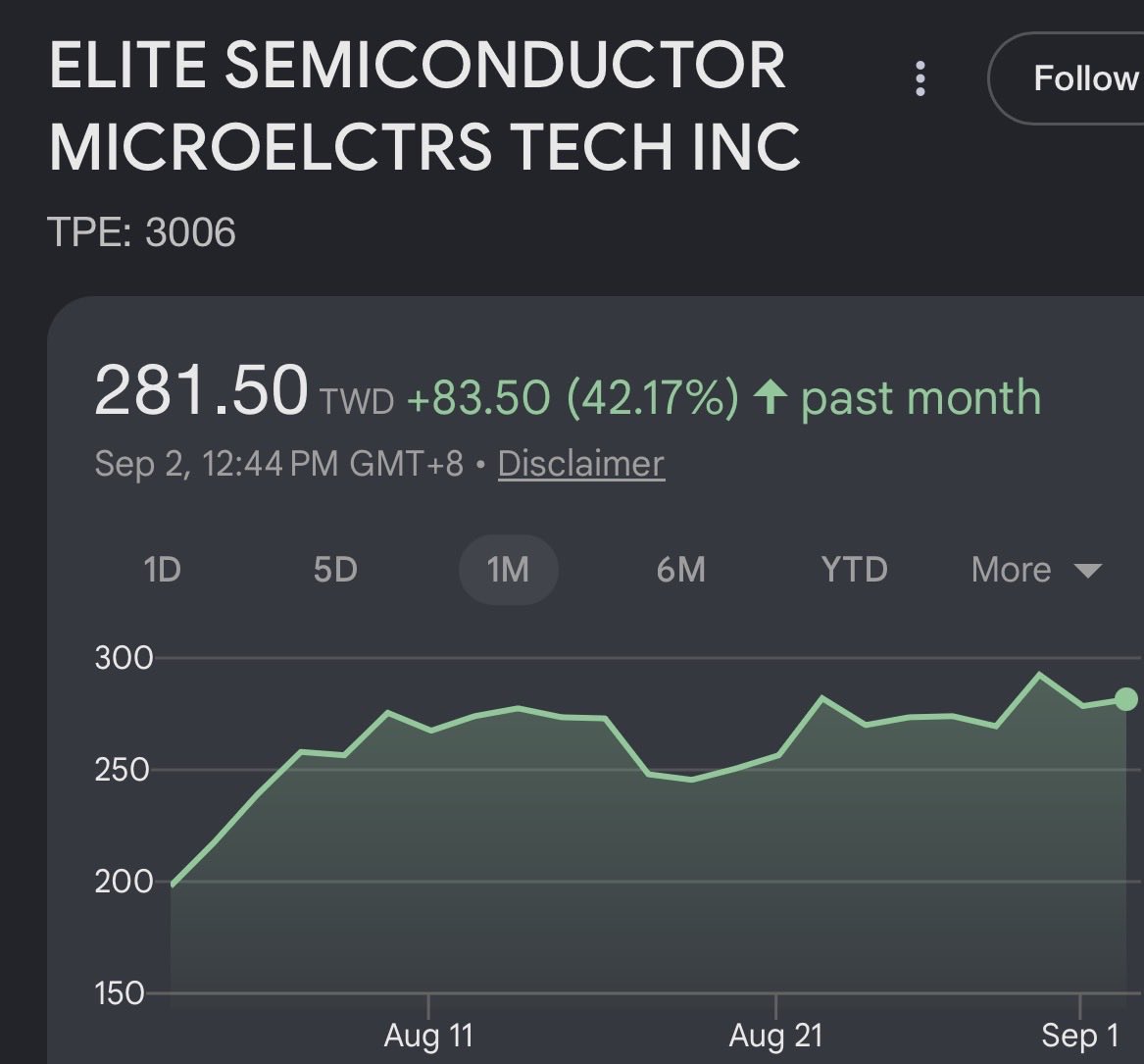
ESMT (3006) is 1.9x P/E ratio off July's earnings annualized.
Latest net income was: $109M net income/July, which is ~$1.3B annualized. With ~$395.9M net cash and with $249.6M in inventory.
The market cap less net cash and inventory is equivalent to:
~17 months of July earnings.
Where monetizing that inventory benefits from rising memory prices.
Their ASP hike expectations were +105–113% Q/Q last quarter from other analyst notes.
DDR2/DDR3, NOR Flash, SLC NAND, prices are expected to keep rising H2.
The main question is duration, but I personally think legacy DRAM/NAND shortages tightens throughout 2027. Others might disagree.
Other analysts like Huanan argue that PSMC wafer hikes are largely pass through (we'll find out H2).
Most people are finding companies with ~20 forward P/E ending 2028 to be attractive...
But 1.9x current runrate P/E seems like an anomaly to me personally.
That's my take on the company/legacy memory theme, I'll let others/markets decide if that's undervalued.