Big Pharma doesn't want you to know about this supplement.
It lowers insulin resistance by up to 42% in 8 weeks.
It's like a natural Ozempic and the mechanism is actually legit.
Here's how Psyllium Husk helps fix insulin resistance (bookmark this): 🧵
Using the sauna after aerobic exercise improves VO₂ max more than training alone.
People who performed 30 minutes of cycling and then sat in a sauna for ~15 minutes afterward saw greater gains in their VO₂ max after 8 weeks of training compared to those who did the workout without sauna.
There’s also emerging evidence for strength training, with studies showing greater increases in markers of anabolic signaling associated with muscle growth with post-exercise heat exposure.
The sauna has several health benefits. But it's also a powerful tool to amplify the body's adaptations to both endurance and strength training.
Clip from my recent appearance on @ThomasDeLauer
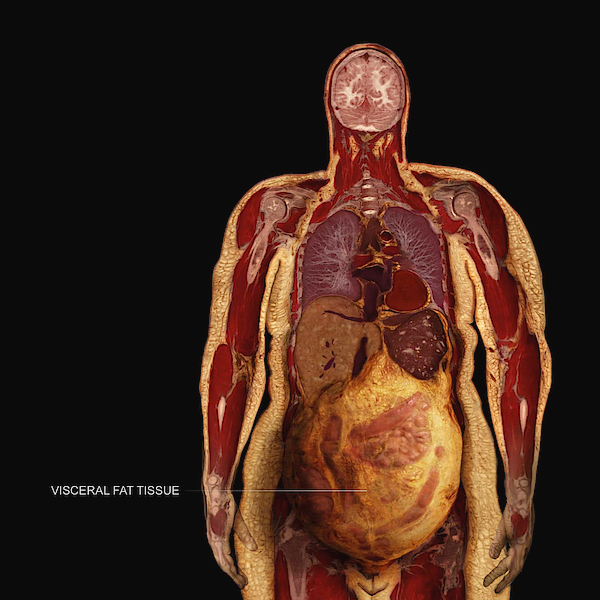
Meet the world's #1 visceral fat doctor.
Dr. Sean O'Mara.
He's spent decades researching the silent killer poisoning our bodies.
Here are his 7 key rules to destroy visceral belly fat:
1) Eat more meat
Creatine supplementation at ~10 grams/day may be a targeted way to support brain function in older adults
While muscle tissues become saturated at 5 grams/day, surpassing this threshold allows more creatine to reach the brain and raise brain phosphocreatine levels
Higher phosphocreatine availability supports cognitive performance specifically under brain stressors like aging, sleep deprivation, and neurodegenerative disease
And because aging places ongoing metabolic demands on the brain, this additional phosphocreatine reserve may help support brain energy metabolism when it’s under strain
ZONE 2 TRAINING: A WASTE OF TIME FOR PEOPLE WHO AREN'T RACING
A new analysis just torched the zone 2 hype. The conclusion? Current evidence doesn't support zone 2 as optimal for mitochondrial function or fat oxidation.
This matters because the biggest health influencers have been pushing zone 2 as some kind of metabolic sweet spot. Turns out the data doesn't back that up. Not for regular people, anyway.
Zone 2 gets defined as exercise where lactate stays under 2 millimoles per liter. That's the technical version. The practical version is the talk test: you can hold a conversation while moving.
The supposed benefits? Better mitochondria and improved fat burning. Two things worth caring about, sure. But zone 2 isn't the magic bullet people claim it is.
THE MITOCHONDRIAL MYTH
Proponents say zone 2 builds mitochondrial capacity better than anything else. The evidence says otherwise. When researchers looked at the actual signaling pathways that trigger mitochondrial growth, zone 2 barely registered.
Your cells need stress to adapt. Zone 2 doesn't provide enough stress. Not unless you're doing it for hours at a time, which most people aren't.
One study found meaningful cellular stress from zone 2 exercise. After two hours. If you've got two hours a week total for exercise, spending it all in zone 2 means you're leaving serious gains on the table.
High intensity work triggers stronger mitochondrial responses in less time. Multiple studies confirm this. A meta-analysis showed that for non-endurance athletes, zone 2 intensity didn't improve mitochondrial function at all.
High intensity training did.
THE FAT BURNING CONFUSION
What about fat oxidation? The research is thin. One study found zone 2 training increased maximum fat oxidation rates after a year. A year.
Other studies comparing intensities gave conflicting results. Some showed low intensity winning, others showed high intensity winning. A recent meta-analysis of 13 studies found both intensities improved fat oxidation equally.
So zone 2 isn't superior for fat burning either. At best, it's equivalent to higher intensities. At worst, it's a waste of time you could spend on training that delivers multiple benefits simultaneously.
THE REAL PAYOFF: VO2 MAX AND INTENSITY
Here's what actually matters for health and longevity: cardiorespiratory fitness. VO2 max measures how much oxygen your body can use during intense exercise.
It predicts mortality quite good, although it is debatable how influencers intepret the data. One study tracking heart disease patients for eight years found those with the best VO2 max scores had 84% lower mortality risk than those with the worst.
The link between VO2 max and mortality crushes the link between mitochondrial health and mortality. And guess what increases VO2 max most effectively?
High intensity exercise. Not zone 2.
SPRINT TRAINING: THE EFFICIENT ALTERNATIVE
You can trigger mitochondrial biogenesis with repeated sprint intervals. No need for hours of zone 2.
Sprint protocols work in multiple formats. Ten seconds on, fifty seconds off. Or work-to-rest ratios of one to four with maximum thirty-second work periods. These short bursts create the metabolic stress your body needs to adapt.
The beauty of sprint training? It improves mitochondrial function, increases VO2 max, and builds power. Three critical adaptations from one type of training.
Zone 2 can't match that efficiency. It only puts stress on your body.
Elite athletes do large volumes of zone 2 because they're already training twenty-plus hours a week.
They need low intensity work for recovery between their high intensity sessions. They're optimizing performance for competition.
That's not your goal.
Your goal is health and functionality. Different objectives require different strategies.
ZONE 2 CREATES STRESS TOO
Even low intensity exercise loads stress on your body. It takes time. It requires recovery. If you're spending four to six hours a week doing zone 2, that's four to six hours you're not spending on strength training or sprint work. Both deliver better returns for longevity and function.
Strength training builds muscle mass, which declines with age and predicts mortality independent of cardiovascular fitness. It improves insulin sensitivity. It strengthens bones. It makes daily tasks easier. Sprint training does all that plus maximizes cardiovascular adaptation in minimal time.
THE PRACTICAL REALITY
Most people struggle to find seventy-five minutes a week for vigorous exercise. The standard recommendation. If you've got limited time, zone 2 crowds out the training that matters most.
The analysis authors acknowledge this. When you're not an elite athlete with unlimited training time, you need to prioritize efficiency.
Focus on high intensity work done safely. Build up gradually to avoid injury. Include power training with heavier weights and explosive movements.
This combination delivers the mitochondrial benefits zone 2 supposedly provides, plus improvements in VO2 max, strength, and power that zone 2 can't touch.
If you've got extra time after hitting your high intensity targets, sure, add some zone 2. But for most people, that's a hypothetical. The reality is choosing between training methods. The data says choose intensity over duration.
FUNCTIONALITY OVER ENDURANCE
Can you sprint if you need to? This practical measure of fitness predicts independence in old age better than your ability to jog for an hour.
Zone 2 training makes sense for ambitious athletes preparing for endurance events. Cyclists, marathoners, triathletes. People who need to sustain moderate effort for hours.
If you're not racing, you don't need that adaptation. You need the ability to produce force quickly and recover from intense efforts. That comes from sprints and strength work, not steady-state cardio.
The zone 2 hype reflects a fundamental misunderstanding of how to translate elite athlete protocols to regular people optimizing for health.
Elite athletes optimize for performance within their sport. You're optimizing for longevity and function across all of life.
PMID: 40560504
For decades, people believed multivitamins were "worthless."
That's not the case anymore.
Studies in older adults show that a daily multivitamin supports cognition.
And given that a large proportion of adults are deficient in one or more micronutrients, a basic multivitamin is a practical way to close these gaps and protect cognitive function with age.
Short “exercise snacks” might be one of the highest-ROI habits for longevity
Observational data show that just 1–2 minutes of vigorous activity, done ~3 times per day (getting your heart rate ~≥80% max), is linked to ~40% lower cancer mortality, ~40% lower all-cause mortality, and ~50% lower cardiovascular mortality
This is even in people who say they “don’t exercise”
These bursts can be as simple as sprinting up stairs or a quick set of all-out bodyweight squats, burpees, or high knees
The current physical activity guidelines undervalue vigorous activity.
Vigorous activity may be 4–9× more potent than moderate activity for reducing all-cause mortality, cardiovascular disease, diabetes, and cancer risk.
The exercise guidelines assume a 2:1 ratio between moderate- and vigorous-intensity activity: two minutes of moderate activity equals one minute of vigorous. That's why the recommendations are 150–300 minutes of moderate or 75–150 minutes of vigorous activity each week.
But new data suggest that ratio is wrong.
In this brand-new journal-club episode, Brady Holmer (@Brady_H) and I unpack a groundbreaking study that should change how we think about activity for disease prevention.
The research identified that 1 minute of vigorous activity is roughly equivalent to 4–9 minutes of moderate activity, and 53–94 minutes of light activity, for disease risk reduction. It also shows a clear dose-response for vigorous activity that’s much weaker for moderate activity and barely detectable for light activity.
We also do a deep dive into why vigorous activity is so powerful, the underlying mechanisms, and discuss practical takeaways, including how even very brief bouts of vigorous movement (think “exercise snacks”) can produce meaningful health benefits.
Timestamps are below. You can find links to the episode on YouTube, Apple Podcasts, and Spotify in the next post.
Enjoy!
Timestamps:
0:00 - Introduction
2:14 - The 1:2 rule for exercise
6:28 - What counts as vigorous?
8:48 - Where exercise guidelines fail
9:32 - Inside the wearable-based study design
15:24 - Vigorous activity—easier than you think?
18:01 - Avoiding healthy user bias
19:12 - A better way to measure exercise
20:58 - Is vigorous 4–10x better?
25:08 - One vigorous min vs. one-hour walk
27:15 - Are light activity's benefits capped?
29:03 - Is vigorous 5x better for your heart?
30:12 - Does zone 2 count as vigorous?
31:24 - Dose-response comparison
32:35 - Vigorous exercise & younger arteries
38:29 - Why aging hearts need intensity
41:22 - Can intensity preserve VO₂ max?
42:40 - Moderate exercise & VO₂ max limits
44:34 - Is vigorous 10x better for diabetes?
51:01 - Why intensity boosts mitochondria
56:11 - Does intense exercise kill tumor cells?
1:02:28 - Hormonal benefits
1:03:19 - Preventing falls with intensity
1:07:49 - Fighting inflammation
1:09:42 - High-intensity training & brain aging
1:11:14 - The 2:1 ratio is out the door
1:13:03 - Could vigorous exercise become a pill?
1:14:21 - Short bursts for longer life
1:18:28 - Can short bouts match full workouts?
1:22:39 - Do wearables undervalue vigorous bursts?
1:25:19 - Can micro-workouts replace the gym?
1:30:23 - Updating exercise guidelines
1:41:48 - Is light activity useless?
1:44:17 - Is vigorous exercise safe for seniors?
1:48:41 - Is HIIT harmful to female hormones?
1:54:18 - Balancing intensity & recovery (80/20 rule)
1:56:43 - Brady’s exercise routine
2:00:30 - Vigorous activity & kids’ brainpower
2:03:27 - Are we undervaluing vigorous exercise?
2:05:16 - Why chasing steps doesn't work
It’s the most underrated medicine on Earth.
It fights cancer, kills inflammation, and crushes stress—yet costs pennies per dose.
Recently, I’ve been researching its healing benefits.
What I found is mind-blowing 🧵
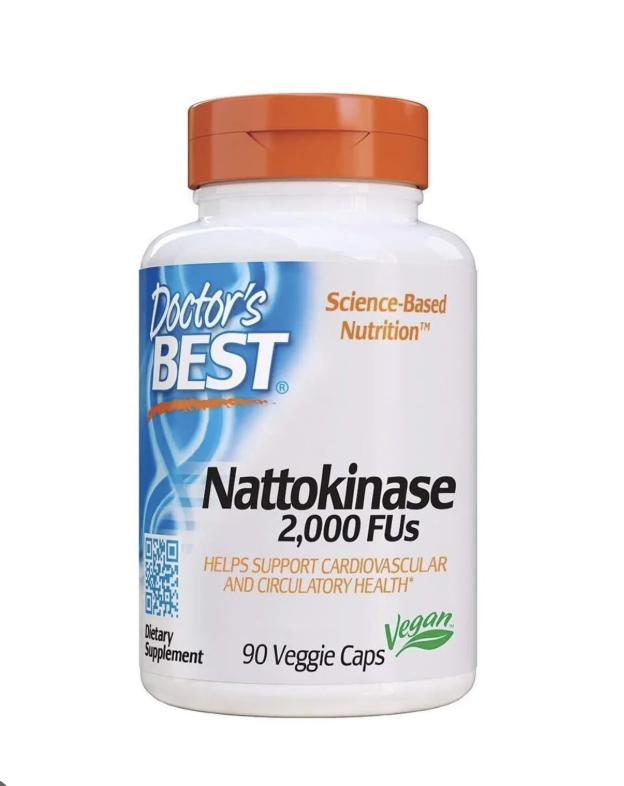
NATTOKINASE is the most overlooked supplement on Earth.
It dissolves blood clots, reduces blood pressure, and optimises lipid profiles. Some people use it to recover from "jabs."
Here's everything you need to know about it: 🧵
Andrew Huberman has studied for 20+ years about:
- Sleep
- Brain function
- Human behavior
His podcasts taught me some stunning facts about my body…
Here are 7 mindful hacks that will shock you ↓
I am not a follower of carnivore diet (big fruit and vegetables consumer here) but I have observed many friends go from obese to really lean, strong & w/healthy blood profiles following the approach I describe here & @paulsaladinomd comments on. CICO? yes of course & SATIETY.






![ChrisMMHealth's tweet photo. STRESSED OUT? 🚨
TOP 5 Stress lowering supplements!
[Backed by Science! 🧪] - a thread 🧵
(Bookmark Post) https://t.co/vROdUxdqLL](https://pbs.twimg.com/media/G3XKr0bXQAATpkz.jpg)