Sorry but Germany leaving Adidas for anyone but Puma is just wrong. If you have one of the premier sports brands built at home, your national kit should come from there!
new yorker verschulden sich um das zu essen was ich mir in die futterluke stopfe wenn ich 10min lang vorm kühlschrank dissoziiere und absolut nichts anderes essbares gefunden hab
@ThirdPosition88 Newsflash they aren’t Muslims and considered heretics & non-muslim. They are closer to Christianity in their beliefs and were set up by the British in the late 19th century to cause division amongst Indian Muslims
Very much a product of empire
https://t.co/oCW9TslLmL
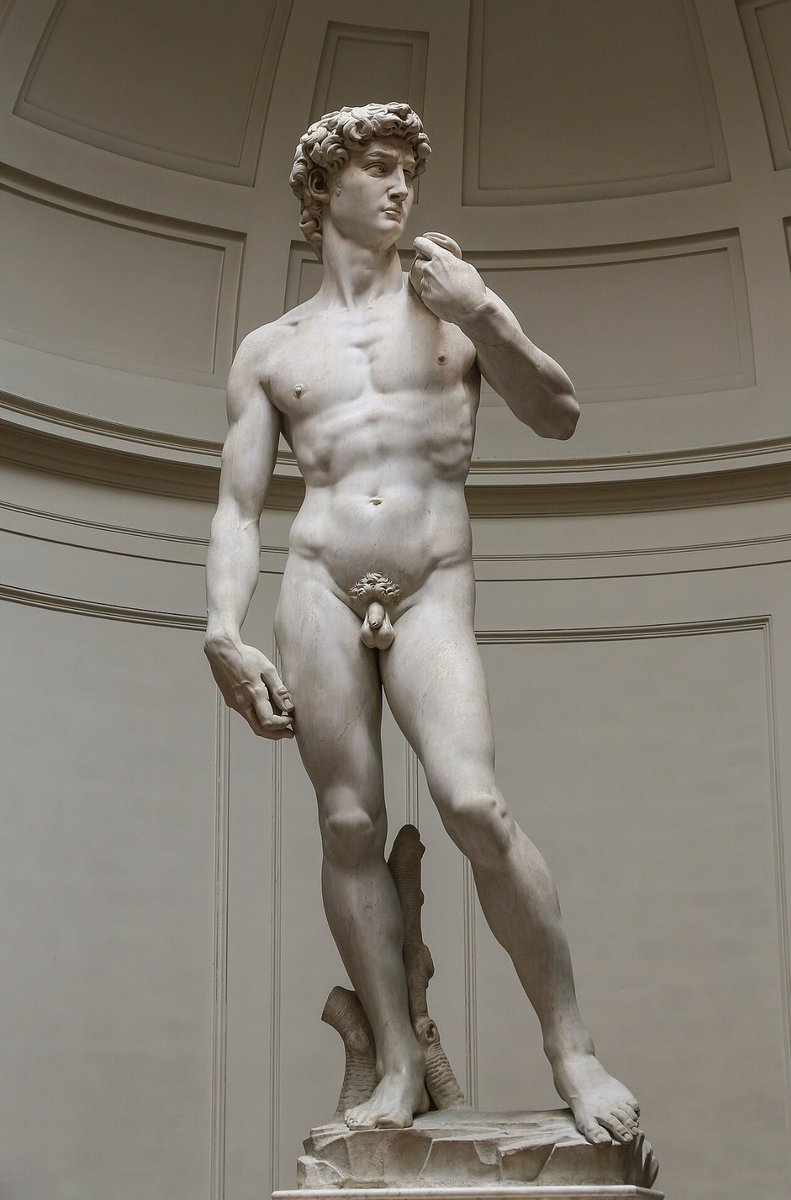
Both of these statues consumed three years of a human life.
One began as a ruined block of Carrara marble that two earlier sculptors had already abandoned as hopeless. A twenty-six-year-old from Florence built a wooden enclosure around it so no one could watch, then spent those years in near-solitude, sleeping in his clothes, eating little, striking the stone until a figure emerged that Giorgio Vasari declared superior to every statue, ancient or modern, Greek or Roman. David is caught in the second before he steps toward Goliath. The sling is still hidden. The brow is furrowed. The veins stand out on the hand that will soon send the stone. He is not celebrating victory; he is gathering himself for a fight he has no right to win. He is the human form rendered so exactly that five centuries later the marble still seems warm. He was made for a cathedral and later placed before the palace of a republic that understood beauty as a public duty and proportion as a kind of moral grammar. Michelangelo said the figure was already inside the stone; he only had to set it free.
The other was conceived on a screen, printed as a small model, then enlarged, cast in bronze, and coated in a pigment ground from lapis lazuli. It shows a nameless young woman in a tight blue dress and platform heels, jewellery catching the light, one leg thrown forward as if she is late for something. The artist is careful to tell us she is not a heroine, not a saint, not even a specific person. She is “everywoman.” She is the passer-by. She is the present tense walking into a future that apparently asks nothing more of us than recognition.
Stand them next to each other and the distance between 1504 and 2026 becomes visible in a single glance.
We once set our highest plinths with images of men who had looked a giant in the eye and of gods who had looked back. We carved bodies that remembered they were made in an image greater than their own. The squares of our cities were arguments for the possibility of the soul. Now the same squares are asked to celebrate the unexceptional self, dressed for the evening, striding past Nelson’s Column on her way to whatever comes next. The National Gallery stands directly behind the new figure, its rooms still filled with the very tradition this statue quietly declines to continue.
A civilisation reveals what it worships by what it chooses to raise above the heads of its citizens. When the gaze that once travelled upward - toward the divine, toward the heroic, toward an ideal of the human form so precise it still silences rooms - is redirected sideways toward the crowd and called “representation,” something more than taste has changed. The ordinary and the unlovely are never merely decorative. They instruct. They tell the young there is no longer anything higher to become, only something more visible to be.
Michelangelo found David already living inside the marble. We have forgotten how to look.