Praggnanandhaa has become the first Indian player to win the Norway Chess Tournament, marking a historic achievement for Indian chess. This milestone is a proud moment for Indian sports and a testament to the country’s growing talent and strength on the global stage.
#RPraggnanandhaa #NorwayChess #ChessChampion #IndiaProud #ChessIndia #PrideOfIndia
A new eye on the cosmos is almost ready to soar!
#NASA’s #NancyGraceRoman Space Telescope is now set to launch on 30 August 2026 - eight months ahead of schedule.
With its powerful wide-field infrared vision, #Roman will reveal vast, uncharted regions of the #universe, unlocking new mysteries of #darkenergy, #darkmatter, and distant worlds.
Every launch expands humanity’s horizon. Every discovery reminds us that the universe still has countless stories waiting to be told.
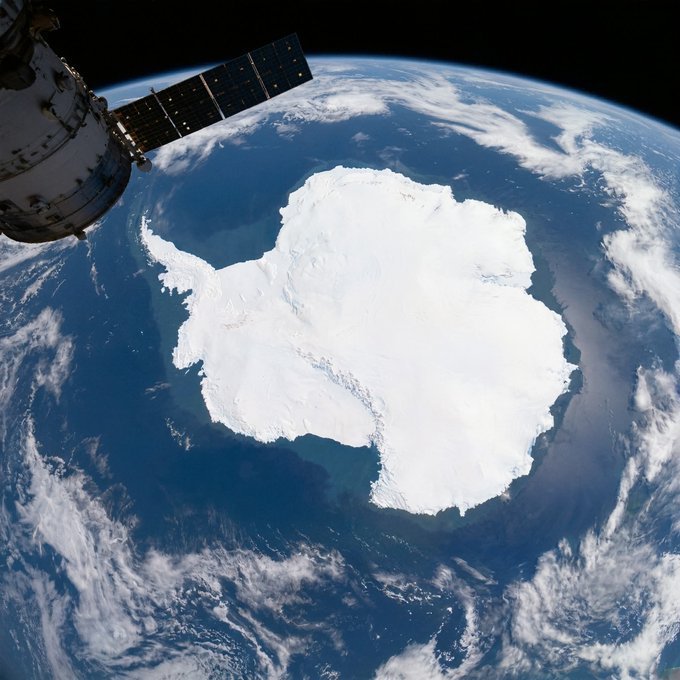
Antarctica as Seen from Space
A frozen titan floating in infinite blue. From orbit, Antarctica reveals its true scale: a colossal white continent holding nearly 90% of all the ice on Earth. Larger than the United States and Mexico combined, it sits in majestic isolation, ringed by the vast, deep-blue Southern Ocean that stretches endlessly in every direction.Up here, every road, research station, and footprint of humanity vanishes completely. The planet’s southern crown looks exactly as it has for millions of years — raw, pristine, and utterly indifferent.That’s the quiet power of Antarctica. It was here long before us.
And it barely registers that we ever showed up.A breathtaking reminder of how small we are against the grandeur of our own world.
Roman just can't wait to start seeing stars!
The Nancy Grace Roman Space Telescope is now scheduled to launch August 30 from NASA's Kennedy Space Center.
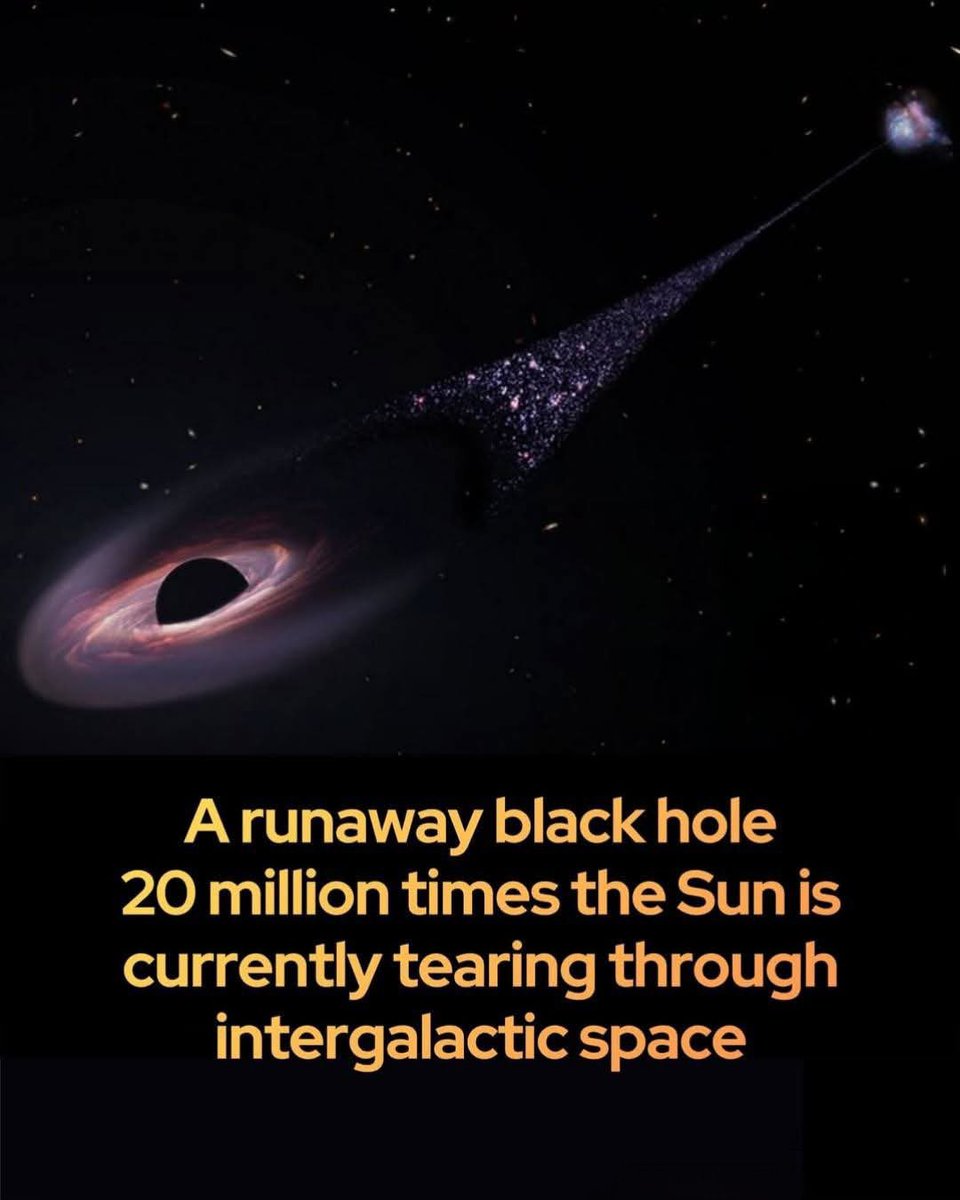
🚨 Scientists just found a rogue supermassive black hole leaving a 200,000-light-year trail of stars as it speeds through space.
That’s as long as the Milky Way galaxy.
A rogue supermassive black hole, estimated to be 20 million times the mass of our Sun, is tearing through intergalactic space at breathtaking speed—fast enough to travel from Earth to the Moon in just 14 minutes.
But rather than destroying everything in its path, it's sparking new life. As it speeds through a cloud of diffuse gas, it compresses and cools the material, igniting a trail of newborn stars that stretches an astonishing 200,000 light-years—nearly double the diameter of our Milky Way. This brilliant wake of hot, young blue stars may be the first evidence of a runaway black hole creating rather than consuming.
Astronomers believe this cosmic bullet was launched during a chaotic interaction between three supermassive black holes—an intergalactic billiard game that hurled one black hole out of its host galaxy. The phenomenon was discovered accidentally while researchers were reviewing Hubble images, mistaking a faint streak for a glitch until further analysis revealed a dense stellar stream and a displaced galactic core. This discovery opens a new window into the life cycle of galaxies and black holes, raising the possibility that such cosmic runaways—and their luminous trails—may be more common than we ever imagined.
Source: NASA. (2025). Hubble Sees Possible Runaway Black Hole Creating a Trail of Stars.
India has now reached 100 Ramsar Sites with the addition of Jai Prakash Narayan Bird Sanctuary (Surha Tal), a testament to the country's growing commitment towards conservation and sustainable development
A clear vision and sustained action can create lasting change!
#100RamsarSites #WorldEnvironmentDay
🚨 Many things that are currently scientific facts — black holes, gravitational waves, antimatter— began as mathematical predictions.
We lacked the technology to confirm their existence. As such, some discoveries literally take centuries.
Black holes, theorized in 1916 by Karl Schwarzschild, weren’t taken fully proven until Cygnus X-1 revealed one’s powerful pull in 1971.
Gravitational waves, predicted by Einstein that same year, remained elusive until 2015, when LIGO detected the space-time ripple of two black holes colliding.
The same patience paid off with the Higgs boson, predicted in 1964 and finally confirmed in 2012 after a half-century and the construction of CERN’s colossal collider.
And antimatter, foreseen in Paul Dirac’s 1928 equations, appeared just four years later when Carl Anderson discovered the positron.
These stories remind us that science is a long game, often waiting decades for the right tools—and moments—to reveal the universe’s truths.
NASA briefly directed astronauts on the International Space Station to stand by in a SpaceX capsule while an ongoing leak was assessed. https://t.co/tLIwrBo5Ep
This World Environment Day, #IPCC’s Climate Change 2023: Synthesis Report highlights:
Conserving ~30-50% of the Earth’s land, freshwater & ocean will help ensure a healthy planet.
➡️ https://t.co/zAMzd12lR7
#NowForClimate
Forests help absorb carbon, regulate temperatures and strengthen resilience against climate impacts.
Protecting them means protecting one of our strongest climate allies.
Find out more: https://t.co/e2SY5xwAG5
#NowForClimate#WorldEnvironmentDay
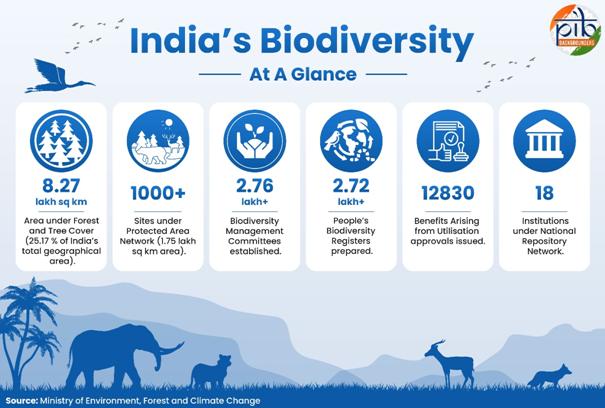
India’s Biodiversity: Commitments and Achievements
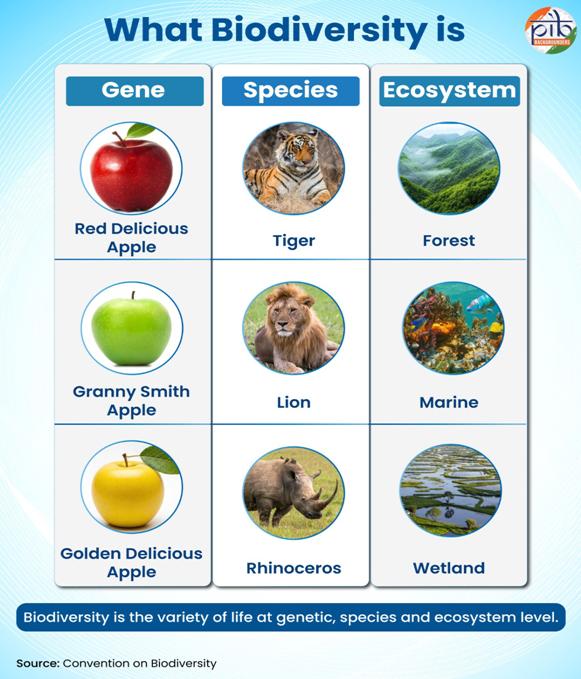
Biodiversity is central to India’s environmental and development priorities. It supports food security, livelihoods, climate resilience, and ecological balance. India’s forests, wetlands, mountains, coasts, deserts, grasslands, and marine ecosystems sustain diverse species and communities. Millions of local communities depend on these natural resources for daily life.
India continues to consrerve its natural capital and biodiversity commitments through policies, institutions, and community participation aligned with global frameworks. Through these efforts, India contributes to global biodiversity goals while strengthening conservation at the national and local levels. India’s approach emphasises local stewardship, recognising that community-led action is essential for achieving broader biodiversity outcomes.
Over the past decade, India has adopted an integrated approach to biodiversity conservation that combines scientific management, habitat restoration, species recovery programmes, and community participation. Significant efforts have been made to expand protected areas, strengthen wildlife monitoring, restore degraded ecosystems, and promote sustainable use of biological resources.
These initiatives have enhanced ecological resilience, supported local livelihoods, and reinforced India's position as a global leader in biodiversity conservation. By aligning conservation goals with sustainable development objectives, India is working towards securing its natural heritage for future generations while fostering inclusive and environmentally responsible growth.
Read here: https://t.co/z2Bfk51gER
#WorldEnvironmentDay #NowForClimate #PositiveClimateAction @moefcc
From mines to batteries. India is closing the loop.
₹3,000 Cr incentive scheme incoming for lithium & nickel processing. ⚡️🔋
Ministry of Mines is set to unveil a ₹3,000 Cr incentive scheme for lithium & nickel processing.
This strategic push aims to build a domestic EV battery supply chain, slashing heavy import dependence (especially from China). Lithium plants need min 30,000 MT capacity, nickel 50,000 MT.
Targets? 30% electric car penetration + 80% for two-wheelers by 2030 (currently just 6% & 9%).
Implications:
→ Reduced reliance on foreign supply chains
→ Boost to local manufacturing & jobs
→ Stronger positioning in global battery metals race
→ Catalyst for downstream battery & EV makers.
This is how India builds real industrial muscle. The EV story just got stronger.
@MinesMinIndia@FinMinIndia
Via @Reuters
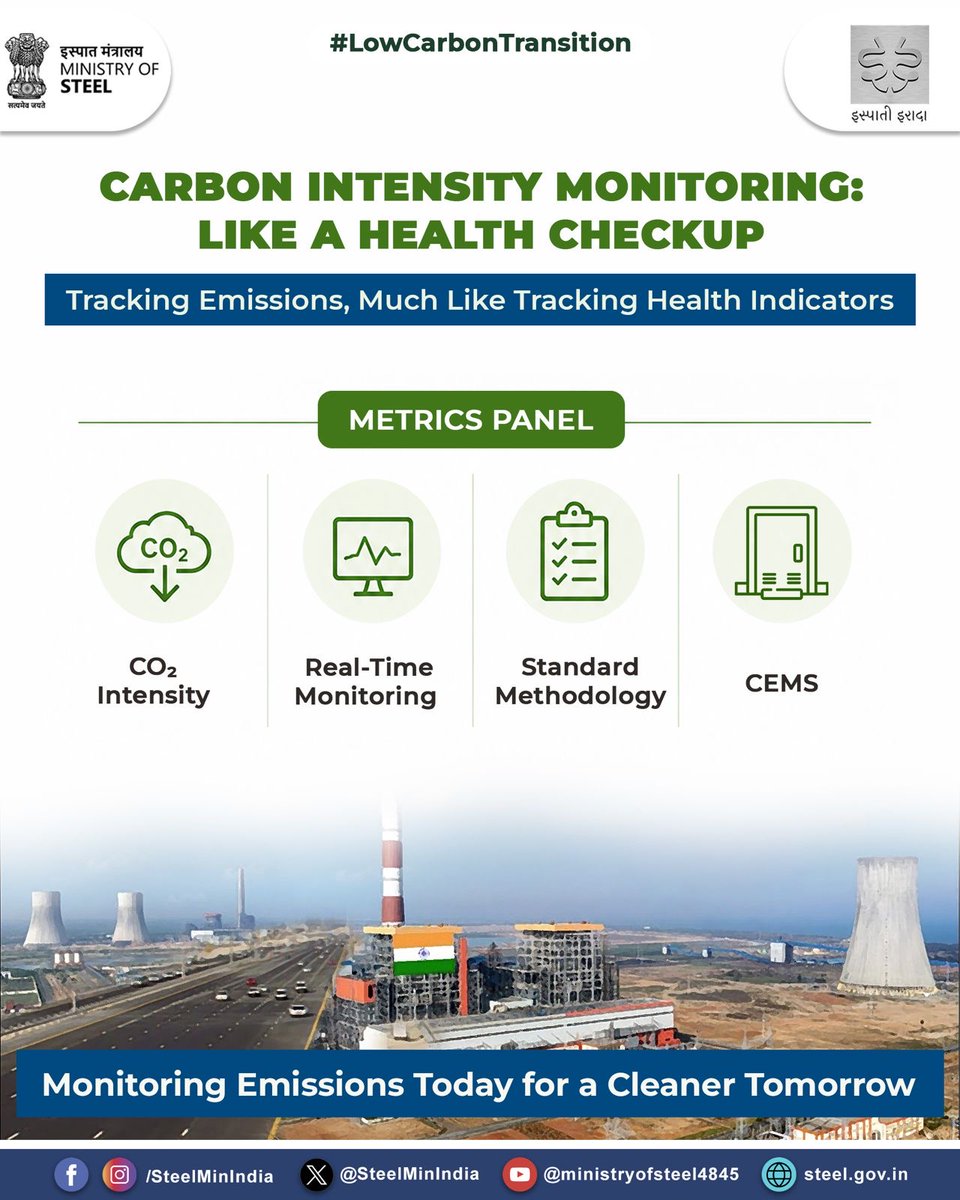
This concept uses the analogy of a “health checkup” to simplify the idea of carbon intensity monitoring in steel plants.
Just like regular health monitoring helps track human well-being, tools like CEMS, real-time monitoring, and standard methodologies help industries track and manage emissions more effectively.
Because complex industrial processes become easier to understand when explained through familiar everyday concepts.
Carbon Intensity Monitoring = The Health Checkup
Monitoring Emissions Today for a Cleaner Tomorrow.
#LowCarbonSteel #CarbonIntensity #CEMS #Decarbonisation #SteelSector #IndustrialTransformation #NetZero #SteelInnovation #ClimateAction
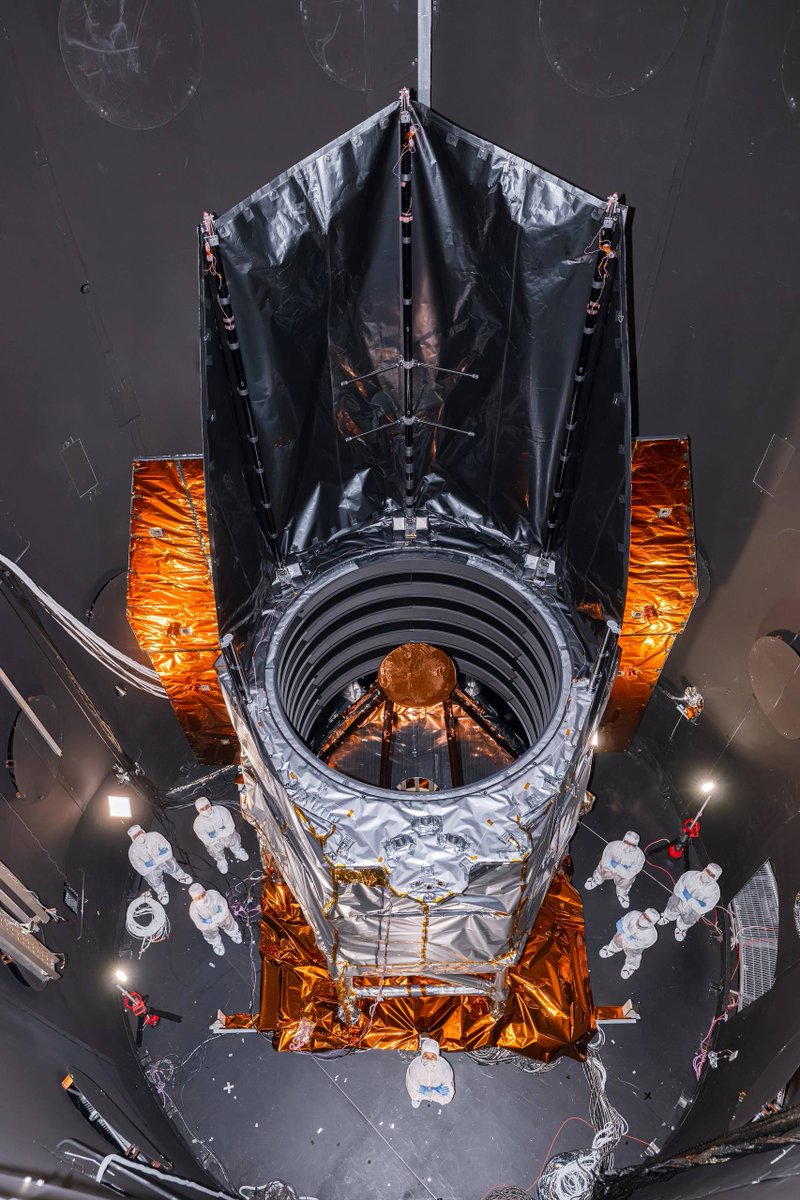
NASA has announced the launch date for the Nancy Grace Roman telescope: August 30th! 🚀
This is eight months ahead of the original schedule. The team is now completing final preparations.
The telescope is already being prepared for transport to the Kennedy Space Center, where it will undergo the final stages of launch preparation, including a series of power tests and a launch dress rehearsal, during which the observatory's tanks will be filled with 1,100 liters of hydrazine.
India's commitment to Biodiversity 🌍🌱
Conserving nature in line with the Global Biodiversity Goals for 2030
✴️Protecting Ecosystems
✴️Restoring Degraded Landscapes
✴️Empowering Communities
✴️Securing a Sustainable Future
#NowForClimate#PositiveClimateAction@moefcc
2/4
✳️Through MISHTI, India is restoring and expanding mangrove ecosystems to strengthen coastal resilience, support livelihoods and protect biodiversity
✳️It supports stronger coastlines, biodiversity, livelihoods, blue economy growth and India's climate goals - all through one integrated approach
✳️From Gujarat to Andaman & Nicobar Islands, #MISHTI is bringing together 13 coastal States and Union Territories under a common vision for resilient coastlines
#NowForClimate
In the chaos of conflicts, innocent children often pay the highest price.
It's time to build a world where every child can grow and thrive in peace.
Let's unite to protect children from violence, abuse and exploitation.
🚸 https://t.co/0M26a3gk3D
#NotATarget#ActToProtect
SpaceX’s literally destroyed the cost to orbit so much even you can afford the ticket to ride on it in the future
- For decades, launch cost to low Earth orbit was roughly $18,500 per kg
- Falcon 9 brought that down to around $2,700 per kg
- Falcon Heavy pushed it closer to $1,400 per kg
➝ Now Starship is targeting a 99%+ cost reduction
When the cost of reaching orbit falls by orders of magnitude, space stops being a rare government program and starts becoming industrial infrastructure
Starlink, orbital manufacturing, lunar cargo, AI compute, and Mars all depend on one thing:
getting cost to orbit as close to zero as possible
That is why Starship matters so much....It is not just a bigger rocket
It is the cost reset that opens the next economic frontier