Defending Digital Freedom in India since 2010. We promote Open Knowledge, Free Speech, Online Privacy, Innovation & Equality - @IFEX Member - Join our force.
16 years. Countless battles. One mission: your freedom online.
Since 2010, https://t.co/X7ipfsWjp2 has stood in the courtrooms, the policy rooms, and on the frontlines to defend your right to speak, to privacy, and to a free internet. None of it would have been possible without you.
But the fight isn't over. It's only getting harder.
We need your support to survive this fight. Every contribution keeps digital rights alive in India.
Donate here: https://t.co/DhFd5NKnCj
#digitalrights
#India 🇮🇳 @SFLCin says there is a need for a comprehensive generative AI framework & added that it should address "training data, consent, accountability, platform responsibility, transparency, & has redressal mechanisms, while still enabling innovation."
https://t.co/AyGnbXLQdG
We are pleased to announce that https://t.co/X7ipfsWjp2 will be attending DRAPAC'26 (Digital Rights in Asia-Pacific), taking place from 8-10 June 2026 in Manila, Philippines.
Join us for conversations on digital rights, privacy, internet governance, and technology policy with stakeholders from across the Asia-Pacific region.
If you're attending DRAPAC'26, we look forward to connecting with you and exchanging ideas to strengthen digital rights and freedoms in the region.
@APC_News@EngageMedia@FMA_PH@dakila_ph
We are pleased to announce that @Orendrasingh, Tech Lead at https://t.co/X7ipfsWjp2, will be speaking at @hillhacks 2026, taking place from 3–7 June 2026 in Bir.
Orendra will deliver a talk titled "Safeguard Digital Rights Beyond Policies," where he will discuss the importance of protecting digital rights in practice and share insights from https://t.co/X7ipfsWjp2’s work defending digital rights and online freedoms in India.
If you’re attending Hill Hacks, join the session and be part of the conversation on the future of digital rights.
#digitalrights #privacy
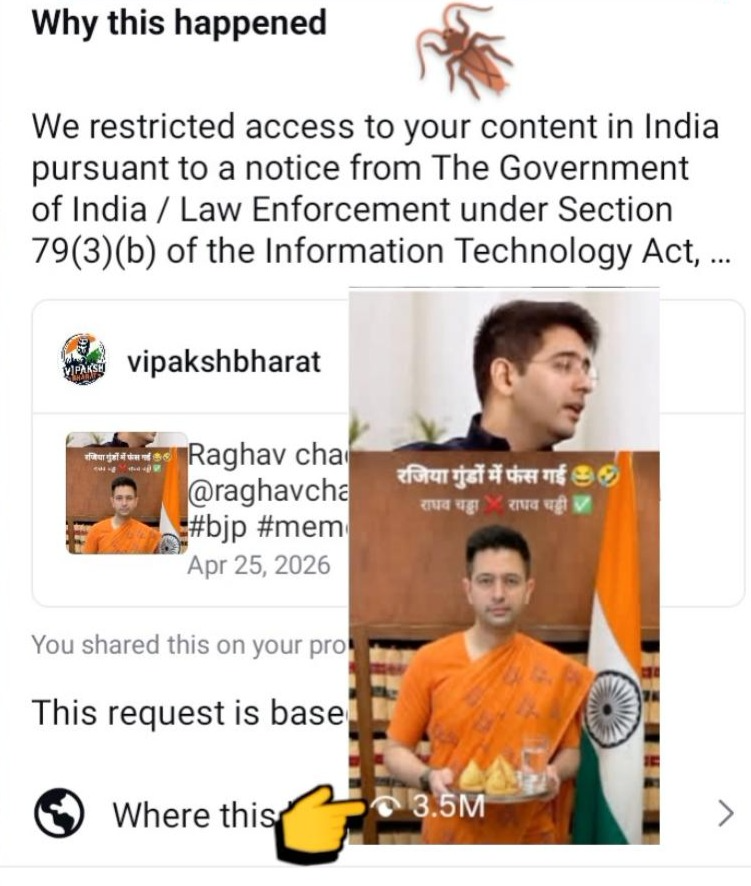
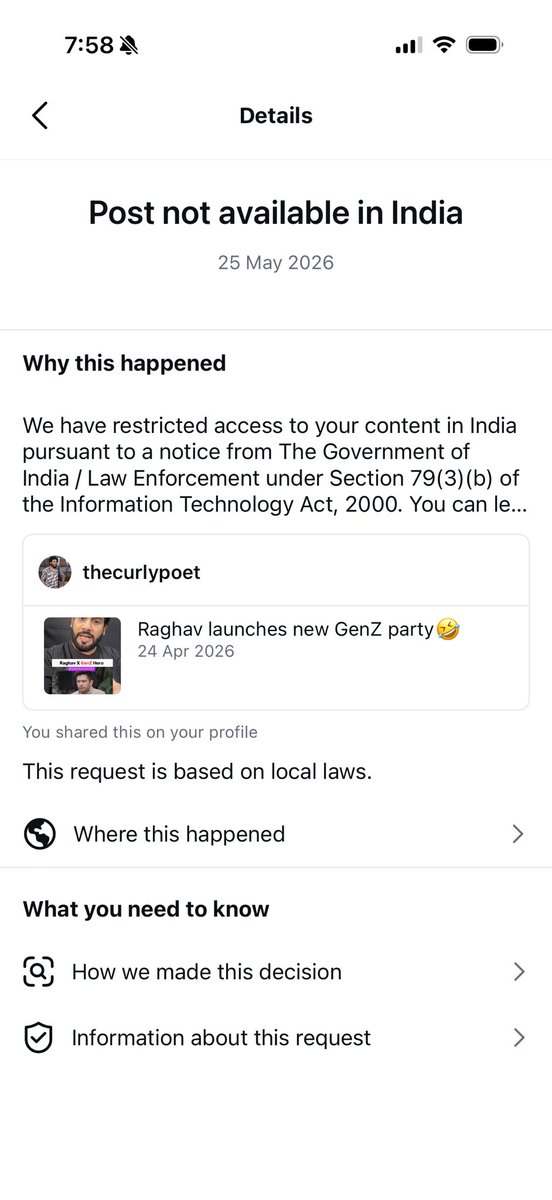
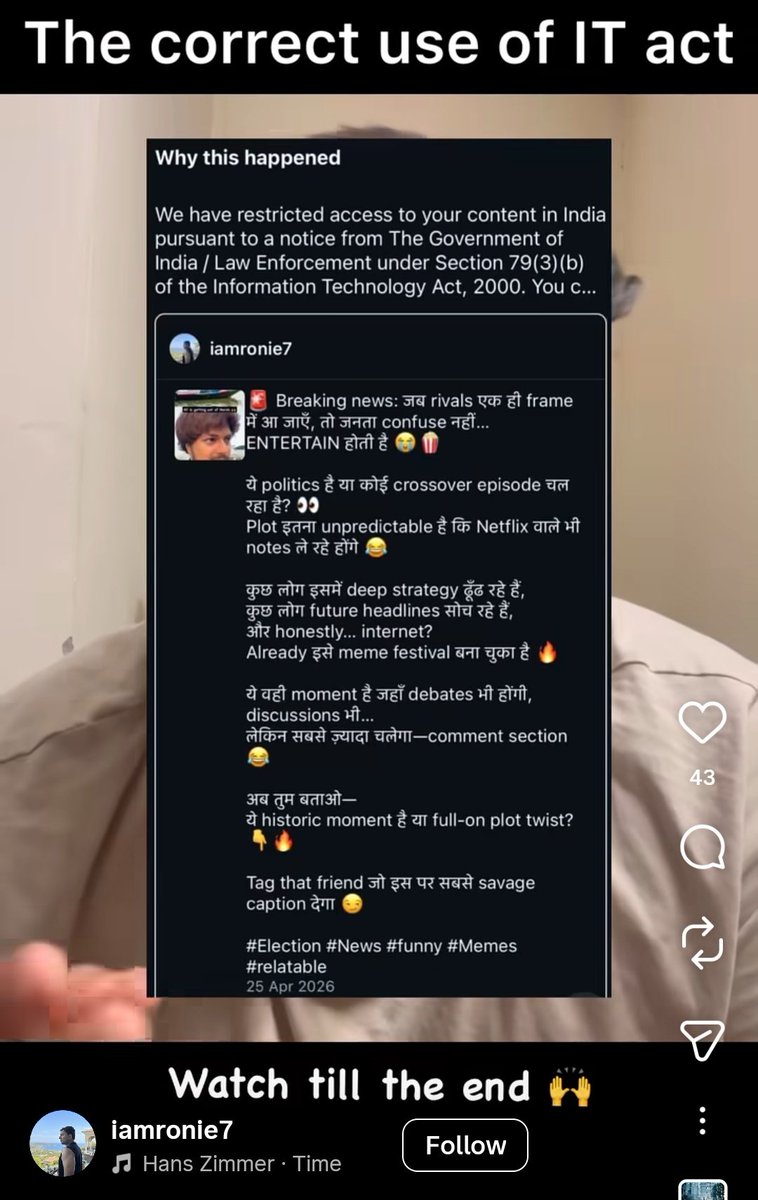
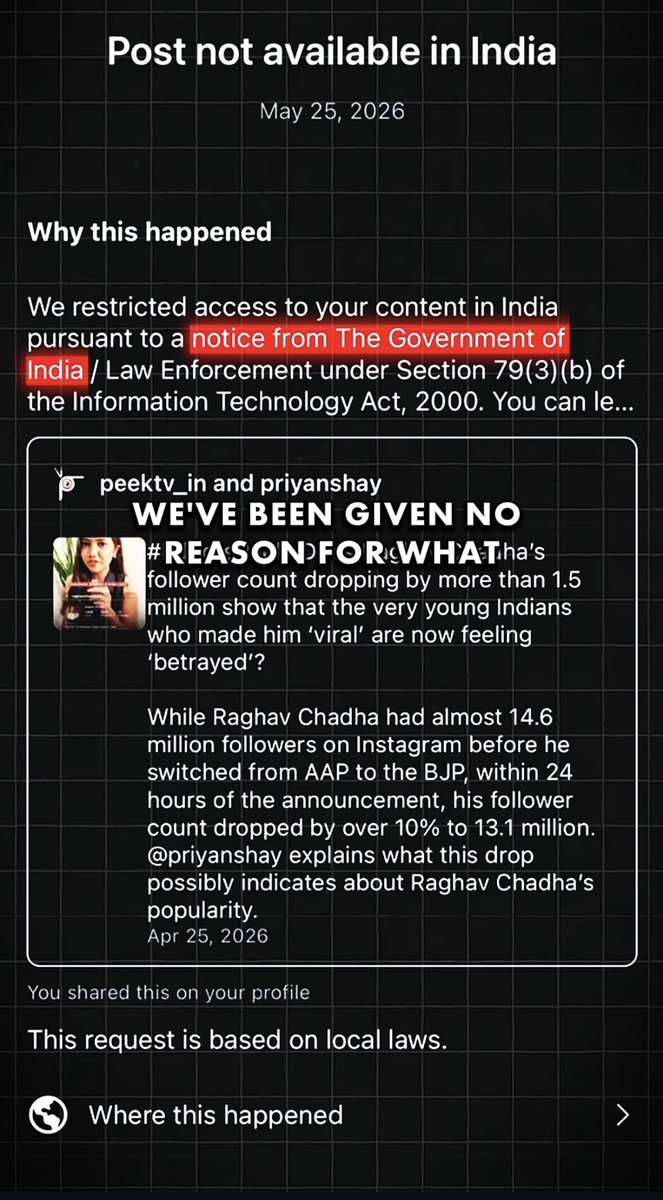
https://t.co/R7wWHi6iXx has written to major social media platforms, including Meta, X, and Google, seeking greater transparency regarding content takedown and account restriction orders issued under Section 79(3)(b) of the Information Technology Act, 2000.
#FoE#freespeech
Under the Information Technology Act, 2000 and the applicable rules, confidentiality obligations expressly apply to blocking orders issued under Section 69A of the Act read with Rule 16 of the Information Technology (Procedure and Safeguards for Blocking for Access of Information by Public) Rules, 2009.
However, no equivalent statutory confidentiality requirement exists for actions taken under Section 79(3)(b) of the Information Technology Act, 2000 read with Rule 3(1)(b) of the Information Technology (Intermediary Guidelines and Digital Media Ethics Code) Rules, 2021.
#freespeech #FoE
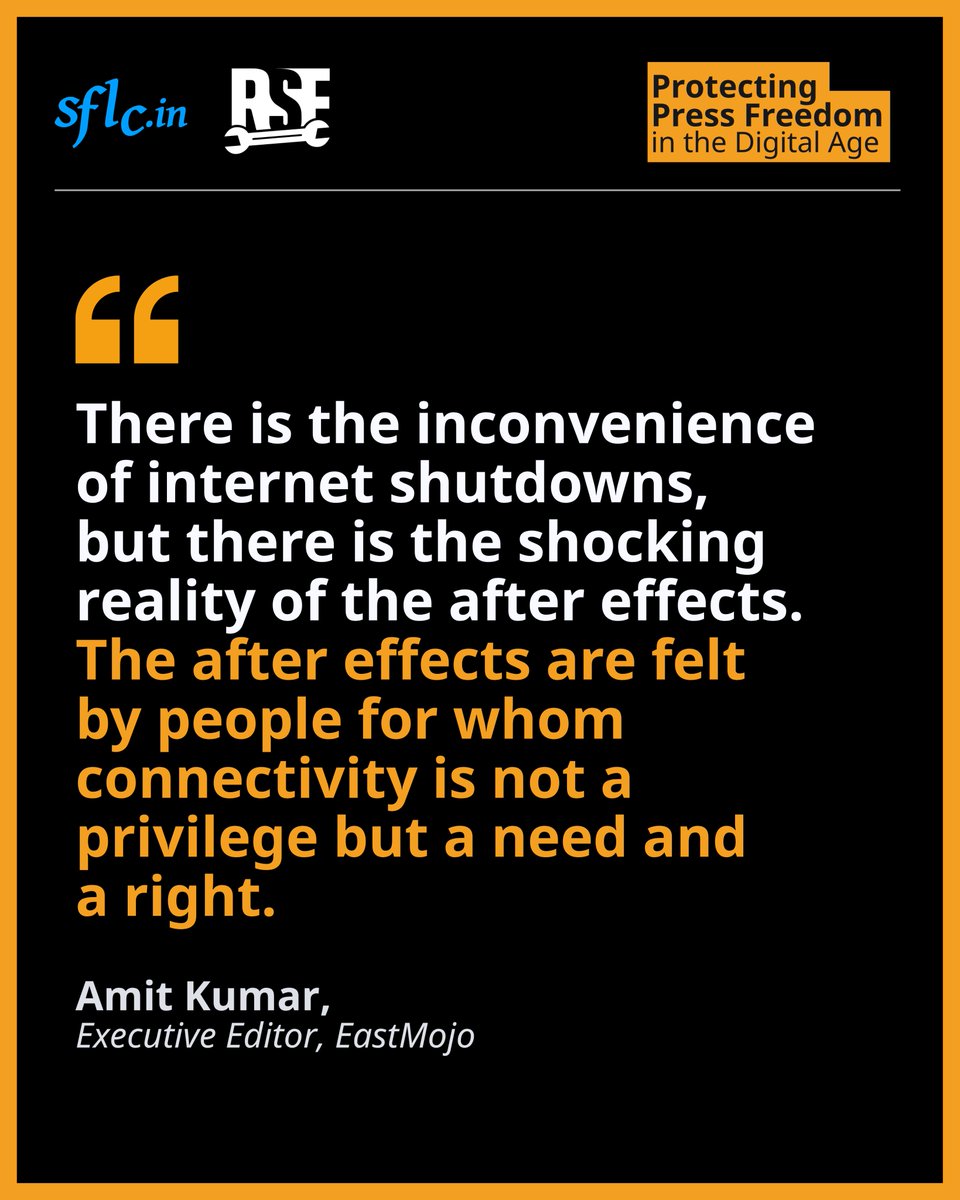
On 30 May 2026, the Haryana government suspended mobile internet, bulk SMS, and dongle services within a 1-km radius of Faridabad's NIT Zone, citing public order concerns during a demolition drive.
#internetshutdown#KeepItOn#LetTheNetWork@accessnow
https://t.co/X7ipfsWjp2 in the news this week! 🗞️
From a secure box to a plain envelope that anyone can open and read.
On @the_hindu's podcast, our founder @mishichoudhary joins @VibhaBMadhava to discuss what @Meta's decision to discontinue end-to-end encryption for @instagram messages means for the future of digital privacy.
Listen to the full podcast here: https://t.co/JNJlm5tjiy
#privacy #E2EE #encryption
@globalencrypt
Meta has ended Instagram’s encryption on May 8, 2026. In this episode of the In Focus podcast, Mishi Choudhary talks to @VibhaBMadhava the privacy implications.
https://t.co/mSwD8ygNpz
There have been numerous instances where UID data has been leaked due to a multiplicity of factors, including lack of a governing data protection framework, weak cybersecurity and privacy safeguards as well as inadequate control over data protection and security practices of third parties.
India’s mission to achieve digital sovereignty through DPI resulted in intensifying the same divides that technology was meant to bridge. Pushing the adoption of digital systems without providing citizens with comprehensive public education on their risks, safeguards, and effective remedies is likely to cause more problems down the line.
#DPI #Indiastack
(4/4)
India began its foray into developing the foundations of its DPI with the institutionalisation of the Unique Identity Project (UID). It aimed to provide each Indian citizen with a unique digital identity authenticated based on biometric data.
Despite the Supreme Court of India’s ruling in K.S. Puttaswamy v. Union of India (2019), UID has been made de facto mandatory for obtaining food rations, opening a bank account, or for enrolling a child in a school.
#DPI #Indiastack
(2/4)
But UID has been subject to numerous controversies:
- No public transparency in development and deployment.
- Multiple instances of biometric verification failures.
- Exclusion of people from social welfare benefits.
Who was supposed to benefit from such digital welfare technologies, if not the people and communities who need them the most? More importantly, what strategies are being considered to mitigate the amplification of technological exclusion if artificial intelligence is integrated within India’s DPI matrix?
#DPI #Indiastack
(3/4)
Conversations on integrating AI systems into India’s DPI model have already begun. The majority of the population in India still does not possess the same level of digital literacy and access to the internet and technology. It has become crucial to first understand the core problems that persist for people at the receiving end.
Read our blog ‘DPI: India’s pipe dream for digital inclusion & sovereignty’: https://t.co/t6qaPsVBaL
#DPI #Indiastack
(1/4)