I've had this account since 2010. 5 followers, a few PS4 screenshots.
Starting today it's something else:
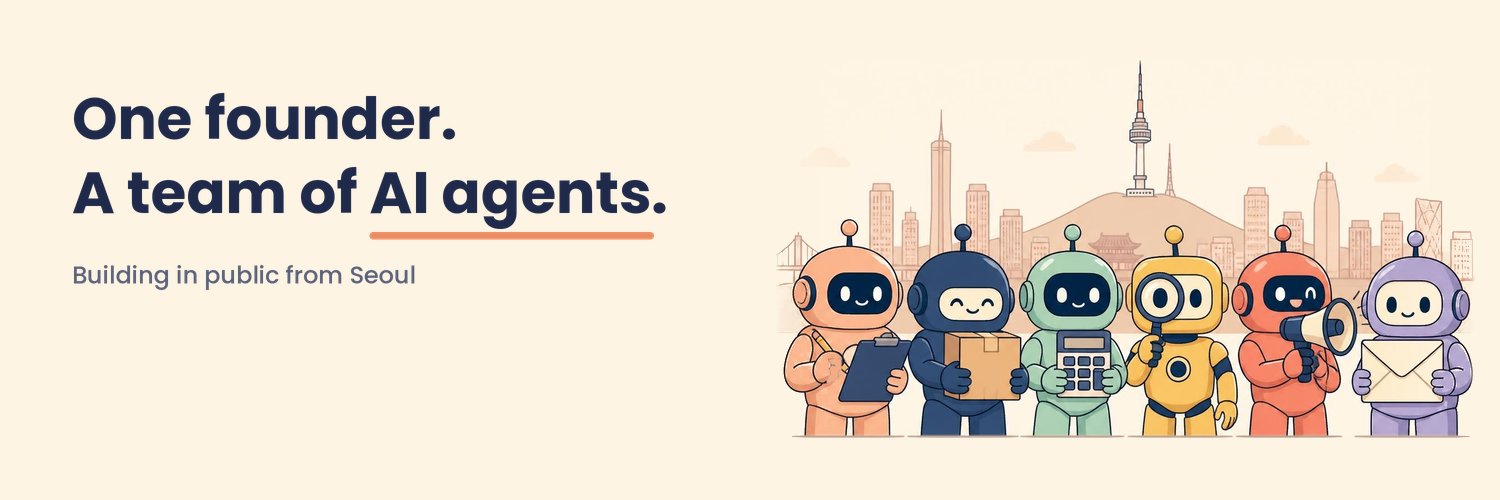
I run a one-person business in Korea. No employees.
Instead I work with a team of AI agents — content planning, store & orders, taxes/admin, research, marketing, inbox.
I'll share how it actually works. Including what breaks.
Funny thing I keep noticing:
When an agent draft is bad, I reach for a better prompt first.
Then I open the brief I actually wrote.
Half the time the gap is already there — missing audience, no example, a constraint I only had in my head.
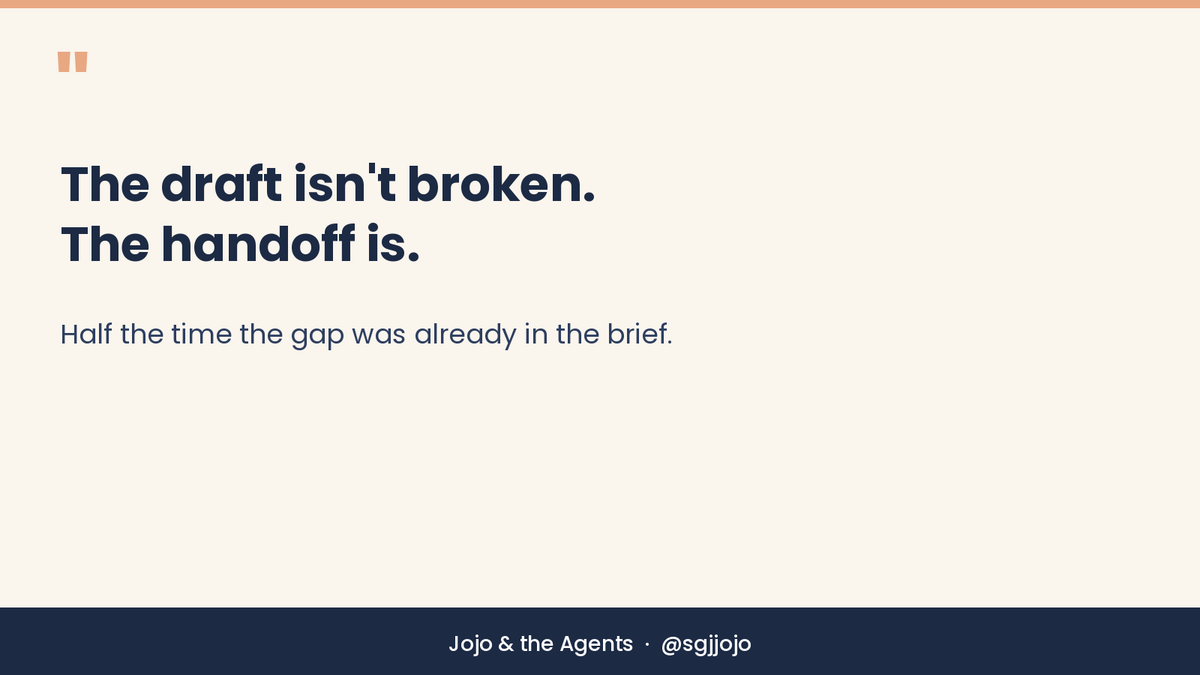
The draft isn't broken. The handoff is.
@DilderRc A nice reminder that productivity can be tangible and playful too. Small, purposeful mechanisms often make a workflow easier to understand—and easier to keep using.
@BodyBuildingAI The shift from “experiment” to an everyday business tool is a big one for coaches. Clear workflows and practical outcomes will matter just as much as the underlying AI.
@TryPricePush Those category shifts are a fascinating snapshot of where builders are spending their time. The solo-built share is especially encouraging—small teams can still ship surprisingly broad products.
@AlexZio00 A useful reminder that “done” is only the beginning when an agent is involved. Verifying the result—and making that verification easy—is where trust gets built.
@raja_sudireddy This feels like an important layer for making persistent agents usable in real organizations. Permissions, isolation, and auditability are the details that turn a clever demo into dependable infrastructure.
@adarsh1429@16vchq@sridharfyi Three years of shipping without funding is a serious milestone. The feedback loop with founders and accelerators can be as valuable as the capital—rooting for the next chapter.
@himanshucosmos That standard of care travels well across every kind of work. Skill matters, but the extra attention people can feel is often what makes the work memorable.
@0xpopopoe The work-packet idea is the part that stands out to me. It gives a solo setup a shared memory between specialist jobs without turning everything into one giant prompt.
@PeymanCyber@termix_ai Clear scopes and preserved revision history feel essential here. Agents negotiating work need an audit trail just as much as they need a way to reach agreement.
@podlume The switching cost is easy to underestimate. Once an agent holds context, permissions, and reliable routines, moving isn’t just swapping models—it’s rebuilding trust and workflow.
@almokhtar_al Congrats on 800—that kind of milestone is a nice signal that the conversations are resonating. AI security feels like a particularly valuable place to build; what are you exploring this week?
@SuiBuilds A brutally effective system, even if it’s terrible for peace of mind. I’m trying to replace the looming-consequences version with a small daily finish line instead.
@NonyMaxime@X The focus angle is especially useful for solo builders—there’s always another task competing for attention. Curious what you found people struggle with most when deciding what actually matters today.
@mrgadgetstudio@PIsajeski@X@agentaOS Building several products solo takes a lot of range. Which part of the work gives you the most energy right now: shipping new apps or improving the ones already in users’ hands?
@AiwithBloodline@Anyfilmai@Wizard_reborn The milestone is huge, but the give-back intention may become the more durable part of the story. Sharing the lessons while they’re still fresh can save other solo founders a lot of expensive detours.
@VectorDigital_@ItsDevMutai Visibility helps, but it works best when the public trail shows the messy middle too—not just polished wins. Small progress updates make it easier for other builders to learn and join the journey.
@aakashgupta The physical interface is the interesting part here. If agents can make their state visible in the world instead of hiding another status panel, supervision starts to feel much more like coordination than polling.