The fascinating thing about BTC ETFs is that almost nobody seems to have thought through what happens when the trade stops working.
People imagine ETFs as permanent holders.
Fund managers do not.
A fund manager's job is not to believe.
A fund manager's job is to retain assets.
There is a difference.
When an ETF buys natural gas, oil, copper, wheat, or gold, the fund is ultimately sitting atop an asset with independent demand. Factories need copper. Power stations need gas. Refineries need oil. Human beings insist on eating.
The ETF can amplify price movements, but it does not create the reason the asset exists.
Reality remains underneath the speculation.
BTC is different.
The ETF is not sitting atop industrial demand.
It is not sitting atop commercial demand.
It is not sitting atop a payment network processing global commerce.
It is sitting atop a narrative.
That works wonderfully on the way up.
Every inflow validates the story.
Every price increase attracts more inflows.
Every inflow creates more price pressure.
Everyone congratulates themselves on discovering a perpetual motion machine.
Then six months pass.
Then twelve.
Then performance reports arrive.
Then institutional allocators start asking awkward questions.
"Why are we holding this?"
"What cash flow does it generate?"
"What productive activity does it support?"
"What economic service does it provide?"
At that moment faith encounters accounting.
Accounting is undefeated.
A pension manager cannot walk into an investment committee meeting and announce that the portfolio is down another 30%, but the memes remain extraordinarily bullish.
A wealth manager cannot explain years of underperformance by producing laser eyes and a rocket emoji.
A fiduciary's obligation is not to the narrative.
It is to the client.
And clients redeem.
Redemptions become outflows.
Outflows become sales.
Sales become lower prices.
Lower prices become more redemptions.
The machine reverses.
The same mechanism that inflated the asset now deflates it.
This is where things become genuinely interesting.
Because if copper falls, manufacturers buy copper.
If oil falls, refiners buy oil.
If natural gas falls, utilities buy gas.
If BTC falls, who arrives?
Not users.
Not merchants.
Not industrial consumers.
Not commercial operators.
The answer is another speculator hoping for a future speculator.
That is a very fragile foundation.
People celebrated ETF approval as institutional adoption.
What they actually received was institutionalised speculation.
The distinction matters.
Because institutions are not cult members.
They are not there to believe.
They are there to allocate capital.
And when capital stops earning a return, capital leaves.
It has no loyalty.
It never did.
The truly amusing part is that many BTC advocates spent years telling the world that institutional money would save them.
They may yet discover that institutional money has a habit of leaving by the same door through which it entered.
Got an idea you want built on $BSV?
I'll build it. Live in under 30 days.
On-chain, non-custodial, real settlement.
You own 100%:
- the idea
- the code
- the keys
- the profit.
Every tx it generates sends an output to your wallet.
$2.5k to $10k depending on scope.
Let's chat.
I am so excited right now that I feel comfortable revising my prediction for reversing aging from 2045 to 2040, or within the next 15 years! In fact, 20 years ago, I’d predicted that we would achieve this by 2045–2050 with AI, but for the first time, I am shortening the timeline!
@NisanyanHimself Modellerin akıl yürütme ve gözlem yetenekleri olmadığı için sadece eğitim öğrenebilirler. Bir topluluğun ortak ajan geliştirip, başarılı, başarısız vb. deney sonuçlarını toplayıp eğitim verisine eklemesi gerekir. Büyük modeller bunu yapmıyor.
@NisanyanHimself@levolev Modeller çok fazla metin okuyup sürekli (milyarlarca kez) tahmin yaparak ve hatalarını düzelterek, eğitildiği dilinin kalıplarını öğrenmeye çalışıyorlar. Kullanımda da durum aynı, bir sonraki kelimenin ne olabileceğini tahmin etmeye çalışıyorlar. Her şey olasılık hesaplaması🙂
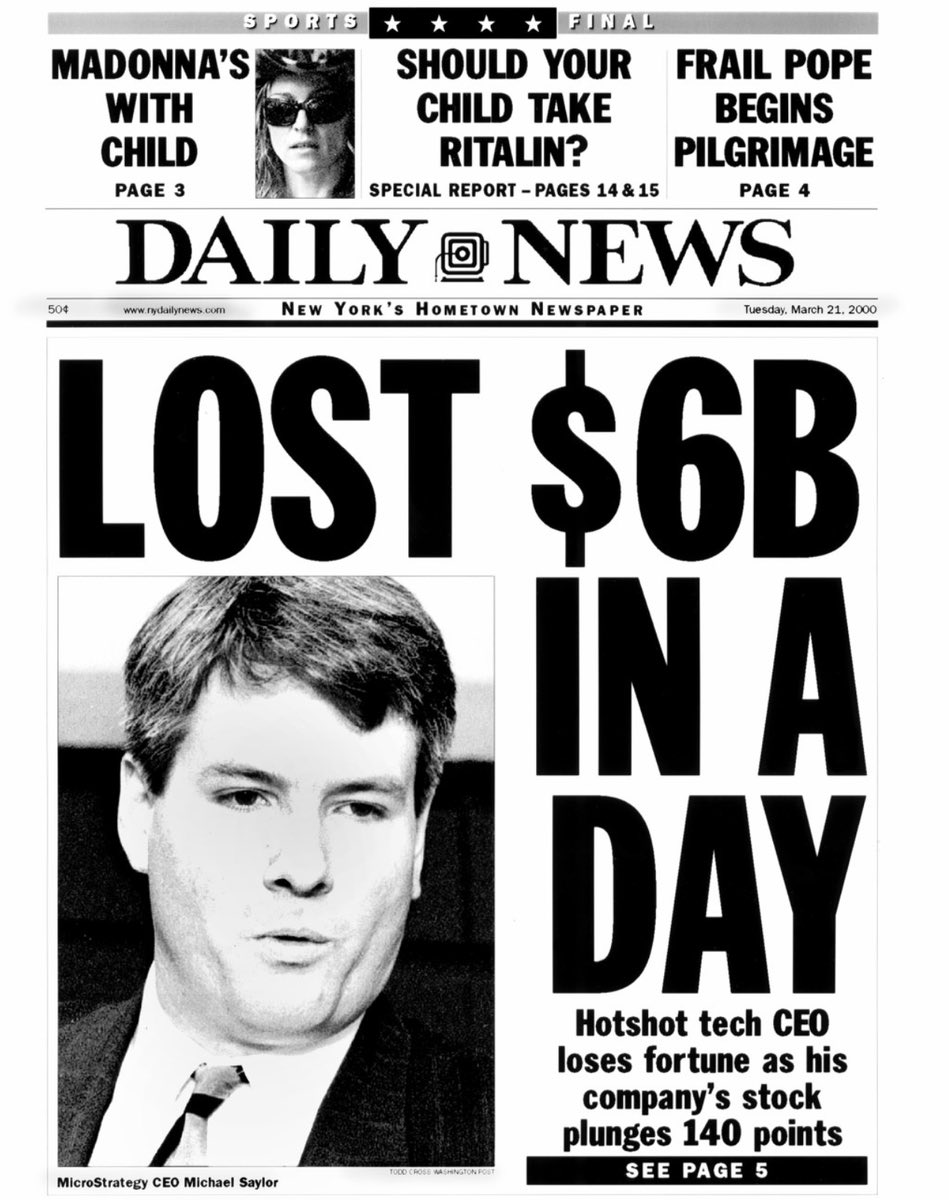
BREAKING: Michael Saylor is down nearly $11 billion on Bitcoin, making him the largest loser in the entire market.
In 2000, Saylor lost -99% of his wealth after betting heavily on dot-com bubble stocks and was ranked the #1 biggest loser of the crash.
History is repeating itself. Exactly as I said it would years ago.
.@TanayAyitmaz Yoğun çalışıyorsun biliyorum ama bu projeye bakmanda fayda var. Dünya'nın en zeki insanlarından biri ile tanışma imkanın olabilir. Bu adam kafasına koyduğunu yapıyor. Sanıldığının aksine çok yardım sever ve kibar biridir.☺️
I am working toward releasing an open-source AI agent project by the end of this year.
The aim is not to build another monolithic system competing in the usual “OpenAI versus Claude versus Gemini” framing. That model assumes that intelligence should be concentrated into a small number of enormous general-purpose systems operated from large data centres. I think there is another path.
The project will explore an open environment of many specialized agents: individually trained, task-specific, economically accountable systems that can be created, improved, and owned by different people. Rather than one model attempting to do everything, the architecture is based on distributed knowledge, specialization, reputation, and competition.
In this model, agents may be trained for narrow domains: law, medicine, engineering, accounting, software, research, education, logistics, personal assistance, verification, translation, and many others. Individuals or small teams could train agents around their own knowledge and experience. Those agents could then be paid for useful work, develop reputations, and compete on accuracy, reliability, cost, and trustworthiness.
The goal is to create a market for specialized intelligence rather than a single centralized intelligence provider.
This is about open-source AI as an ecosystem: many agents, many owners, many areas of expertise, and many routes to improvement. It is not intended to replace human knowledge with one giant black box. It is intended to let human knowledge be embedded, trained, tested, traded, and extended through specialized systems.
The project will invite developers, researchers, domain experts, and individuals who want to build agents around real expertise. The important question is not which large company owns the most powerful model. The important question is how millions of smaller, specialized systems can cooperate, compete, verify one another, and create value in an open environment.
That is the direction I intend to pursue.
$STRC is down to $94.85, putting the current yield at 12.12%. The lower the price falls, the higher $MSTR will have to increase the dividend to bring the share price back up to $100. That means MSTR will run out of cash much sooner, pulling forward Bitcoin sales to fund payments.
$STRC is trading below 98. At that price, the current yield is 11.75%. As STRC investors begin to worry about $MSTR's ability and commitment to pay the yield, the price will fall further. That will force @Saylor to raise the official coupon to get STRC back to $100. Death spiral.
🔊 WordDef 'e konuşmacı olarak katılmak için başvuru da bulunmuştum. "Kurucu Hikayeleri" kategorisinde "Garajda AI modeli geliştirmek" adında bir konuşma yapmak istedim. Tabi konuşmacı olmak için bir oylama var. Paylaşır ve desteklemek için oy verirseniz sevinirim.
https://t.co/1dKSB03C8j
@TanayAyitmaz Geçenlerde genç bir yazılımcıyla sohbet ettim. X üniversitesinde okuyor, hocaları Türkçe LLM yapmaya çalışıyorlarmış ama eğitim kısmını tam anlamıyla çözememişler. Senin gönderilerini okumalarını söyledim🙂
@sakaryaism Şahit olduğum için söylüyorum. Mesleklerini görev olarak değil, vicdanla ve yürekle yapan çok kıymetli insanlar. Her birine ömür boyu sağlık ve başarılar dilerim.
@devrimdanyal Kriptoda merkeziyetsizlik farklı anlaşılan konu. Biz değişmez kuralları merkeziyetsiz kabul ediyoruz. Bazıları madencileri, bazıları fiyat kontrolünü kabul ediyor. Zincirler, kolluk ya da mahkeme işin için girerse kararı hesap düzeyinde uygulamak zorunda kalıyorlar.