Claude Cowork with blender is so much fun, still work in progress will post the final scene soon.
Trying out if it can build basic geometry nodes scene like waves hitting a beach 🌊🏖️
52% of MCP servers are dead within 90 days.
But the median server has 6 commits — lifetime.
The protocol works. The logic layer doesn't exist.
Content goes stale. Tools stay isolated. Nobody monitors what fails.
Full research: https://t.co/xCk7HPZbce
This MTP pull request merge is getting more attention than many model drops.
I first noticed MTP while looking at Qwen3.5-0.8B, and now llama.cpp support makes the whole thing more interesting.
My current understanding is that MTP mainly improves token generation, not prompt processing.
So it helps when the model is writing a lot:
chat, coding, long answers, agents, synthetic data, local assistants.
But if the workload is mostly huge prompt + short answer, then prompt processing is still the bottleneck.
People are mentioning around 1.5x to 1.8x faster token generation in some setups.
My question is: how useful is this overall in real local AI workflows?
Is MTP going to matter mainly for long generation and agent loops, or will it become a default feature people expect in models?
New UI Preview feature on Claude Code is really great.
I gave it a screenshot and asked it to make a navbar prettier.
Instead of immediately editing CSS, it first asked me to choose a direction:
Refined gold pill
Sparkle prefix
Glow halo around text
That is the part I found useful.
For frontend work, “make it prettier” is not a coding instruction. It is a taste decision.
Claude Code did not jump straight from prompt to diff. It stopped at the subjective layer first.
The flow felt like:
visual context → design options → human choice → code edit All in a single clean flow.
This is one of the most crucial lessons in First Break AI.
It teaches you how to navigate @huggingface like a pro.
Not just:
download model → run notebook → move on
In this lesson, we go deeper.
We look at how open model repos are structured, how to read model files, how config.json connects to the actual model class, and how to trace from a Hugging Face model page into the Transformers code that runs the model.
We use Qwen3-0.6B as the learning model.
We also look at why Markdown matters so much in AI workflows: model cards, GitHub issues, README files, Discord, Cursor, Claude Code, planning docs, and AI-assisted work.
Then comes the biggest win: datasets.
Working with datasets is a core AI engineering skill.
I show 3 ways to analyze datasets on Hugging Face:
Croissant endpoint
Data Studio / browser viewer
load_dataset with Python, pandas, and plots
We inspect dataset structure, categories, response lengths, distribution, short examples, long examples, and how to think about dataset quality before using it for training or fine-tuning.
And this sets up the next part:
running Qwen3 directly in C, without treating Transformers as magic.
Lesson 01: Hugging Face Beyond Upload
Watch:
https://t.co/GF8ZCNk5WN
Free cohort:
https://t.co/0H4qIVOpGj
“Once you start learning about stuff , the density of accessible information increases in an extremely literal sense: You are able to engage with more of the world than you were before, even though the amount of physical world around you has not changed” - Quote from “How I read ”
This is a great way to put into words my reaction when I discover a new perspective. One word in Mumbai slang describes this perfectly: “Aaila.”
Link to the Original post:
https://t.co/S37sXaXobC
👇Epic prompt for learning , create clean Japanese style posters. Use claude to create 3d mockups instantly. Mockups could be better looking for a way to generate better ones.
Interestingly on Qwen 3.5 0.8B I came across an MTP ( Multi token prediction side branch) on the mockup. This is used for speculative decoding in models and apparently other models are shipping this too ( deepseek , GLM - need to check).
NORMAL PATH
tokens / vision tokens
↓
24 decoder layers
↓
RMSNorm
↓
tied LM head
↓
predict next token t+1
MTP SIDE PATH
main hidden state + token embedding
↓
fusion projection: fc.weight [1024, 2048]
↓
one small decoder-like layer: mtp.layers.0
↓
mtp norm
↓
same / tied vocab projection
↓
draft token t+2 / t+3 ...
I will include this topic in our cohort as well
https://t.co/xLmTIU0rq6
Cost/Perf tradeoffs & Evals are the most requested topics for this cohort.
I was not expecting these to make top 3. Real life signals are always different from my assumptions.
Moved my site to a custom domain. Google traffic vanished overnight.
Google had picked my old *.pages.dev URL as the canonical and was treating my real domain as a copy.
20-minute fix with Claude + 1 git command nobody talks about.
We need more real LLM training case studies.
If you’ve seen or shared actual training runs, drop them here 👇
💡 We’re collecting these and turning them into structured breakdowns that are easy to learn and apply.
Reading the Curves:
How real LLMs learn, spike, recover, and stabilize.
👉 https://t.co/uovuNxS0le
The Marin pretraining run is now part of our pre-cohort blog + office hours.
During the cohort, we’ll keep collecting and publishing real case studies across open-source models and experiments.
Cohort: 1 May — 30 June (2 months)
We need more real LLM training case studies.
If you’ve seen or shared actual training runs, drop them here 👇
💡 We’re collecting these and turning them into structured breakdowns that are easy to learn and apply.
Reading the Curves:
How real LLMs learn, spike, recover, and stabilize.
👉 https://t.co/uovuNxS0le
The Marin pretraining run is now part of our pre-cohort blog + office hours.
During the cohort, we’ll keep collecting and publishing real case studies across open-source models and experiments.
Cohort: 1 May — 30 June (2 months)
First Break AI
Your first break in AI — a guided journey from first commit to capstone
Free, open cohort to upskill in training, inference, and AI product building.
https://t.co/xLmTIU0rq6
Easy to follow Roadmap & AI Podcast guided journey are up.
Weekly office hours (Friday)
Join Discord Server: https://t.co/ailadSswLY
I shared a LinkedIn post this morning, https://t.co/kN6q3yGD5O showed me exactly what LinkedIn did behind the scenes:
→ LinkedInBot: 5 visits
→ robots.txt, /, image preview
→ All confirmed scraper category
GA (Google Analytics) + Plausible showed: 0 visits. Because bots don't run JavaScript.
This is why I'm building https://t.co/kN6q3yGD5O — every site has this traffic, almost no one can see it.
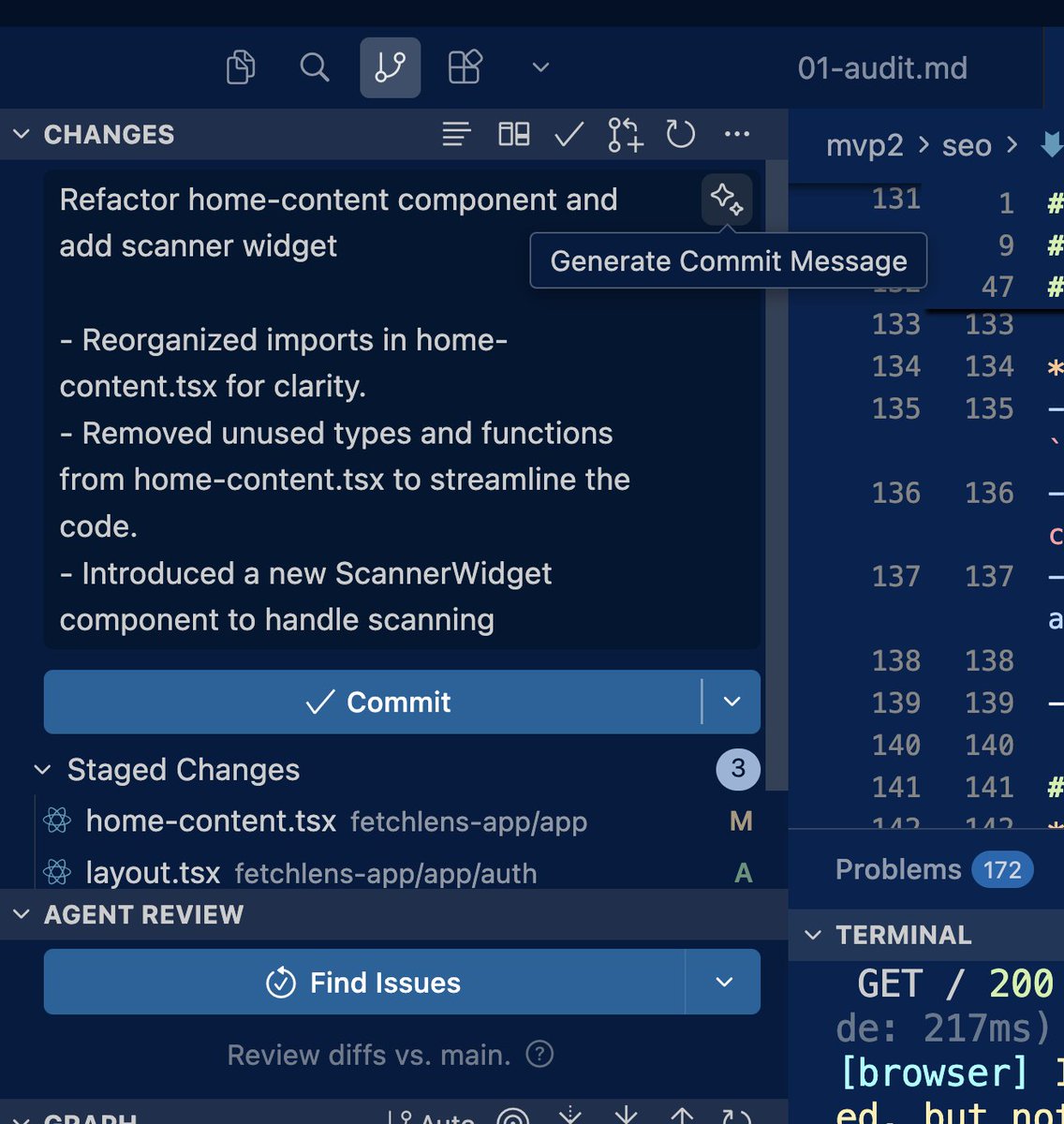
One script tag or middleware line. WordPress, Shopify, Next.js, anything with @fetchlens
Scan site for free at https://t.co/kN6q3yGD5O
Scanned my domain using this free tool — shows which AI agents are hitting your site at the server layer, before JS even loads: https://t.co/drawtkbYTU — no signup needed, takes 10 seconds.


![thefirehacker's tweet photo. 👇Epic prompt for learning , create clean Japanese style posters. Use claude to create 3d mockups instantly. Mockups could be better looking for a way to generate better ones.
Interestingly on Qwen 3.5 0.8B I came across an MTP ( Multi token prediction side branch) on the mockup. This is used for speculative decoding in models and apparently other models are shipping this too ( deepseek , GLM - need to check).
NORMAL PATH
tokens / vision tokens
↓
24 decoder layers
↓
RMSNorm
↓
tied LM head
↓
predict next token t+1
MTP SIDE PATH
main hidden state + token embedding
↓
fusion projection: fc.weight [1024, 2048]
↓
one small decoder-like layer: mtp.layers.0
↓
mtp norm
↓
same / tied vocab projection
↓
draft token t+2 / t+3 ...
I will include this topic in our cohort as well
https://t.co/xLmTIU0rq6](https://pbs.twimg.com/media/HHxkQE5bcAAKSX4.jpg)