I'm starting a free newsletter to keep in touch with folks who are fans of things I love (& fans of stuff I've written for!)
You'd be an inaugural member! Interested? Please sign up here! https://t.co/CK91C8Juse
#animation#action#scifi#anime#fantasy#superheroes#ComicCon
If I were on an SSRI, I'd want to know this, so I'm sharing. By the way, the account is geared towards women's health, but Google tells me there are related issues for men on SSRIs too.
60 to 70% of women taking SSRI antidepressants (Prozac, Zoloft, Lexapro, Celexa) experience difficulty reaching orgasm or complete inability to orgasm as a direct side effect of the medication. the number is not 10%. it is not "some women." it is the majority of users. the medication that treats depression by increasing serotonin simultaneously suppresses the dopamine and norepinephrine pathways that produce orgasm. the drug that fixes the brain's mood system breaks the brain's pleasure system.
the mechanism: SSRIs increase serotonin availability in the synaptic cleft. serotonin reduces anxiety and stabilizes mood (the therapeutic effect). serotonin also directly suppresses dopamine release in the mesolimbic pathway (the reward/pleasure pathway) and reduces norepinephrine signaling (the arousal pathway). orgasm requires both dopamine (the buildup of pleasure) and norepinephrine (the physical arousal response). SSRIs suppress both while treating depression through a third pathway. the mood improves. the orgasm disappears.
the delay or absence of orgasm on SSRIs is not psychological. it is pharmacological. the drug is chemically reducing the neurotransmitter activity required for the orgasm reflex. the woman who cannot orgasm on Zoloft is not "in her head." she is experiencing a documented, predictable, dose dependent side effect that her prescribing doctor may not have mentioned because sexual side effects are historically under discussed in psychiatric medication counseling.
the cruelest irony: many women develop depression partially because of relationship dissatisfaction, body image issues, or sexual trauma. the medication treats the mood but eliminates the sexual function that is often central to the recovery. the woman starts feeling emotionally better but loses the ability to orgasm, which creates a new source of frustration, shame, and relationship strain. the drug treats one wound and opens another.
the practical reality: if she is on an SSRI and struggling to orgasm, the first step is not a new technique. the first step is a conversation with her prescribing doctor about alternatives. bupropion (Wellbutrin) is an antidepressant that works through dopamine and norepinephrine rather than serotonin and has a significantly lower rate of sexual side effects. switching medications or adding bupropion alongside the SSRI is a well documented clinical strategy. the solution exists. it requires a medical conversation, not a bedroom adjustment.
for women who remain on SSRIs by choice or necessity: higher stimulation intensity (vibrators), longer foreplay (30+ minutes), and timing sex 8 to 12 hours before the next SSRI dose (when blood levels are lowest) can improve orgasm accessibility. the strategies compensate for the suppressed neurotransmitter levels without replacing them.
if she can't orgasm and she's on an SSRI, the answer is not "try harder" or "relax" or a new position. the answer is that her medication is pharmacologically suppressing the neurochemistry of orgasm in the majority of users and nobody told her that when they wrote the prescription. the conversation needs to move from the bedroom to the doctor's office. the solution is medical, not sexual.
My son is a senior in high school who works thirty hours a month at a sporting goods retailer.
He submitted a written time-off request four weeks in advance for his high school graduation ceremony and family dinner. The supervisor signed the paper and pinned it to the bulletin board.
When the weekly roster was posted, the store manager had scheduled him for a closing shift right through the exact hours of his graduation ceremony.
When my son brought the signed approval sheet to the manager’s desk, the man shrugged and said:
"Business needs change. If you don't show up for your shift, consider it job abandonment. In the real world, you learn that your job comes before personal plans."
My son sat in the car in our driveway, completely defeated, genuinely believing he had to choose between walking across the graduation stage or keeping his job.
I walked into the store with him, found the manager, and had my son hand over his nametag and uniform shirt on the spot.
I looked the manager in the eye and said:
"In the real world, you are a retail manager attempting to manipulate a teenager into missing a once-in-a-lifetime milestone he worked twelve years to earn, all to fold sweatpants on a Friday evening. His resignation is effective immediately."
The manager stammered, turned red, and started offering to find shift coverage on the spot. We walked out.
Teach your children early: an hourly job that demands you sacrifice your education, your milestones, and your self-worth does not value you as a human being. Never let an entry-level supervisor convince your child that their future is negotiable.
@joespfeifer@1goodtern Who needs to unmask to use a bathroom? Am I missing something?
My family avoids eating in public unless we are outside and can be away from others. We've also had a few picnics with friends... Separate, distanced picnic blankets act as a good reminder to stay distanced.
@OldYesButWise@1goodtern Sometimes if you ask a question instead of making an argument, that might help?
Flu and colds and are also bad to get... So you don't have to use the C word?
Sorry you're dealing with this. :(
I love how Outlook immediately removes a meeting invite from my inbox the second I accept it. Because why would I ever need to reference the agenda, meeting link, or literally any of the information required to attend? Incredible design. No notes.
Shoutout to the people that do the awkward little jog when a car lets them cross the street.
You are not moving any faster, but the effort is beautiful. I see you. I respect you.
I do strangulation exams as part of my job. I have taken extensive training in strangulation and am qualified to testify as an expert in strangulation cases. The general public has no idea how bad this epidemic has become, how many women and girls this is happening to, or how dangerous this is.
I share facts about it sometimes like men who strangle women are twice as likely to be involved in a mass shooting or to kill a cop. Women who are strangled by their partners are 750% more likely to be killed by that partner.
I tell people that death by strangulation can occur in just minutes, under a minute if you hit the right nerve bundles that lead to certain arrhythmias. I also tell them that a woman can die from a strangulation event up to one year after the event and that a pregnant woman who has been strangled is at high risk of pregnancy loss for weeks after the strangulation event. Strangulation can lead to brain damage, physical disability, stroke, pregnancy loss, and death.
I tell people that there is no safe way to strangle and that nobody has the ability to consent to being murdered, and consent is not an excuse for murder, if someone were to consent to this it is incumbent on the would be murderer to use self discipline and restraint, because a person’s “consent” to being murdered is not going to be recognized by any court as a legitimate excuse. Nobody can consent to being killed.
When I tell people these things, a very few are appreciative, mostly women, some are interested, men and women, and some attack me for being stupid and not knowing what I am talking about, apparently days of professional training and hundreds of exams performed mean nothing to the “experts” of X. Those that attack are mostly men. Some argue with me about dumb things, like my insistence to call strangulation what it is. Strangulation is not choking, choking is not strangulation, these are two different types of ways to block an airway but they are not the same. That is what people argue with me about the most. They insist on using incorrect language and then provide me with a weak google link picture of a choke hold to try to prove it’s the same.
So then it becomes me explaining that a choke hold is called a chokehold but it is not choking it is strangulation and that blows their minds and I am met with silence or swears.
This is an incredibly important issue that needs to be discussed but it is very contentious and the defenders of strangulation can turn into rabid dogs very quickly.
Anyway, I just wanted to tell you that I really appreciate the effort you are taking here, that you are raising awareness and that you are using accurate language and data. It’s really important that we change the narrative around this subject.
I would like to share this resource with you, I’m not sure if you are aware of them or not, but this was the group that did my training on strangulation. They go all over the US teaching medical professionals and law enforcement about strangulation and they have a ton of information and resources on their website. You might find them useful.
Thank you for talking about this.
https://t.co/mOYpSn5IaX
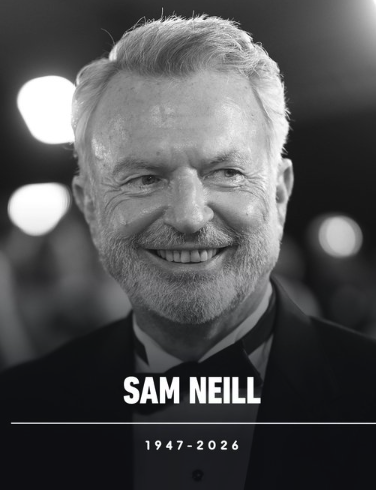
I met him once boarding a plane. We were stuck in line and i was like "ok..say something..fk do it.. do it...do it" in my head..
He turns once glances at me... smiles and nods... like "yeah i know you know who i am.." and i just go quiet...then he glances back and just says "ask away..."
I did the usual "omfg love your work blah blah" and then he asked what I did and then just went into this rathole of how tech and creativity fascinate him and how people do things with computers and then we ended up talking about sheep properties and my life living in the outback... then he splintered off to his seat and mine..
Then we get to our destination, I get off and my wife is waiting for me with the kids and he gets off after me as he was ambushed with people wanting selfies... anyway I tell my wife "guess who's on the plane" and so she now wants to wait around, he then walks past us, nods at me and says "nice meeting you Scott" and continues..
The look my wife gave me at that point in time was like "WTF DID YOU DO.."
Anyway. All i remember was here's one guy who could have just waived me off took the time to chat about nothing and still somehow gave me the "you matter too" vibe.
Legend. Genuinely sad he's passed.
NYC Rapper Drew Empire @DrewEmpire718 wears N95s and organizes mask-required shows to stay healthy and to show solidarity to marginalized people with disabilities, compromised immune systems and #LongCOVID. Support #MaskTogetherAmerica#CleanAir
For myself, this is one of the most important pieces written about taking covid precautions when most people don’t. It resonated so deeply with me. I think it will resonate with many of the folks that I interact with here.
@drseanmullen
https://t.co/CFvjftw6Ik
Long COVID is defined as an symptomatic condition. However, COVID-19 can also cause organ damage without symptoms.
New Paper:
Spectrum of COVID-19: From Asymptomatic Organ Damage to Long COVID Syndrome
#LongCovidAwarenessDay
https://t.co/L3o8WOLA27
The research behind this is wild. Your sperm carries a set of instructions that tell your genes when to turn on and off. A Duke University study found that THC rewrites those instructions. The more weed in your system, the bigger the changes. It goes straight for the genes your future embryo needs in its first week of life.
I had to read the "day 3 crash" part twice. For the first three days after fertilization, an embryo runs entirely on the mother's DNA. Day 3, the father's genes switch on. If those genes carry cannabis damage, the embryo just stops growing. Fertility doctors see this happen in their labs: embryos that fertilized fine and looked healthy on day 2 go completely still by day 5.
Boston University tracked 1,535 couples trying to have a baby. Men who smoked weed once a week or more doubled their partner's miscarriage risk. That number held up even when the woman herself never touched cannabis. And the miscarriages clustered in the first 8 weeks, right when the father's damaged DNA would be doing the most harm.
Duke also found that the specific genes THC alters in sperm overlap with genes linked to autism. One of those genes, called DLGAP2, helps brain cells communicate with each other. It was changed in cannabis users' sperm. When researchers bred THC-exposed male rats and checked their offspring, the same altered gene pattern showed up in the pups' brains. The damage crossed a generation.
Weed has gotten way stronger over the last 30 years. THC content was about 4% in the 1990s but nearly quadrupled to 15% by 2018, and modern dispensary strains regularly sit at 20-30%. Concentrates go up to 95%.
Quitting for about 11 weeks (one full cycle of sperm production) reverses some of the DNA changes. Not all of them. Duke's lead researcher says men should stop at least 6 months before trying for a baby. Half of your kid's genetic blueprint comes from you, and right now, THC is editing that blueprint before conception even happens.
Microplastics have been found in human brains, blood, placentas, and testes across 1,300 species. An 18-year-old in Virginia just built a filter in her garage that removes 95.5% of them. The physics of how it works is worth understanding.
Traditional water filters use solid membranes. Water passes through, particles get caught. The problem: microplastics range from 5mm down to 1 micrometer. Filters fine enough to catch the smallest particles clog constantly and need replacing. The maintenance cost makes them impractical for household use.
Mia Heller built exactly this, over and over, after water tests in Warrenton, Virginia showed PFAS and microplastic contamination. Government agencies said no public funds were coming. Residents were on their own.
Heller took a completely different approach. Her system uses ferrofluid, a liquid containing magnetic nanoparticles suspended in oil. The key insight is polarity. Microplastics and water have different polarities. Microplastics are more attracted to the oily ferrofluid than they are to water. So when ferrofluid enters contaminated water, the microplastics migrate toward it on their own.
Then you apply a magnetic field. The ferrofluid is magnetic. The magnet pulls the ferrofluid out of the water, and all the attached microplastics come with it. The ferrofluid is recovered and reused at an 87.15% recycling rate.
No membrane. No clogging. No constant filter replacements.
She went through five prototypes before getting it working. The system filters about a liter at a time and fits under a kitchen sink. She also built her own turbidity sensor to verify the removal rate, rather than relying on visual inspection.
Municipal drinking water plants achieve 70 to 97% microplastic removal depending on technology. Her garage prototype hits 95.52%. She won a $500 prize at the Regeneron International Science and Engineering Fair for it.
The constraint she already sees: ferrofluid is expensive to produce at scale. She designed the system for individual households, not treatment plants. But the mechanism, polarity and magnetism replacing physical filtration, is the kind of first-principles reasoning that makes the best engineering.
Five prototypes. One garage. $500.
Your brain runs an authenticity detector, and AI just broke it.
There's an fMRI study from Oxford where researchers showed people Rembrandt paintings. Same paintings, same canvas, same brushstrokes. The only variable: whether subjects were told "this is genuine" or "this is a copy." When told "copy," the frontopolar cortex lit up. That's the region your brain activates for complex evaluative judgments and prediction errors. When told "authentic," the orbitofrontal cortex activated instead. That's the reward center. Same painting. Completely different neurological experience.
Your brain has two separate circuits for processing the same content depending on whether it believes a human made it.
Now layer in what neuroscientists call the predictive coding framework. Your brain is constantly generating predictions about incoming sensory information. When the prediction matches reality, you process smoothly. When it doesn't, your brain fires a prediction error signal, which triggers heightened attention and cognitive load. That signal is the same mechanism behind the uncanny valley. Your visual cortex detects something 95% right, the prefrontal cortex flags a mismatch, and the result is unease.
AI content has pushed this system into permanent overdrive. Every piece of writing, every image, every video now generates a low-grade prediction error because your brain can't confidently categorize it as human or machine. The cognitive load of constant authenticity assessment is real and measurable. Anxious hypervigilance research shows the brain amplifies these prediction error signals under uncertainty, which burns through attentional resources and impairs higher-order thinking.
The comic nails the cultural observation. The neuroscience is darker. We trained an entire species to run threat detection on every piece of content they consume. The metabolic cost of never trusting what you see is not zero.
@EVRYTHNGFATIGUE@Sean_Doc_16 Plus, one way to fund a movie is to pre-sell distribution territories, and these presales are often determined by attaching actors to those movies who draw audiences in those territories. I'm not sure how much weight is given to actors in animated movies, but it's likely not zero
@EVRYTHNGFATIGUE@Sean_Doc_16 It's also the publicity opportunities. A bigger name actor might go on a talk show or something similar as a guest and promote the movie. Voice actors SHOULD get invited to talk shows, but they don't as often. So hiring a lesser known actor can mean less soft advertising.