Alhamdulillah ala kulli haal (All praise is due to Allah in every situation).
Dear Allah subhanallah wa ta'ala, grant me the best of this life & hereafter, let this time bring good tidings now and forever, ameen.
Cheers to great & the best of life.
#Taqullah💯™️
Alhamdulillah, 4 decades of shukr (gratitude) to the Almighty Allah.
4 decades of abundant blessings & countless favours - good health, provisions, family & friends, protection, guidance and many.
I am indeed grateful to Allah for the gift of life- both the good & trials.
SubhanAllah (Glory be to Allah), Alhamdulillah, and Allahu Akbar (Allah is the Greatest).
“If you are grateful, I will surely increase you [in favor]; but if you deny, indeed, My punishment is severe” (Quran 14:7).
Alhamdulillah ala kulli haal (All praise is due to Allah in every situation).
Dear Allah subhanallah wa ta'ala, grant me the best of this life & hereafter, let this time bring good tidings now and forever, ameen.
Cheers to great & the best of life.
#Taqullah💯™️
SubhanAllah (Glory be to Allah), Alhamdulillah, and Allahu Akbar (Allah is the Greatest).
“If you are grateful, I will surely increase you [in favor]; but if you deny, indeed, My punishment is severe” (Quran 14:7).
The GRA is currently being developed with some social amenities like a health centre, government school, market etc and with government designed layout.
Kindly contact me if interested.
Aisha, have the constitutionally guaranteed right to express yourself, but your consistent display of crass ignorance and shameful behavior, seemingly aimed at garnering likes and retweets, in the name of your disdain and hatred (which you profess at any given opportunity) for Nigeria is shameful to say the least.
For the record:
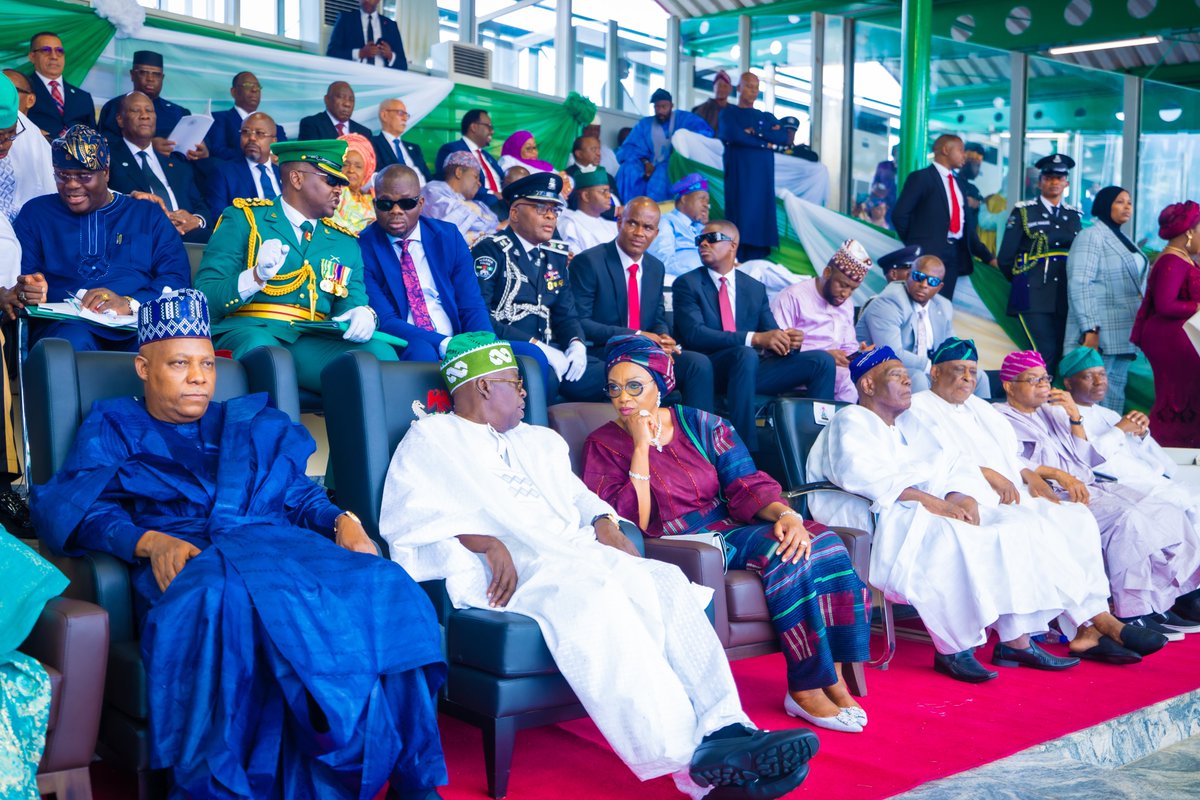
1. That first row at today's inauguration was reserved for South African kings/royalty.
2. The South African President wasn't expected to start greeting dignitaries at the time of the video you shared and he was respectfully recalled to the podium by the inauguration compere (see video below).
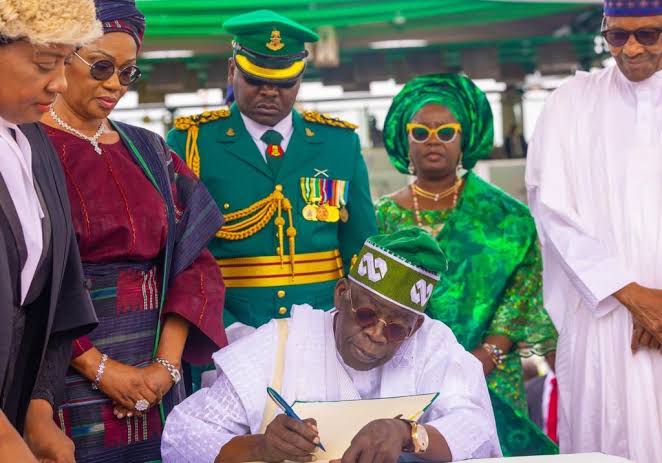
3. Immediately after President Ramaphosa finished the anthem, he went ahead to greet the visiting presidents who were all seated in the second row (similar to the way visiting presidents were seated in the third row during Nigeria’s own inauguration on May 29, 2023 - see pictures below).
Madam Yesufu @AishaYesufu, your persistent ignorance and hatred create a very toxic mix, which you have shown a remarkable ability to embody and fully personify.
A cautionary word: With or without your personal enmity, Nigeria will succeed. I truly hope you receive your “Elon Cheque” in full this month.
!
@otegaogra@officialABAT In the spirit of #RenewedHope , hopefully, both the executive & legislative arm of government will follow through priorities with the urgency with which this particular bill was dispatched for the benefit of the masses.
The commoners needs to breath.
@otegaogra@officialABAT@otegaogra thanks for giving more insight into the process that finally led to reverting to our first National anthem - that it wasn't just about the President @officialABAT having his way.
@otegaogra@officialABAT Personally, I'm also of firm believe that the first national anthem truly describes our reality as a country of many culturally diverse nations but also conscious of that fact that it isn't one of the country's priority at this time, considering the present climate.
NIGERIA, WE HAIL THEE
The Stirring Saga of our National Anthem(s): Historical Perspective or Voice of a New Dawn?
by Otega Ogra, FCIM
1. The year was 1959. As the clock ticked towards 1960, Nigeria stood on the precipice of a monumental shift—its emancipation from British colonial rule. This was a time when our nation was more a line item in a colonial ledger than a free state. The country, once treated less as a nation and more as a commodity in an unholy alliance with the infamous Royal Niger Company, was gearing up to redefine its identity. Our founding fathers had waged a long, arduous struggle not just against colonial domination but also against the indignity of having to pledge allegiance in compulsory renditions to a distant monarch with the anthem, "God Save the King."
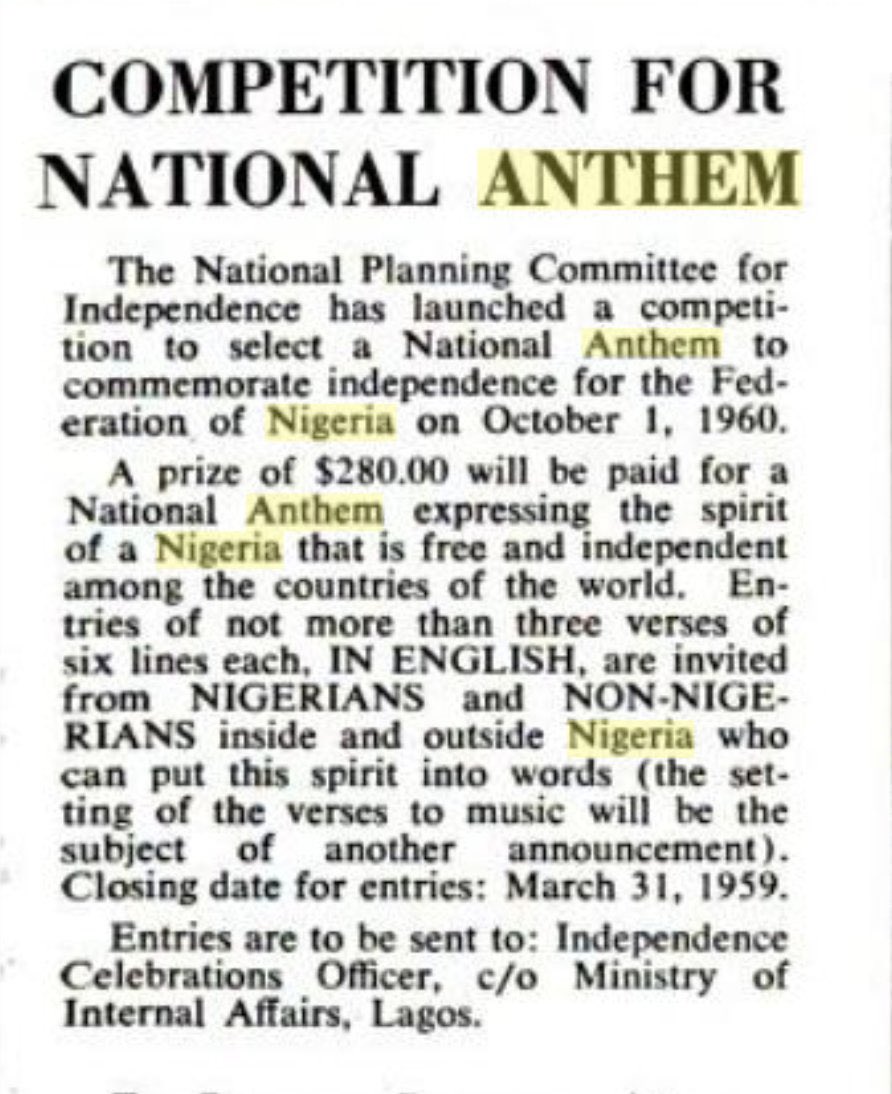
2. To solidify this newfound autonomy, a call was issued, inviting both Nigerians and international participants to pen a national anthem that would encapsulate the vision of the impending free and independent Nigeria. The call for entries reproduced below, was a clarion call to articulate the collective aspirations and spirit of diversity of our soon-to-be sovereign nation:
“COMPETITION FOR NATIONAL ANTHEM”
“The National Planning Committee for Independence is thrilled to announce a competition to select a National Anthem to commemorate the Federation of Nigeria's independence on October 1, 1960.
A prize of $280.00 will be awarded for a National Anthem that resonates with the spirit of a free Nigeria, standing proud among the nations of the world. We invite submissions of no more than three verses, each comprising six lines in English. This lyrical representation should capture the essence of our nation (the setting to music will be announced later).
Please send your entries by March 31, 1959, to: Independence Celebrations Officer, c/o Ministry of Internal Affairs, Lagos.”
3. This call for entries drew a staggering response of over 1,000 entries, culminating in the selection of "Nigeria, We Hail Thee" as Nigeria’s inaugural anthem, penned by a British expatriate living in Nigeria, Lillian Jean Williams, with music by Frances Berda. As the anthem echoed through the celebrations on October 1, 1960, it marked a fitting tribute to the aspirations of our nation and reflected the broad diversity of the various nations that made up the New Nigeria. Unity was its key message.
4. However, the years that followed brought with them trials that tested the nation's resolve: a military coup in 1966, a subsequent civil war, and the onset of an oil boom that reshaped the economic landscape. By the late 1970s, amid the throes of change and under the leadership of then former dictator and military Head of State, General Olusegun Obasanjo (who was part of the military coup that brought Gen Murtala Mohammed into power before his demise in a failed coup that saw Obasanjo become head of state), a new anthem was sought to reflect what they believed was a maturing nation’s identity. This led to another anthem competition, to reflect the nationalistic fervor of the time, resulting in "Arise, O Compatriots," adopted in 1978 and penned by a quintet of Nigerian writers - John A. Ilechukwu, Eme Etim Akpan, B. A. Ogunnaike, Sota Omoigui and P. O. Aderibigbe. The music was created by the Nigerian Police Band directed by B. E. Odiasse.
5. Years of political tumult continued until Nigeria returned to civilian rule in 1999, with reformed President Obasanjo (now a civilian) at the helm. The turn of the millennium saw calls from across the country for restructuring, a topic that Obasanjo largely sidestepped, focusing instead on other reforms. This decision to ignore...
⏬⏬
@otegaogra A detailed response here @otegaogra .
It seems @atiku missed the numbers while reading but still on point with the urgent need to reduce our cost of governance.
@Bitshore You know how this present state of Isreal finally came into being right and all that had transpired between that time and now right?
Let's get our facts right my bro and go beyond mainstream media propaganda.
OPEN LETTER TO BATISTS
I understand the tricks and ploys, the schemes and plots, the pleas and appeals, the hopes and wishes, prayers and invocations, the lobbying and praise-singing that come with a new government, but Listen to Me, my brethren in the struggle, pls hearken to