Claude Fable 5 will be available again globally tomorrow.
After a series of productive conversations with the US government, we're redeploying the model with a new set of classifiers to target and block more cybersecurity tasks. In the near term, some routine tasks like coding and debugging will fall back to Opus 4.8. We’ll continue to refine these classifiers over the coming weeks to reduce false positives and better distinguish genuine misuse from legitimate requests.
We’ve also begun drafting a consensus framework—with Amazon, Microsoft, Google, and other Glasswing partners—for assessing the severity of AI jailbreaks and how AI developers should respond to them. We invite other industry partners and model providers to join us in this effort.
Finally, we’re scaling up our collaboration with the US government on model testing and safeguards. This will include pre-release access to models and safeguards for evaluation, information sharing on jailbreaks and misuse, and dedicated resources for joint research.
Thank you to our users for your patience, and to our partners across the government, industry, and the research community who worked alongside us to make Fable 5 available again.
Read our full blog: https://t.co/VHyum831ri
What separates AI success from failure, explains Douetteau, isn't a technology decision. It comes down to three interdependent things: ensuring the right people are building AI, establishing orchestration that connects every data source and system in use and governance with no blind spots. If one of these components is missing, AI will reliably fail.
Sponsored by @dataiku https://t.co/zKFmPCxPIY
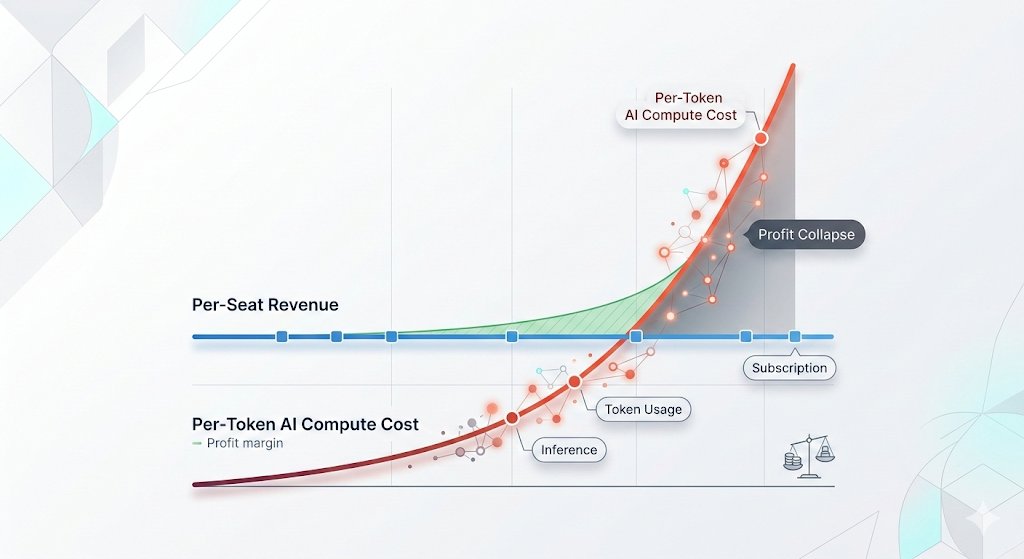
🦔Microsoft canceled its internal Claude Code licenses this week after token-based billing made the cost untenable, even for a company with effectively infinite cloud resources. Uber's CTO sent an internal memo warning the company burned through its entire 2026 AI budget in just four months. American AI software prices have jumped 20% to 37%, and GitHub (owned by Microsoft) is dropping flat-rate plans for usage-based billing across its products.
My Take
The AI subsidy era is ending in real time. The same company that put $13 billion into OpenAI and built the Azure infrastructure powering most of Anthropic's compute just looked at the bill from a competitor's coding tool and decided it was not worth paying. That is not a productivity failure on Anthropic's end. Token-based pricing is forcing every enterprise customer to confront the actual cost of running these models at scale, and the number turns out to be far higher than the flat-rate experiments suggested.
This ties directly to my Gemini Flash post yesterday. Anthropic, OpenAI, and Google all raised effective prices in the last six months. Enterprises that built workflows assuming AI costs would keep falling are now watching annual budgets evaporate in months. Two outcomes look likely from here. Either enterprises scale back AI usage to fit budgets, which slows the revenue ramp the labs need to justify their valuations ahead of IPOs, or the labs cut prices and absorb the losses, which makes the unit economics worse at exactly the wrong moment. Both paths land in the same place, the numbers stop working, and somebody has to take the writedown.
Hedgie🤗
Agent identities is going to be a super fun and hard problem for software in the coming years. Most agentic systems today assume that the agent can do everything the user can do, and just operate as an extension of that user. This has worked well and is how most auth has worked for cloud software, and it has made integrations super easy over time.
But then comes along systems like Openclaw, and suddenly we get a new view into what becomes possible with agents that can operate on their own. And when you have many of them running in parallel. You start to work with them like a colleague, not just as an extension of what you do.
But of course this now introduces an all new complexity than the traditional approach. What if you want an agent to access only a small subset of your data? What if you want an agent to have its own sandbox to operate in without any risk of a blast radius if it goes off the rails? What if you want to create an agent that can work with others, without you seeing everything it’s doing?
For all of these cases, agents will start to need their own identities inside of platforms. To do this, we likely will need new mental models for how we delegate controls and access to them, how you handle authentication, who gets to manage them in an organization and so on. Lots to figure out in this space right now.
Claude Cowork gives you a peek into the future of knowledge work. Here's a demo of using Box as a cloud filesystem via MCP for Claude to leverage content as context to generate new slides locally. The future is having agents running in the background doing work for you.
"ConversationRelay is now HIPAA eligible, giving healthcare and regulated industries the green light to deploy voice AI #gamechanger#AI#healthcare@twilio
Figma's 250% IPO pop just created a $200B valuation roadmap for Canva's 2026 IPO 🧵
At 68.6x revenue ($56B market cap on $821M revenue), Figma proved investors will pay extreme premiums for category-defining design software.
Canva's advantage:
•3x larger revenue base ($3B vs $1B)
•7 years of profitability vs Figma's recent turn
•230M users vs Figma's 13M
•Broader market (consumers + enterprise)
Potential valuations:
🚀 Bull case: $195-210B (Figma's 68x multiple)
📊 Conservative: $30-36B (standard SaaS 10-12x)
📉 Bear case: $18-24B (market downturn 6-8x)
The bull case would make Canva the largest software IPO in history. Even the conservative case represents a massive outcome.
Figma didn't just go public—it validated design software as a premium investment category.
Canva's superior scale + market position could capture similar or higher multiples.
The 2026 timing will be everything. 💭
Good morning! Our Social Media Client Care Team is here and available to help until 5 pm ET, send us a message with your account related questions or concerns. We will be offline tomorrow for Presidents Day and back online Tuesday at 8 am ET.
Starting in May 2025, Skype will no longer be available. Over the coming days you can sign in to Microsoft Teams Free with your Skype account to stay connected with all your chats and contacts. Thank you for being part of Skype