😌Abey bsdk, Beem-meem ekta k chodo,,, ab pta laga,,ki tum logo me hulchal kaise ho gyi,
.
ki swarn samaj ki baat rkhne wala vyakti, debate show me kaise baith gya, isko to mandir me ghnti bajaani chahiye
.
soch rhe thay,,inko gher lenge,pr sher na ruka tha, na rukega
Rajnath is sitting at the centre not because of being political heavyweight like Modi or Shah but as a counter to Yogi.
We will see more of him at the centre of BJP Politics.
#BiharElection2025
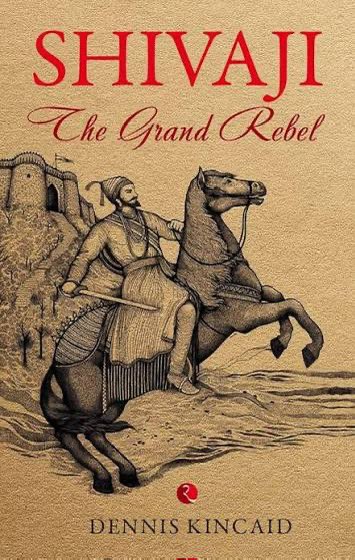
1910: Shivaji the Hindu rebel
1937: Shivaji the progressive king
I find it interesting to compare the two Grand Rebel books, both bestsellers of their time — respectively in 1910 by Kincaid the father and in 1937 by Kincaid the son — and the change in tone and narrative of Shivaji’s life that happened in these 27 years!
We shall do it with some excerpts from the two. (1910 versions was written with Jackson’s collaboration.)
1910 portrays Shivaji as Hindu saint-warrior restoring dharma, a Hindu rebel against Islamic tyranny, looking for not just the political independence but also the liberation of dharma.
1937 recasts Shivaji as a nationalist, proto-democratic, secular-leaning, progressive leader, emphasizing his tolerance, cross-religious alliances, and administrative acumen.
Some comparative excerpts:
(Rajyabhisheka)
1910- “The priests poured over him the sacred waters of the seven holy rivers, and the people hailed him as a Raja, a Hindu prince restored by Heaven to rule once more over Hindustan. Thus was the ancient faith vindicated and the kingdom purified from alien touch.”
1937- “When the drums beat at Raigad, Shivaji stood not as the chosen of the Brahmins but as the chosen of his people. The ritual was Hindu, yet the spirit was national. Men of every caste and creed who had served him felt that day that the land had found its voice.”
(His Purpose)
1910- “He struck for his Faith and for his Country, and in the name of the Gods he freed his people from the yoke of the foreigner. In Shivaji we see a Hindu of the old type, brave, devout, and unselfish. He rose against alien oppression.”
1937- “It is wrong to see Shivaji’s rebellion as merely a Hindu uprising against the Musalmans. It was, in truth, a national movement — the protest of a people ground down by alien rule, irrespective of caste or creed.”
(Slaying Afzal Khan)
1910- “By guile the Khan would have slain him, but the Hindu was watchful. In a moment of righteous wrath he struck the blow that saved Maharashtra from ruin.”
1937- “The meeting was a duel of two soldiers rather than a crusade of creeds. Shivaji’s dagger was drawn by prudence, not by hate; he fought for survival, not for sanctity.”
(His Religiosity)
1910- “Each dawn he offered worship to Bhavani, whose sword he deemed his own. He believed that the Mother had raised him up to restore righteousness upon the earth.”
1937 - “He was devout, but his piety was of the heart, not the temple. His faith was discipline, not dogma. In a world of fanatics he kept his balance.”
(Hindavi Sawarajya)
1910 - “He dreamed of a Hindavi Swarajya wherein the Hindu might again walk upright beneath his own gods.”
1937 - “He founded a State, not of caste or sect, but of men who had found faith in themselves. It was not Hindu rule he sought, but just rule.”
(Source of Tolerance for Muslims )
1910 - “Though he warred against the Musalmans, he bore them no malice. In the mosques of Bijapur he set guards, for the true Hindu strikes his foe in battle, not in prayer.” (ie it is innate nature of Hindu yo be tolerant)
1937 - “He never insulted the faith of Islam. Many of his captains were Musalmans, for he valued courage more than creed. To him loyalty was a nobler bond than birth or caste.” (source of tolerance is not his Hinduness)
(Shivaji’s inspiration growing into a rebel)
1910- “In the boy of nineteen burned the spirit of his race. The blood of the old Hindu princes leapt again. He resolved that the land of the Gods should no longer bow to the Crescent.”
1937- “Youth and faith made him reckless; oppression made him bold. He saw no Hindu or Musalman, only rulers grown corrupt and a people ground down by greed.”
(Reverence to Saints)
1910 - “He listened reverently to Tukaram, whose hymns kept alive the Hindu soul when swords had failed.”
1937 - “He drew strength from poets and saints, not because they were Hindu but because they spoke of duty, equality, and the worth of every man.”
1/2
@arunpudur L*nd Ke Beej, Modi Yogi samarthak hum bhi h pr itne andhe nhi h ki Pakistan or Hindustan ka farak na samaj ske.
Is video me dikh rhi bike Indians nhi Pakistani h isliye chutiyap band kr or thik thik report kr. Dange agar ho gye na to ye Yogi Ji hi teri Ga*d me lath chda denge.
Gandhi took the Indian Independence movement from a wet dream of elite Bombay lawyers and made it a pan-national revolution. In doing so, as I’ve written before, he became the prototype of the modern-day Indian politician who cuts across parties. He wielded power without holding a constitutional post. He used morality as a shield to deflect criticism.
He started a cult of personality, which built up to not allowing any opposition. He was anti-science and followed a self-serving circular logic that he was always right. He abhorred sex and used austerity as a virtue one should aspire to. He placed religion, not rationality, at the centre of his political beliefs. He decided who’d become PM, irrespective of who got the popular votes. He wore the robes of a priest pretending to be a politician, and we’ve seen many iterations and variations of this kind of politician since Independence.
Critics (and fans) of both parties will recognise—often in the behaviour of their opponents because self-criticism is suicidal in politics—the classic Gandhi traits.
Narendra Modi often evokes his impoverished childhood and lack of familial attachment to suggest his incorruptibility.
Rahul Gandhi, the son, grandson, and great-grandson of former Premiers, claims that he’s a non-materialistic sage at heart.
Mamata Banerjee isn’t seen anywhere without her slippers and plain cotton white saree, and the same goes for Arvind Kejriwal, who always ensures that he’s living up to the middle-class ideals by wearing a shirt that’s two sizes too big for him.
Sonia Gandhi showed that one didn’t have to become PM to be the most powerful person in the country. Like Gandhi, many Indian politicians also wear a vow of celibacy as a badge of honour.
The point is Gandhi set the anti-scientific, anti-industrialist tone that would be embraced by politicians across spectrums and helped create a country and economy that was teetering on the brink of recession. In fact, one ought to thank Nehru for having a mind of his own and imbibing the nation with a degree of scientific aspiration and industrialisation, junking the idea of 1000 villages fuelled by chakra-spinning, which saw us become the first nation to land on the dark side of the moon.
From an old piece on Why Pakistanis are happier than Indians
India and Pakistan are on two different trajectories, and even the honest Pakistani knows that. If Albert Camus was right, then perhaps the secret to happiness lies not in prosperity, democracy, or purpose—but in the acceptance of futility, the repetition of struggle, and the knowledge that there is no divine reward at the summit.
In The Myth of Sisyphus, Camus describes a man condemned to eternally roll a boulder up a mountain, only for it to roll back down each time. It is an absurd fate, but in contemplating it—knowing it is his, accepting it as unchangeable—Sisyphus becomes, paradoxically, free. Camus writes: “One must imagine Sisyphus happy.”
Perhaps this, then, explains Pakistan’s higher ranking in the World Happiness Report 2025. Perhaps Pakistan is the Sisyphus of South Asia. A nation locked in a cycle of economic collapse, military coups, IMF bailouts, energy shortages, and cricketing heartbreak, and yet—it smiles on the way back down the hill.
“I said that the world is absurd, but I was too hasty. This world in itself is not reasonable, that is all that can be said. But what is absurd is the confrontation of this irrational and the wild longing for clarity whose call echoes in the human heart. The absurd depends as much on man as on the world.”
— Albert Camus
Where India fights, debates, builds, reforms, and aspires—Pakistan accepts. It no longer expects the summit. Its happiness is not driven by achievement but by survival, not by growth but by repetition. Where India agonises over its democracy, Pakistan no longer pretends to have one. Where India chases global leadership, Pakistan is content negotiating its next loan. There is peace in low expectations, freedom in detachment. If happiness is the absence of disillusionment, then what better strategy than to stop being illusioned in the first place?
And so, while Indians grumble through traffic jams in growing cities, rage against corruption, or demand better governance, Pakistanis return to their rock each morning, lift it with muscle memory, and smile—because nothing else was promised.
“Each atom of that stone... forms a world.”
— Albert Camus
Every bailout is a new beginning. Every coup, a cosmic reset. Every World Cup loss, a philosophical cleansing. They roll the rock. It rolls back. The absurd cycle is complete.
Meanwhile, India is caught in its own existential spiral—still believing happiness is to be earned, still chasing Jefferson’s promise of “the pursuit”, still demanding meaning from its journey. But as Camus warns, meaning is a human construct. The world owes us none.
So maybe Pakistan is happier.
Not because it is richer, freer, safer, or better—
But because, like Sisyphus, it has made peace with the mountain.
And it no longer asks why.