This Sunday, not a startup. A 9 year old Polymath Bridging Paninian Grammar with Modern Code
Before the rest of Bengaluru even wakes up, he has already chanted 6 chapters of the Bhagavad Gita from memory. He can break down every single word, root, and rule of Paninian grammar across all 700 shlokas.
By mid morning, he is standing in a 12th grade labs, working through complex chemistry experiments alongside students nearly twice his age.
By evening, he sits in front of a terminal, compiling self-taught C and Python code to engineer custom hardware prototypes, build offline edge AI voice assistants, and deploy apps downloaded across the globe.
His name is Vrishvardhan Sharma and he is not a product of commercial coaching.....
He is a 9 year old polymath operating at the precise, breathtaking intersection where 2,500 year old Sanskrit computational logic meets the frontiers of modern software engineering.
His story is about what happens when ancient Indic scholarship (Shaastras) meets self-taught modern tech in a mind that operates purely on curiosity.
Originally hailing from Patna (mother side) and Jaipur (father side) and now based in Bengaluru, Vrishvardhan’s academic and spiritual depth developed at an astonishing pace:
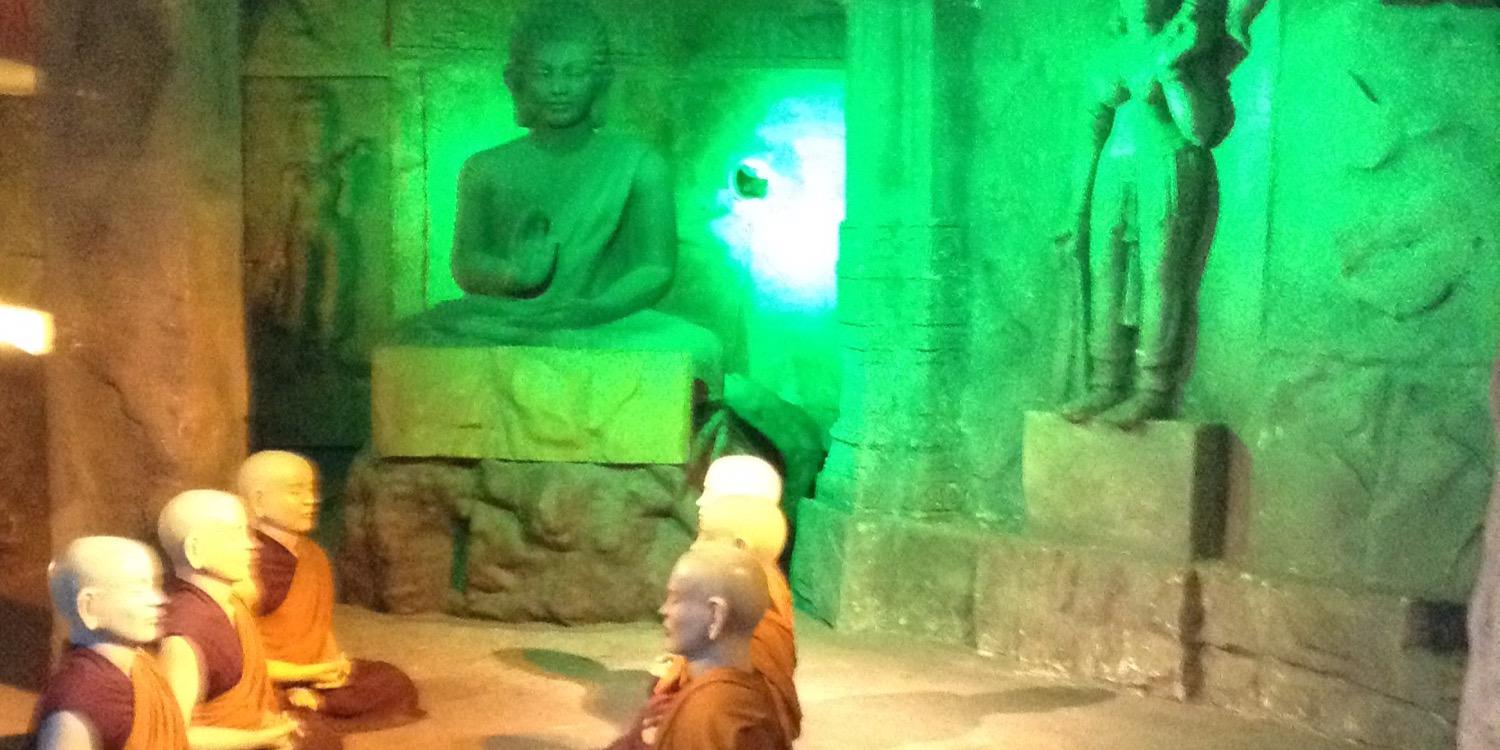
Age 5: Memorized the entire Bhagavad Gita and was blessed to recite complete Gita at Shringeri infront of personal audience of Shankaracharya Vidhushekhar Bharati ji.
Age 6: Winning the National Gita Medal. Today, he has completed 526+ full Gita Parayanas, chanting 6 chapters every morning and analyzing every shloka grammatically.
Age 8: Memorized the Ashtadhyayi (Panini's masterwork on Sanskrit grammar), winning a National Gold Medal competing against university level postgrad scholars.
Linguistic Versatility: Achieved fluency in 6 languages, with the ability to read and write in 13 scripts. He personally handwrote the Gita in 11 different Indian scripts, dedicating the work to the spirit of Ek Bharat Shreshtha Bharat.
Vedic Mastery: Attained the status of a Ghanapathi of Shri Rudram (Namakam and Chamakam), 1 of the most complex, rigorous modes of Vedic chanting and memory retention known to human tradition.
Yet, rather than remaining exclusively within classic academic frameworks, Vrishvardhan taught himself programming languages like Python and C, applying computational logic directly to modern software problems.
Instead of following commercial app frameworks filled with popup ads / aggressive paywalls / artificial gamification tricks, Vrishvardhan builds tools centered on human cognition and cultural connection.
- KannadaVardhan: Created after moving to Bengaluru to help users pick up Spoken Kannada naturally. Built on what he terms "The Sahaj Way", an ambient cognitive process where users learn by listening, guessing, receiving gentle corrections, and speaking without the anxiety of rigid grammar charts.
- GitaVardhan: A clean, user-focused digital interface designed for deep engagement with scripture.
- Offline Voice-Command Gita Assistant: A tiny custom hardware prototype engineered to run voice commands locally, processing requests completely offline without reliance on internet servers or data tracking.
Vrishvardhan’s dual mastery of Panini’s Ashtadhyayi and modern code is where his greatest potential lies.
Panini’s 4,000 algorithmic rules written 2,400+ years ago are widely recognized by computer scientists as the world's 1st formal, context-free generative grammar system, the direct intellectual ancestor of modern programming languages and natural language processing (NLP).
By combining formal Sanskrit computational linguistics with software architecture, Vrishvardhan represents a rare bridge between India's intellectual heritage and modern deep-tech innovation.
While Vrishvardhan's parents carefully limit public media exposure to shield his growth, his work shows what is possible when deep root discipline meets unstructured modern curiosity.
A 9 year old is building to solve problems, bridge cultures, and explore the boundaries of learning.
Bharat is really rising. 🙏🙏
PS: I have written this with his parents’ direct approval. I had also told his father that, at any cost, he needs to be protected from all the noise and negativity on SM.
Where Will You Find a Mother’s “Pallu” in Jeans? 🤔
In school, the teacher asked the students to write an essay on “Mother’s Pallu.”
One student wrote something so touching that it can fill your heart with emotions… 😭
Respected Teacher,
A mother’s pallu was not just a piece of cloth; it was the dignity and grace of a mother.
A mother’s pallu was used to lift hot utensils from the stove.
It wiped away the sweat and tears of her children, cleaned dirty faces, ears, and little hands.
After meals, there was a special comfort in having our faces wiped with mother’s pallu.
Whenever something went into our eyes, mother would roll the pallu, warm it gently with her breath, and place it on the eye — somehow, the pain would disappear instantly.
For children sleeping in their mother’s lap, her lap became the soft bed, and her pallu became a comforting blanket.
Whenever a stranger entered the house, a child would hide behind mother’s pallu for safety.
Whenever a child felt shy, they would cover their face with mother’s pallu.
When a child stepped outside, they would hold onto the pallu, and it became their guide and protection.
As long as a child held the mother’s pallu, it felt as though the whole world was safely within their reach.
During winter, mother wrapped her child from all sides with her pallu to protect them from the cold.
And during heavy rain, the same pallu turned into an umbrella covering the child’s face.
Mother’s pallu was also used like a towel to wipe hands.
It carried fallen flowers and fruits gathered from under the trees.
Sometimes, grains, offerings, or prasad were collected in it.
It was even used to dust and clean household things.
Whenever something was lost, mother would tie a knot in her pallu, believing it would soon be found — and somehow, it usually was.
The knot in mother’s pallu was like a moving bank or locker, and if luck favored the child, a few hidden coins would magically appear from it too.
A mother’s pallu was not just cloth — it was a magical feeling, an emotion, a shelter, and a world of love.
Today’s generation may never truly understand its warmth and meaning.
Now, when mothers wear jeans…
where will that “pallu” come from?
🙏 Dedicated to every mother whose saree pallu carried love, warmth, sacrifice, and countless childhood memories. 🙏
If blood—and not water—flows through your veins, then by all means scroll past this post; otherwise, stay and read the true story of a Veerangana (revolutionary heroine) today!
Today, I am going to tell you the story of a heroine whom our history books have erased.
Her name was Bina Das.
The incident took place on February 6, 1932, during the convocation ceremony at Calcutta University. The entire hall was packed with British officials and loyalists. Stanley Jackson—the most ruthless Governor of Bengal—stood upon the dais with immense arrogance.
Suddenly, a slender, saree-clad young woman stepped forward from the crowd. No one suspected a thing; everyone assumed she was merely a meritorious student approaching to receive her degree.
But Bina Das had not come to receive a degree; she had come to prepare the funeral pyre of British rule!
The moment the Governor began to speak with a smile, Bina Das drew a revolver from the folds of her saree, and the entire hall was shaken by the reverberation of gunshots—
Five shots, fired one after another! To save his life, Governor Jackson cowered beneath a table like a frightened dog.
The British guards were paralyzed with panic. Had she wished to, Bina Das could have fled; instead, she stood tall and surrendered herself for arrest.
Then came the horrific torture inflicted upon her in prison...
In jail, she was stripped naked, forced to lie upon slabs of ice, and lashed with whips in an attempt to force her to divulge the names of her comrades. Yet, from the lips of that lioness, only one phrase ever escaped: "Vande Mataram." For nine long years, she endured hellish torment, yet she never learned to bow down.
But the true agony began *after* independence...
In 1947, the nation attained freedom. Politicians secured their seats of power, but what did Bina Das receive? Oblivion. She was forgotten. The woman who sacrificed her youth, her family, and her future for the sake of freedom was, after independence, compelled to wander the streets of Rishikesh in utter destitution.
A dark evening in 1986... A decomposing corpse was discovered lying by the roadside in Rishikesh. Clad in tattered rags, the body was a mere skeletal frame with a face etched with wrinkles. The police assumed it was the body of a beggar. For several days, the corpse lay rotting in the scorching sun, as kites and crows pecked away at it.
When, weeks later, the body was finally identified, it was revealed that this was not the corpse of a beggar, but that of the great Bina Das—the woman who had once struck terror into the hearts of the British! 😭
Was it to witness such a fate that she had taken up the revolver? Have we become so ungrateful that we could not even provide this 'daughter' of ours with a few feet of earth for a grave, or two square meals a day?
The pages of history often reserve space for those faces that remained in the limelight; but what of those noble souls who, without a shred of self-interest, sacrificed their very all? Bina Das's struggle was not born of a desire for position or honor, but stood as a testament to her unwavering love for her country.
The truest tribute we can offer is to keep her magnificent sacrifice and her ideals alive within our hearts, and to ensure that future generations are made aware of her extraordinary valor. "Let us resolve that the name of every brave hero and heroine who sacrificed their life at the altar of freedom shall forever remain immortal, etched in the golden letters of history."
✅ We demand recognition for our Bina Das!
Make a promise to yourself: if you are a true Indian, do not leave this page without writing 'Jai Hind' in the comments section to honor this great heroine—for this is not merely a word, but a heartfelt tribute to those martyrs..
“Reduce the luxuries.” Not cruelty. Not neglect. But remove excessive dependency. Remove the full-time attendant. Keep only partial assistance. Give them responsibility again. Give them importance again. Make them needed again.
The son started telling his mother: “Nobody cooks like you. Please make one sabzi for me daily.”
The daughter-in-law started telling the father: “The vegetables you bring taste fresher.” Slowly the old rhythm of life returned. Again there were discussions.
Again there were plans for tomorrow. Again there were small fights. Again there was movement.
Again there was purpose.
—And slowly… happiness returned too.
That case taught me one of the deepest lessons of human life.
1. Luxury does not always create happiness.
2. Sometimes the smallest daily struggles silently keep human beings alive from within.
3. A person must wake up in the morning feeling:
“Someone needs me today.”
That feeling itself is life.
@SaffronChargers Please introduce this in West Bengal too. I personally know of several families where the husband, after becoming a sub-inspector and getting a high-ranking post, abuses his family members. Even their lives have been put at risk.
@SuvenduWB@WBPolice@BJP4Bengal@JPG_Police
California's Central Valley produces 80% of the world's almonds. Each almond requires 3.2 gallons of actual irrigation water to grow. Not rainfall. Actual tap water pumped from aquifers.
One gallon of almond milk requires 162 gallons of irrigation water. Compare that to dairy milk at 8 gallons of tap water per gallon, with the rest being rainfall that falls on pasture anyway.
But here's where it gets properly grim. Almonds bloom for exactly three weeks in February. During those three weeks, California needs every pollinating bee in North America transported to the Central Valley or the crop fails entirely.
Commercial beekeepers truck in 31 billion honeybees. That's two-thirds of America's entire managed bee population, all concentrated in one valley for three weeks. The bees are packed into trucks, driven across the country, dumped into almond groves drenched in pesticides, worked to exhaustion, then packed up and shipped to the next crop.
The mortality rate is catastrophic. Beekeepers report losing 30 to 50% of their hives annually. That's billions of bees dead. Not from natural causes. From being used as disposable pollination machines for your almond milk.
The pesticides don't help. Almond groves are sprayed with neonicotinoids which scramble bee navigation systems, fungicides which weaken their immune systems, and herbicides which eliminate the wildflowers they'd normally forage on between almond blooms.
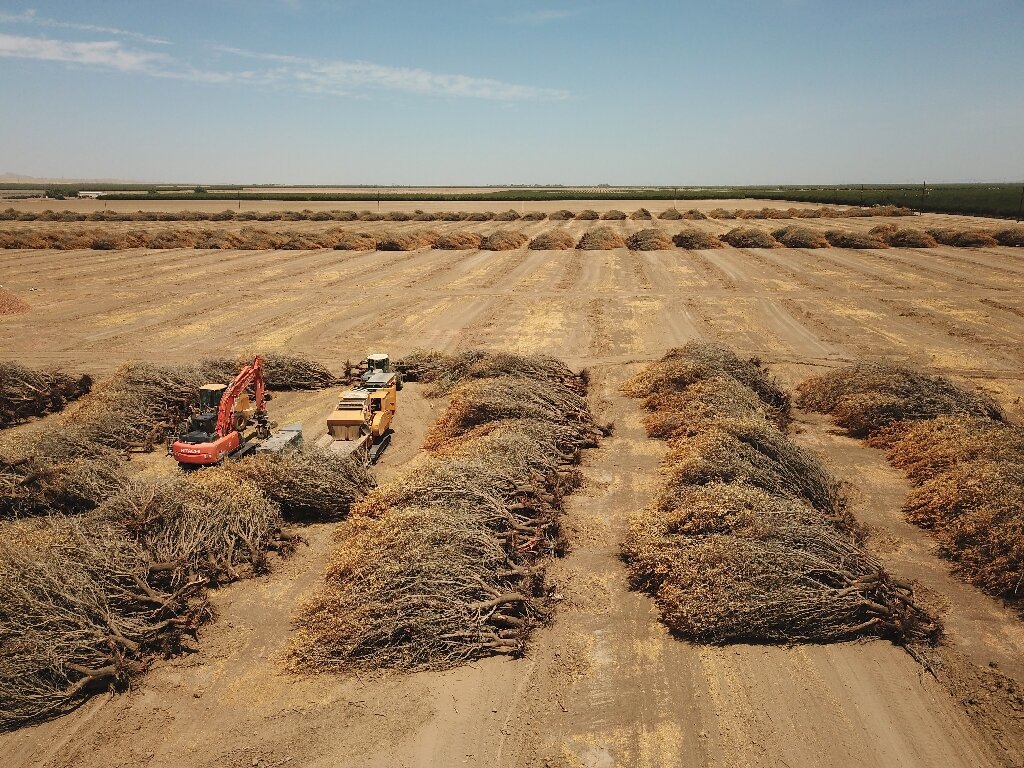
Meanwhile the aquifer depletion is permanent. The Central Valley has sunk 28 feet in some areas from groundwater extraction. That water took 10,000 years to accumulate. It's being drained in decades for almond milk.
Your vegan latte killed more bees and used more water than a year's worth of dairy milk. But it's got "plant-based" on the label so you're definitely saving the planet.
One Bhagavad Gita. Three master keys.
The Shrimad Bhagavad Gita was explained by:
• Adi Shankaracharya (Advaita)
• Ramanujacharya (Vishishtadvaita)
• Madhvacharya (Dvaita)
✅ I’ve compiled all 3 commentaries into one Google Drive folder so you can compare perspectives side-by-side.
But remember:
The Gita is the practical essence of Yoga Shastra.
These 700 shlokas become powerful only when you:
• internalize them
• practice them daily
• live them in real life
💬 Comment “700” and I’ll DM you the folder link.
📌 Save this post for your study
🔁 Share it with a friend who needs Gita guidance
Follow @TheSanskritChannel for more.
Here’s the link: https://t.co/tcbT76ZogB
#BhagavadGita #Gita #Shankaracharya #Ramanujacharya #Madhvacharya #Vedanta #Advaita #Vishishtadvaita #Dvaita #YogaShastra #SanatanaDharma #Sanskrit #HinduPhilosophy #GitaWisdom #TheSanskritChannel