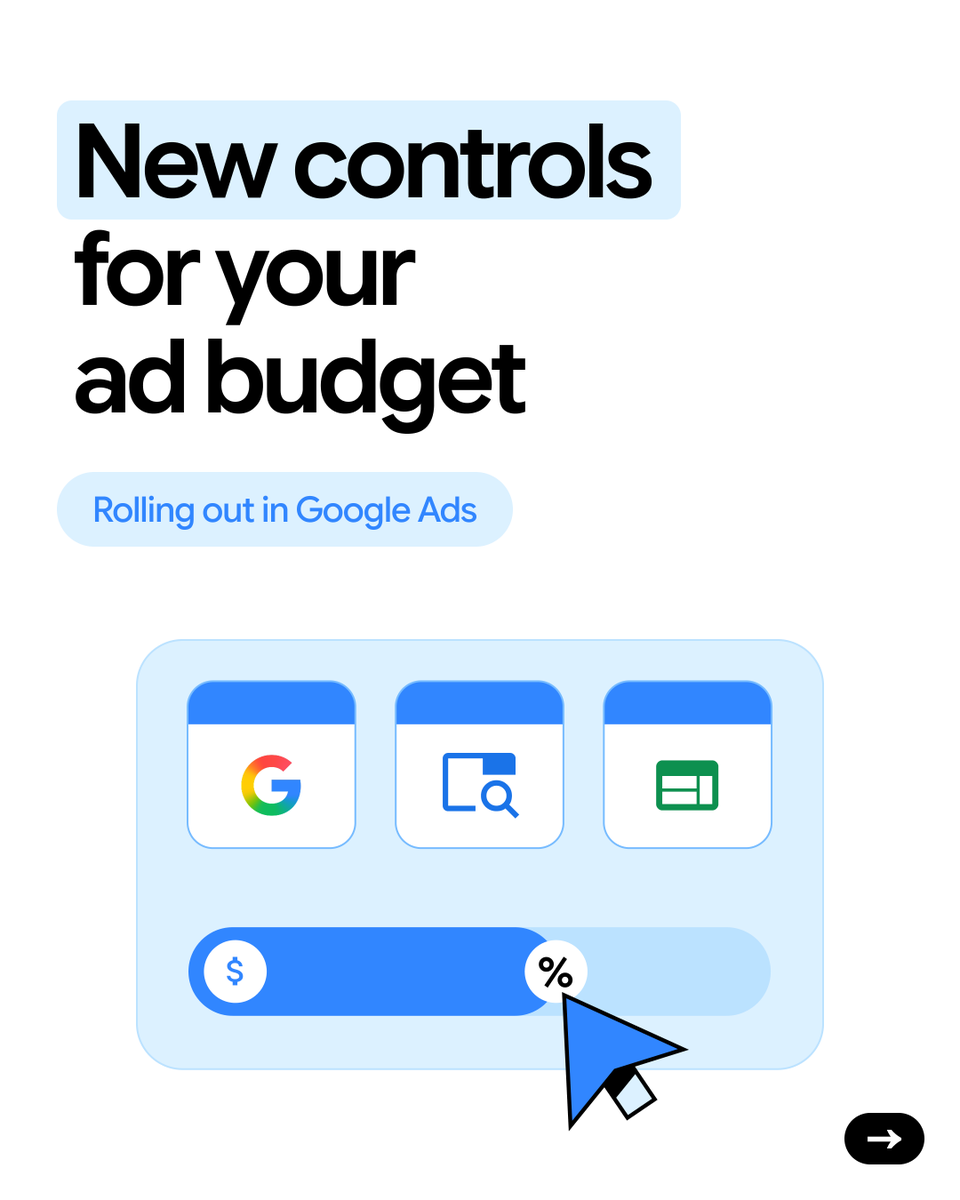
Want more control over where your Google Ads budget goes first?
See how new controls work across Search, Shopping, and Performance Max (with Demand Gen coming later): 👇
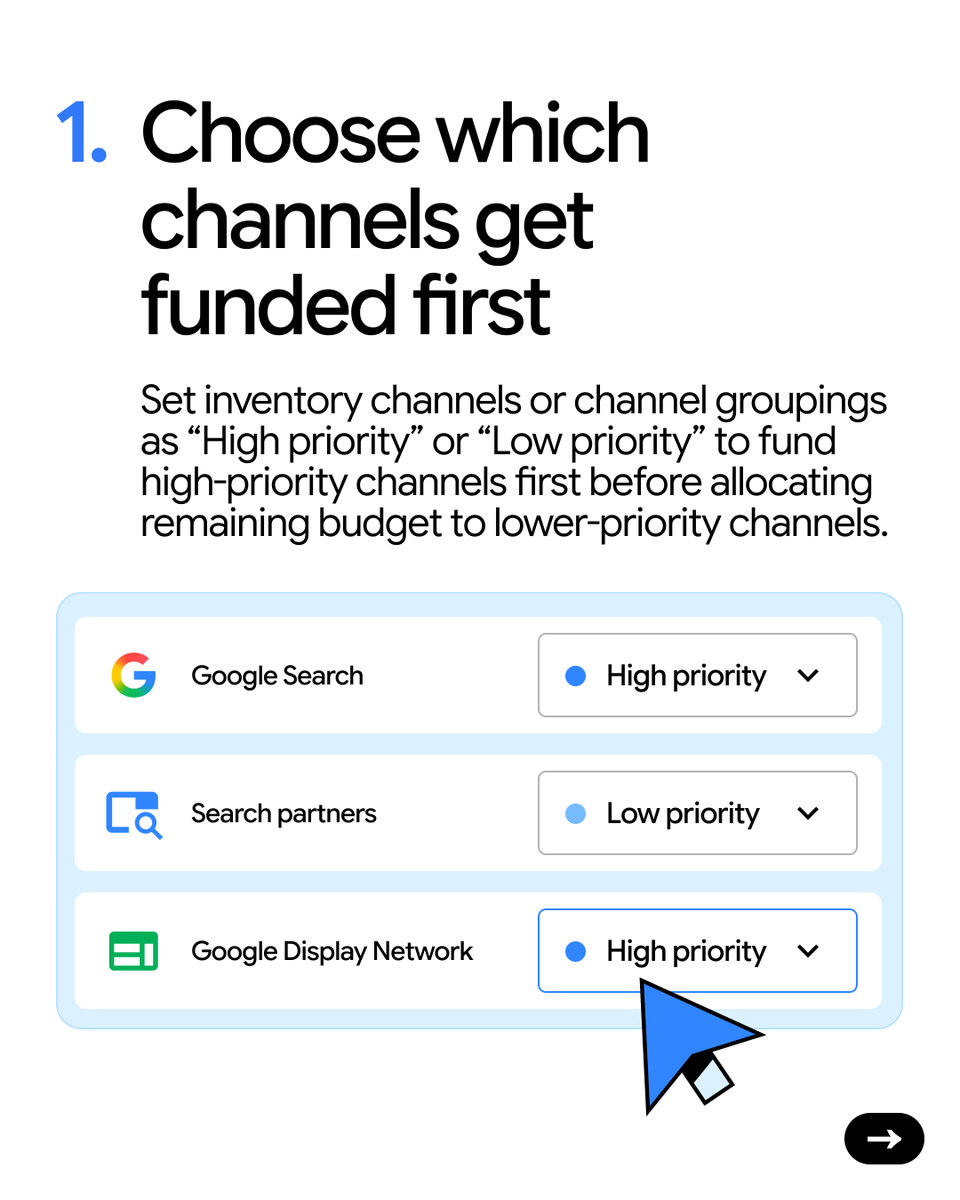
1️⃣ Choose which channels get funded first:
Set inventory channels or channel groupings as “High priority” or “Low priority” to fund high-priority channels first.
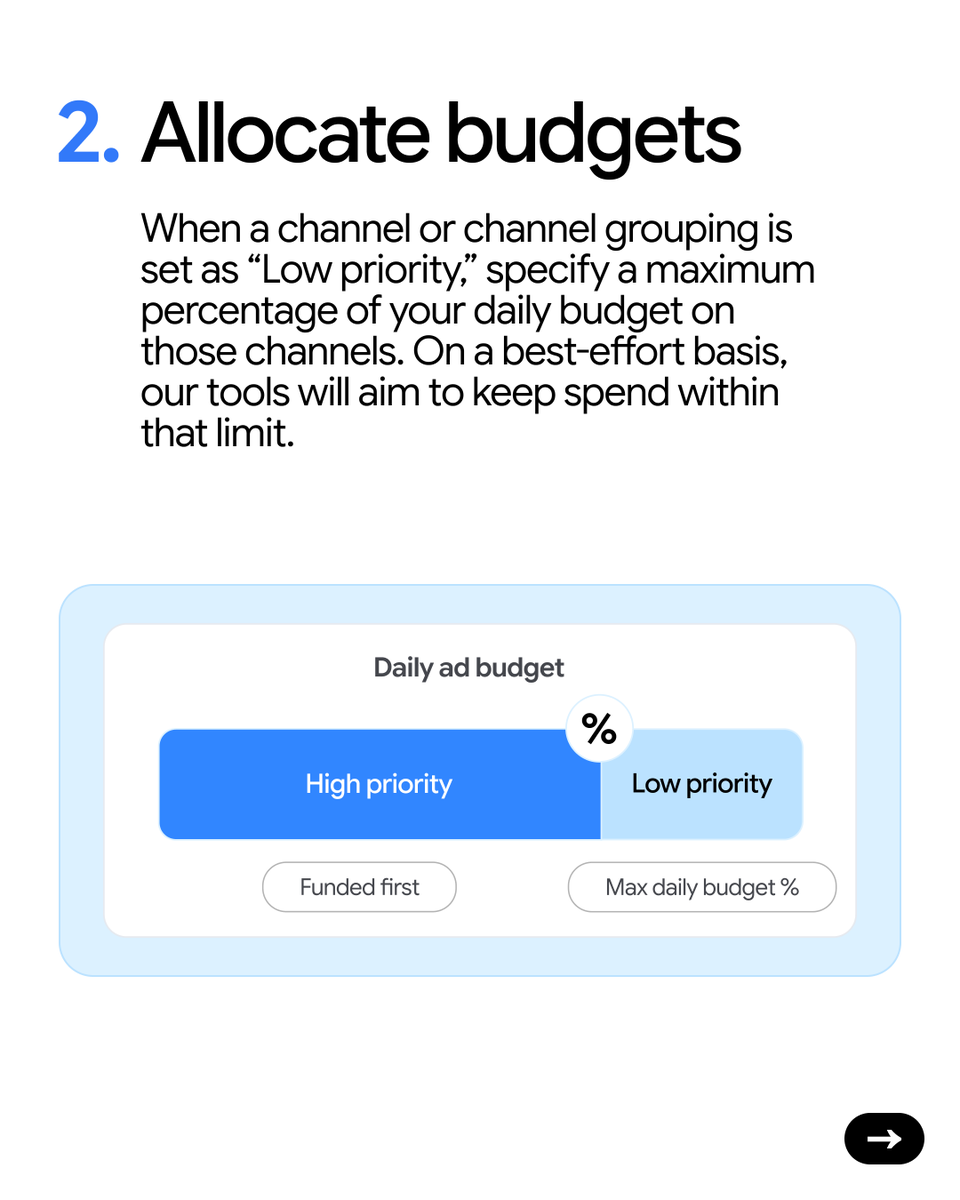
2️⃣ Allocate budgets:
When a channel or channel grouping is set as “Low priority,” specify a maximum percentage of your daily budget on those channels. On a best-effort basis, our tools will aim to keep spend within that limit.
Check the comments to learn more. 👇
Day 12/
We’ve made improvements to Codex & Work that increase the effective usage you get. We achieved this by reusing context across subagents, keeping context cached longer, and improved request routing that allows us to increase cache hits.
@launchwhasmik Thanks for clarifying. The card-required subgroup does lead that chart: 10.5 paying customers per 1,000 visitors. The 5 figure is freemium; all free trials is 3.6. My earlier reply compared the broader categories.
https://t.co/lhdLfHEjW1
@alphacolin I'd show the bill at current usage and at twice that usage for each option. A customer may prefer a slightly higher starting price if the next growth step is predictable. Their choice could reveal which kind of pricing uncertainty bothers them.
@hnshah For an AI product launch, I'd write separate introductions for developers and store owners. One can start with model choice; the other can show how to update a product listing. Reusing the same launch copy assumes both audiences already care about the same problem.
@GoogleCloudTech For lead scoring, a classifier's 0.8 still needs calibration; the output format alone doesn't make it an 80% conversion probability. I'd check score bands against observed purchases before using them to allocate sales effort.
https://t.co/JYSVJR92Af
Google structured data gallery added a "filter by..." option - not writing a story on this but thought it was worth posting here https://t.co/q5GUGpDiKh
@gregisenberg For done-for-you agents, the recurring offer could be a specific job: keeping a retailer's product feed current. Price setup separately, then show what changed each month. That gives the buyer something concrete to renew beyond the initial installation.
@KodyNordquist I'd carry the customer question over too. If an organic demo gets lots of 'will this work with X?', make the paid version answer that in the opening. The useful finding may be the objection you uncovered, even if the original edit needs changing.
@tonysimons For client work, I'd pair the audit with a separate performance export. The README says GSC, GA4 and Google Ads OAuth flows are disabled. A list of page fixes still needs query and conversion data to decide which fixes deserve the next week of work.
@ConnorShowler I'd update the schema section: Google retired HowTo rich results in 2023 and FAQ rich results on May 7, 2026. Useful Q&A can stay, but those rich-result gains shouldn't be in the SEO forecast.
https://t.co/GPhNkvotnr
https://t.co/lhMOO4GCRQ
@gaganghotra_ A useful next step would be revenue per visit by AI surface. A smaller stream of visits could convert better yet still produce fewer paid subscriptions overall. The tag would let publishers see both sides instead of treating higher conversion as a win.
@elonmusk I'd separate misleading claims from visual style. Publish rejected examples with the reason for each: a plain phone-shot demo can be useful, while a polished video can still hide subscription terms. Advertisers need a standard they can apply before paying.
@adsliaison Thanks for the pointer. For Shopping ads, that cross-sell view could change which product gets budget: a low-margin advertised item may bring in a more profitable basket. I'd compare advertised and purchased products before cutting that item's spend.