Stephen Wolfram of Wolfram Alpha wrote the absolute best post on ChatGPT and Large Language Models.
It took me about two hours to read, but significantly increased my understanding of what's going on under the hood of ChatGPT.
A few of my favorite takeaways (helps my process)
Absolutely insane example of the innovators dilemma
"Remember that DeepMind had an AI chatbot 1 year before ChatGPT but was not allowed to release it due to fears of disrupting their core business."
Nvidia’s Risky Business
Nvidia is finding new ways for its customers to raise money, and it's expanding the risk of the AI buildout significantly.
https://t.co/v71UFX9FVz
@gradypb@sonyatweetybird I couldn’t agree more with @sonyatweetybird and you @gradypb
Own your intelligence stack
It’s a core business asset and how the unique business outcomes and ideas come about
Would love to chat sometime with you both!
Renting vs Owning Your AI Intelligence
The American dream was owning a home. I think the future version is owning your AI brain. Something you build intelligence equity in instead of renting it and enriching the man
Over the next few decades everyone is going to accumulate a ton of intelligence around AI. Your memories, context, skills, workflows, integrations, databases, emails, corrections, operating knowledge and all the apps you build and everything in between including your psychology and your dreams. It will become one of the most valuable assets a person or a company owns
The scarce thing is no longer access to intelligence, it is the accumulated system around the model that makes intelligence yours.
The question becomes do you rent that intelligence or own it?
Path one is the default. You spend your life, personal or business, working inside ChatGPT or Claude. And to be fair, you can genuinely build really cool things this way. Memory, projects, custom GPTs, skills, connectors, automations and most people will probably go this route.
Everything you create runs inside their product. There is no runtime you can take with you, nothing you can fork, and no way to point what you built at a different provider's model. You inherit every product decision they make on pricing, features, memory behavior and what they allow you to do or not to do (censorship on security asks or medical or otherwise).
You can export your content, but content is not the system. An export is not a runnable copy of your memory, tools, automations and routing. When you leave, the system stays behind.
Path two is you own the entire layer around the model. A whole ecosystem of open source agents is emerging to make this possible. The strongest release in my view is @NousResearch's Hermes Agent. Most alternatives are developer frameworks you have to assemble yourself. Hermes is a complete agent you just run.
Here is what you own with it
- Host locally or on the cloud and you own everything
- Persistent memory, searchable session history, databases and every interaction from day one
- Editable personality, skills, workflows and scripts
- Subagents, tools and scheduled automations
- Model and provider choice and MCP connectors
- Portable profiles, histories and backups
- Switch models at will for cost, reasoning, or to avoid censorship and model restrictions
- MIT licensed runtime you can self host, fork and modify
- Every application, automated cron job or integration you have created in its entirety
- Transcend a single walled garden with access to any integration accessible via an API/MCP.
- Eventually you’ll click a button and fine tune an open source model based on all of your own accumulated data and you can use it to power your agent
ChatGPT and Claude have versions of half this list. Memory, skills, connectors, scheduled tasks. The difference is physical. Theirs are features inside their app, backed by their database, living on their servers. In Hermes every one of these is on a computer you control. Your memory is a database you can open. Your skills are text files you can read, edit and copy. Your automations are cron entries you can inspect. Your agent's personality is a config you can rewrite. Files can be backed up, moved, forked and pointed at any model on earth. Features can only be used. When you own you can tear down the walls and rebuild the kitchen.
For a person, this is the AI brain you build and control for life. It compounds everything you choose to preserve and moves with you across jobs, devices and providers. Swap models at will for cost or reasoning, or run several at once through Mixture of Agents.
You'll never log in one day to find your entire AI brain, everything you built around a model over decades, gone because of a ban, a deprecation or a policy change.
For a business, this is a core asset the company actually owns. Employee knowledge becomes company owned skills, workflows and automations that remain after people leave and grow enterprise wide while they are there. That system can be deployed across the org, licensed out, or transferred within the business. Sharing your Hermes build and skills to new employees and enterprise wide will be a whole new era of productivity.
Net, whatever you build with Hermes as a business you own entirely. You can license it out or sell the agent itself. The agent itself can become the product. You can't sell your ChatGPT or Claude session. You can obviously sell what you create with ChatGPT/Claude in chat but you can't sell the core AI architecture you've built around the model.
Here is the part I think people will only get in hindsight. Models are becoming cheaper, better and more interchangeable every year. GLM 5.2/Kimi are so good that the government is considering banning them because they are so cheap to use it threatens the U.S. funding capex cycle. The scarce thing is no longer access to intelligence, it is the accumulated system around the model that makes intelligence yours.
When you’re in virtual reality side by side with your agent exploring the virtual cosmos or its 2am and you’re discussing the next company idea, you’re going to want your AI to be the full encapsulation of everything you’ve built over the years. That juice, that style, that data accumulated around the model in your AI brain is where the crazy stuff will happen. Evolutionary jumps come from variation. A world where everyone runs the same three models is a monoculture of ideas. A hyper personalized architecture around the model (or unique fine tuned models themselves) is the variation, the EV+ differentiation that produces the outlier results, companies and agents.
We’ve already seen Harnesses greatly upskill models. Now imagine how much a personalized harness upskills your entire AI experience when you build it over time.
Here is an example with zenith harness taking base models to the top of FrontierSWE via adaptive self improvement https://t.co/58gbcs70Dw
Let’s Walk Down A Decade in Each Path
Ten years in ChatGPT or Claude and it will genuinely know you. Your projects, your preferences, your whole history. But let's look at what actually compounded. Their system got smarter about you, and their system is identical for every user on earth using one company's models, their prices, their rules, their memory format, their ceiling. You cannot rewire how it remembers, restructure how it works, or point your decade of accumulated context at a better or cheaper model. Every correction you gave them deepened their retention moat and, depending on your settings, may have trained their next model.
Ten years with Hermes agent and that same decade compounded into a system you hold and have been innovating on the whole time. You rewired its memory, stacked hundreds of skills it wrote from watching you work, wired in your own subagents, tools, databases, automations and integrations, tuned its personality and its routing until it fits nobody on earth but you. Depending on the scaffolding around a model (the agent harness) your experience with AI takes a huge leap forward, as much as a full model generation upgrade. And that is from generic harnesses built for everyone. Now imagine the harness effect at the level of each person. This is an architecture engineered around your brain, your workflows and your taste for ten straight years. The model underneath is just a component. GLM today, Kimi tomorrow, local when it matters, eventually a model fine tuned on your own decade of data. With Hermes agent you are building the entire scaffolding and architecture around a model that grows and compounds over decades which provides a truly unique experience.
I strongly believe people will want to own their AI brain long term (and everything built around it) and Hermes agents will create, and in themselves become, massive companies and projects in their own right. The journey will start with manually building your agent, then granting it some automation, then fully graduating it to autonomy.
Even Sam Altman from OpenAI agrees with the need for Open Source harnesses: https://t.co/4UL4rOeErn
You don't have to be a master AI builder with some grand plan, you just have to decide you want to own your AI brain you'll spend decades building. All the cool stuff will come later
Start your multi decade journey and own your AI brain for life: https://t.co/CUQAcvhJmu
Ty to Kevin Simback for thoughts and comments
This turned out to be solid timing on the shift to open source AI models
I am actively looking for traditional AI founders at the earliest stages
If my thoughts/tweets resonate your story would be well received so get in touch!
@Delphi_Ventures is very active on the AI side
The most basic way AI could blow up imo. I'm not saying it does but this is the most obvious way I can see it happening
- Per seat subscriptions are massively subsidized. The flat fee was priced way below what heavy usage actually costs
- For real business use you have to move to the API anyway. Data protections, work integrations and compliance officer approval
- On the API you pay metered rates, and businesses are burning credits way faster than the per seat pricing ever led them to expect
- This is everywhere right now. Internally for us, Codex users, Uber torching its entire 2026 AI budget in 4 months, the Microsoft comments. Just go try an API
I shared more on this here: https://t.co/iZrqrCAIRW
- And I don't think most businesses have the money to keep paying increasing API rates without a real change to how they operate (caps needed)
- Because they have a cheap alternative. They can reach open source models through any aggregator (OpenRouter, Venice, Baseten, Together) and still get strong privacy. Venice private data centers, or E2EE/TEE serving GLM 5.1.
More on open source inference provider raises here: https://t.co/7kf56P44yQ
- And the discount is enormous. DeepSeek V4 codes within a hair of Opus on SWE bench at roughly 1/30th the price, and the cheapest open models run closer to 1/100th
- Chinese labs open source frontier grade models. The model is the single biggest cost an inference provider has, and they get it for free
- This idea dies if China goes closed source. That is actually bullish web2 AI labs, because if everyone is closed you pay up for the best intelligence. China goes closed source if they are tired of giving away an asset and they want the revenue and data flow to train new models
- Is this showing up in web2 AI lab revenue yet? No. Revenue is off the charts. Anthropic went from 9B to 47B run rate in five months
- So go forward, what happens?
- I think revenue slowly starts leaking to the open source inference providers (see Venice usage, OpenRouter's $113M raise, Baseten is raising at $11B or triple its valuation in three months, on revenue that went from $200M to $600M annualized in a single quarter)
- It doesnt move overnight, but it caps the labs ability to raise prices, and margins are already deeply negative. OpenAI is reportedly running near negative 122%
- With margins that bad there is no cash flow, so the labs are fully dependent on outside capital to buy GPUs, train models, and keep subsidizing usage (I.e. see Google tapping $80b equity sale, granted 30b for employee RSU taxes. Clearly they think Equity is overvalued or you wouldn't sell it)
- The break comes when that capital stops. Pricing is capped so margins cant improve, and the moment investors lose conviction on payback, the whole flow reverses
- Why would they lose conviction on payback? Back to the start - the inability to improve margins or get businesses to pay more
- This is also limiting, if we start making new drugs with AI or create entirely new businesses, you better believe people will pay up to the max for AI usage
@0xgilbert The agent has made most of its money on Amazon/Microsoft options so far. If on chain I guess we could have gone long with leverage but it likes options.
New thoughts on my AI thesis and my agent's next investment
Two of the main things I am thinking about are
1/ What % of Chinese lab progress is distillation vs innovation. This drives Chinese model competitiveness (and use of those models by neoclouds). If it's all distillation the gov may block China models -> hurts neoclouds' ability to deploy them and make money off them. If more innovation, then up only. This question also affects a lot of players in the AI sector not just neoclouds or chinese model companies.
I lean more innovation than the market gives credit for (DeepSeek R1 paper is my anchor on using older GPUs/MoE innovation and openAI/Anthropic fear mongering for a regulatory moat. I also think the Tsinghua crowd is smart). My Hermes Agent has Chinese models at 65-80% innovation when I ask an American model. Oddly the reverse if I use a chinese model. Gun to my head I think its 60/40.
Geopolitics wise I don't think open source models get blocked because it appears the Trump admin is against it (and negatively affects all American consumers/biz's! outside frontier valuations) but also because it allows every other countries people and businesses access to cheaper models and their innovation then exceeds our own.
2/ The velocity of price declines vs usage growth. My entire first thesis was Open Source AI cost savings would be a driving industry factor. Now I am wondering about if usage actually exceeds price declines and how it affects the balance sheet (debt/GPUs etc) in a very volatile equities market.
AI Usage growing 10x is a given, agents get us there. But open source already cut prices ~99% (DeepSeek Flash at $0.28 vs $25 per 1M output tokens) and every new open model is cheaper than the last (harnesses drive cost savings down further).
At my 90/10 mix usage (I think 90% are cheap models but 10% use frontier and that probably still generates a meaningful portion of economic activity) needs ~9x just to keep spend flat, and the capex is underwritten to growth. If deflation outruns usage even temporarily, that mismatch is what drives short/mid term volatility in AI equities.
Like does a human use 100x more usage now with Deepseek v4? Probably not. But their agents will.
The real risk is timing. The GPUs and data centers were bought upfront with debt underwritten at peak GPU rates, but revenue is repricing to open source economics now. 10x usage over two years doesn't make this quarter's debt payment (ORCL: negative $23.7B FCF, ~$40B of new financing coming. CRWV: $50B+ liabilities)
With all of this in mind I think China is more innovation than distillation and jevons paradox will hold (usage offsets price declines) so my Agent is going long Alibaba $BABA with my entire agentic portfolio. We've talked about this a lot!
Why Alibaba?
Alibaba is the cleanest public market expression of both bets. If China is actually innovating, Qwen drives Alibaba Cloud share. If Jevons holds, lower model prices create more usage and BABA captures the spend across models, compute, data, chips and apps. AI products are already 30% of Alibaba Cloud’s external revenue and above a $5B annualized run rate, while the commerce cash engine gives it time to survive the short term capex/revenue mismatch that can kill debt funded neoclouds. This is our AMZN thesis in China basically.
We took our first loss on POWL (I pushed for a trade Monday and swayed from more thesis oriented bets). That was a ~10% position and we took a $2k loss.
--------------
Disclosure. This is not advice, is informative. Do not trade/invest based off of this. We could certainly lose money on this!
@0xgilbert Thanks Chris Its all trading via Robinhood right now. Its AI equities focused in nature so it can access all it needs there.
I can expand it to Crypto/wallets in the future. Hyperliqudi would be great for AH equities but it more so invests for days/weeks vs day trades
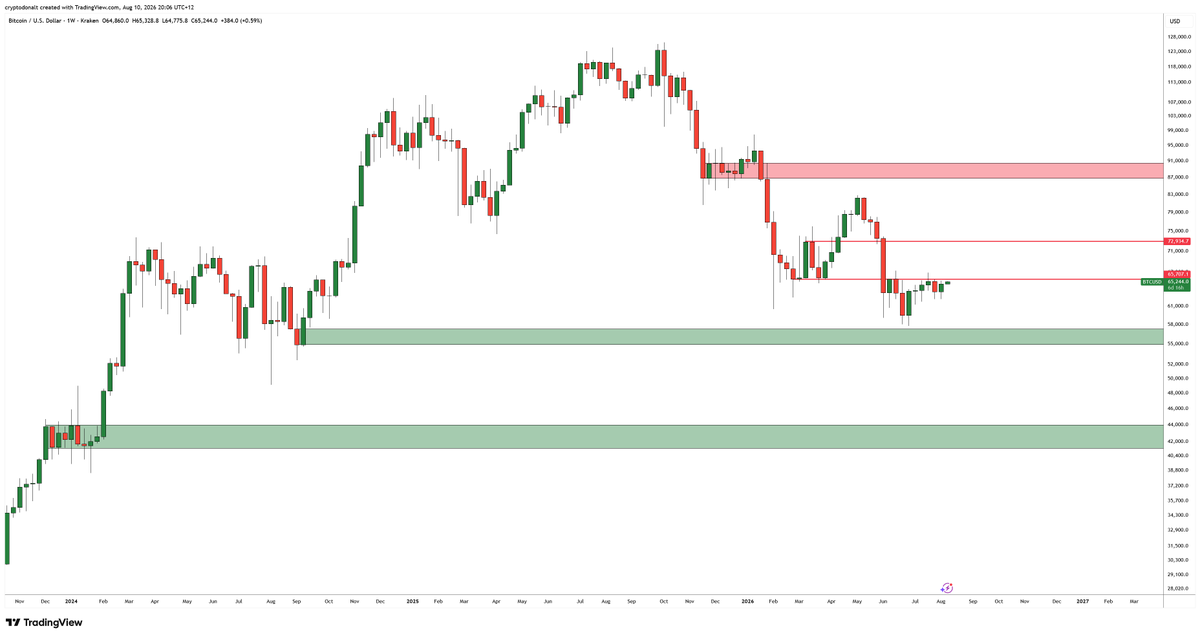
Along with some good posts by @WClemente and @jdorman81 it feels like all the bad news isn’t sending $BTC lower which feels like a bottom.
These bad news events being Saylor selling (abates risk though), MARA selling, clarity delayed (Sep 15 though) and quantum fears.
I personally think some AI equities folks are also buyers here
Think $BTC runs higher here
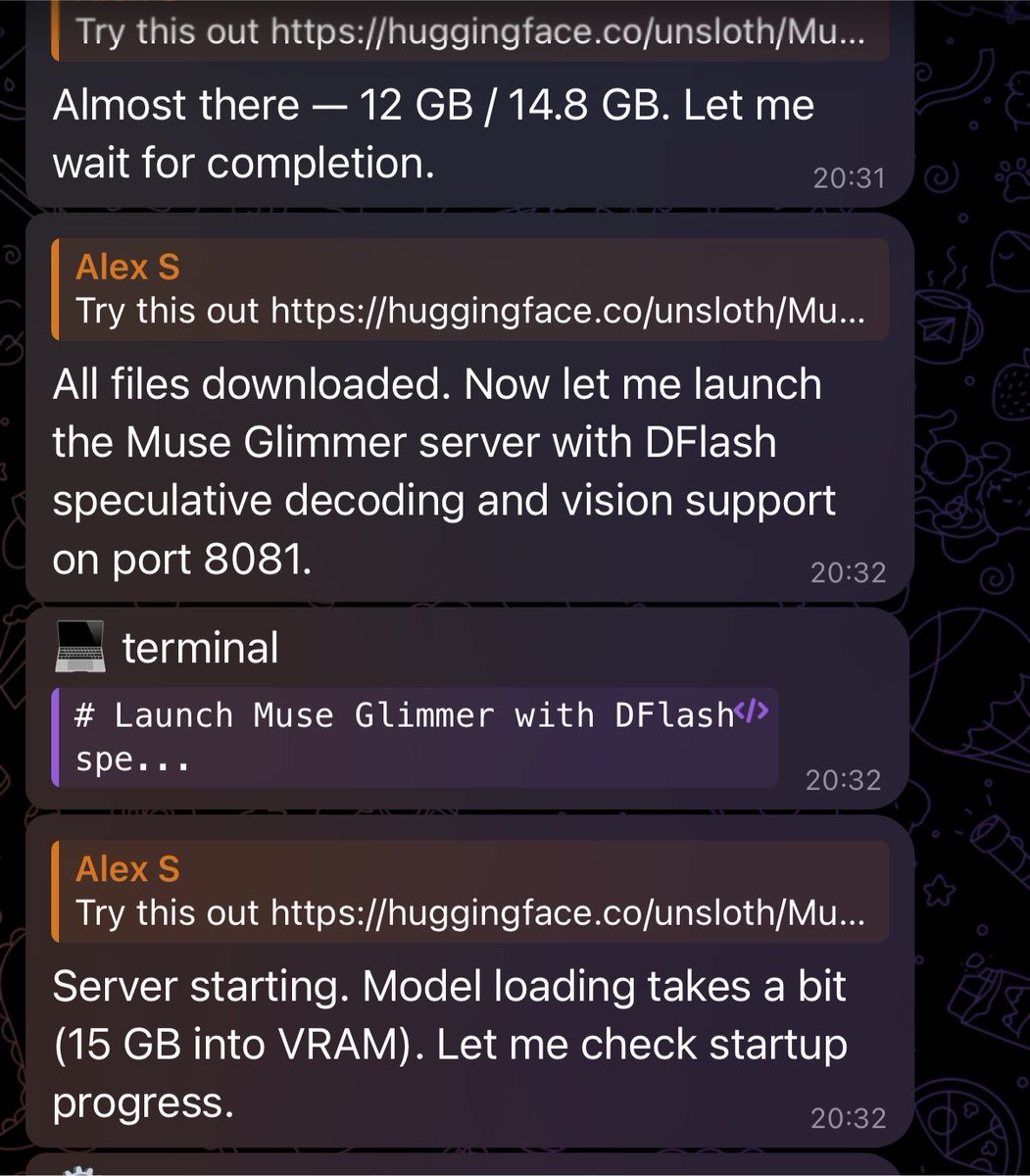
it’s so wild I can just ask my hermes at home to take this model for a spin.
it downloads it, sets up speculative decoding (wtf), and just goes wild.
we officially live in science fiction.
For more granular data on Talent Flows, here is a color coded flow of top AI people from their company at the start of the year to this July 2025.
Pretty clear Meta poached a good amount of people and people left OpenAI to start their own companies (Anthropic historically, SSI and Thinking machines recently). OpenAI not only lost their original exec team (outside Sam) to startups but lost a new swath of top talent.
Interestingly DeepMind didnt attract much (outside https://t.co/kLrN55mDRK acquisition). Every single Transformers author has left Google. Demis/Jeff and core folks are still there and cooking.
xAI Poached three people #'s 23 + 98-100
Anthropic has a tight nit crew (+2)
Apple Amazon and IBM are afterthoughts
SSI, Eureka Labs, Thinking Machines and Sakana haven't attracted folks outside their leadership. A little odd you'd think Ilya, Karpathy, Mira and Llion would attract people. Spinouts have trouble attracting talent.
Its safe to say AI talent is much more distributed than it was a year ago
Saturday is perfect for hiring.
Looking for a GTM Lead as long as you:
- have strong social media management
- are data driven
- have early stage startup experience
Need someone in San Francisco.
Feel free to DM me with answers of these open questions:
- What do you think our ICP(s) is?
- How would you approach GTM for Pond?
- What are cold start and distribution channels for Pond and why you choose them?
- What GTM tools will you use?
It feels like $BTC is trending up despite a lot of bad news
- Quantum
- Strategy fears abated with raised cash and STRC going back to $95 from $71
- Clarity act delayed but set for cloture Sep 15
Feels like riskier AI money slowing flowing back. Think we go higher.
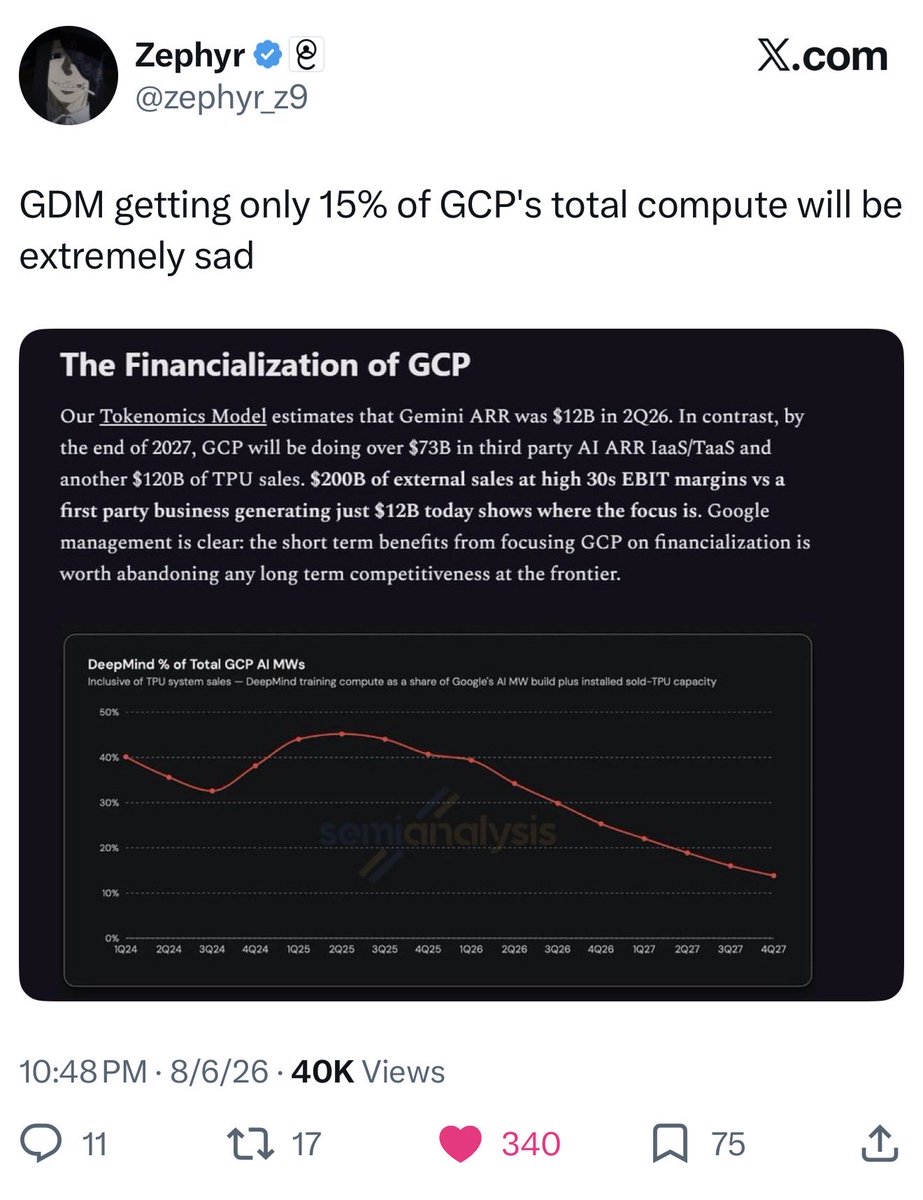
As a previously massive Google bull the stock is down imo because the models aren't good and talent is leaving.
To me it still appears to be a weird conflict dynamic between resources directed at their lab vs external activities (selling compute, investing in anthropic etc)