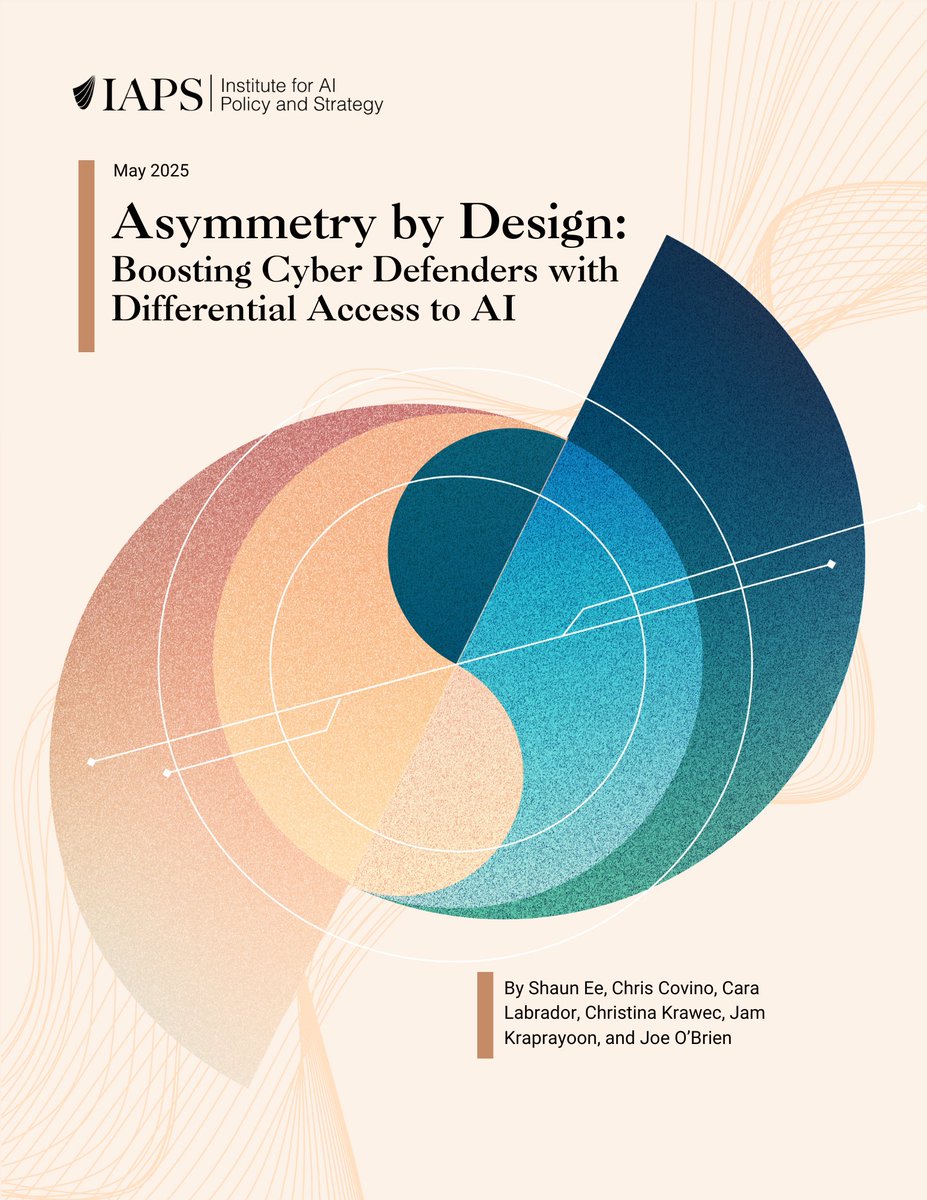
☯️ How can we make sure AI cyber capabilities boost defenders over attackers?
We tackle this question in a new report from the Institute for AI Policy and Strategy (IAPS), “Asymmetry by Design.”
And lays out four example schemes that developers can reference, though these are not exhaustive! We encourage readers to apply our differential access framework to their specific challenges, from supply chain security to cybersecurity for the defense sector.
A really obvious way AI will displace humans is that AI will be nice, pleasant, kind and thoughtful, but humans will be stupid and annoying. So the future is a bunch of nice, pleasant, kind, thoughtful AIs, and humans that are nice, pleasant, kind and thoughtful.
For context, our estimate is fairly minor compared to everyday uses of electricity. Even heavy ChatGPT usage would not dramatically increase your energy footprint — a typical chat query uses less energy than a lightbulb or a laptop does in a few minutes.
Congress could dramatically improve the H-1B program with a simple, one-sentence change that could likely pass in a reconciliation bill.
Here’s the case…
1. High-skilled immigration is critical if you want America to win.
2. Our immigration system should be a meritocracy that prioritizes talent and hard work.
3. On net, the H-1B program has been positive, but it could be reformed to maximize upside and stop gaming of the system.
4. Currently, if companies employ too much of their workforce on H-1Bs, they are subject to extra rules and requirements, unless they pay $60,000+/year.
5. In 1998, $60k was significant ($116k today) — today, it's far below the average H-1B salary.
6. One sentence changing this floor from $60k to $120k (with automatic increases using CPI or 3x national median income) would transform H-1B usage.
7. Most of the top 20 H-1B filers are outsourcing firms paying relatively low wages — this change would increase their compliance costs dramatically.
8. This change would help prioritize our limited H-1B slots for higher-value work and employers — and likely make it too expensive for companies whose business model is to use H-1Bs to outsource jobs.
9. Finding a change that can pass through reconciliation is key — that way, you only need 50 votes in the Senate.
10. This revision could work because, while it can have a significant budgetary impact, it makes no new policy. It is simply updating a policy Congress enacted into law 26 years ago.
11. Raising the floor would lead to an additional $11+ billion in federal payroll taxes over 10 years (with zero effect on federal spending).
12. There are other reforms that could also improve the H-1B program (like moving away from a lottery system).
13. But this one-sentence change is the simplest, most straightforward improvement that would be eligible for inclusion in a reconciliation bill.
14. Consider it a large downpayment on a better H-1B system.
We have updated our post on #J28243 to include local pressure (1025 hPa) altitude corrections for the ADS-B data. ADS-B data is only reported in Standard pressure (1013.25 hPa). https://t.co/ECZ3sHa1Zg
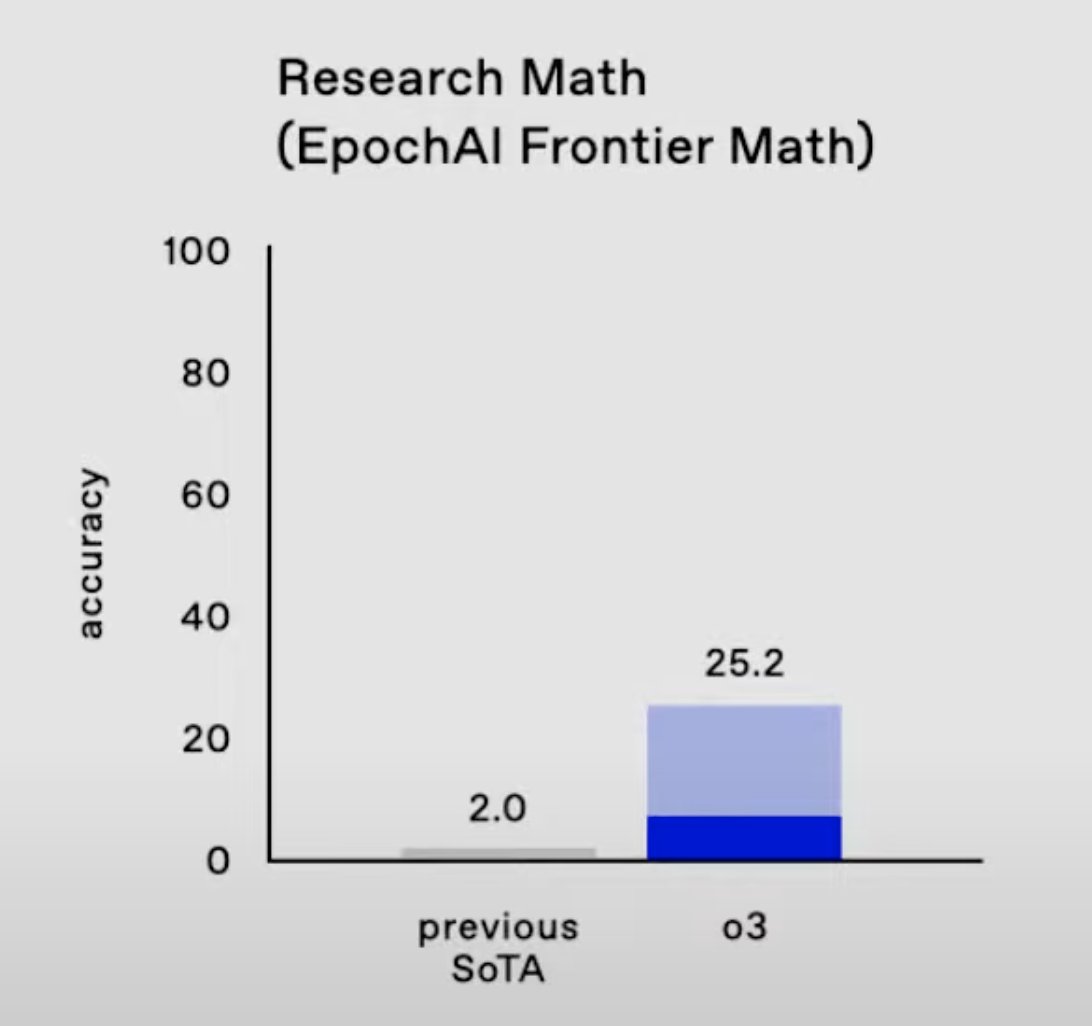
1/11 I’m genuinely impressed by OpenAI’s 25.2% Pass@1 performance on FrontierMath—this marks a major leap from prior results and arrives about a year ahead of my median expectations.
This is really great to see!
Specification-based evaluation is such a critical aspect of pretty much all engineering fields -- it makes a ton of sense to connect that approach to how we evaluate LLMs.
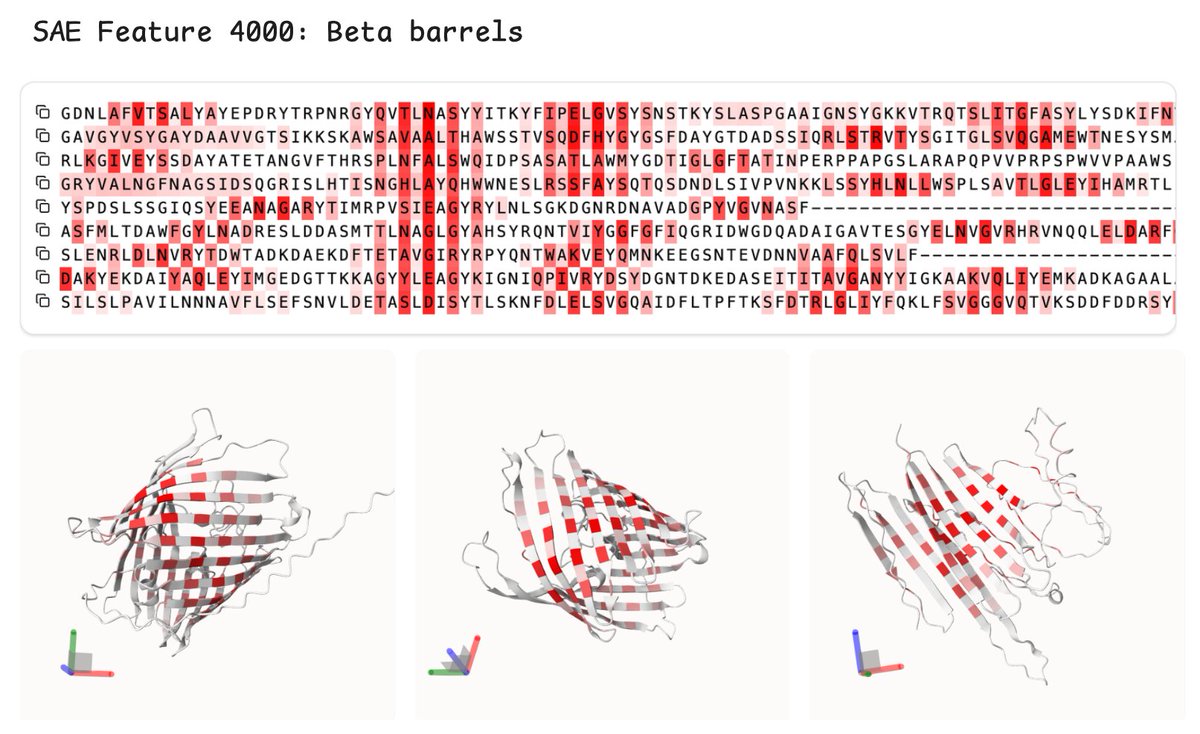
Inside the brain of a protein language model 🔍
A thread on reverse engineering neural networks:
Some methods, challenges, and rabbit holes on the 20 amino acids—the building blocks of life.
1. There have been warning signs for years that many blue state policies aren't working.
Especially because states like California make it really difficult to build anything.
Here's a thread with some data... 🧵
Remember Golden Gate Claude?
@etowah0 and I have been working on applying the same mechanistic interpretability techniques to protein language models.
We found lots of features and they’re... pretty weird?
🧵
Which case-studies can inform the regulation of advanced AI?
New paper from myself, @oscar__delaney, Ashwin Acharya and @zoehtwilliams undertakes a first-of-its-kind systematic search for relevant regulatory precedents.
https://t.co/wS1IfEc2Xs
Summary in the thread👇[1/4]
📢 We're thrilled to share that Asher Brass, a researcher at IAPS, is one of the co-authors of a new paper titled "Responsible Reporting for Frontier AI Development", led by Noam Kolt of the University of Toronto.