Sustainable & Development Finance • Emerging market capital flows • Trade and macro • Interested in geopolitics, history & emerging tech • BRICS & Global South
Shashi Tharoor: China has been able to attract a lot of Chinese scholars working in the West to come back home and lead research institutions. India hasn't been able to do that as easily because China can offer financial incentives that India cannot
@DanielDiMartino You may be even more surprised to learn that Nicolas Mudoro was also an ardent follower of the same Sai Baba. Besides, it is rather naive to refer to Sai Baba as a Hindu god. And why should it be shocking that someone is not Christian?
@nitinmeshram_ Sir, you should stick to your “peedit, shoshit, vanchit” narrative and victimhood card instead of venturing into subjects that are clearly beyond your intellectual capacity.
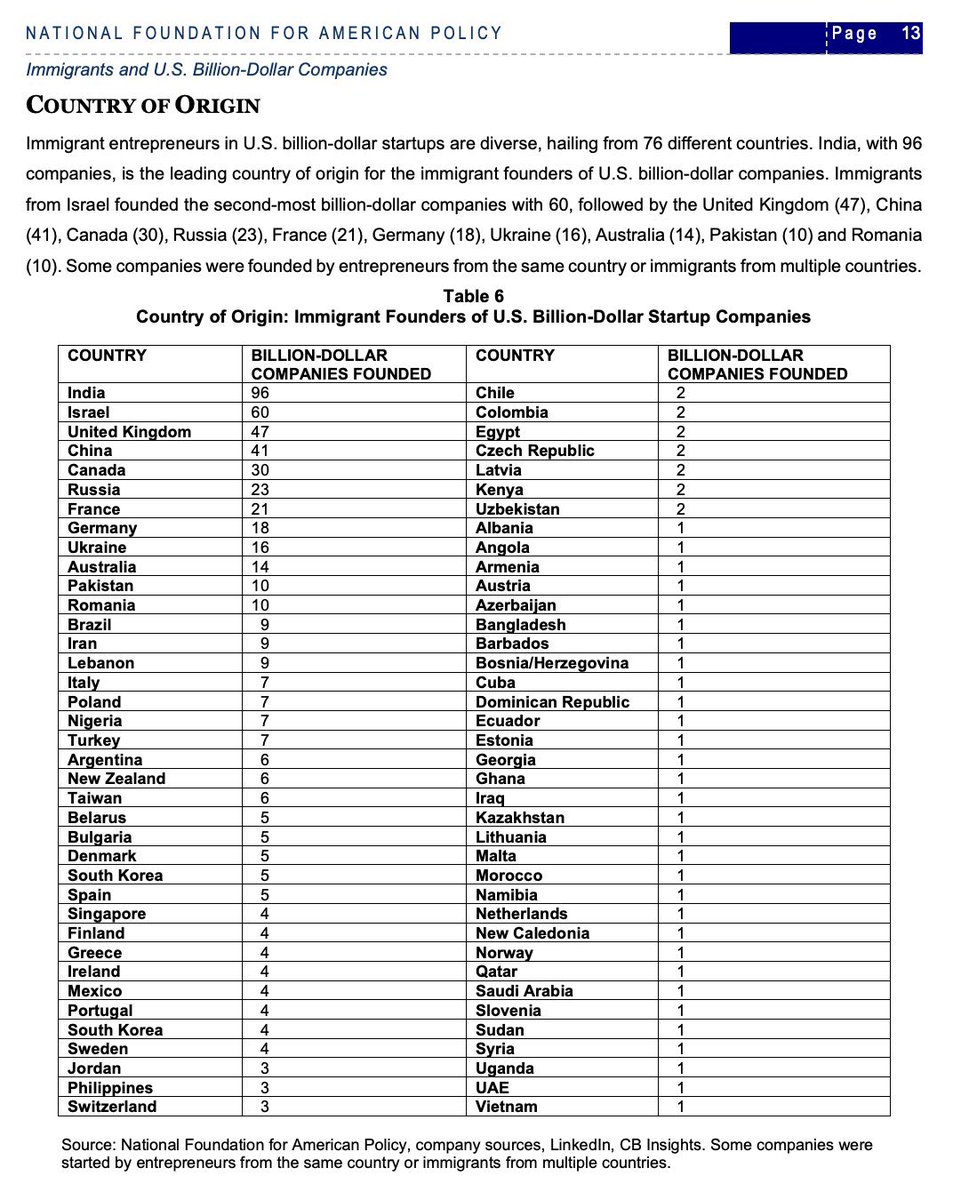
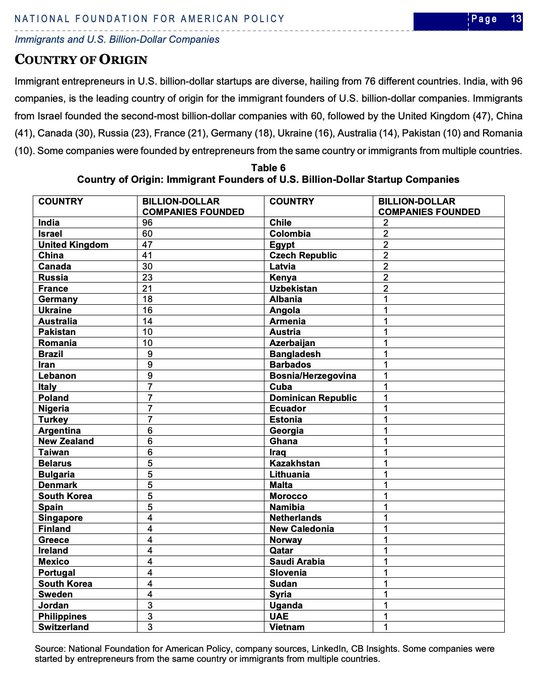
India has sent 96 people to America who started billion dollar companies. No one else is even close.
There's only about 5 million Indians in America. Almost one in 50,000 of them is a unicorn founder!
What a holy, special, beautiful people.
I will always fight for them.
Gold has overtaken US government bonds as the world’s top reserve asset. The shift reflects an attempt by many countries to seek alternatives to the US dollar, the world’s de facto reserve currency https://t.co/h3NnirICcS
@Jared_Seidel_ It’s been a long time since your last visit, you should come back again soon. So much has changed in the last ten years! Maybe this time, consider exploring South India or the Northeast 😀
Much of the West’s religious heritage was shaped, directly or indirectly, by Indian thought transmitted through ancient trade networks.
From the 10th century BC, ships sailing from the Red Sea to India under the Hiram–Solomon maritime venture facilitated commercial exchange and intellectual and theological transmission. The Bhagavad Gita idea of the unity of the divine influenced the rise of Yahweh from minor deity to the main and eventually only Hebrew god.
Furthermore, Jain rejection of animal sacrifice influenced the decline of sacrificial practices across the Levant and eastern Mediterranean. Later, Buddhist ideas also traveled west. Under Chandragupta Maurya (c. 321–297 BC) and Ashoka (c. 268–233 BC), thousands of missionaries travelled the same trade routes. The doctrines they carried, asceticism, vegetarianism, the soul’s transmigration, reincarnation and pacifism, influenced far further.
These ideas resonated among Gnostics, Essenes, Manichaeans, Orphics, Pythagoreans, Druze and Neo-Platonists. The non-canonical Gospel of the Ebionites presents John the Baptist as a vegetarian, while parts in Genesis endorse plant-based sustenance.
Traditions surrounding Krishna and Indra include motifs later associated with Jesus: miraculous birth, celestial signs and wise men bearing gifts. Both Buddha and Jesus undergo wilderness fasts marked by temptation. Both advocate celibacy and renunciation of worldly wealth. In a Jataka, a Buddhist disciple walks on water. In another Buddha feeds 500 people with a piece of bread. Another resembles the prodigal son story.
Trinities within Vedic and later Hindu thought, Varuna–Mitra–Agni or Vaishnava–Shaiva–Krishna invite comparison with Christianity. Brahmanical substitution of rice cakes for human sacrifice parallels the Eucharist, where bread becomes Christ’s flesh. Brahmanical prohibitions against contact with raw flesh echoes in ritual restrictions imposed on Roman priests or flamens, probably derived from Brahmin. Krishna, Buddha and Christ were the result of virgin births. The word Christ is from Krishna or Krista. Indian ablution rituals spawned the idea of baptism, the idea of reincarnation became resurrection.
The Vedic “Om” became ‘Amen’. Devotion to Mary, mother of god, the Madonna is from Mata Nah, Our Mother, or the mother goddess. In Buddhist monasteries material gifts were linked to spiritual merit, copied by Christians. The idea of many divine manifestations emanating from a single ultimate reality resembles the hierarchical Christian God, Christ, the Holy Spirit, Mary, angels, saints, and martyrs. John1.1’s ‘In the beginning was the Word and the Word was with God and the Word was God’ was a Vedic mantra.
Accelerating Indian maritime trade unintentionally brought Indian ideas, albeit re-moulded in transmission, which in Christian form eventually replaced European pagan religions, which themselves were originally Indian-influenced from thousands of years earlier.
A good initiative: India’s new Ambassador to China @VDoraiswami speaking in Mandarin introduces the Indian Embassy and its services. A snippet of the video that’s up on Chinese social media
This woman is a fraud, she has no idea about Indus Valley civilisation sites and discoveries. She thinks just because the civilisation was named Indus Valley Civilisation , big cities should be around the Indus River. RakhiGarhi is 430 km away from the Indus River and is the biggest site of the Indus Valley Civilisation. The more she opens her mouth the more she exposes herself.
@GordonGChang Right, the “China collapse” you wished for will never happen in your lifetime no matter how patient or impatient you are. You are wasting your life bullshitting.
Indian babies have been sleeping with parents for centuries. Same with babies in many parts of Asia & Africa.
The West forgot the basics & started separate rooms, controlled crying & all that nonsense. That was blindly followed by the "progressive" set in India. Now it seems common sense is coming back in fashion
The racists are not mad at @balajis. They are actually jealous of him. He is smarter than them. He is richer than them. He is also kinder than they are. They cannot digest a person who has the ability to analyse things far better. Balaji's biggest strength is his amazing ability to handle disagreement. How do I know? I have had umpteen disagreements over the years, and the way Balaji tries to understand someone else' pov is admirable. Imagine racist Americans have a problem with a guy like him.
Symbolism of Shiva pervades all of Indus Valley civilization (Sindhu-Saraswati civilization). Numerous Sivalingas along with Siva-Pashupati found in excavations leave no doubt about early Hinduism in India. In fact, just like modern India Siva and Shakti (the goddess in multiple forms) is most popular and commonly found across all of the Indus sites.
One of the most powerful symbols of India’s unbroken civilizational continuity!
Discovered at Mohenjo-daro in undivided India this steatite seal, about 4,300-year-old, shows a seated figure in yogic posture (widely seen as Shiva-Pashupati) seated in Mulabandhasana, surrounded by animals.
While ancient sites may lie across modern borders, India remains the living custodian of this heritage. The yogic posture, Shaivite symbolism, and spiritual ethos seen in the Pashupati Seal continue to thrive in India’s temples, daily worship of Shiva, yogic traditions, and cultural life even today.
From the Vedic period to contemporary Bharat, this civilizational thread has remained alive and unbroken — deeply embedded in our philosophy, rituals, and collective consciousness.🇮🇳
#PashupatiSeal #IndusSaraswatiCivilization #LivingIndianHeritage
@ashajadeja And what would that have done when the highest office in America is relentlessly fuelling racism, the broader support base of GOP is overtly bigot, racist and fanatics. Tough time ahead for the most successful immigrant group in America.
Indian-origin communities in the United States are facing difficult times, with discriminatory rhetoric increasingly finding space in mainstream political discourse and influential institutions. It will only get worse from here as long as pedophiles and bigots remain in power.