@Bi_Mababa actually thinking about the problem to solve and executing it. There is a joy in making stuff and doing stuff.
So, listening to other people summarising AI summaries cause AI summarised their other admin stuff is annoying
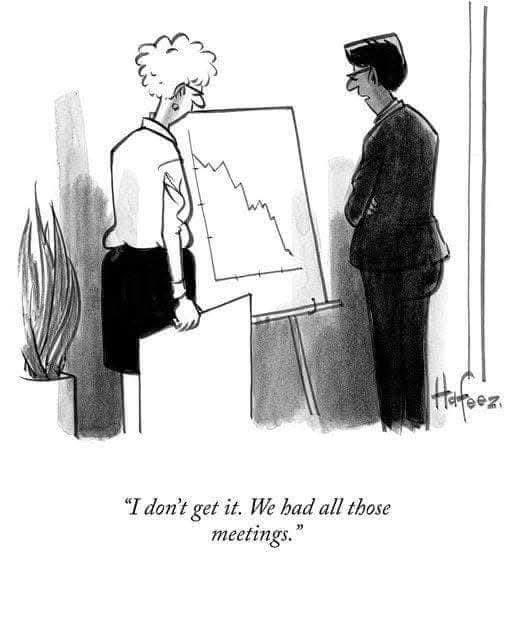
By far the worst thing about AI is that people automate their smaller admin stuff, which gives them more time to talk. And I don't want to listen to you talk
The most pathetic thing that can happen to you is to have your entire life trapped due to a status on a piece of paper that you cannot influence or view the progress of
@thetomska Had a little rant about this yesterday...
Think it's more about signalling that they are across more things. Not caring about the actual value and value of action, but just saying that they are
It was too long for a thread so put it on substack.
https://t.co/TabfbHRxhy
This is why we are doomed. IT firms always sell to corporates on the basis of two things only. 1) Fear and 2) Cost-saving. It's risky talking to Finance, Procurement, IT or Compliance about opportunity, value-creation or growth. They often don't want to know.
"Aspire to greatness" makes for a terrible sales-deck!
When Shohei Ohtani was a high school freshman, he created a detailed "dream sheet" with one central goal: to be the #1 draft pick for 8 NPB (Nippon Professional Baseball) teams.
It was a 64-cell roadmap based on a framework called the Harada Method.
Here's exactly what Shohei did 👇
1. First, some history.... The Harada Method was created by Takashi Harada, a Japanese junior high track coach. He took a team ranked last out of 380 schools and, using his system, turned them into the #1 team in the region within 3 years. They held that top spot for the next 6 years.
2. You start by placing your main goal in the center of an 8x8 grid. For Ohtani, this was "be the #1 draft pick."
3. Next, you identify 8 critical supporting pillars needed to achieve that goal. These surround the main goal.
Ohtani's 8 pillars were:
• Body
• Control
• Sharpness
• Speed
• Pitch Variance
• Personality
• Karma/Luck
• Mental Toughness
4. You then break down each of those 8 pillars into 8 smaller, actionable tasks or daily routines.
This fills out the entire 64-cell grid, turning a massive dream into a concrete, daily action plan.
To improve his karma, he listed tangible actions like:
• Showing Respect to Umpires
• Picking up trash
• Being positive
• Being someone people want to support
5. The method goes far deeper than just technical skills. It forces you to analyze your weaknesses and build confidence. It also has a highlight on service to others, emphasizing that humility and contributing to your community are essential for personal success.
6. The key to the system is daily execution and accountability. Once the 64-cell chart is complete, you turn the tasks and habits into a daily diary and a "Routine Check Sheet." It’s designed to transform abstract intentions into a measurable, daily practice.