Lawrence Brooks, the oldest World War II veteran in the United States and believed to be the oldest man in the nation passed away at the remarkable age of 112.
With his departure, the world loses not only a man, but a living witness to history, a member of the Greatest Generation whose courage, endurance, and quiet dignity carried him across more than a century of change. His life stands as a testament to service, sacrifice, and unwavering strength.🕊️🇺🇸
#TheGreatestGeneration #RIP
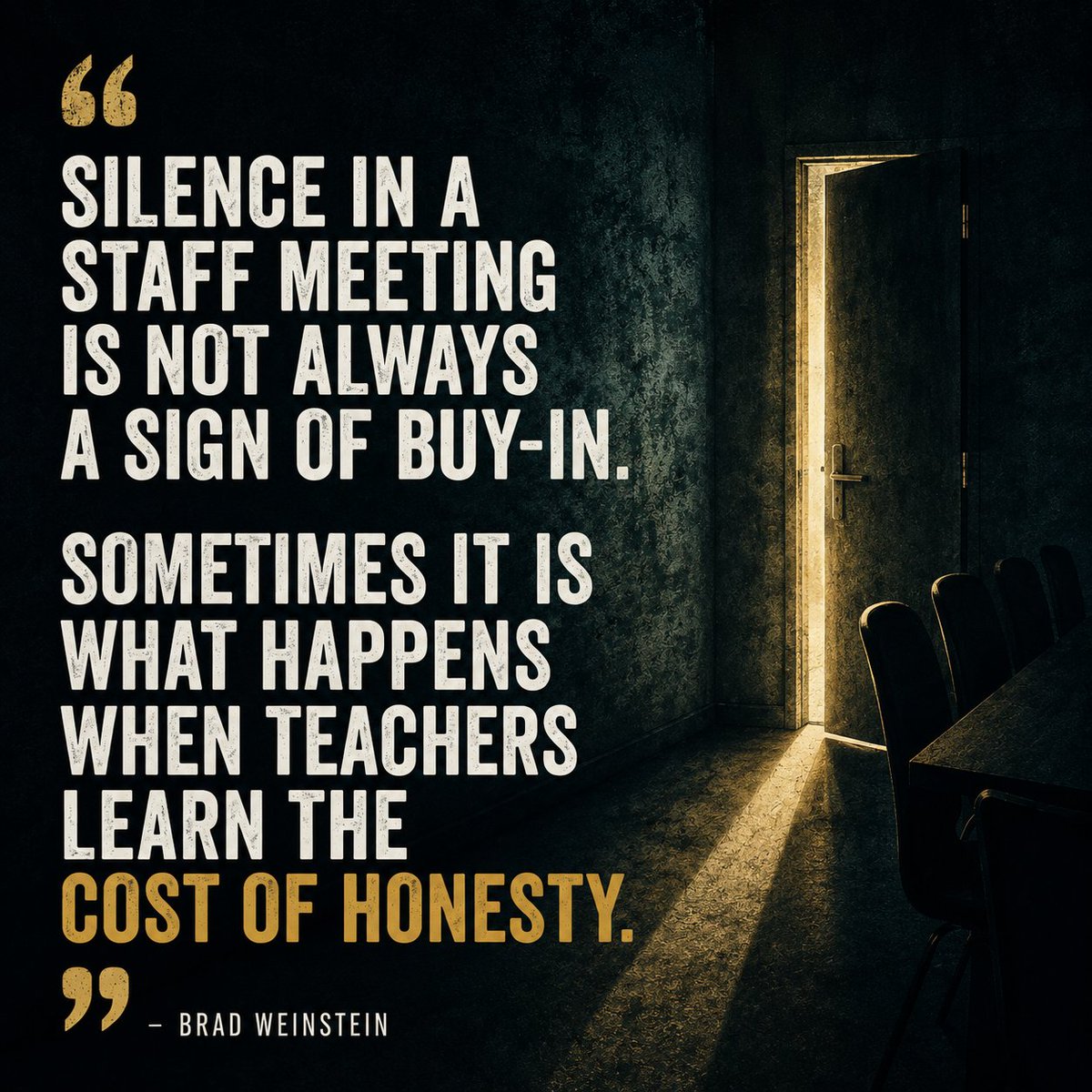
Silence in a staff meeting can look like agreement.
But in many schools, it is something else.
It can be what happens when teachers have learned that honest feedback gets dismissed, labeled as negativity, or quietly used against them later.
Teacher voice does not disappear overnight. It fades when educators realize that speaking up does not lead to meaningful change, safer conversations, or better school leadership.
Real teacher buy-in is not measured by who stays quiet.
It is measured by whether educators feel safe enough to be honest before decisions are already made.
If school leaders want stronger school culture, they have to ask a harder question:
Are teachers quiet because they agree, or because they have learned it is safer not to speak?
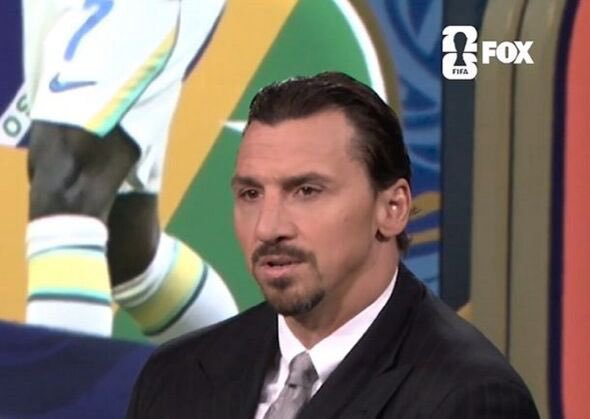
🚨Zlatan Ibrahimovic on VAR after Croatia’s last-minute equaliser vs Portugal was ruled out:*
This referees are doing everything possible for Ronaldo to win the world cup but they will say Messi is the FIFA boy , This ball was never an Offside because the ball didn't touch the Croatia player , This is pure daylight robbery.
"The referee and VAR have just erased what should have been one of the greatest moments of this World Cup.”
"Let’s be clear: if you’re going to cancel a goal in the 90th minute, the evidence has to be beyond doubt. I’ve watched the incident multiple times, from every angle, and I still don’t see anything conclusive enough to overturn it.”
"If you’re in that VAR room for minutes, pausing, zooming, drawing lines to a shoulder, a boot, a heel… it’s not clear and obvious. And if it’s not clear, the goal must stand. That’s the whole point of VAR.”
"The referee has allowed technology to become the main character. But fans don’t fill stadiums or stay up late to watch a screen. They come for football — for drama, for emotion, for moments you remember forever.”
"Croatia showed real fight. They dug in, they scored late, they thought they’d earned a dramatic equaliser to keep their dream alive. Then one decision ripped it away, and that decision will be argued about for years.”
"This is why confidence in VAR is collapsing. It’s no longer fixing obvious mistakes. It’s hunting millimeters that nobody in the stadium can see with their own eyes. That’s not what football is supposed to be.”
"I feel for those Croatian players more than anything. You celebrate, you believe your World Cup is back on, and then it’s gone in seconds. For me, the referee on the pitch and VAR in the booth both got it wrong.
🚨 Luka Modrić on Croatia’s controversial last-minute disallowed goal against Portugal:
🗣️ “This is football. Not a courtroom, not a lab where we freeze every frame and argue over centimetres.
Tonight we gave everything against a very good Portugal team. We were still fighting deep into stoppage time. The boys kept believing, kept pushing, and when that ball went in through Josko we thought we had it — equaliser, extra time, everything still possible.
Then VAR comes in and takes it away because of a touch earlier in the move. I respect the officials, I really do. But the rule is clear and obvious error. Was this one? These little things, these marginal calls where players are fighting for every inch… that’s football. That’s what defenders and attackers do every single day.
If we start ruling out goals like that in the last seconds because of a split-second touch or a shoulder or a toe, then what are we left with? The game loses its soul. The emotion, the chaos, the moments that make people fall in love with football — they get taken away by technology that was only supposed to fix the obvious mistakes.
We accept that sometimes the ball doesn’t go your way. We’ve done it our whole careers. But when the decision feels like it rewrites the last chapter of the match instead of just correcting something clear, it hurts. Not just us in the dressing room, but everyone who was watching and living every second with us.
Portugal deserved to go through, they’re a strong side and they showed it. But nights like this make you wonder where the game is heading. We play with our hearts, we fight until the whistle, and then one review decides everything.
That’s not protecting football anymore. That’s changing it into something else.”
A young woman named MacKenzie Tuttle graduated from Princeton in 1992 with a degree in English. One of her professors was Toni Morrison, who later described her as one of the finest creative writing students she had ever taught.
After graduation, MacKenzie took a job at the New York investment firm D. E. Shaw. There she met a colleague named Jeff Bezos, who had an ambitious idea: selling books on the internet.
She didn’t laugh at the idea.
They married in 1993, and the following year drove across the country to the Seattle area to build what would become Amazon.
In the beginning, there was no global empire.
There was a garage.
MacKenzie handled accounting, wrote business materials, answered customer emails and phone calls, and packed orders alongside Jeff. Like many startups, everyone did whatever needed to be done.
As Amazon grew, MacKenzie stepped away from day-to-day operations to raise their four children while continuing to pursue her own passion for writing.
Her debut novel, The Testing of Luther Albright, won the American Book Award. She later published a second novel and quietly built a respected literary career.
Meanwhile, the story of Amazon became one of the most famous business stories ever told.
Jeff Bezos became one of the world’s most recognizable entrepreneurs.
MacKenzie’s role was rarely part of the public narrative.
She never seemed interested in changing that.
What many people don’t know is that she also knew financial hardship.
Her family filed for bankruptcy while she was still a student, and she has spoken about the kindness of people who helped her through difficult times—acts of generosity she never forgot.
In 2019, after her divorce, MacKenzie Scott received approximately 4% of Amazon’s shares.
Almost immediately, she made a decision that surprised the world.
She signed the Giving Pledge, promising to donate the majority of her wealth during her lifetime.
Then she did something even more unusual.
Instead of building a massive public foundation or attaching her name to buildings, she began giving away billions of dollars through large, unrestricted grants.
Universities.
Food banks.
Housing organizations.
Rural communities.
Women’s health initiatives.
Tribal colleges.
Climate organizations.
Small nonprofits that had never imagined receiving gifts of that size.
Many recipients reportedly thought the phone calls were scams.
They weren’t.
Since 2019, MacKenzie Scott has donated tens of billions of dollars to thousands of organizations, making her one of the most significant philanthropists of the modern era.
Despite giving away enormous sums, her fortune has remained substantial because of Amazon’s continued growth.
The woman who once packed Amazon’s first orders is now helping fund opportunities for millions of people she will probably never meet.
She never asked for buildings in her name.
She never demanded headlines.
Sometimes the greatest legacy isn’t the company you help build.
It’s what you choose to do with the success that follows.
🚨 John Stockton, habló sobre la diferencia que existe entre Michael Jordan y LeBron James 🚨
"No existe dicha comparación, los medios han intentado vender esta noticia para crear controversia entre fanáticos, para mantener con vida el negocio del baloncesto, ya que Michael Jordan siempre es tema de conversación, en cuanto a baloncesto se refieran."
"Cada uno tiene su propia historia, pero no es lo mismo ver un LeBron jugando, que ver un Jordan jugar."
"El juego de LeBron, es un juego de mucho contacto, donde utiliza mucho su físico para llegar a la canasta, es el tipo de juego todos estamos acostumbrados a ver."
"El juego de Jordan, era un juego muy estético y elegante, un juego muy difícil de ver, creó que por esta razón lo extrañan tanto el público, todavía ya retirado observó los videos y me preguntó, cómo es que este hombre podía durar tanto tiempo en el aire."
"Creó que todavía Lebron, no ha hecho nada por la liga como lo hizo Jordan. Todos debemos agradecer el valor que el aportó a la hoy NBA.
"Cuando LeBron dejé un legado de esa magnitud cómo lo hizo Jordan, en ese momento deben empezar a comparar, de lo contrario no está a la altura."