My new article looks at the many tellings of Sassi and Punnun across Sindh and Punjab between the sixteenth and nineteenth centuries in Persian, Sindhi, and Punjabi https://t.co/SGElnGdils
Women speaking up against purdah and polygamy in 1950s Pakistan. Rich archival material and fascinating analysis. Elisabetta Iob, “The Girls are in Town: Purdah, Emotions and Everyday Resistance in Urban Pakistan,” https://t.co/NS1w0W1R66
Excellent article on Qudsia Begum, a powerful Mughal queen from 18th c, and the outrage at her influence. OPEN ACCESS. Emma Kalb, “A Harem in Disorder: Narrating Elite Female Seclusion in Late Mugha Delhi” https://t.co/jH6PUJ2nNz
Famed historian K.K. Aziz was commissioned by Z.A. Bhutto to document the events leading to Bangladesh's creation. His 2000-page manuscript was never published—until now.
Read it on the LUMS Digital Archive: https://t.co/YHjw4xknCQ
#LUMSDigitalArchive#KKAziz#Bangladesh1971
This book shows that a concern for the individual self was not an exclusively western phenomenon. Rather, the practice of leaving individual legacies was a crucial means for the production and reproduction of empire, family, and social order in South Asia.
Delighted to report that my book, Leaving Legacies: The Individual in Early Modern South Asia, has been published by Cambridge University Press. Folks with access to Cambridge Core should be able to read online. Print copy to follow next year. 1/🧵
https://t.co/XAtEpuP27f
Leaving Legacies is a fresh account of the individual in early modern South Asia. A gendered practice carried out by men, leaving legacies involved assembling three kinds of material traces: monuments, books, and sons.
Zindagi Tamasha: Of Narrow Lanes and Narrower mindsets
A video goes viral, is taken out of context, the man behind it is threatened and his life turns upside down, this is the story of Zindagi Tamasha, and the story of Sarmad Khoosat trying to release Zindagi Tamasha.
1/n
@adilhossain Hi Adil, Much great work linguistic states reorganization and language movements in India, but no conceptual history of ethnicity that i am aware. The trajectories of ethnicity concept in Ind and Pak are intriguingly divergent and possibly responsible for this.
Very pleased to share my new article, where I historicize regional identity before the ethnicity concept. I show that the Four Nationality Thesis was an idea that enabled federalist politics in early Pakistan, but also set the grounds for cultural (1/2) https://t.co/DexT32dECT
📣Call for Papers South Asian Studies: The European Association for South Asian Studies (EASAS) 27th ECSAS Conference will take place in Turin Italy from 26 to 29 July 2023. Call for Papers opens 15th Nov, see details of all their panels here: https://t.co/l96i8hldvL
#ComingUp: Dr. @SarahSuhail shares the life stories of women who have escaped bonded labor in Sindh, describing their conditions of carceral labor and their strategies and tools of escape.
When: Tuesday, 4th Oct, 5 PM
Where: VC Faculty Lounge, Academic Block, LUMS
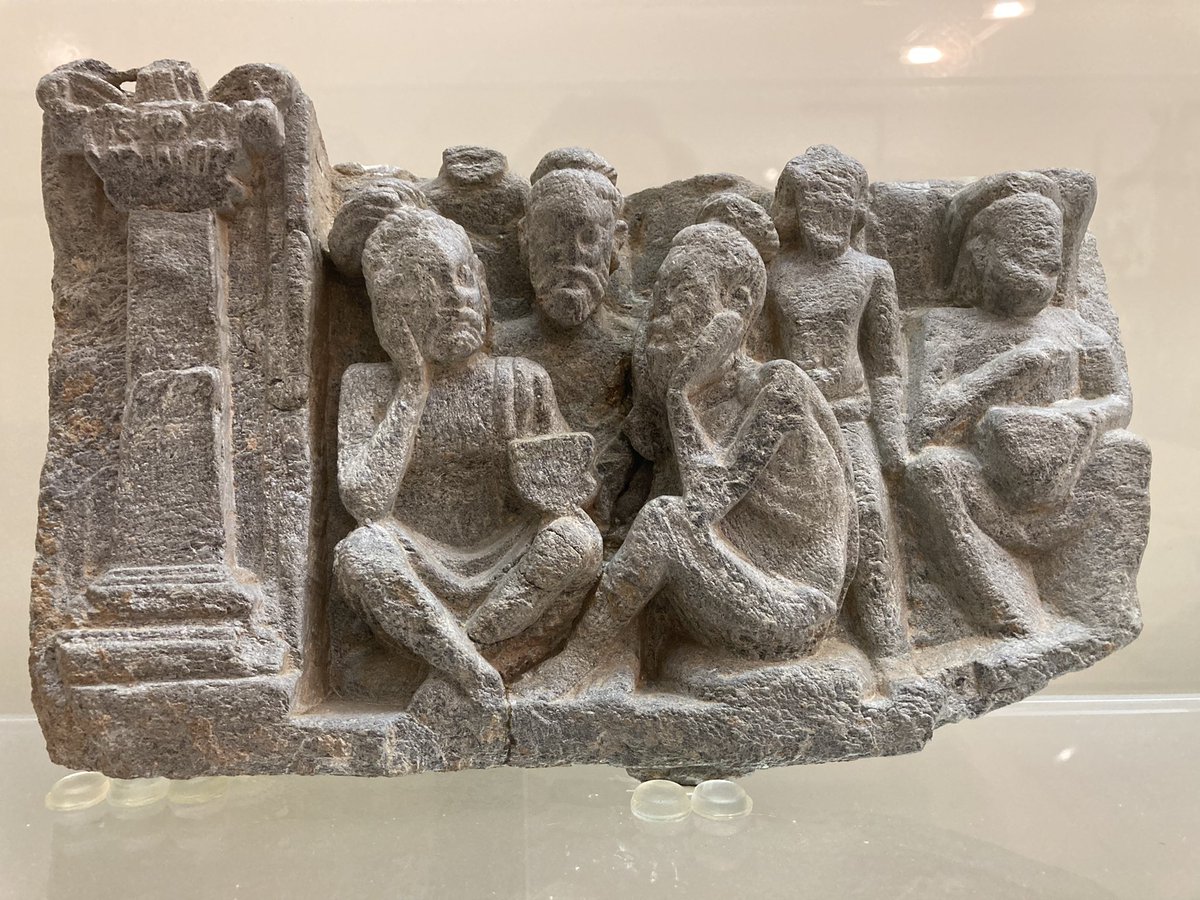
I thought I’d share a few photos from my research this summer on the exhibition of ancient Buddhist art from Pakistan in postwar Italy. Here are a few photos from Trieste- one of a number of Italian cities that collected Gandharan sculpture in the 1950s & 1960s.
Saida Waheed Gender Initiative (SWGI) is excited to announce the Calendar of Events for Fall 2022, featuring compelling and timely discussions on a range of topics, bringing together academics, experts and practitioners from across the globe.
we are working on a list of flood relief fundraisers (orgs and individuals) from across pakistan. it's still work in progress but please reply to this tweet or DM me if you need us to add details of fundraising efforts you know of to the list: https://t.co/TEPc8GYKp3