Creating a token takes minutes, but running one as a real financial asset takes far more work.
You need real infrastructure.
Ownership rules, jurisdiction limits, custody, issuance and redemption permissions, freezes, pauses and administration all have to work together.
Separate contracts, databases, compliance providers and manual processes get stitched together, and each handoff adds cost and risk.
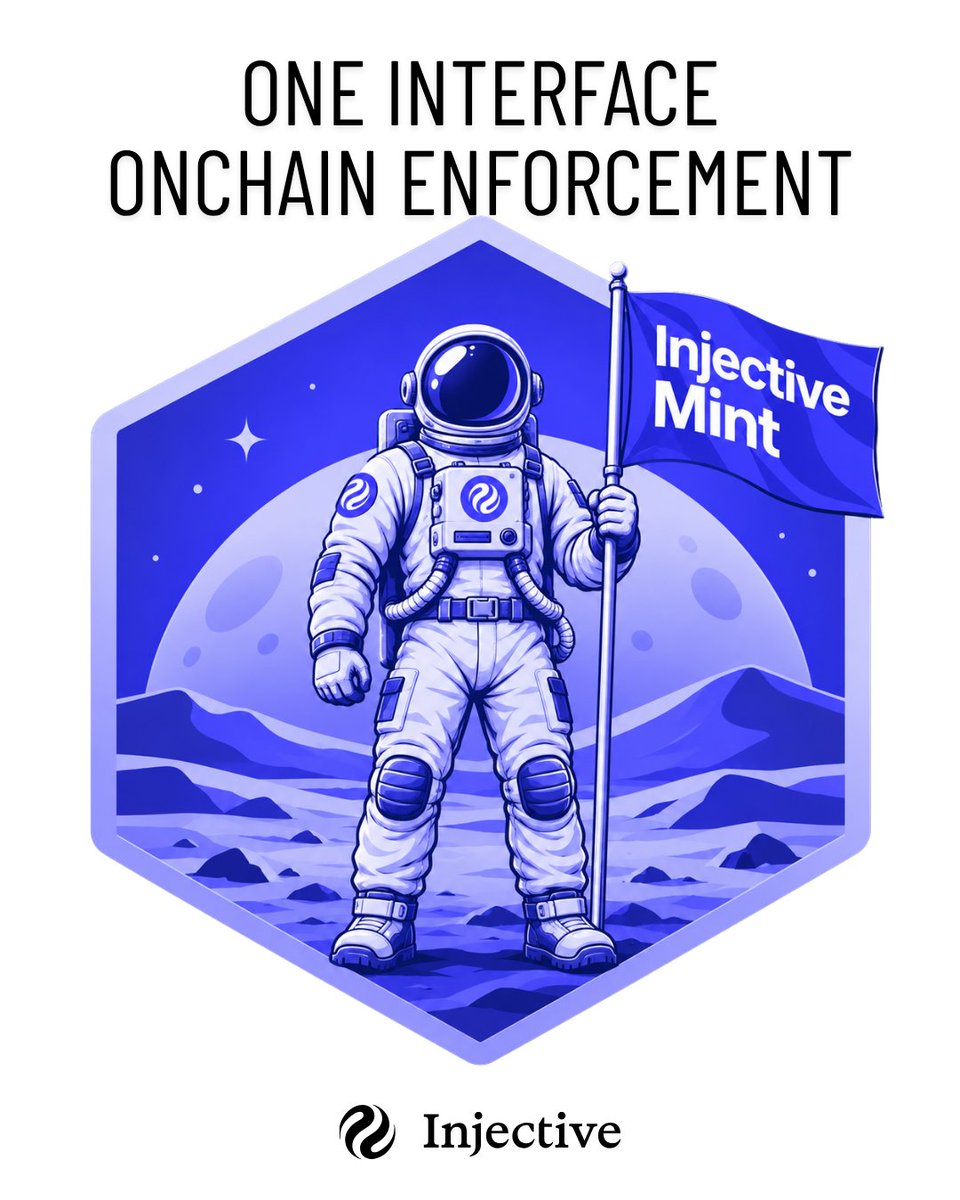
@injective Mint changes that.
You define the asset and its rules in one interface, and Injective enforces them directly onchain.
on Injective, subject to the issuer's rules:
- spot and derivatives trading
- lending and borrowing
- collateral for other positions
The weird thing about Stock trading is how quickly people jump from:
- “$TSLA is going up”
to
- “buy TSLA.”
There’s a whole question in between:
what kind of exposure do you actually want?
Owning the shares and trading a derivative that tracks the price are two very different things.
There's a shot early in this video, rows of identical units in cases, same face, same pose, same everything, right before one gets pulled and the title card hits.
That shot is every character-based bot before this one. Mass produced, interchangeable, forgettable the second you look away.
I know it doesn't stay that way because I used it. I told it GenVM was basically just their branded EVM. It didn't hand me a paragraph correcting me. It asked me to explain myself first, then let the gap show up on its own.
That's the actual difference between decoration and an interface. Decoration gets looked at once. An interface has to catch you being wrong and make that useful instead of embarrassing.
What I'd want next: let it remember which assumption it corrected last time, not just that I showed up.
@GenLayer turned the thing sitting on a shelf like every other one into the one thing that argues back.
https://t.co/PRwbgL8j6O
What's the last assumption a tool corrected before you even finished the sentence?
Agent Tank Episode 2 looks like a prediction market pitch until the vote starts falling apart.
That was the part I found most interesting. The problem is not simply picking the right answer. It is deciding who gets to define the answer when the outcome is genuinely arguable. A single judge can be pressured, bought or gamed. A larger panel makes that harder, but the escalation from 5 to 11 to 23 to 47 to 95 also shows something deeper: disagreement does not disappear just because more agents are voting.
Now remove the humans from the loop.
One agent pays another to complete a task. The work arrives. One side says it meets the agreement, the other says it does not. There is no court to call, no support ticket to open and no operator waiting to make the final call.
For an agentic economy to work at scale, there needs to be a way to resolve those gray areas without handing permanent control to one model or one oracle. That is the role an adjudication layer can play, and it is probably one of the most important pieces of infrastructure for agents that actually transact with each other.
That is what makes @GenLayer interesting to me.
The Agent Tank hackathon is exploring this problem in practice:
https://t.co/ruW7dfcKpX
The Genesis trailer made me more curious about @GenLayer than any feature list could.
One sentence did it:
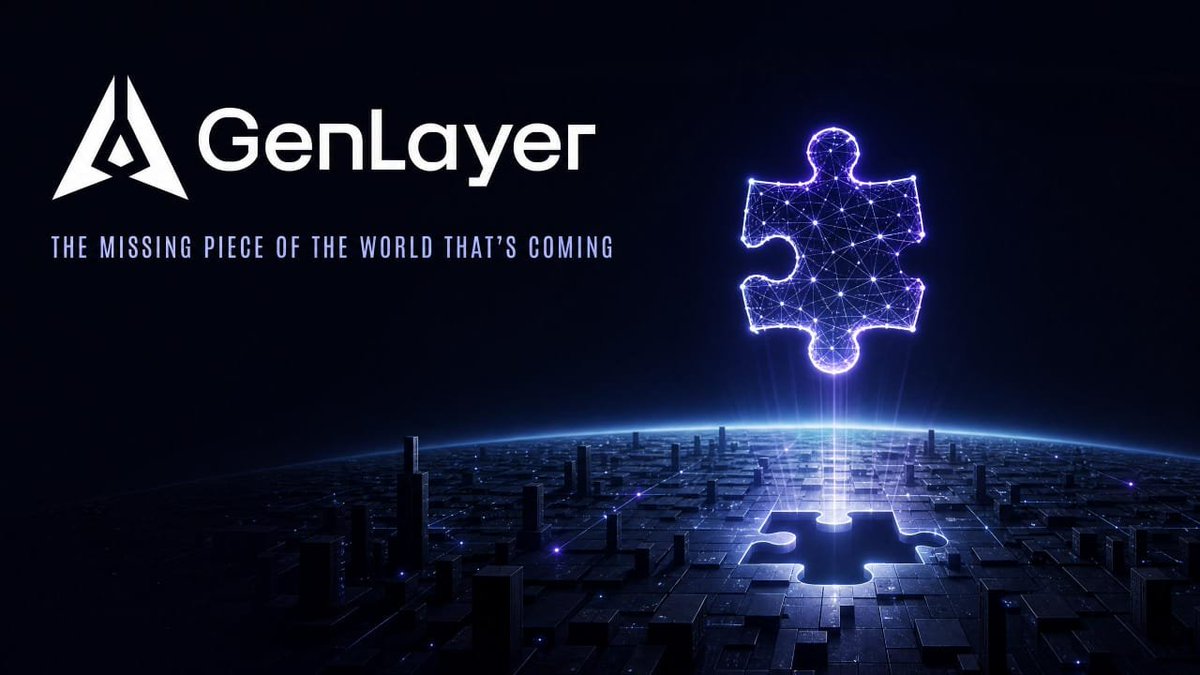
"we're building a missing piece of the world that's coming."
That genuinely caught me. I rewound the video just to hear that part again.
Because if you're building a missing piece of the world that's coming, I want to know what you saw coming in the first place.
A network where LLMs can settle disagreements isn't a feature you add later. It's infrastructure you build from scratch, and infrastructure like that doesn't fit in a product page.
That's probably why this needed a documentary and not a launch thread.
That's why Genesis is worth watching, and why this trailer specifically is the place to start.
It went out a day before Episode 1, and if you've never heard of GenLayer before, this is the cleanest entry point there is. It's not a product walkthrough. It's a series about how the idea started, why it was necessary, and how it became the network being built today.
And hearing @kstellana tell it himself changes what you take from it.
Not an agency voiceover. The person who watched an account go from $150 million to $14,000 explaining, in his own words, why that experience is the reason this exists.
For the rest of Genesis, I want the part between the problem and the solution.
What made LLM validators seem like the right answer? When did contracts need to start handling questions of meaning, not just rules?
Start with the trailer. What's the one question you want Genesis to answer?
Creating a token takes minutes, but running one as a real financial asset takes far more work.
You need real infrastructure.
Ownership rules, jurisdiction limits, custody, issuance and redemption permissions, freezes, pauses and administration all have to work together.
Separate contracts, databases, compliance providers and manual processes get stitched together, and each handoff adds cost and risk.
@injective Mint changes that.
You define the asset and its rules in one interface, and Injective enforces them directly onchain.
on Injective, subject to the issuer's rules:
- spot and derivatives trading
- lending and borrowing
- collateral for other positions