1 week = 2% of the year.
“Let’s circle back in 2-3 weeks” = 6% of your year gone just to have a conversation.
This is why startups beat big companies. Not better ideas. Faster loops.
We go from existential product problem to shipped solution in 3 weeks. Most companies haven’t even scheduled the meeting.
HIPAA says 30 days to get medical records. One case took 800.
Every business has a version of this. A boring, invisible dependency quietly capping your throughput.
What's yours?
https://t.co/Yc8w1c81Qr
One developer. No VC. No team. Built something that went viral and had every major AI lab fighting to hire him.
Peter Steinberger is the blueprint for what’s possible right now if you actually build with AI instead of just posting about it.
The tools are free. The models are accessible. The gap isn’t resources it’s willingness to create.
What are you building?
Peter Steinberger is joining OpenAI to drive the next generation of personal agents. He is a genius with a lot of amazing ideas about the future of very smart agents interacting with each other to do very useful things for people. We expect this will quickly become core to our product offerings.
OpenClaw will live in a foundation as an open source project that OpenAI will continue to support. The future is going to be extremely multi-agent and it's important to us to support open source as part of that.
The founder of a ChatGPT wrapper, wrote 3,000 words comparing AI to COVID... his proof: "AI does my job." His job is wrapping someone else's AI. Of course it can.
Fear mongering dressed up as concern with a "follow me" button. This is why people don't trust the space.
@mattshumer_ The founder of a ChatGPT wrapper, wrote 3,000 words comparing AI to COVID... his proof: "AI does my job." His job is wrapping someone else's AI. Of course it can.
Fear mongering dressed up as concern with a "follow me" button. This is why people don't trust the space.
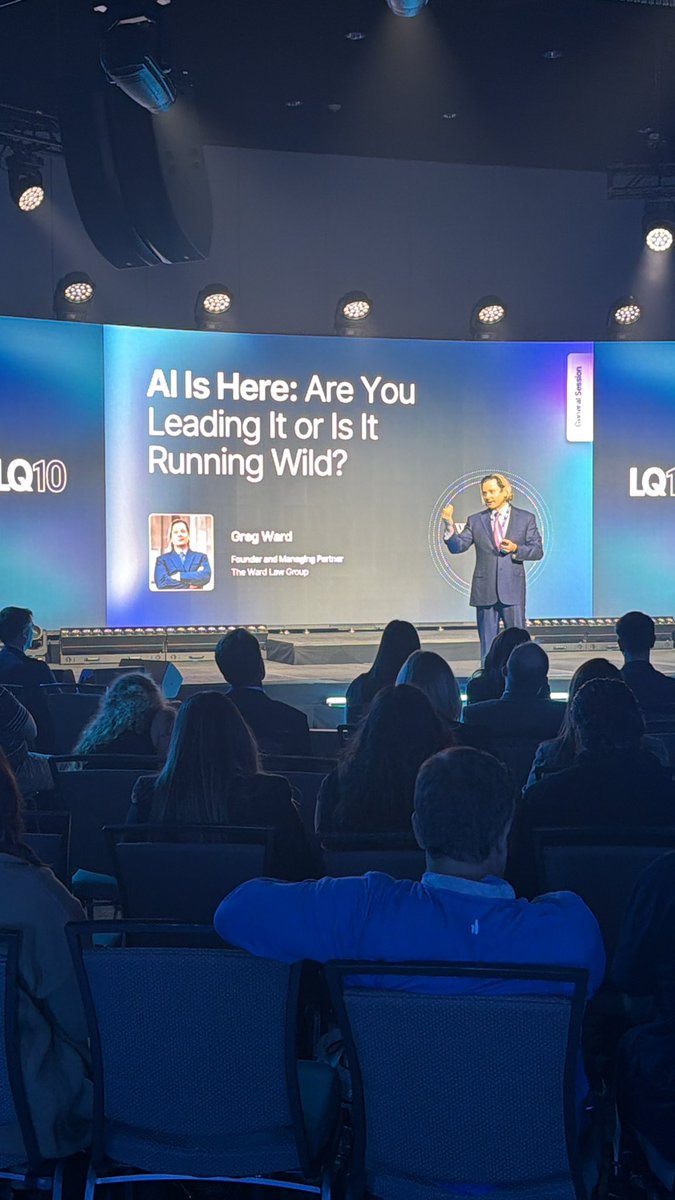
At LitiQuest this week.
Anyone still saying law firms won’t adopt AI isn’t talking to law firms.
The conversation here isn’t “should we?”, it’s “how fast / where else can we scale AI?”
The performance gap between firms using AI and firms ignoring it is about to get very wide.
@LitifyHQ
First, the good part of the Anthropic ads: they are funny, and I laughed.
But I wonder why Anthropic would go for something so clearly dishonest. Our most important principle for ads says that we won’t do exactly this; we would obviously never run ads in the way Anthropic depicts them. We are not stupid and we know our users would reject that.
I guess it’s on brand for Anthropic doublespeak to use a deceptive ad to critique theoretical deceptive ads that aren’t real, but a Super Bowl ad is not where I would expect it.
More importantly, we believe everyone deserves to use AI and are committed to free access, because we believe access creates agency. More Texans use ChatGPT for free than total people use Claude in the US, so we have a differently-shaped problem than they do. (If you want to pay for ChatGPT Plus or Pro, we don't show you ads.)
Anthropic serves an expensive product to rich people. We are glad they do that and we are doing that too, but we also feel strongly that we need to bring AI to billions of people who can’t pay for subscriptions.
Maybe even more importantly: Anthropic wants to control what people do with AI—they block companies they don't like from using their coding product (including us), they want to write the rules themselves for what people can and can't use AI for, and now they also want to tell other companies what their business models can be.
We are committed to broad, democratic decision making in addition to access. We are also committed to building the most resilient ecosystem for advanced AI. We care a great deal about safe, broadly beneficial AGI, and we know the only way to get there is to work with the world to prepare.
One authoritarian company won't get us there on their own, to say nothing of the other obvious risks. It is a dark path.
As for our Super Bowl ad: it’s about builders, and how anyone can now build anything.
We are enjoying watching so many people switch to Codex. There have now been 500,000 app downloads since launch on Monday, and we think builders are really going to love what’s coming in the next few weeks. I believe Codex is going to win.
We will continue to work hard to make even more intelligence available for lower and lower prices to our users.
This time belongs to the builders, not the people who want to control them.
Claude is built to be a genuinely helpful assistant for work and for deep thinking.
Advertising would be incompatible with that vision.
Read why Claude will remain ad-free: https://t.co/Dr8FOJxINC
Before every decision, I ask one question:
“Is this within my control?”
If yes, act.
If no, adapt and redirect.
Most stress comes from pouring energy into things you can’t influence.
This isn’t passive acceptance. It’s aggressive focus on your actual levers.
Stop fighting battles you can’t win.
Redirect that energy to the ones you can.
In a world where speed is everything, most founders move too slow.
Not because they’re lazy. Because they treat every decision like it’s permanent.
I split decisions into two buckets:
Reversible → Move fast. Correct later.
Irreversible → Slow down. Get it right.
Most decisions are reversible.
Most founders treat them like they’re not.
Speed on the reversible ones is a competitive advantage.
🚀 Introducing LlamaLab – the future of medical record management for law firms.
Same-day record retrieval. AI-powered analysis. Stronger cases in minutes.
Stay ahead. Stay efficient. Stay winning.
#LegalTech#AI#MedicalRecords#LlamaLab
@CeylonDonCrypto @llama_index@Javtorr_ This feels like metadata would be a better approach with time weighting if you want to prioritize more relevant info. Or you could use an index retriever if you’re set on the multi index route