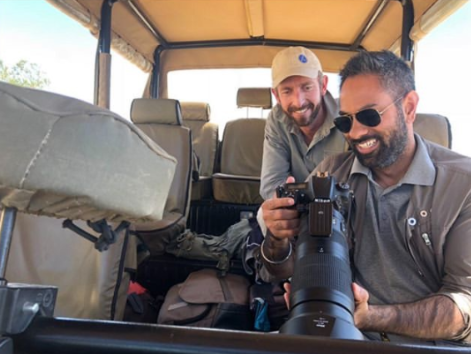
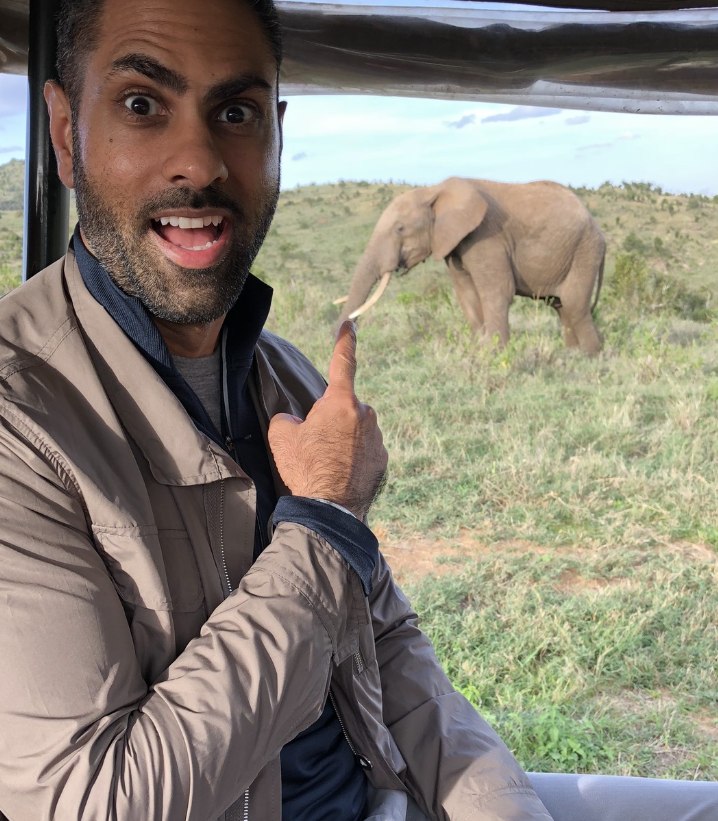
During our honeymoon, my wife and I visited Kenya and went on safari.
I wanted to take as many photos as I could to document this experience, but I wasn’t satisfied with what I was getting from my iPhone. I thought a professional camera would be the answer, so I rented one from the lodge we were staying at.
“Everyone can take a picture,” I thought. “This can’t be that hard.”
But the pictures I took still sucked. Defeated, I decided to hire the photographer-in-residence at our lodge for help.
The results were dramatic.
I went from this:
To this:
Notice the differences in focus, composition, and visual context. There was nothing like having a coach right there on the spot, giving me instant feedback, to help me get better.
If you decide you want to get serious about improving at something, nothing will accelerate your progress like a great teacher you respect and trust.
Whether it's mastering a musical instrument, refining your culinary skills, perfecting a golf swing, or understanding the depths of philosophy, a dedicated coach can show you paths to success that you never knew existed.
This investment can fast-track your success. As much as I tried to take good pictures myself, I just wasn’t getting anywhere. I needed help to get the results I wanted.
And that’s just as true with money as it is with photography.
If you’re trying to figure out your finances on your own, it can look just as bleak as my initial photography attempts. Without any guidance, you might find yourself squinting at bank statements, seeing them as out-of-focus shots filled with undefined details.
But with the right strategy and knowledge, your financial landscape can come into sharp focus, like a beautiful shot of a cheetah in stark contrast against the savannah.
I don’t journal to “be productive.” I don’t do it to find great ideas, or to put down prose I can later publish. The morning pages aren’t intended for anyone but me.
Morning pages are, as author Julia Cameron puts it, “spiritual windshield wipers.” It’s the most cost-effective therapy I’ve ever found. To quote her further, from page viii:
“Once we get those muddy, maddening, confusing thoughts [nebulous worries, jitters, and preoccupations] on the page, we face our day with clearer eyes.”
Please reread the above quote. It may be the most important aspect of trapping thought on paper (i.e. writing) you’ll ever encounter. Even if you consider yourself a terrible writer, writing can be viewed as a tool that you can and should use. There are huge benefits to writing, even if no one—yourself included—ever reads what you write. In other words, the process matters more than the product.