Zcash is strong and will get through this.
The bug was found, disclosed, and fixed. There is no evidence it was exploited.
It was discovered by a white-hat researcher whose job was to find vulnerabilities before attackers could. That's exactly how security should work.
Over time, users can migrate to newer shielded pools that benefit from years of research, real-world experience, and lessons learned. Tachyon is expected to be the safest yet.
The bigger lesson is that, in the age of AI, every protocol should be relentlessly battle-tested. We now have tools that can analyze code and cryptographic systems at a scale that wasn't possible before. Projects should use them aggressively to find weaknesses before attackers do.
Finding a bug isn't a sign that security has failed. Not looking for bugs is.
Incredible transparency and honesty from Zcash devs. I'm glad they found this issue and moved fast to help the network get secured.
There isn't a better way to handle these issues.
@Famous0x3@SolanaFloor The exact timeline is still being evaluated, but we expect it to take at least a couple of months. We're currently assessing a few different options and their tradeoffs, and plan to follow up next week with a proposal and recommended next steps.
We are so happy. Shielded Labs—developers of Crosslink, and home of the legendary @zooko, the indomitable @aquietinvestor, and more!—have decided to host a red·bridge node. Decentralization leads to Unstoppable Private Money everywhere. Let’s keep going! cc: @mrkit2u@reddevinc
Shielded Labs has now funded efforts that helped to discover and remediate at least two major vulnerabilities in Zcash before they could be used by the bad guys!
.@brian_armstrong says it's surprising that crypto has gotten as big as it has... on a public surveillance ledger... and that it's time for crypto to transition from HTTP (full transparency) to HTTPS (privacy)
We agree
That's why we're building on Zcash
one third of bitcoin's circulating supply sits in addresses with exposed public keys. zero quantum protection. ethereum has no migration plan. solana's implementation is optional. hedera shipped production post-quantum cryptography in november 2025 with the SEALSQ QS7001 chip, processes $10b+ in RWA settlements, has google and ibm running nodes, and trades at $3.73b. the market is pricing quantum preparedness at exactly zero. bitgo just ran the first quantum-resistant transaction on ethereum testnet two days ago. that's testnet. hedera's been live in production for six months. when this narrative rotates from "science fiction" to "engineering requirement" the repricing won't be gradual
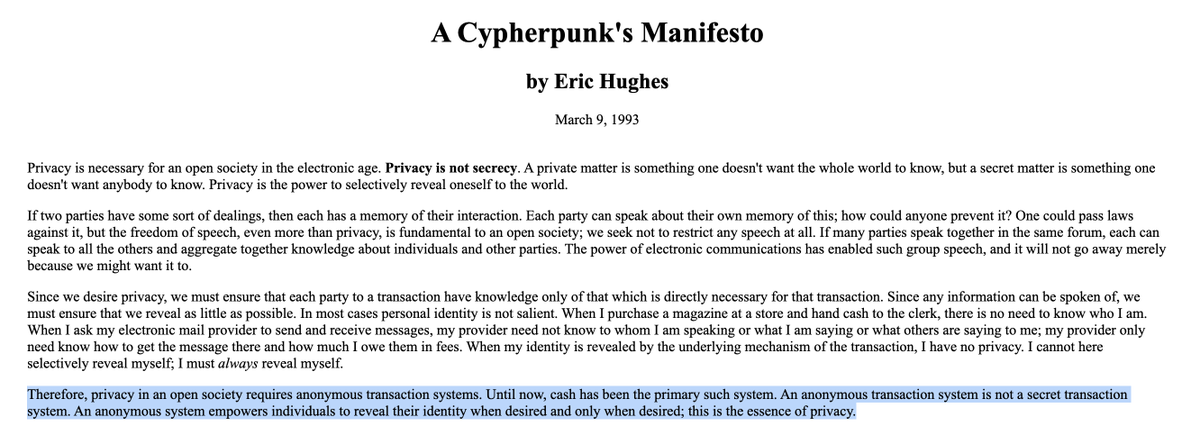
the point of privacy in crypto is not that all transactions must be private or else
it's that it's a non-negotiable property required for a monetary asset to achieve: i) universal scale, ii) fungibility, iii) neutrality, iv) censorship resistance