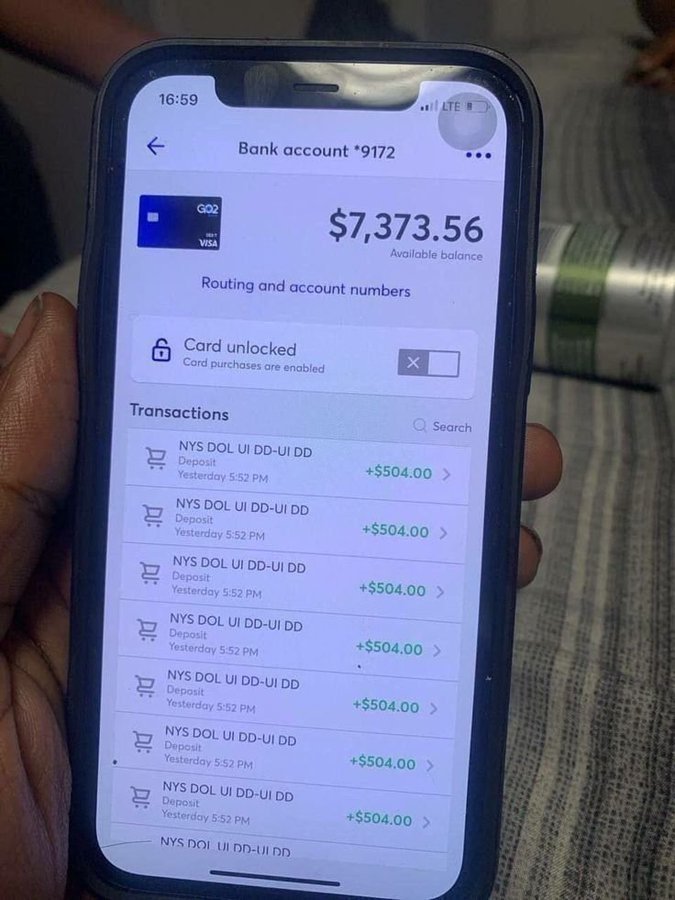
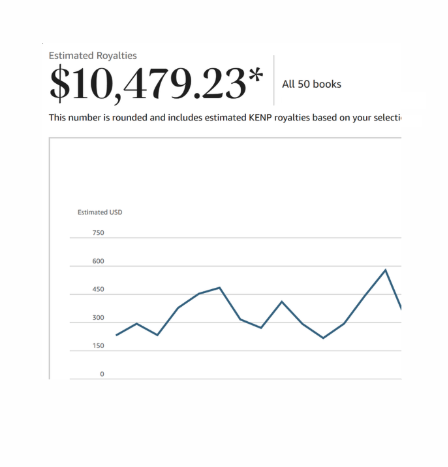
I make $504 a day with my AI side hustle, working 60 minutes a day.
You must have:
1. Internet
2. Mobile
3. 1 hour everyday
I am sharing my guide to help you. For today only, it's free (regularly $129).
Like, comment "send" and repost for absolutely FREE.
(Must follow)
I LAUNCHED A GROK BOT TERMINAL OVERNIGHT, GAVE IT $44.82 AND STOPPED ASKING AI WHAT IT WOULD DO. BY MORNING IT HAD $11,643.21 AND SIX AGENTS LOGGING EVERY TRADE
I spent a year asking agents what they'd trade and watching the chat scroll. Last weekend I built the thing that actually trades, in Grok Bot, with no code I touched by hand.
The six agents share one screen, each one job:
> scanner reads new token pairs and volume spikes
> rug check filters suspicious tokens before anything executes
> sizer sets position from account equity, not a fixed ticket
> executor opens and closes with slippage tracking
> logger writes the reason behind every trade
> equity curve updates on every close
I went to bed on $44.82 and left the laptop open on the dashboard. By morning the balance read $11,643.21. Every trade on the activity feed had a reason next to it and a line in the log.
That's the shift I didn't see coming. Not that an agent made money overnight. That I stopped being the one asking "would you long this?" and started being the one reading the log of what already happened.
Starting balance: $44.82
Current balance: $11,643.21
Grok Bot built the terminal, the agent architecture and the dashboard. I described what I wanted and the thing went live.
The full build is in the article below ↓
The whole build is in the post below ↓
Comment " Grok_Bot "
2️⃣ Like and Repost
3️⃣ Follow me @Nexa_Tech_Ai
I'll DM you the complete setup.
19 year old Japanese student built a trading bot with Claude Code in 2 days.
Used his iPad as a second monitor.
First night: $6,732 profit.
Starting capital: $68.
Total profit so far: $750,000.
Here's how it works👇
The bot scans over 50 markets simultaneously.
Syncs live BTC data from Binance every second.
Spots price errors before humans even notice.
The edge is pure speed + pattern recognition.
While traders stare at charts trying to predict the next move, his bot is already executing on mispricing across dozens of markets.
No guessing.
No emotions.
No hesitation.
Just Claude Code logic finding gaps that close in seconds.
He built the entire system in 48 hours:
→ Claude Code handles the trading logic
→ Binance API feeds real-time BTC data
→ iPad displays multi-market monitoring
→ Executes trades when arbitrage windows open
The system runs 24/7.
Every price dislocation = profit opportunity.
Most people are still trading manually, refreshing charts, second-guessing entries.
Meanwhile this 19 year old engineering student turned $68 into $750K by letting Claude Code do what humans can't: process 50 markets instantly and execute without fear.
Why are people still trading manually?
I'm giving away the exact Claude Code setup for free.
24 hours only.
To get it 👇
1️⃣ Comment " Claude "
2️⃣ Like and Repost
3️⃣ Follow @Nexa_Tech_Ai (so I can send it via DM)
You can earn $8,400 per month, if you have:
1. Internet
2. ChatGPT
3. 1 hour a day
I’ve put together a detailed course for this, and it’s 100% free
Like and reply “INFO” and I’ll DM you the course
Must follow me to get this killer guide in your DMs
FREE for next 48 hours
Top Tech Skills to Learn in 2026
🤖 AI & Machine Learning
☁️ Cloud Computing
🔐 Ethical Hacking
📊 Data Analytics & Data Science
☁️ AWS & Cloud Technologies
💡 Want the full guide + learning resources?
❤️ Like + 🔁 Repost
💬 Comment “ALL”
Follow 👉 @Tech_BobbyJack
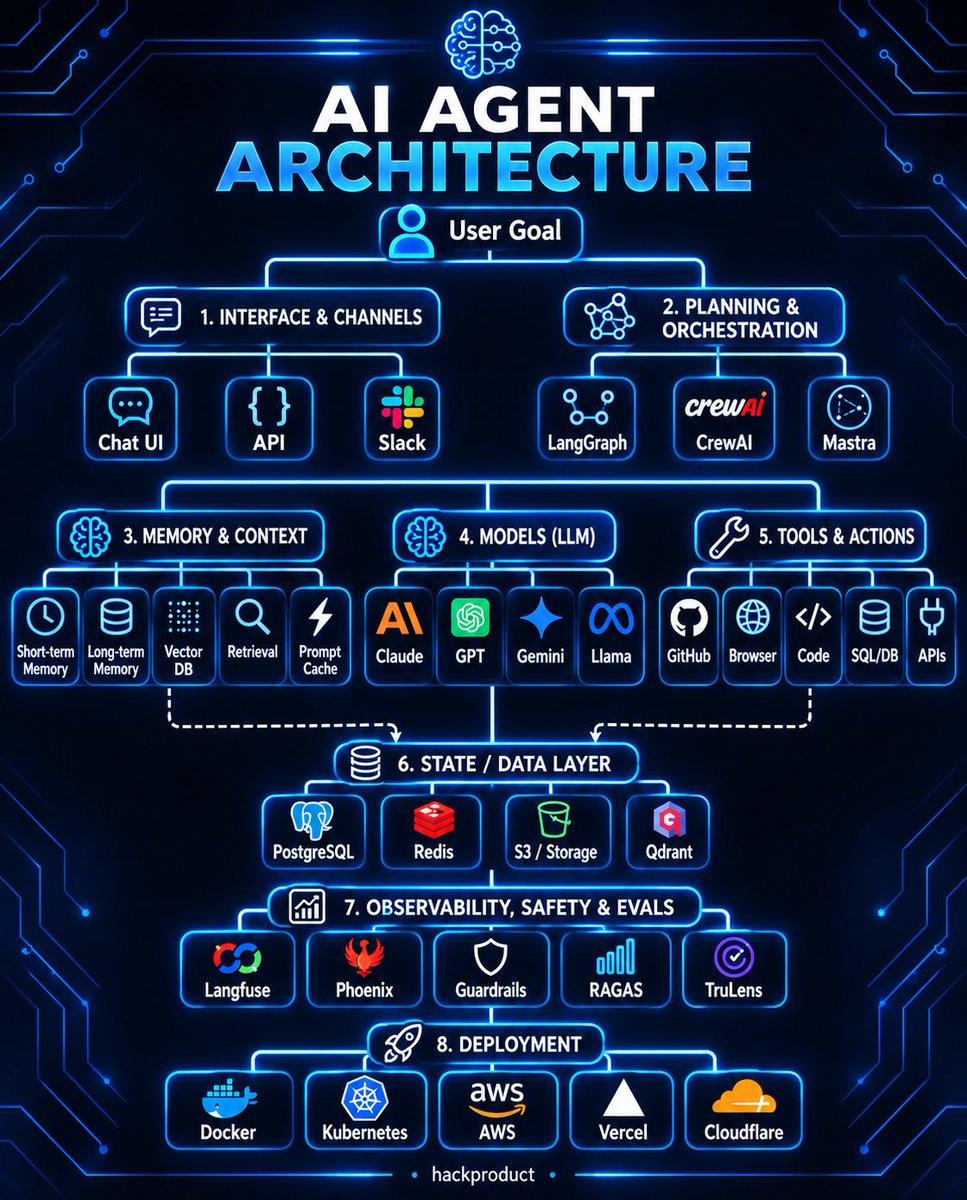
𝗔𝗜 𝗔𝗚𝗘𝗡𝗧 𝗔𝗥𝗖𝗛𝗜𝗧𝗘𝗖𝗧𝗨𝗥𝗘 — 𝗧𝗛𝗘 𝟴 𝗟𝗔𝗬𝗘𝗥𝗦 𝗬𝗢𝗨 𝗡𝗘𝗘𝗗 𝗧𝗢 𝗞𝗡𝗢𝗪
Building an AI agent is not just about connecting an LLM to a prompt.
A production-ready agent needs multiple layers working together.
𝗛𝗘𝗥𝗘’𝗦 𝗧𝗛𝗘 𝗦𝗧𝗔𝗖𝗞:
01 — 𝗜𝗡𝗧𝗘𝗥𝗙𝗔𝗖𝗘 & 𝗖𝗛𝗔𝗡𝗡𝗘𝗟𝗦
How users interact with the agent.
→ Chat UI
→ APIs
→ Slack
→ Other interfaces
02 — 𝗣𝗟𝗔𝗡𝗡𝗜𝗡𝗚 & 𝗢𝗥𝗖𝗛𝗘𝗦𝗧𝗥𝗔𝗧𝗜𝗢𝗡
The layer responsible for breaking goals into steps and coordinating execution.
→ Task planning
→ Workflow orchestration
→ Agent coordination
→ Decision-making
03 — 𝗠𝗘𝗠𝗢𝗥𝗬 & 𝗖𝗢𝗡𝗧𝗘𝗫𝗧
Agents need context to make better decisions.
→ Short-term memory
→ Long-term memory
→ Vector databases
→ Retrieval
→ Prompt caching
04 — 𝗠𝗢𝗗𝗘𝗟𝗦
The reasoning engine behind the agent.
→ Claude
→ GPT
→ Gemini
→ Llama
→ Other specialized models
The best model depends on the task, cost, latency, and reliability requirements.
05 — 𝗧𝗢𝗢𝗟𝗦 & 𝗔𝗖𝗧𝗜𝗢𝗡𝗦
This is where an agent becomes capable of doing things.
→ GitHub
→ Browser
→ Code execution
→ SQL/Databases
→ APIs
Tools allow agents to move beyond generating text.
06 — 𝗦𝗧𝗔𝗧𝗘 & 𝗗𝗔𝗧𝗔 𝗟𝗔𝗬𝗘𝗥
Agents need reliable infrastructure to store and manage information.
→ PostgreSQL
→ Redis
→ Object storage
→ Vector databases
07 — 𝗢𝗕𝗦𝗘𝗥𝗩𝗔𝗕𝗜𝗟𝗜𝗧𝗬, 𝗦𝗔𝗙𝗘𝗧𝗬 & 𝗘𝗩𝗔𝗟𝗦
Autonomous systems need to be monitored and tested.
→ Tracing
→ Evaluations
→ Guardrails
→ Error monitoring
→ Performance tracking
This layer helps make agents reliable enough for real-world use.
08 — 𝗗𝗘𝗣𝗟𝗢𝗬𝗠𝗘𝗡𝗧
Finally, the agent needs to run reliably in production.
→ Docker
→ Kubernetes
→ AWS
→ Vercel
→ Cloud platforms
𝗧𝗛𝗘 𝗕𝗜𝗚 𝗣𝗜𝗖𝗧𝗨𝗥𝗘:
User Goal
↓
Interface
↓
Planning
↓
Memory + Context
↓
LLM
↓
Tools + Actions
↓
State + Data
↓
Observability + Safety
↓
Deployment
𝗧𝗛𝗘 𝗞𝗘𝗬 𝗟𝗘𝗦𝗦𝗢𝗡:
A powerful LLM is only one part of an AI agent.
The real engineering challenge is building the system around the model — giving it memory, tools, planning, safety, evaluation, and reliable infrastructure.
That’s what turns an LLM into a production-ready AI agent.
Follow @mayaislam_ai for more AI, tools, automation and tech insights.
#AI #AIAgents #AgenticAI #ArtificialIntelligence #LLM #AITools #MachineLearning #Tech
Forget YouTube
Forget Instagram
Your Google Doc can make you $8,400 per month from anywhere in the world.
I usually charge $99 for this guide, but today you get it for free.
Like + comment 'DOC' & I'll send you my entire guide for FREE.
Must follow me so I can send the guide in DM.
FREE for 48 hours.