28Y Female.
No known comorbidities.
4 days after wedding, went with her husband to VV Puram Food Street, Bangalore.
Had biscuits coated with liquid nitrogen that produce fumes.
Oral bleeding.
Endoscopy shows significant erosion of oesophageal and gastric mucosa.
Diarrhoea.
Subsequent onset of weakness of bilateral upper and lower limbs.
Still no movement after a month.
Anti-GD1b antibodies positive.
Nerve conduction studies show Acute Motor Axonal Neuropathy.
Intubated. Tracheostomised.
A corrosive injury ending up as an autoimmune neuropathy.
At CMC Vellore, we had one of the most renowned immunology labs in the country.😇
Yet ANA blot was NOT available...🥲
Not because it couldn’t be done
but because we were taught something more powerful:😎
“Clinical evaluation first.
Order only what will change your decision.”
At the time, it felt limiting.
Today, I realize it was deliberate training.👩🏾🔬🕵🏽♀️
Because great clinicians are not made by unlimited panels …
they are made by sharp history, careful examination, and thoughtful questions.👩🏾🔧
The lab is an extension of your brain.
It should never become a substitute for it.👩🏾🔬
That philosophy from CMC shaped how I practice today.
Bedside before bloodwork.
Thinking before ticking boxes.
#ClinicalMedicine #MedicalEducation #CMC Vellore #Rheumatology #MedTwitter
This video was shot 15 years ago long before it went viral, long before people tried to add meanings to it.
A lone penguin, filmed in Antarctica, walking endlessly through the ice... No edits. No background story, No narration.
Just a penguin and time.
For years, no one knew why it was walking. where it was going, Or what it was thinking.
Some called it lost. Some called it depressed Some laughed at it.
But this clip survived for 15 years because it mirrors us.
Penguins can't fly like other birds.
On land, they look slow, awkward, out of place.
Yet they keep moving because stopping in the cold means death.
This penguin didn't have a map.
It didn't know how long the walk would be.
But it understood one thing: forward is the only direction.
Just like life: - When you don't know your destination
When everyone else seems ahead
When the environment feels cold, lonely, unforgiving You walk.
Not because you're confident, but because survival demands movement.
Evenings in the hospital have a language of their own.
The corridors breathe faintly of antiseptic and exhaustion; and the ward holds its chorus of beeping monitors and murmured prayers.
That night, I walked into one such hum of half-light and half-hope, where a 24-year-old newlywed lay on the bed, her wedding bangles still clinking softly against the rail.
Her file said: “Seizure — under evaluation.”
Her pulse raced at 126, but her blood pressure was steady. The CT was normal. No past illnesses, no family history. Just a young woman two days into marriage, now in a hospital bed, eyes half-open, lost somewhere between sleep and shock.
Her mother stood beside her, face pale with worry. “She went to the washroom after lunch,” she said, voice trembling. “We heard a thud… she was on the floor, eyes rolled back… some blood from her mouth. We thought she was gone.”
I went over her chart again — no meningism, no focal deficits, no rash, no infection. Yet something gnawed at me.
Her pupils were dilated. Her skin was hot, I could feel the heat rising off her.
“Did casualty use dilating drops for fundus?” I asked my junior.
He shook his head. “No, sir.”
That was the moment my mind began to wander — that restless medical curiosity that never sleeps.
I went back to my old mnemonic VITAMIN D — Vascular, Infection, Trauma/Toxin, Autoimmune, Metabolic, Inherited, Neoplastic/Nutritional, Developmental/Degenerative.
But nothing fit.
Then, like a spark from memory, something I had read just a week before surfaced — one of those odd coincidences that make you question your own mind. The Baader–Meinhof phenomenon, also called the frequency illusion — when you learn about something new and suddenly start seeing it everywhere.
And what I had read about recently was the “4 D” toxidrome:
•Dry as a bone
•Dilated pupils — blind as a bat
•Delirium — mad as a hatter
•Decreased bowel sounds
It was atropine poisoning.
At first, it felt absurd. My junior frowned. “But how would she get atropine?”
“Not directly,” I said. “Maybe through something natural — something she didn’t know was dangerous. Like Datura.”
The mother, catching fragments of our conversation, leaned closer.
“What are you saying, doctor?”
I showed her a picture of the Datura plant — those innocent-looking white trumpet flowers that bloom in the wild, sacred in some rituals, fatal in others.
Her eyes widened. “Yes! That grows near our home… She… she didn’t eat it!”
A pause. Then came the moment when truth and fear meet halfway.
“She saw a video,” the mother whispered. “It said grinding those flowers and leaves makes the skin fairer. She started applying it last week… before her wedding.”
And everything fit — the dryness, the dilated pupils, the delirium, the tachycardia, the fever. The 4 D pattern I had just read about had walked out of the page and onto my ward bed.
We borrowed physostigmine from anesthesia that night — the antidote that reverses the anticholinergic storm. Slowly, her pulse eased, her pupils shrank, her consciousness returned. The next morning, the bride woke up — bewildered but alive.
Before discharge, I told her softly,
“Don’t trust every voice that tells you to change what’s already beautiful. Don’t apply or swallow anything just because it’s ‘natural.’ Even nature hides its toxins in petals.”
A year later, a newspaper headline caught my eye:
“Three women hospitalized in Kannur after applying Datura paste for fairness.”
I remembered her face instantly — the fear, the innocence, the irony.
Medicine, I realized again, is not just about treatment. It’s about pattern recognition. Sometimes, the pattern is a toxidrome. Sometimes, it’s human behavior.
And that night taught me that the true antidote is not always physostigmine —
Sometimes, it’s awareness.
#Rheumatology #Immunology
#Sullysrounds #MedX #Medtwitter #Mnemonics #Medicine #History
@DrAkhilX @IhabFathiSulima@Janetbirdope@CelestinoGutirr@aditya_gan3500@theliverdoc
One of the quiet privileges of academia: you spend your days surrounded by some of the brightest people on the planet — all trying to understand something deeply. Not to sell it, not to exploit it, just to understand. That changes you.
I rem my mom told me that as a doctor you are the last line of defense. If the staff, nurse, junior, intern, resident can’t do the IV you the attending are the LAST person on the team if you can’t then the patient suffers.
Know every skill.
I still remember the first time I watched Something the Lord Made.
Second year MBBS.
A quiet hostel night, one more movie before exams.
By the time the credits rolled, I wasn’t the same person.
That night changed how I saw medicine forever. 🫀
He wasn’t a doctor.
Not even a college graduate.
Just a young Black carpenter from Nashville — Vivien Thomas.
In 1930, the Great Depression crushed his dream of studying medicine.
So he took a lab job with a young surgeon named Dr Alfred Blalock.
Neither of them knew they were about to rewrite cardiac surgery.
#Rheumatology #Immunology
#Sullysrounds #MedX #Medtwitter #Mnemonics #Medicine #History
@DrAkhilX @IhabFathiSulima@Janetbirdope #MedTwitter #RheumTwitter
@drkeithsiau@CelestinoGutirr@aditya_gan3500@nileshnolkha
study physics.
not for the grades.
but to finally understand why things move, fall, break, or explode.
it’s not just equations; it’s the source code of reality.
you start seeing patterns everywhere: in drones, bridges, sound, light, heat, time.
once you get physics,
you stop seeing the world as random
you start seeing it as engineered
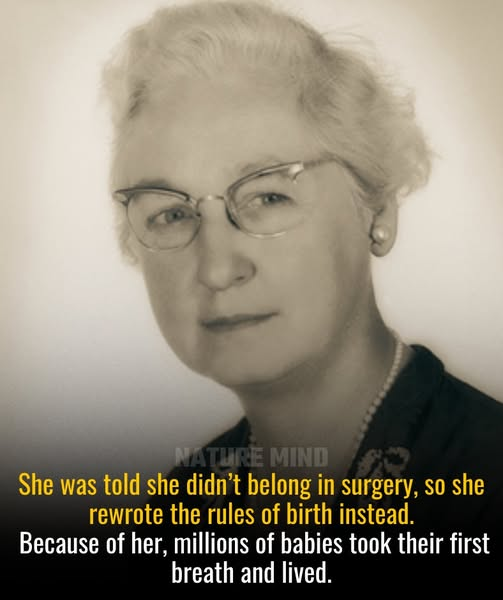
In 1952, inside a New York City delivery room, a baby was born blue and silent. Doctors hesitated, unsure whether to keep trying. Then a calm voice broke through the panic.
“Let’s score the baby,” said Dr. Virginia Apgar.
That moment changed medicine forever.
Apgar had once dreamed of being a surgeon, but in the 1940s few women were allowed into the operating room. Told that no hospital would hire her, she turned to anesthesiology instead — a decision that would save millions of lives.
Working in Columbia-Presbyterian’s maternity ward, she saw newborns die within minutes of birth because doctors had no system to judge which babies needed help first. So one morning in 1952, she grabbed a pen and paper and designed a five-point test measuring heart rate, breathing, muscle tone, reflex response, and skin color. She called it the Apgar Score.
The idea spread faster than anyone expected. Within a decade, almost every hospital in America was using it. Infant mortality fell sharply. Doctors finally had a language for newborn care — and babies once thought lost were suddenly being saved.
Apgar never stopped pushing forward. She earned a public health degree, joined the March of Dimes, and became a global voice for mothers and infants. When asked how she had thrived in a man’s world, she laughed, “Women are like tea bags — they don’t know how strong they are until they’re in hot water.”
Dr. Virginia Apgar passed away in 1974, but her test still guides every delivery room on Earth. Every two seconds, somewhere in the world, a baby takes its first breath — and someone quietly calls out a number that honors the woman who refused to give up on newborns or on herself.
My late father used to say “If you begin any new project at exactly 12 noon on Vijayadashami it is destined for great success!”
He truly believed in this tradition what some might call a superstition.
Every year he would start something new, a story, a novel or a painting precisely at noon on that day!
Would you like to start something new tomorrow?
Happy Dasara.
TAVR in asymptomatic patients? This trial showed TAVR to improve outcomes (driven mainly by ⬇️ hospitalizations) in severe aortic stenosis but ABSENCE of symptoms — echoing the smaller RECOVERY trial in “very severe” aortic stenosis in 2020. EARLY TAVR Trial, NEJM 2024 ♥️
One of a kind is an epithet used lightly but Ram Jethmalani personified it.
Undoubtedly the best lawyer India has seen. A 75 plus years' career. Hard-working, hard-partying, kind-hearted.
I once asked him the question, "What makes for a good lawyer?"
His answer was: "Hard work. Hard work. And Hard Work...when I walk into a court room, I must know more than everyone there combined. After that it's upto the two xz!#&'s up there"😃
He was the hardest working professional I have ever seen in my life and this was when he was already in his mid 80s!
And there is a lesson there for all of us!
Another time I asked him, "Do you ever get angry in court?" (he was always indulgent to the curious child in me - bless his soul)
His answer, "No. But I know how to use anger"
Another lesson there!
Ram Uncle is probably having a grand birthday party in the Great Courtroom in the Sky.
I will always cherish your memories 🙏 #RamJethmalani