My purpose in life is to inspire people to create technology with joy and wonder, and accelerate innovation!
Principal Eng @youdotcom; Prev Eng #1 @hackerrank
Claude Chrome Plugin helped me migrate my long running Spotify playlist to youtube in a matter of minutes with a single prompt. 🤯
> go through the list of liked songs in spotify (currently open), find them on youtube, and create a playlist.
Introducing Inference Router: enterprise-grade inference on demand.
Kimi K3, GLM 5.3, DeepSeek V4.1 Flash, Qwen3.8 Flash, Muse Spark 1.3, Mercury 3 and more, available with an uptime SLA of at least 99.9%. US hosting and web search built in.
https://t.co/XBdJQWDwnO
Introducing the @youdotcom Inference Router: enterprise-grade inference for leading LLMs, on demand.
• Minimum of 99.9% uptime SLA, backed by service credits
• Zero data retention across every model call and web search request
• 100% US-hosted infrastructure, with multi-provider failover
•Built-in web search
One OpenAI-compatible API, with no platform fee.
Introducing Flint, @Recursive_SI’s first model: a fast local coding model built with our automated research system, the Eureka Machine.
• Best-in-class fast local coding
• Up to 2x faster than comparable models: 125+ tokens/sec on a MacBook Pro, 150+ on RTX Spark
• Built from scratch in under 4 months
Private, unmetered intelligence on your own machine. Open weights available now on @huggingface, run it locally on your favorite framework or try it for free on @opencode or @pidotdev.
Cursor, meet You.
4 skills plus an MCP server with 4 tools for search, contents, research, and finance, now in the @cursor_ai Marketplace.
Your agent asks. You answers. Cursor writes the code.
https://t.co/1XHVx2UCqY
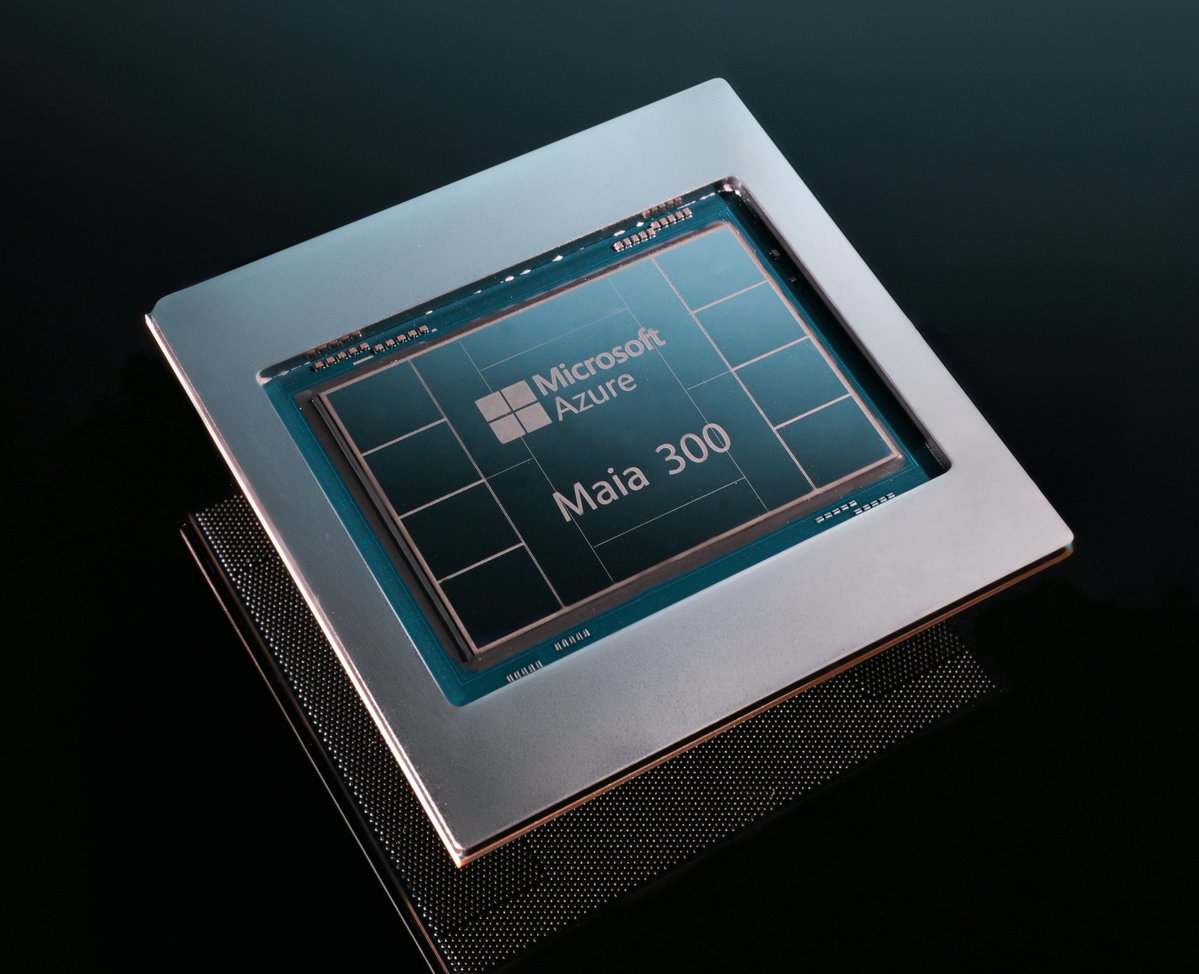
Today we are announcing our biggest bet yet on our own silicon.
Starting next calendar year, we will scale our Maia family to multi-gigawatt deployments, making it the primary inference system for our own product and services.
And we’re introducing Maia 300, which delivers 40% more tokens per watt compared to leading GPU-based systems.
We are already deploying Maia 200 across the US, Europe, and Australia, delivering up to 1.7x more tokens per watt across experiences in Teams and Copilot.
Our goal is to build on the full-stack efficiency gains we’ve already seen, while continuing to bring the latest innovations from across the ecosystem into our fleet.
Dusting off this tweet from April because this gap in shared understanding of LLM capability is *widening*. It's now less "two groups of people speaking past each other" and more a sharp funnel.
- Napkin math somewhere around 6B people (~75% of the population) have barely come in contact with LLMs at all.
- Around 1-2B (~20%) are casual and infrequent users of free-tier ChatGPT-like products. This group sees derpy chatbots and treats them a bit like a better Google search, a writing aid, or etc. Maybe an agent tries to book you a flight. I have non-tech friends who (reasonably, imo) say they have not much use for it at all. Even many professionals outside of math&code are in this tier. For example, execs and many other functions spend a lot of their time talking to other people, so while they understand what is happening intellectually, it is still second-hand and a bit abstract.
- Now we get to professional use of frontier-grade LLMs in math&code. Somewhere around 20M people (0.2%) see first-hand that large, complex projects that used to take them weeks/months can now be completed by agents with a prompt. Building apps, copying apps, translating apps, decompiling apps from binaries... This has all happened very quickly and recently - less than 1 year ago, I was writing code manually by hand, typing memorized computer code commands into a code editor character by character, occasionally pressing Tab to autocomplete a little chunk of code.
- And finally we get to the ~5,000 people (~0.00006%) with access to frontier-grade systems internally. The external world has seen the preview. It looks like swarms of thousands of agents collaborating over weeks on software mega projects: minting zero days, running cyber attacks and defenses at machine speeds, discovering new science, advancing the frontier of mathematics. Things that would have taken top professionals in the industry years of work. Meanwhile, human review and comprehension are starting to fall behind. For example, people are still involved in the "archeology" of the OpenAI-HF incident from many months ago. Mathematicians may be poring over the 722 manuscripts on frontier mathematics for a while.
The funnel is driven by a combination of factors:
1. The impact scales with ambition, problem size, and horizon. A question with a paragraph answer barely stresses the system. You need a reservoir of big, difficult problems that you really care about. This aspect drives the consumer / professional dimension of the funnel.
2. The jaggedness of the system (which I have written about a lot separately). Capability peaks in domains that are digital, verifiable and economically valuable. This is because LLM capability emerges from reinforcement learning on verifiable rewards on a curated environment mixture driven by revenue potential. This aspect primarily drives the area (e.g. math&code) dimension of the funnel.
3. Access. Free-tier, paid-tier, internal.
So this is the weirdness of the moment. The general public has mostly not interacted with these systems. When they have, it looks like a derpy chatbot. The majority of professionals still see only a modest uplift. And a small sliver of professionals are experiencing the vertigo of the curve going vertical. And it is all happening at the same time.
Search that works the moment you install.
@AnythingLLM now comes with @youdotcom Web Search by default, giving users fresh, accurate results with zero data retention.
Private by design, fresh by default.
Trying to understand where we are and where we're headed with AI, for real?
Reading a book by a deeply technical AI researcher who is a proven operator and prolific investor in the space is a can't go wrong choice.
I don't know about you but I'm always looking to those with a track record of inventing and pulling the future forward to understand where we are and where we're headed.
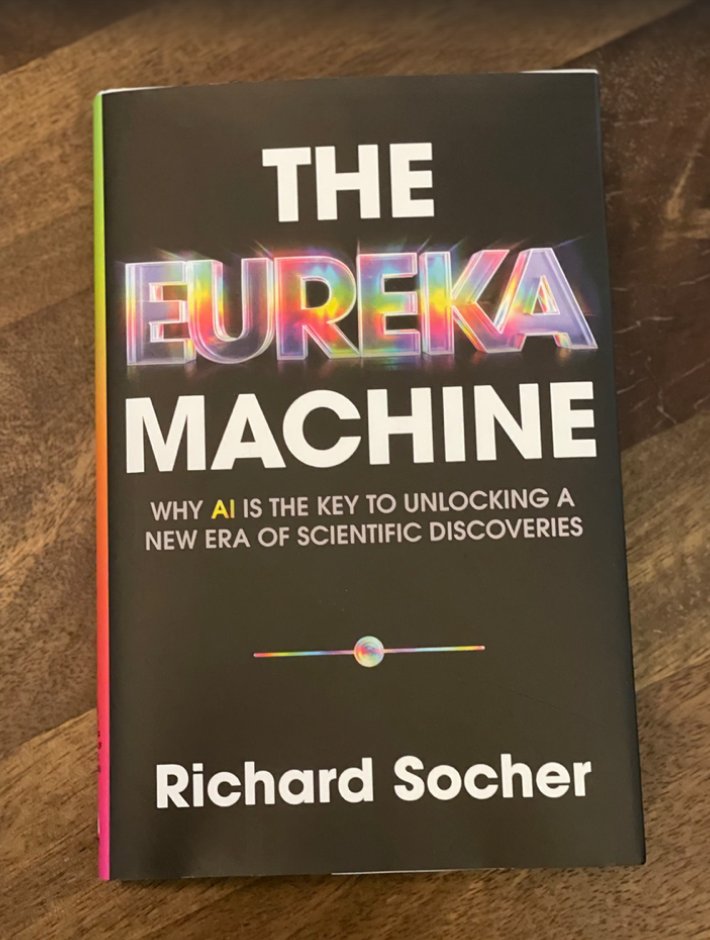
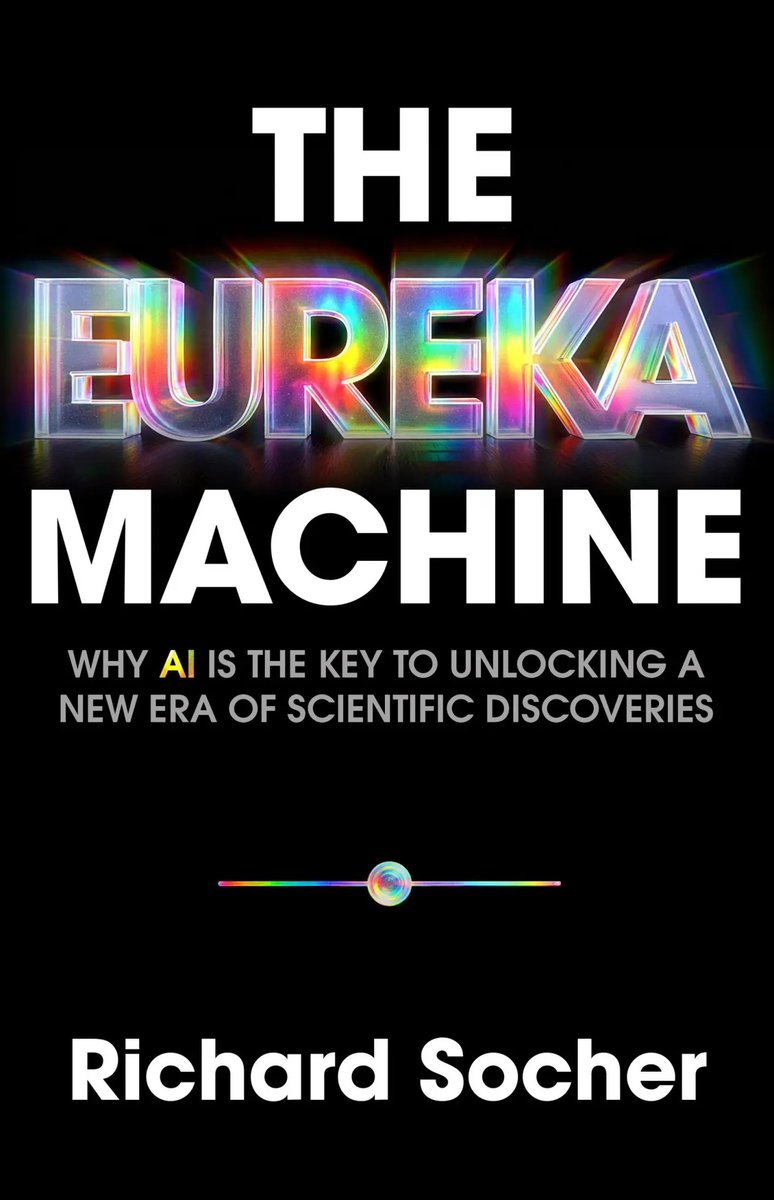
"The Eureka Machine" by @RichardSocher 👇👇👇
AI moves so fast that I thought this book was going to be a year too late. It turns out it's right on time.
While I was writing, I kept having to change chapters from "someone should do this" to "someone has done this," and then go talk to the people who had done it. A good example is the chapter on virtual cells. I'd written that we needed large initiatives to build one. By the time I finished, I was writing about the ones that exist — the Chan Zuckerberg Initiative's is now the largest and best-funded push to model a human cell.
The Eureka Machine is out today.
It's about building a full-stack scientific superintelligence: a living map of human knowledge, a model of physical reality, high-fidelity simulations, autonomous labs, and an agent swarm of AI scientists on top. There's no better science to start with than the science of AI itself, because that's where the feedback loop is tightest. Then you expand the aperture to physics, chemistry, and especially pre-clinical biology.
This will be the most meaningful application of AI, and one of the most important things humanity does. And it may be the last organic invention we need to make. After that, it starts inventing everything else for us to solve our most pressing problems.
While writing, I couldn't let the idea go. Eight of us started @Recursive_SI to go build it.
AI is going to massively accelerate science, and unlike most of what gets argued about right now, that isn't zero sum.
I hope you all enjoy the book. I look forward to discussing it with you all.