Islam has a problem with freedom, democracy, pork, dogs, music, Christmas, Zoroastrians, Hindus, Jews, Buddhists, Christians, women who do not wear the hijab, people who leave the faith, and even those who draw the Prophet of Islam who, according to widely recognised Islamic sources, was betrothed to Aisha when she was six.
Yet if we say that we have a problem with Islam or choose to criticise it, we are immediately branded “Islamophobes” or “anti-Muslim”. Some even call for jihad or declare critics apostates, while others justify their killing.
If an ideology claims the right to judge, restrict, condemn or even excommunicate everyone else, why should that ideology itself be exempt from criticism?
Why should Islam be treated as a protected taboo? The fact that some Muslims respond to criticism with threats or attempts to silence others should never force us into self-censorship. Instead, it should reinforce the principle that no religion or ideology is above criticism in a free society.
@elonmusk
Validation of the ISGPS definition confirms post-pancreatectomy acute pancreatitis as a clinically important complication after pancreatoduodenectomy, occurring in 7.5% of patients. https://t.co/u7SGmJTPqc
3. CIRCULATE: ctDNA guided treatment in Stage II colon cancer.
- Primary ITT endpoint not met, but…
- ctDNA positivity after surgery continues to carry poor prognosis
- Adj treatment for ctDNA+ improved outcomes
4/7
#InfiniteIndia | Colonial writers claimed India was never a nation, fragmented, uncivilised, needing “saving.” But ancient texts, geography, and shared cultural memory tell a different story. India wasn’t created by colonisers, it existed long before them, as a living civilisation.
Watch The Full Program: https://t.co/EavOTAJ8mX
@authoramish #InfiniteIndiaOnDDNews #IndiaCivilization #ReclaimHistory #DecolonizeNarrative #IndianUnity
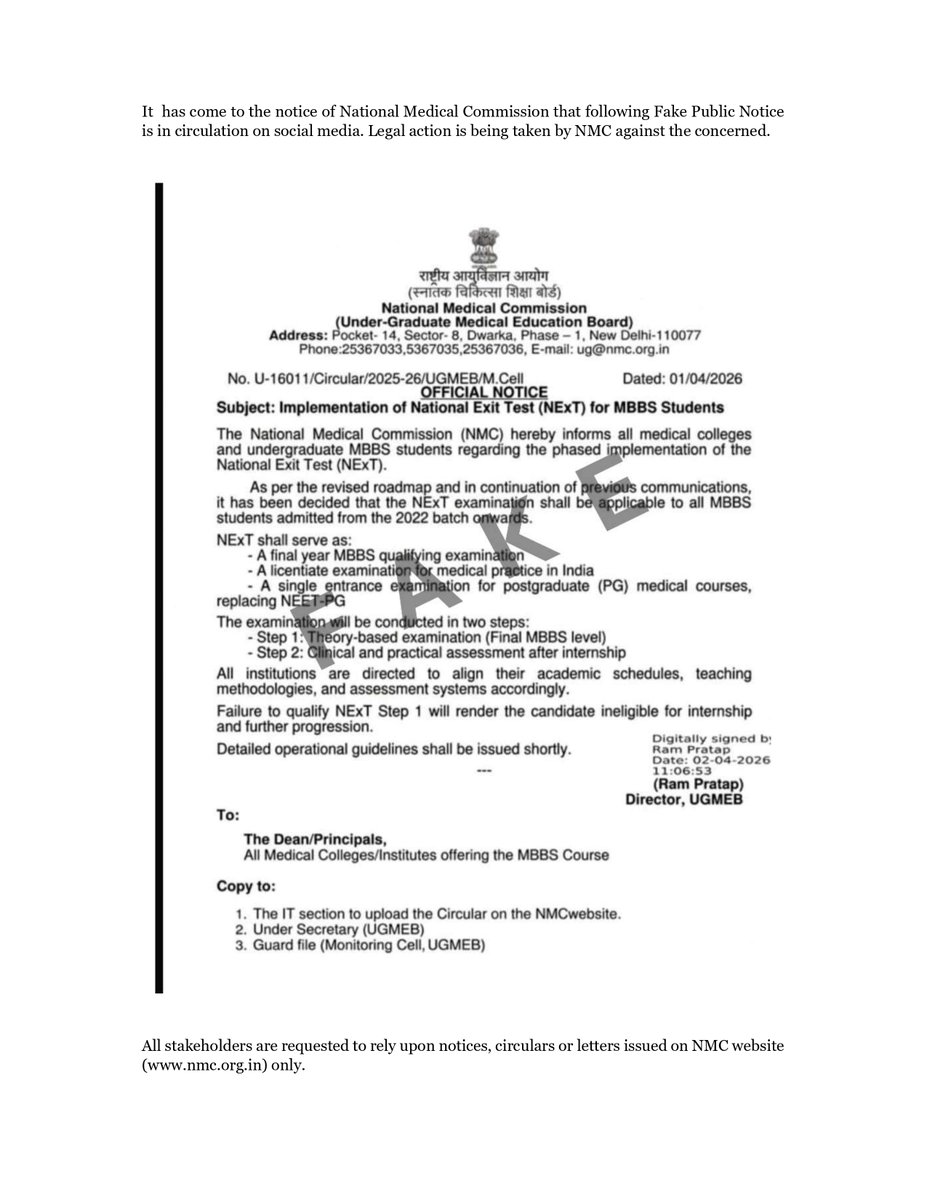
It has come to the notice of National Medical Commission that a fake public notice is being circulated on social media. Strict legal action is being initiated against those responsible.
All stakeholders are strongly advised to verify information only through official communications available on the NMC website: https://t.co/bCrbPIH9lh
Postpancreatectomy-specific complications account for nearly half of in-hospital deaths after pancreatoduodenectomy. The long intervals between onset and mortality highlight opportunities to prevent failure to rescue. https://t.co/GvTRBkB7Gj
New CRP Guidelines for Predicting Anastomotic Leakage in Colorectal Surgery
by Zayas-Bórquez R, Canto-Losa J (...) Santes O et 2 al. in Rev Gastroenterol Mex (Engl Ed)
🪡 read our summary 👉 https://t.co/GGSsUgyLDg
📖 read the article: https://t.co/rQ6ywDVIuc
Surgical site infection
➡️ https://t.co/E9DwD9D2xT
🧼 Surgical site infections (SSI) occur within 30 days after surgery (or up to 1 year with prosthetic material) and range from superficial wound infection to deep or organ/space abscesses
🏥 In Europe, SSIs account for ~16% of healthcare-associated infections and are linked to a 2–11× increase in postoperative mortality, longer hospital stay, and higher costs
⚠️ Risk is multifactorial: procedure-related (clean ~2% vs contaminated >10%, highest in colorectal surgery), patient-related (diabetes, obesity, smoking, immunosuppression), and surgical technique
🦠 Most SSIs are caused by Gram-positive cocci (~54%), while Gram-negative Enterobacterales (~31%) dominate in abdominal and colorectal procedures
✅ Prevention and management rely on timely antibiotic prophylaxis, meticulous surgical technique, early diagnosis, and prompt source control, supported by hospital surveillance and feedback programs
Work by María Sánchez-Rodríguez, Carlos Pastor, Patricia Tejedor
#SoMe4Surgery #MedTwitter #SurgEd #Surgery @RCPSGTrainees @aecirujanos@SEIQuirurgica@iss_sic #MedicalTechniques @BJSAcademy@young_bjs@BjsOpen@evanscolorectal@robhinchliffe1@bplwijn@MalinASund@nfmkok@TejedorPat@paulo_sutt@PVaughanShaw@JJEarnshaw@juliomayol@ksoreide #some4hpb #some4tpl @DPCG_official@pancreatitis_nl@PancreasClub #PancreasClub2023 #PancreaticCancer #Pancreatitis #HCC @PanCAN #PanCANawareness @EurPancClub@P_C_E_@dice_europe #PancreaticCancer #cholangiocarcinoma #colorectalsurgery #StepUp4CRC @FightCRC@ACPGBI #ERAS @dice_europe #Crohn #proctology @Dukes_Club@ACPGBI_EduTrain@AECP_FAECP@PelvExGroup@escp_tweets@YouESCP #TeachMeColoproctology
#Some4COLoprocto @cpastorid@MerySanchezRo
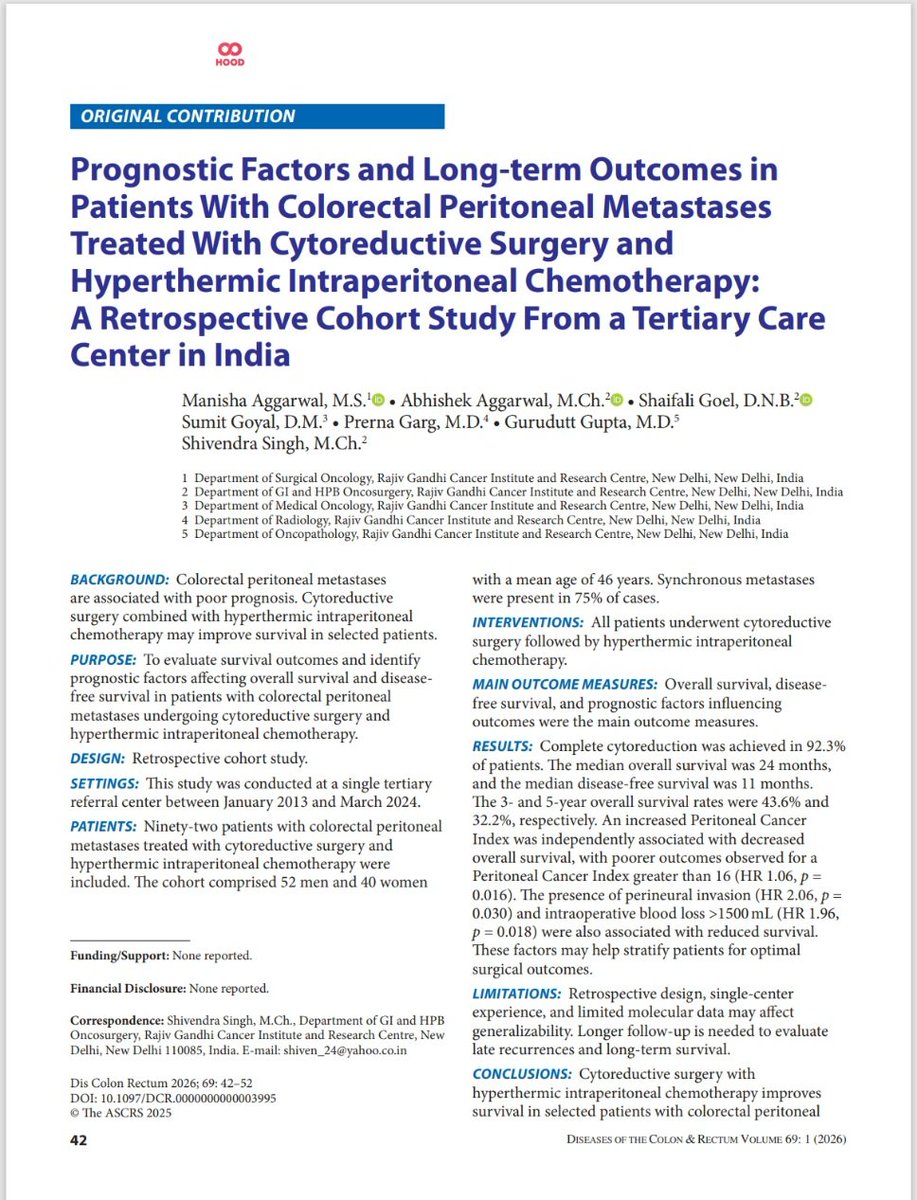
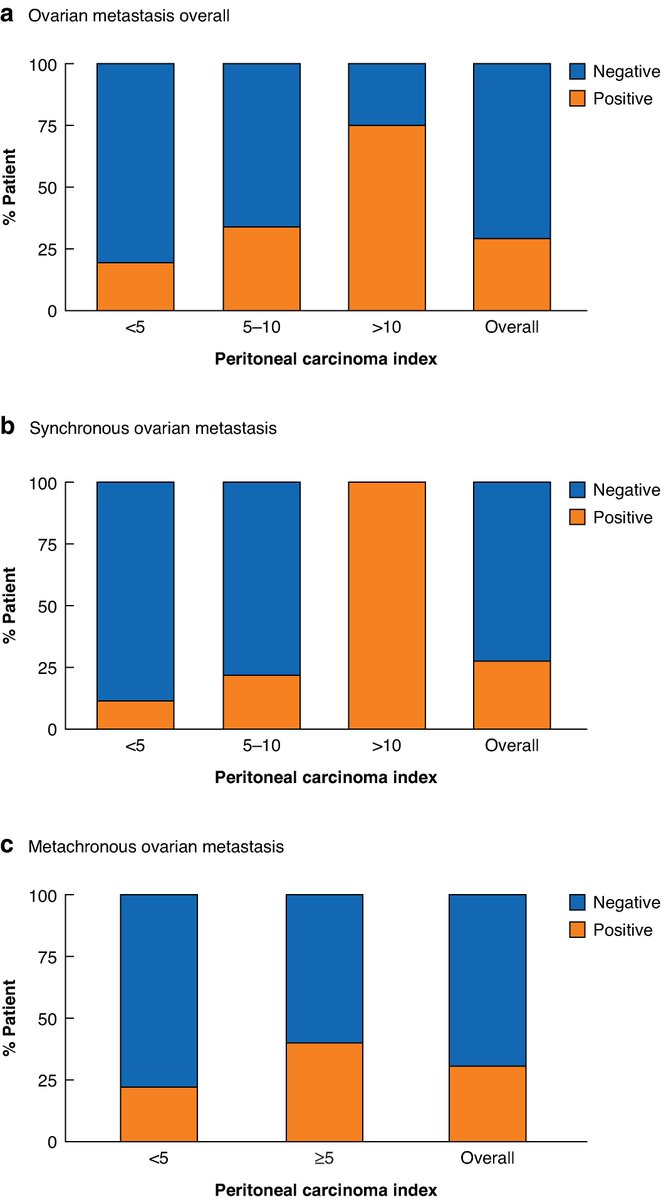
Impact of prophylactic bilateral salpingo-oophorectomy in patients with colorectal cancer with peritoneal metastasis during cytoreductive surgery: dual-center cohort analysis
➡️https://t.co/1kTlxs6dU0
For colorectal cancer patients with peritoneal metastasis and bilateral macroscopically normal ovaries, the incidence of both occult synchronous and metachronous ovarian metastases is relatively high and increases with higher peritoneal carcinoma index scores. However, the decision to proceed with prophylactic bilateral salpingo-oophorectomy should be made cautiously, because it does not improve long-term survival.
👏👏👏Xiajuan Xue , Zhigang Hong , Huiqun Shen , Muxu Zheng , Wanjun Yang , Peirong Ding , Yincong Guo , Jinghua Tang , Leen Liao
#SoMe4Surgery #MedTwitter #SurgEd #Surgery @BJSAcademy@BJSurgery
Once upon a time, Mamata Banerjee stood in Parliament and supported the idea of a single ID to prove citizenship. She warned the nation about illegal infiltration and spoke of the dangers it posed.
Today, the same Mamata Banerjee calls every attempt to regulate citizenship ‘anti-people’… while infiltrators are ruining Bengal, changing its demographics, and threatening its security.
What changed?
Not the ground reality.
𝐎𝐧𝐥𝐲 𝐡𝐞𝐫 𝐩𝐨𝐥𝐢𝐭𝐢𝐜𝐬.
For power and greed, she has abandoned the very principles she once shouted from the floor of Parliament.
Bengal deserves honesty.
Bengal deserves clarity.
Bengal deserves safety.
And most importantly,
𝐁𝐄𝐍𝐆𝐀𝐋 𝐃𝐄𝐒𝐄𝐑𝐕𝐄𝐒 𝐂𝐇𝐀𝐍𝐆𝐄! ⛔️
Interesting @SurgEndosc study from @MSKCancerCenter looking at patterns and detection of local regrowth in patients with rectal cancer who experience cCR after TNT and undergo watch-and-wait (2006-2020)
-Suspected local regrowth occurred in 30%
-Abnormal MRI with normal endoscopy was uncommon (11% of suspected regrowths) compared to Normal MRI/abnormal endoscopy (32%) and abnormalities on both MRI and endoscopy (57%)
-For patients undergoing salvage surgery, the rate of pCR was 44% in the +MRI/-Endo group, 18% for the -MRI/+Endo group, and 4% for the +MRI/+Endo group. This means residual/recurrent cancer was much more likely to be present in the final specimen if the endoscopy was abnormal.
-Of the 99 patients with salvage surgery and recurrent cancer on final pathology, only 1 patient (1%) had this recurrence detected by MRI alone.
Important caveats:
-This study goes back to 2006, and MRIs have certainly evolved during that time (as have TNT, surveillance, etc).
-All false positive MRI findings occurred after 2013, suggesting newer MRIs pick up subtle abnormalities that aren't necessarily cancer regrowth.
-pCR on final pathology shouldn't necessarily be considered a failure in management. These patients do very well.
What I take home from this study is that isolated irregularities on surveillance MRI can be safely monitored without proctectomy in the short-term...ie you can leave the rectum in for a little while and let the problem declare itself.
https://t.co/MYEcqeDl2H