What is your memory worth?...
Like tears in rain....
The iconic last words of the replicant Roy Batty in Blade Runner, delivered by Rutger Hauer, are ..."All those moments will be lost in time, like tears in rain. Time to die.".
Katherine Boyle just identified Elon Musk’s most important contribution to America, and it has nothing to do with the products he shipped.
Boyle, General Partner at a16z: “I think Elon’s most important contribution to this country is training two generations of engineers to work with their hands again.”
For ten years, America’s sharpest technical minds optimized ad clicks and built messaging apps. Software consumed ambition. The physical world became something you abstracted into APIs, not something you touched or understood.
Elon didn’t reverse that through inspiration. He reversed it by building companies that required understanding manufacturing or failing completely.
SpaceX and Tesla forced engineers to learn how metal fractures, how tolerances cascade through systems, how physical iteration costs months and millions per failure. No debugging. No patches. Just physics that doesn’t negotiate.
Boyle: “Training two generations of engineers.”
The product isn’t the cars. It’s the people. Look at who’s founding America’s critical hard-tech companies now. The common thread isn’t Stanford or MIT. It’s time on factory floors at SpaceX or Tesla.
They learned welding. They learned that “impossible” just means unsolved engineering, not violated physics. They learned failure in the physical domain where mistakes compound instead of reverting.
Elon didn’t build companies. He accidentally rebuilt industrial knowledge that had been decaying for thirty years while America’s best minds chased digital scale.
Boyle: “Work with their hands again.”
Three words that sound quaint but describe a civilizational inflection point.
Software dominated because it scaled infinitely at zero marginal cost. Physical manufacturing was slow, expensive, unfashionable. Building real things became what you did if you couldn’t code.
Elon made atoms matter again. Made manufacturing the hardest problem worth solving. Made physical engineering prestigious in ways it hadn’t been since humans walked on the moon.
The evidence is everywhere now. Technical talent that doesn’t default to “which app” but asks “which physical thing should exist that currently doesn’t.”
Ambition redirected from optimizing engagement metrics to building rockets. From scaling users to scaling factories. From virtual products to physical infrastructure.
That shift matters more than any vehicle or spacecraft Musk delivered. Products obsolesce. Redirecting an entire generation’s engineering ambition from digital to physical compounds across decades and rebuilds industrial capability at civilizational scale.
We stopped just coding the future. We started machining it, welding it, breaking it in reality until physics confirms it works. That transformation from virtual to tangible ambition is reconstructing American manufacturing one engineer at a time.
And those engineers are now training the next wave. The compounding has started. The School of Elon doesn’t need Elon anymore. It’s self-sustaining, spreading through an entire generation that learned building real things matters more than building virtual ones.
That’s not just a business achievement. That’s a civilization remembering how to make things that matter in the physical world again. And it might be the only thing that saves American technological leadership when the competition is just building faster because they never forgot.
.@pmarca and @jaltma on why early-stage venture is all about upside, not batting average.
“In venture... it’s asymmetric. You can only lose 1x, but you can potentially make 1,000x.
There's two errors in venture: There's the error of commission, where you invest in the thing that fails, and then error of omission, where you don’t invest in the thing that succeeds... Overwhelmingly, the error that matters is the error of omission.”
Thousands of distinct vehicle and pad criteria had to be met prior to catching the Super Heavy booster. Thanks to the tireless work of SpaceX engineers, we succeeded with catch on our first attempt.
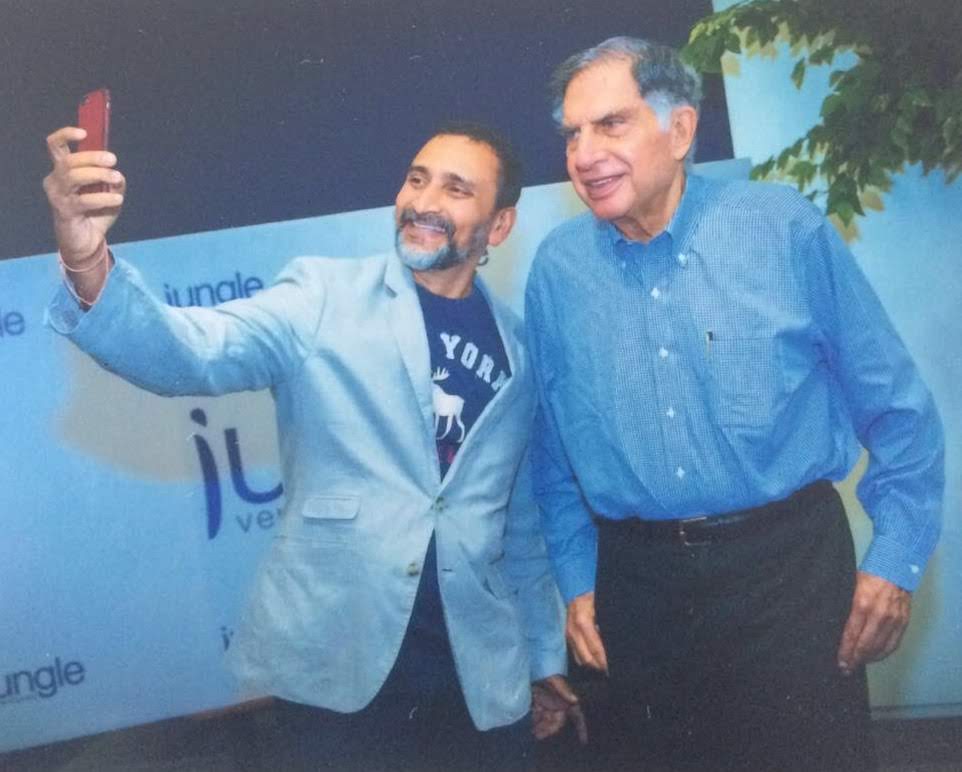
I had a privilege to meet and have a conversation with Shri Ratan Naval Tata ji in 2016.
India has lost a visionary leader, a compassionate leader, a man with integrity.
My deepest condolences. Om Shanti, Shanti, Shanti 🙏
The first Starships to Mars will launch in 2 years when the next Earth-Mars transfer window opens.
These will be uncrewed to test the reliability of landing intact on Mars. If those landings go well, then the first crewed flights to Mars will be in 4 years.
Flight rate will grow exponentially from there, with the goal of building a self-sustaining city in about 20 years. Being multiplanetary will vastly increase the probable lifespan of consciousness, as we will no longer have all our eggs, literally and metabolically, on one planet.