There have recently been some discussions on the ongoing role of L2s in the Ethereum ecosystem, especially in the face of two facts:
* L2s' progress to stage 2 (and, secondarily, on interop) has been far slower and more difficult than originally expected
* L1 itself is scaling, fees are very low, and gaslimits are projected to increase greatly in 2026
Both of these facts, for their own separate reasons, mean that the original vision of L2s and their role in Ethereum no longer makes sense, and we need a new path.
First, let us recap the original vision. Ethereum needs to scale. The definition of "Ethereum scaling" is the existence of large quantities of block space that is backed by the full faith and credit of Ethereum - that is, block space where, if you do things (including with ETH) inside that block space, your activities are guaranteed to be valid, uncensored, unreverted, untouched, as long as Ethereum itself functions. If you create a 10000 TPS EVM where its connection to L1 is mediated by a multisig bridge, then you are not scaling Ethereum.
This vision no longer makes sense. L1 does not need L2s to be "branded shards", because L1 is itself scaling. And L2s are not able or willing to satisfy the properties that a true "branded shard" would require. I've even seen at least one explicitly saying that they may never want to go beyond stage 1, not just for technical reasons around ZK-EVM safety, but also because their customers' regulatory needs require them to have ultimate control. This may be doing the right thing for your customers. But it should be obvious that if you are doing this, then you are not "scaling Ethereum" in the sense meant by the rollup-centric roadmap. But that's fine! it's fine because Ethereum itself is now scaling directly on L1, with large planned increases to its gas limit this year and the years ahead.
We should stop thinking about L2s as literally being "branded shards" of Ethereum, with the social status and responsibilities that this entails. Instead, we can think of L2s as being a full spectrum, which includes both chains backed by the full faith and credit of Ethereum with various unique properties (eg. not just EVM), as well as a whole array of options at different levels of connection to Ethereum, that each person (or bot) is free to care about or not care about depending on their needs.
What would I do today if I were an L2?
* Identify a value add other than "scaling". Examples: (i) non-EVM specialized features/VMs around privacy, (ii) efficiency specialized around a particular application, (iii) truly extreme levels of scaling that even a greatly expanded L1 will not do, (iv) a totally different design for non-financial applications, eg. social, identity, AI, (v) ultra-low-latency and other sequencing properties, (vi) maybe built-in oracles or decentralized dispute resolution or other "non-computationally-verifiable" features
* Be stage 1 at the minimum (otherwise you really are just a separate L1 with a bridge, and you should just call yourself that) if you're doing things with ETH or other ethereum-issued assets
* Support maximum interoperability with Ethereum, though this will differ for each one (eg. what if you're not EVM, or even not financial?)
From Ethereum's side, over the past few months I've become more convinced of the value of the native rollup precompile, particuarly once we have enshrined ZK-EVM proofs that we need anyway to scale L1. This is a precompile that verifies a ZK-EVM proof, and it's "part of Ethereum", so (i) it auto-upgrades along with Ethereum, and (ii) if the precompile has a bug, Ethereum will hard-fork to fix the bug.
The native rollup precompile would make full, security-council-free, EVM verification accessible. We should spend much more time working out how to design it in such a way that if your L2 is "EVM plus other stuff", then the native rollup precompile would verify the EVM, and you only have to bring your own prover for the "other stuff" (eg. Stylus). This might involve a canonical way of exposing a lookup table between contract call inputs and outputs, and letting you provide your own values to the lookup table (that you would prove separately).
This would make it easy to have safe, strong, trustless interoperability with Ethereum. It also enables synchronous composability (see: https://t.co/9jy6v1X6Fw and https://t.co/gZmu3YjebM ). And from there, it's each L2's choice exactly what they want to build. Don't just "extend L1", figure out something new to add.
This of course means that some will add things that are trust-dependent, or backdoored, or otherwise insecure; this is unavoidable in a permissionless ecosystem where developers have freedom. Our job should make to make it clear to users what guarantees they have, and to build up the strongest Ethereum that we can.
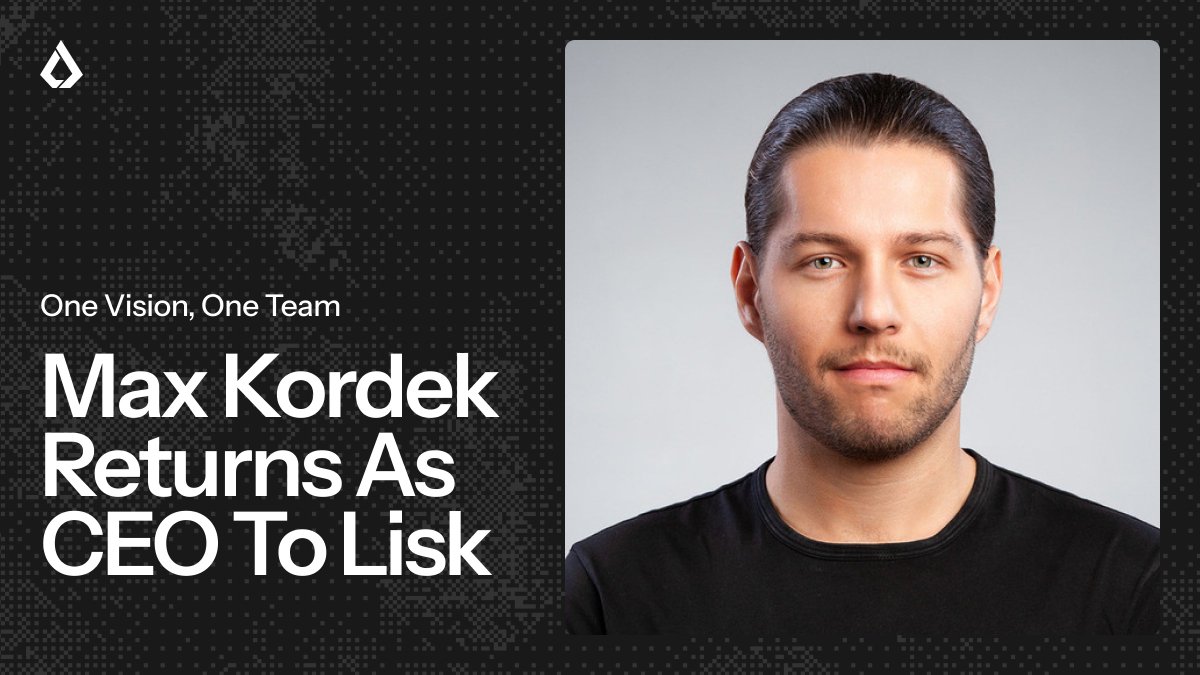
Max Kordek returns as full-time CEO and goes all in on Lisk.
Today, we’re strengthening Lisk with a bigger team, increased funding, and full support behind our mission.
@maxkordek is returning as CEO to lead this next chapter.
Full announcement 👉 https://t.co/HzUVj94s6h
We are investigating a potential security incident in our AWS infrastructure and have therefore taken Lisk Portal offline out of caution.
Note that we have not received any reports of any malicious activity related to the Lisk Portal so far.
Lisk x United Nations 🇺🇳
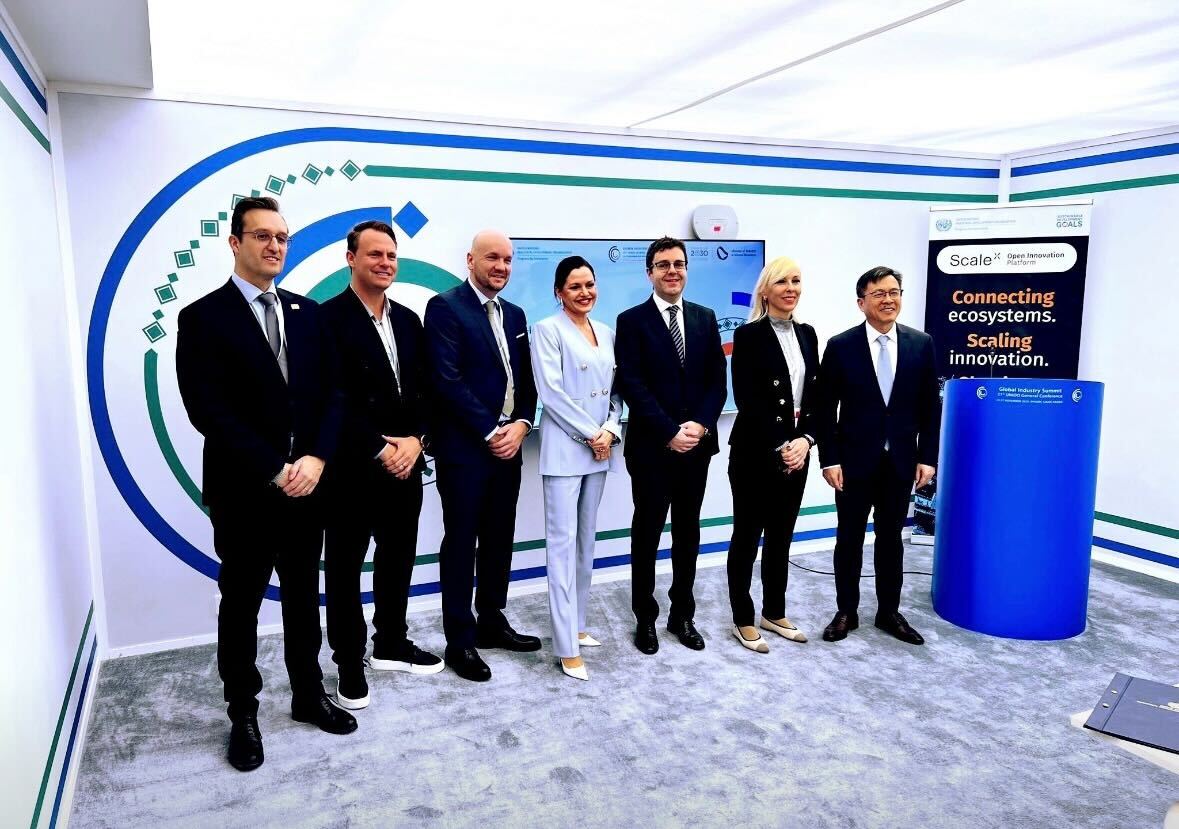
We’re excited to announce we’ve joined ScaleX, the @UN's new deep-tech accelerator led by @UNIDO, as its first partner.
Together, we are launching the Lisk x ScaleX Web3 Incubator for founders in emerging markets to run real pilots with governments and industry 🧵
Behind closed doors, big things have been happening at Lisk.
Today, we can finally start talking about one of them. 🚀
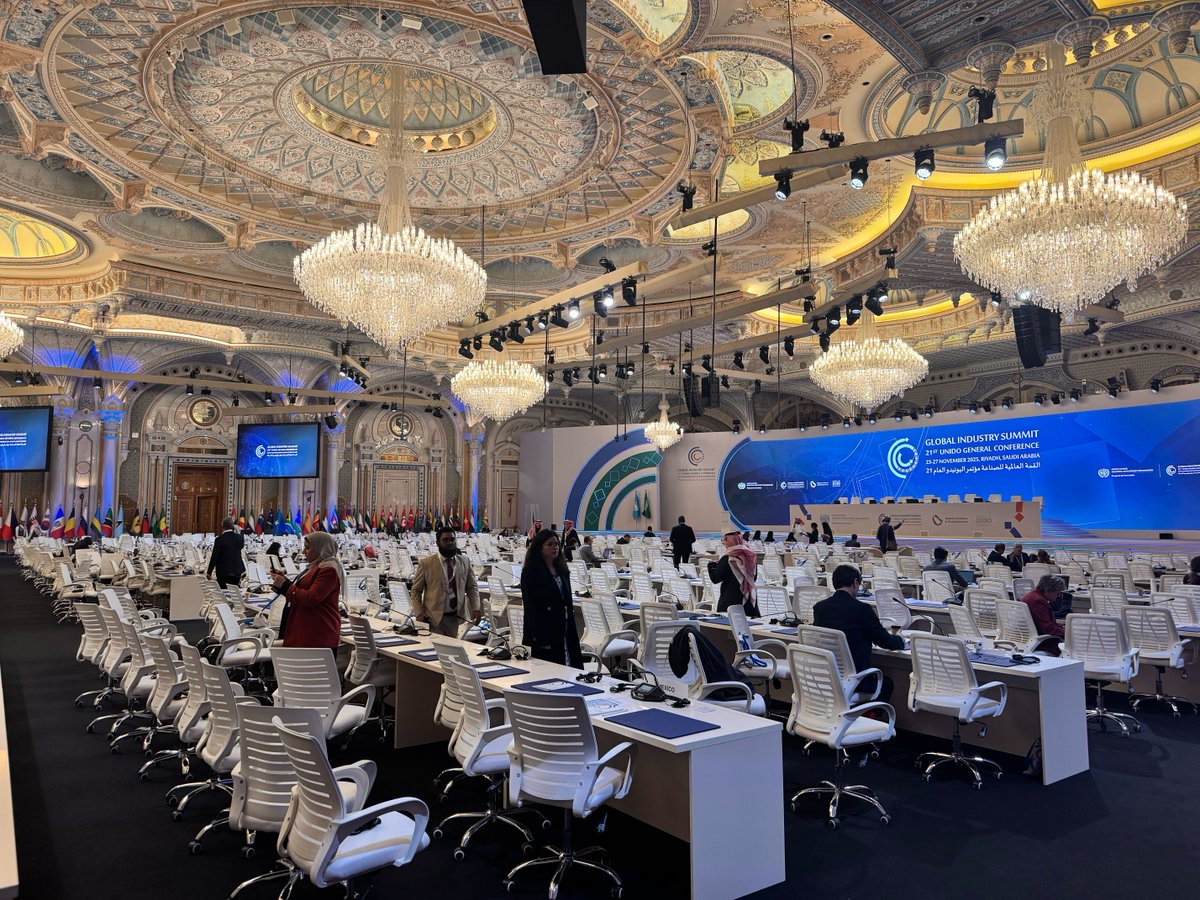
🌍💡 Last week in Riyadh 🇸🇦, our Head of Investments, @gideongreaves, attended the United Nations convention where the @UN officially launched ScaleX; a global accelerator helping startups run real pilots with governments and enterprises.
🏛️📈 ScaleX is led by @UNIDO, which is the United Nations Industrial Development Organization. A UN body responsible for advancing industrial growth and economic development worldwide.
And here’s the part that matters:
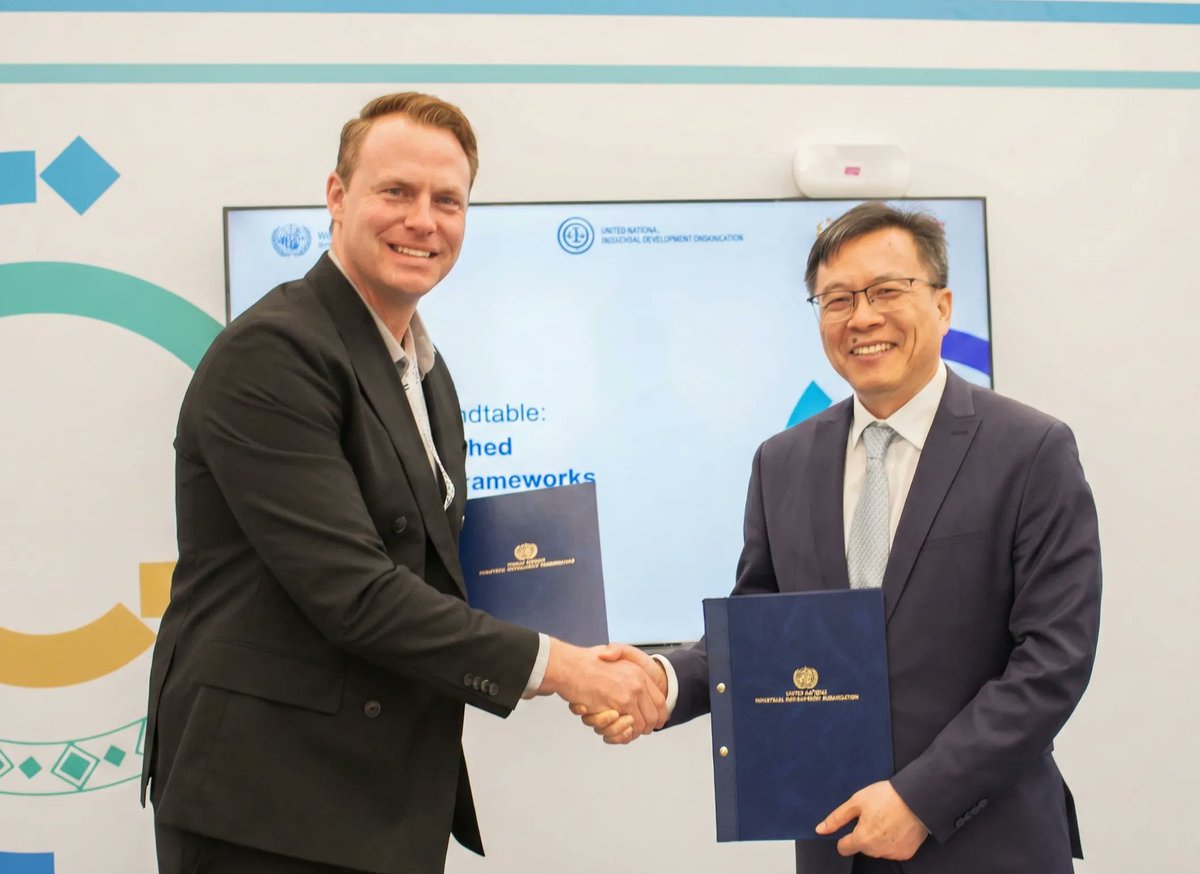
👉 Lisk was announced as the first organization partnering with UNIDO on ScaleX.
Together, we are creating the Lisk x ScaleX Web3 Incubator. A UN-supported initiative focused on applying decentralized technologies to industrial and supply-chain challenges in Emerging Markets.
🌐🤝 This partnership positions Lisk at the center of a global initiative connecting tech, industry, and sustainable development and aligns directly with our Mission in Emerging Markets.
Governments, VCs, and ecosystem leaders were present, including representatives from Barbados 🇧🇧, Georgia 🇬🇪, and Slovenia 🇸🇮, many of whom expressed interest in future collaboration.
A major milestone for Lisk and the beginning of a powerful new chapter for Web3 adoption. 💥
That’s one of the reasons why we choose to move to Ethereum and use op stack years ago!
The infra won’t be the moat but the ecosystem, apps, AIs and humans on and off the chain, is the main differentiator.
Building that takes time, but we are in the right direction
i have a hard time convincing myself to own l1 tokens long term not because the p/e ratios r high, but because they have no moat. without a moat, they become commoditized and can’t capture meaningful value.
- users can bridge from one chain to another easily these days.
- most app devs can move from one chain to another fairly quickly too (aside from a handful of complex smart contracts).
- and it’s never been easier to launch a new chain.
their switching cost of blockchains is nowhere near something like aws.
the only way as far as i can see for chains to strengthen their moat is to verticalize and own the app layer. my perception is chains solana, base, and hyperliquid have come to this conclusion and r actively working on it. and ofc so do the up and coming corp chains like tempo.
its a no brainer to believe in the exponential, but the best expression of this view is to bet on the app layer.
You can't just launch a project nowadays and expect market to care.
Oversaturation of tokens, lack of actual product-market fit and real business models, has led to people questioning their reality and having a reality check smack in their face about what is really happening in this industry.
It's time for the entire industry to wake the f*ck up and return to fundamentals.
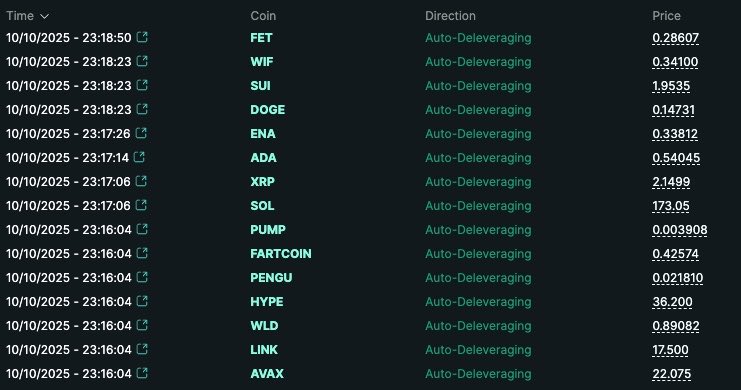
1/ Since a lot of people are waking up to see their perps positions closed and wondering what the hell “Auto-Deleveraging” means, here’s a quick and dirty primer.
What is ADL? How does it work? And why does it exist?
Today, the Lisk EMpower Fund goes live — a $15M venture fund backing founders in Africa, Southeast Asia, and Latin America. 🌍
Our mission: close the capital gap and support proven products on their path to global scale.
👉 https://t.co/IzZIVAIvwl
The opportunity ahead 🧵
🚨 There’s a large-scale supply chain attack in progress: the NPM account of a reputable developer has been compromised. The affected packages have already been downloaded over 1 billion times, meaning the entire JavaScript ecosystem may be at risk.
The malicious payload works by silently swapping crypto addresses on the fly to steal funds.
If you use a hardware wallet, pay attention to every transaction before signing and you're safe.
If you don’t use a hardware wallet, refrain from making any on-chain transactions for now.
It’s still unclear whether the attacker is also stealing seeds from software wallets directly at this stage.
Excellent report here: https://t.co/5CtiZJHYsN
really amusing to see alt-L1 proponents cheering the creation of new alt-L1s instead of Ethereum L2s
like i guess it validates their business model or something
but also ask critically why they didn't build on your thing(s), too
and why everyone who chooses to do so chooses Ethereum
Today's Highlights
•How to mine Bitcoin at home in 2025: https://t.co/gmQJsvJDGM
This article outlines the four main methods for individuals to mine Bitcoin at home in 2025. These methods include lottery mining, which offers low-cost opportunities but lacks predictability; solo ASIC mining for those wanting more control at a higher risk; pooled mining to distribute the risks and rewards; and cloud mining, which eliminates the need for hardware but can be less profitable. As Bitcoin gains wider acceptance, prospective miners are reconsidering their strategies to align with evolving market trends.
•ArkType: Ergonomic TS validator 100x faster than Zod: https://t.co/0UHB5thSxs
ArkType has been introduced as a TypeScript validation tool boasting performance improvements of up to 100 times compared to existing libraries such as Zod. This represents a significant advancement for TypeScript developers in the efficiency of validation processes. The increased speed could enhance the development experience by reducing the time developers spend on validation tasks, making it a compelling choice for those building complex applications.
Today's Highlights
•PayPal Pushes Further Into Crypto by Adding Chainlink and Solana as New Offerings: https://t.co/qb7L7Yaykw
PayPal is expanding its cryptocurrency product lineup by integrating Chainlink and Solana, providing broader access to digital assets for its Venmo and PayPal users. This strategic move aligns with the current trend of increasing regulatory clarity and reflects growing demand for cryptocurrency functionalities in mainstream financial applications. By adding these high-performance assets, PayPal positions itself to attract users interested in both interoperability and smart contracts, enriching the user experience and expanding transaction capabilities.
•Model-Signing to Strengthen ML Supply Chain: https://t.co/zGRctPLDzk
The Open Source Coalition has introduced Model-Signing, a new initiative aimed at enhancing the integrity of machine learning supply chains. This tool is designed for developers to validate the authenticity and provenance of ML models before their deployment, which is crucial for maintaining security and trust in applications, particularly within blockchain environments. By providing a robust verification mechanism, it empowers developers to ensure that the models used in their products are reliable and tamper-proof, thus reinforcing application integrity.
Devconnect is coming to Buenos Aires, Argentina from 17-22 November 2025!! 🌞🇦🇷
Devconnect ARG will be different: We want to support an effort the local community has already started — bringing Argentina onchain.
Read about Devconnect ARG & how you can get involved👇
🚨BREAKING🚨
VANCOUVER COUNCILORS HAVE
PASSED A MOTION TO MAKE THE
CITY "BITCOIN-FRIENDLY" AND
EXPLORE THE USE OF $BTC FOR
CITY FINANCE.
BIG MOVE FOR CANADA 🔥