“Chubby, but effective” spoonie with a soft spot for feral cats and goalies. Christian, fiction writer, and unrepentant Pekka Rinne fangirl.
ΜΟΛΩΝ ΛΑΒΕ
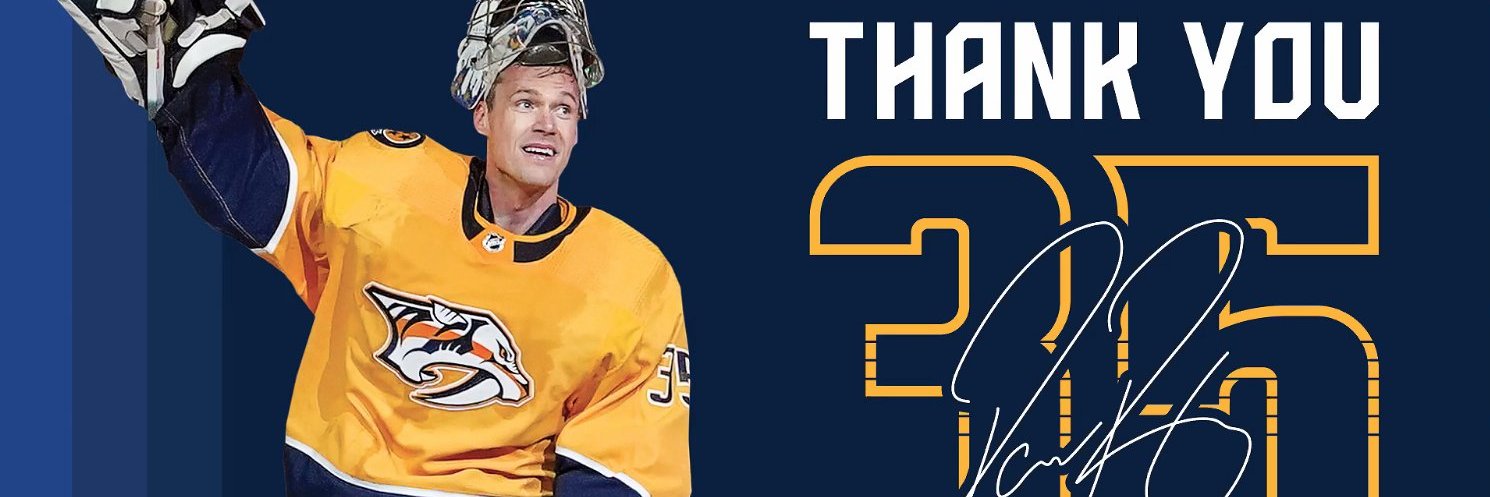
Thank you, Pekka Rinne. For everything. 💛💙
Smashville loves you and we’re going to miss you, every game. Every season. It’s been an honor to call you ours.
All the respect, love, and joy to you, sir.
#PekkaForever
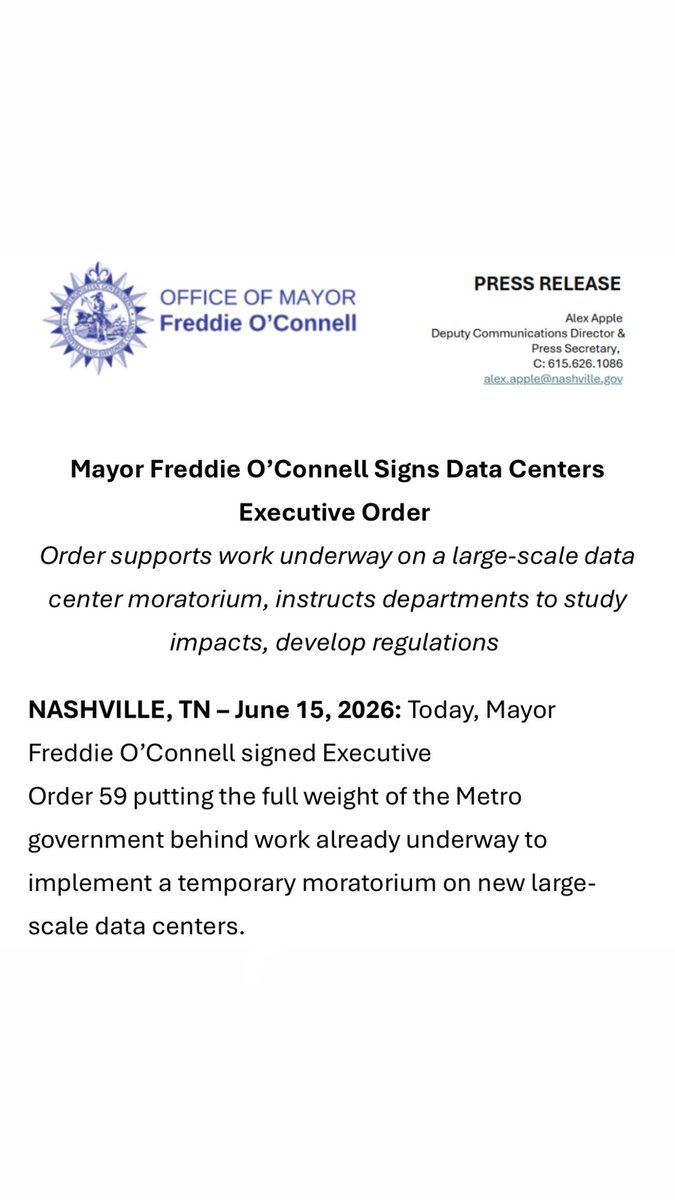
Nashville Mayor Freddie O’Connell signed an executive order directing Metro to review the impact of large-scale data centers on surrounding communities. The move follows community pushback over a proposed data center near the Nashville Zoo. @FOXNashville
“I lay it at the feet of Jesus and give Him all the glory.”
This is AWESOME! Jaccob Slavin @Jslavin74 is a Stanley Cup champion. But he knows where the true victory is found and points to Jesus after their clinching Game 6 win.
🎥 WMFY News 2
You have noticed it. ChatGPT feels dumber than it used to. Your prompts that worked six months ago produce worse results now. The writing sounds flatter. The ideas sound safer. The internet itself feels like it is shrinking. Every article reads the same. Every email sounds the same. Every answer sounds like it was written by the same voice.
You thought it was you. It is not you.
Researchers at Oxford and Cambridge published a paper in Nature proving what is happening. They call it Model Collapse.
Here is the mechanism in one sentence. AI trained on AI-generated data gets dumber every generation until it forgets what real human data looked like.
The internet is filling with AI-generated content. Blog posts. Articles. Reviews. Comments. Social media. AI companies scrape the internet to train the next generation of models. Which means the next generation of AI is being trained on the output of the current generation.
Each cycle loses information. Not randomly. It loses the rarest, most unusual, most creative parts first. The researchers call these the "tails of the distribution." The weird ideas. The unexpected perspectives. The things that made the internet feel human. Those disappear first.
What remains is the average. The safe. The expected. The bland.
Then the next generation trains on that. And loses more. And the next generation trains on that. And loses more. The researchers proved this is not a slow decline. Major degradation happens within just a few iterations. Even when some of the original human data is preserved.
They tested it on large language models. On image generators. On statistical models. The pattern was the same every time. The output converges toward a narrow, flattened version of reality that looks nothing like the original data.
The lead researcher put it plainly. "Large language models are like fire. A useful tool. But one that pollutes the environment."
The pollution is invisible. You cannot see which sentence on the internet was written by a human and which was written by AI. Neither can the AI that is about to train on it. And once the tails are gone, they do not come back. The damage is irreversible.
This is not a prediction anymore. It is a diagnosis.
The internet you grew up on was built by humans writing things no algorithm would have written. Strange, personal, imperfect, alive. That internet is being diluted. One generation of AI at a time. And the models trained on what remains are learning a smaller and smaller version of the world.
Model Collapse is not a technical problem. It is a cultural one. The thing that made the internet worth reading is the thing that disappears first.
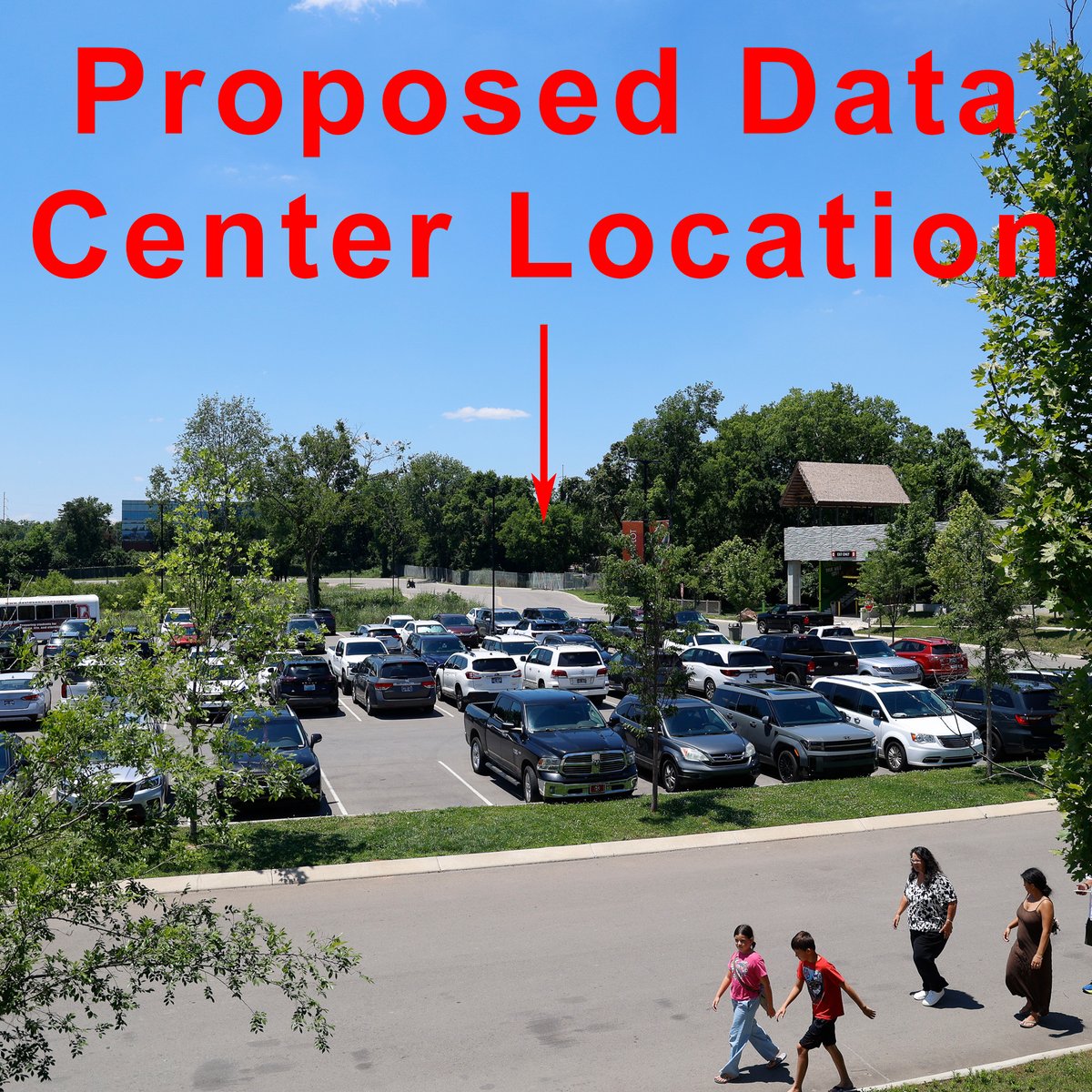
This right here is why there should be no data center near the Zoo. They have been working for many years to help save this beautiful species. Azi and her kin are infinitely more valuable than surveillance and AI crap.
Azi showcasing her climbing skills!
Clouded leopards are mostly arboreal, with short, flexible legs, a tail nearly as long as their body for balance and ankles that rotate 180°, allowing them to climb down trees headfirst. 🐆🌳
📹 Veterinary Keeper Courtney
George Orwell’s 1984 was published today in 1949.
“The Party told you to reject the evidence of your eyes and ears. It was their final, most essential command.”
We were absolutely floored by the millions of you that watched us make silly water sillouettes on our driveway last summer. We are starting out the summer the only way we know how, and this time it’s all about movies! What else do you want to see? We have a whole summer ahead, a driveway and a hose. The possibilities are endless!!!
A single native oak tree supports 550+ species of caterpillars.
A Bradford pear supports about one.
Caterpillars are how songbirds feed their young. Almost all of them. A pair of chickadees needs between 6,000 and 9,000 caterpillars to raise one brood of chicks.
Bluebirds, warblers, vireos, wrens: same story. Adults might eat seeds, but the babies eat caterpillars.
Researchers at the University of Delaware found that yards dominated by non-native plants produce 75% less caterpillar biomass than native-dominated yards.
Chickadees in those yards were 60% less likely to even attempt to nest.
Most caterpillars can't eat non-native plants. They didn't evolve with them. The leaves are chemically wrong.
So when we landscape with crepe myrtle, Bradford pear, ginkgo, Japanese maple, Pieris, we're building a yard that looks alive and is functionally a desert.
The food web starts in your front bed. It's the highest-leverage thing you can do. It's also the thing nobody tells you when you buy a house.
You've seen the meme: one opossum eats 5,000 ticks a season. Unfortunately, it's wrong.
When researchers dissected the stomachs of 32 wild opossums, they found zero ticks. The number came from a single lab study that got stretched into folklore, and it still gets repeated everywhere.
But the opossum doesn't need the lie. It's the only marsupial in North America. It cleans up carrion, rotting fruit, slugs, snails, and the rodents you'd rather not have around. It eats copperheads and rattlesnakes, because it's immune to their venom. And it almost never carries rabies, since its body runs too cool for the virus to take hold.
So when one waddles through the yard at night, you're not looking at a pest, you're looking at the cleanup crew that works for free.
The plastic ring around a duck's beak doesn't kill it fast. It starves it slowly. 2 seconds and a couple cuts fixes this problem.
A duck with a ring stuck on its bill can't open its mouth to eat. It can't fish. It can't preen. It tries to scrape the ring off against rocks, branches, mud, anything, until its bill is raw and it's exhausted from the effort.
Wildlife rehabbers see this constantly in waterfowl: cranes, geese, ducks, pelicans, and herons. The birds in the photo below are three out of millions.
The fix takes about two seconds. Cut every plastic loop you encounter before throwing it away. Six-pack rings, jug seals, the rings around milk caps, dog treat bag tops, mask ear loops. Snip every closed circle into an open line.
You won't see the bird your snip saved, but the ring you cut tonight isn't out there waiting to choke a tern next year. It's already a piece of broken plastic on its way to a landfill, no longer a snare for anything.
Stand with us to protect the future of Nashville Zoo.
A proposed 69,000-square-foot data center is planned next to the Zoo, but no environmental impact studies have been conducted. Sign our petition to help protect the animals in our care ➡️ https://t.co/q2ISQnxLBK
Buffy the Vampire Slayer actor Anthony Head has passed away at 72 years old.
Head played Rupert Giles in 121 episodes of Buffy.
He also starred in Repo! The Genetic Opera, and once played Dr. Frank-N-Furter in a London production of The Rocky Horror Picture Show in the '90s.
Walk your lawn before you mow it. Especially in spring and summer, especially after rain.
Lawn mowers kill toads, fledgling birds, snakes, baby rabbits, and box turtles by the millions every summer. None of them get out of the way fast enough. Most of them are exactly the species your yard most benefits from having around.
Two minutes of walking before you start the mower saves all of this. Look for matted patches of dead-looking grass (rabbit nests), small ground depressions, sleeping toads in the morning dew, fledgling birds hidden in long grass, and any small turtle you weren't expecting.
If you find a rabbit nest, flag the corners with garden stakes and mow around it for the next 2 to 3 weeks. The babies leave the nest on their own.
Two minutes of looking is the difference between a perfect lawn and a perfect lawn that didn't kill anything.
A man who reads old books cannot be fully captured by modern stupidity. He has dead kings, prophets, poets, killers, saints, drunks, generals, and madmen whispering in his bloodstream. The feed has no chance against this.