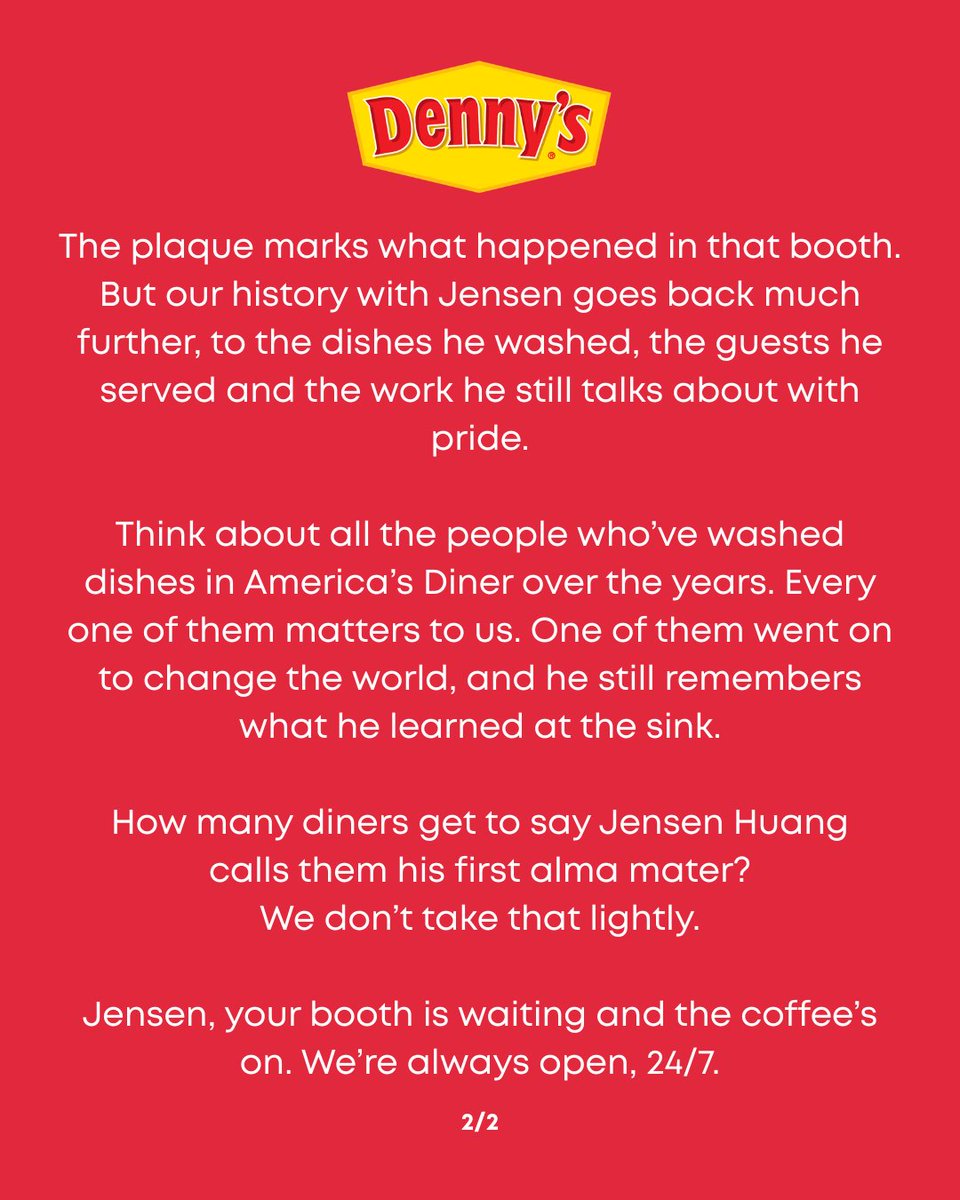
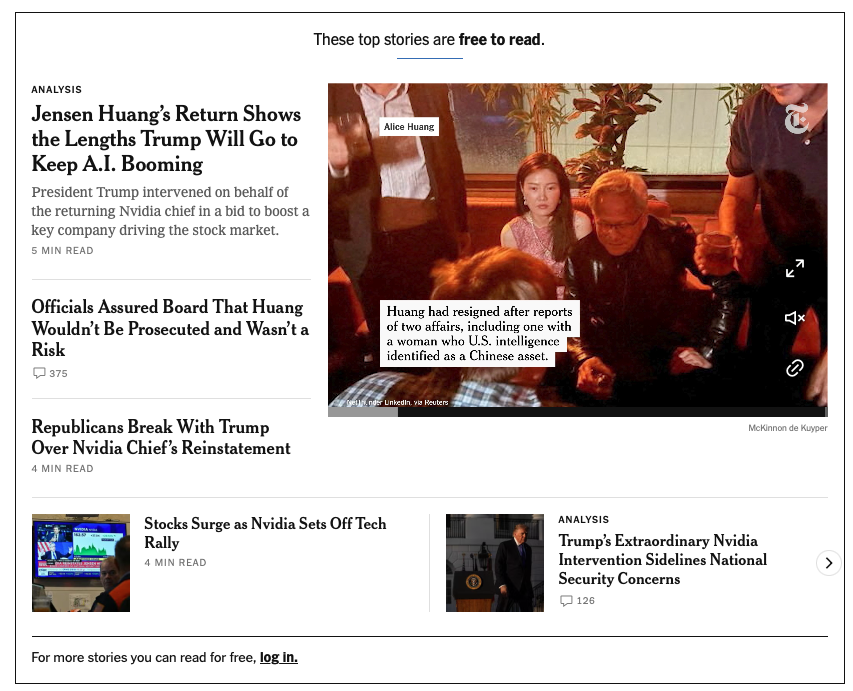
In an ongoing interview, Trump says if Huang had not been reinstated at Nvidia, Xi might have called and asked him to lead a Chinese company. If Huang was “mad” enough at the U.S. Trump said he may have done it… adding he has some of their “blood in him.”
I love these interactive views for deciding on new UI/UX ideas in your app.
They let you try a bunch of variations in isolation (without the complexity of your whole app). They're super fast and work great on mobile. And they show the pros/cons and product thinking.
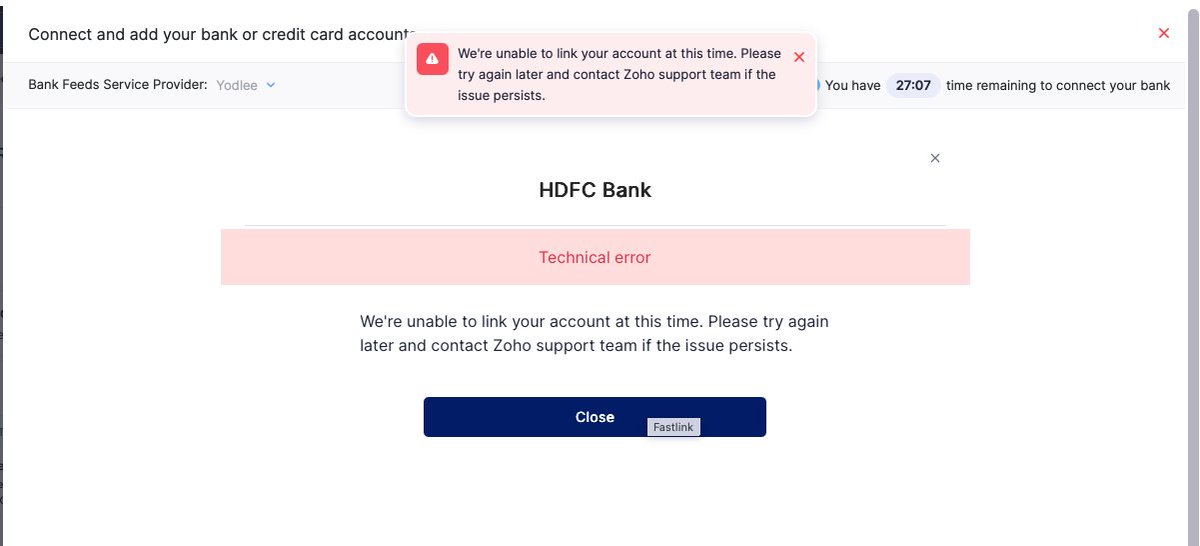
It's been 6 months now of broken integration between @ZohoBooks and India's large bank @HDFC_Bank 😤
(this is the CX on the Professional tier; and no they don't provide a refund or credit note for deficient service)
https://t.co/N88VzgFa05
@svembu@Praval@ZohoCares
Hi @sid6mathur, we sincerely regret the inconvenience this has caused. We are actively following up with service providers and will keep you posted in the existing thread.
We have also provided multiple options to import the bank / credit card statements for all our paid customers such as PDF, CSV, TSV, XLS, OFX, QIF, CAMT.053, or CAMT.054. The sample format on the import screen can help line things up before uploading.
We understand the convenience of automatic feed fetch for your day-to-day accounting, and we’ll ensure your request is followed up on priority.
It was a top secret meeting in Raisina Hill, amidst the thick Delhi diwali smog. Jaishanker had convened a meeting of the most disruptive capitalists. The Viksit AI alliance.
Ajit Doval began proceedings. "This Jensen Huang affair has given a huge leg up to China. We must do something."
"We need our own chip," said Anant Ambani. His dad nodded with a smile.
"nVidia is in a stage of advanced entropy," opined Deepinder Goyal.
"Loha garam hai maar do hathoda," quoth Gautambhai. "We can buy out nVidia" if all of us contribute."
Vijay Mallya had joined on Jiochat from London. "SBI is also there."
Byju Raveendran and Nirav Modi gave thumbs up emojis from their remote locations. "India First" meant that they too would pitch in.
It was thus decided that an Indian confederation would wrest control of nVidia from China and USA.
"We will name it naiVedya," said the charismatic Shridhar Vembu. "But we need a truly exceptional leader to run it."
"Prof Prathosh of IISc," shouted Tejasvi Surya as he opened a window. Jaishanker recognized a threat and shut it immediately, as the whole room gagged at the smoke.
Prathosh demurred. "I am a teacher. Not a CEO."
Eyes turned on Bhavish Agarwal, an alumnus of IIT Bombay Computer Science. "Sorry friends. I am too much of a RAW Dog. We need to be more subtle," said Bhavish ruefully. Nation first before personal ambition.
Who could head this critical and hostile takeover of world AI by India that would accelerate Viksit Bharat 2047? Who had the technical knowhow and Blue Ocean mindset, and also an Indic Knowledge Systems orientation? Who could bridge past and present seamlessly?
Suddenly the lights in the room flickered. Strange, because the building had a special Kirloskar genset. Only one face was visible to all on the Viksit Cabal.
A simple elderly lady in a cotton saree.
A disappointing footnote to the #BharatSummit proceedings: when I got to Hyderabad, I learned that 115 of the 315 speakers whom the External Affairs Ministry had cleared for the event ended up being refused entry to India or having their visas cancelled, apparently on the instructions of the Ministry of Home Affairs. It is completely unclear under what provision of law the government has taken such a drastic step, but it is obviously impossible to reverse it since the conference concludes tomorrow. What a shame that a proud democracy has become so insecure that it must stifle any voices it fears will be critical!
A short banter, a long contrast.
In a crowded nighttime setting, @RahulGandhi asks a group of young men for a “cool story bro.” They hit back with the classic Gen Z deflection: “Tell your mom.” He doesn’t pause, doesn’t look for a handler, doesn’t stiffen. He smiles and returns it with “You tell my mom.”
That 11-second exchange quietly exposes several things at once.
It requires enough everyday English to catch the line in real time. Not lecture-hall English. Street English. The kind that doesn’t need a teleprompter or a translator hovering nearby.
Even if the words were later explained, it still needs context awareness — the ability to recognise that “tell your mom” here is not an insult or a request for a formal message, but an invitation to play. Many people in public life process everything through a single, rigid frame and miss the register entirely.
Then comes the harder part: the security to stay in the moment. To smile, lean in, and enjoy the exchange instead of treating it as a trap or a slight. That level of comfort in an unscripted crowd is rare. It is the opposite of the rehearsed, tightly managed public appearances where every interaction is pre-cleared and any deviation is treated as risk.
Even with all of that, producing a light, cheeky retort on the spot is a separate skill. Presence of mind under mild social pressure is not the same as reading from a prepared text.
What follows is equally revealing. There is no later framing of the moment as an unacceptable dragging of one’s mother into public mockery. No wounded statement. No demand that family be kept outside the banter. The clip simply ends with the smile still there.
And finally, the last contrast: even if someone did choose to treat a casual line about “mom” as an offence, they would still not convert that same mother into campaign capital. One side can absorb a joke about family and move on. The other has spent years turning family references into electoral currency while remaining visibly brittle about any unscripted mention of the same.
None of these steps is automatic. Language, context, real-time confidence, wit, and the refusal to weaponise or over-protect family are all visible in the same brief interaction.
The absence of any one of them would have broken the exchange. The absence of several of them is why certain styles of politics cannot even enter the frame.
Shashi Tharoor in IE today says India should accept dual nationality, citing numerous cases of Bollywood actors carrying foreign passports, and his own son.
Article is triggered by actor Imran Khan’s case.
In his view the heart of these individuals and the diaspora bats for India, and in many cases they carry foreign passports for convenience of travel etc.
Flimsy reasoning.
Article of the Indian Constitution explicitly forbids holding Indian and foreign citizenship at the same time. A Constitutional revision will be required.
Section 9 of The Citizenship Act, 1955enforces this constitutional rule.
Post partition there was need to establish clear, undivided national boundaries and prevent ambiguity over who belonged to India versus newly formed Pakistan.
Also preventing divided allegiance and to ensure that citizens—and especially future political leaders—did not hold competing allegiances to former colonial powers or neighboring states.
That concern remains.
National Security and Governance Concerns are real.
There are intelligence and espionage risks. Dual nationality complicates background checks and counter-intelligence. Allowing individuals with foreign state loyalties to hold sensitive government jobs, military positions, or public office presents major security risks.
Dual citizenship can create legal loopholes for individuals accused of financial fraud or criminal offences to evade Indian law enforcement.
Managing tax obligations, property ownership laws, and foreign exchange rules for millions of dual citizens would create severe administrative friction. Dual status could be exploited to bypass domestic financial restrictions or create tax loopholes.
India has one of the largest overseas diasporas in the world. Granting full voting rights and domestic political influence to tens of millions of non-resident dual citizens could drastically skew local elections .
Managing dual nationals requires intricate legal coordination regarding taxation, military conscription, and diplomatic protection. Current administrative systems are not designed to track dual legal obligations for millions of diaspora members.