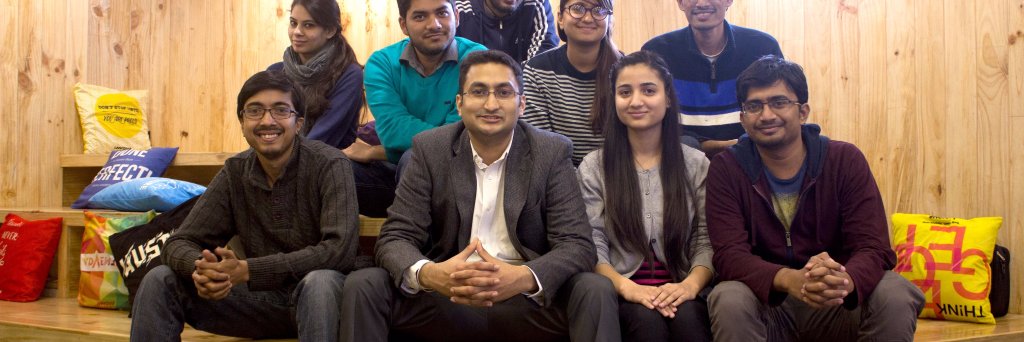
I first met Sanjeev Bikchandani when I was interning at IIM - Ahmedabad in 2008. I was among the 500 students attending the entrepreneurship conclave in which Sanjeev and Deep Kalra of Makemytrip spoke about building a long lasting company.
I asked him what’s the path to exit. As I recalled this incident yesterday while talking to Saneejv, he asked me, what did he say then. I said, “Build everything for the long term and don’t think about exits.” He said, “yes and I still believe the same.”
Sanjeev has built Infoedge (the parent company of https://t.co/DX9ROF2skH) to an institution. His humility and raw energy would inspire any entrepreneur to think big and start small and always be the person who is looking to make a lasting impact. Without Sanjeev, I doubt Zomato or Policy Bazaar would be there, where they are.
Infoedge is a rare firm where they have been shareholders in Zomato and PolicyBazaar for 15 years and still continue to be even after the IPO.
We need more people like Sanjeev Sir in the Indian Startup Ecosystem who not just created one of the first tech startups in India which went public, but also created an ecosystem of other startups 🙌🏻🙌🏻
The full conversation will be out soon!
Last week, We hosted a group of builders for our Agentic Infra Meetup. We spent the morning digging into the reality of agent orchestration, observability, and the infrastructure required to make AI agents actually work.
In 2020 we saw AI shifting from research to products. That conviction shaped Neon Fund’s early capital.
Today we’re closing Neon Fund III at $25M, continuing a belief we’ve been building for years: founders will build enduring global companies with AI.
https://t.co/r1e38SOAwD
Most conversations in startups begin at zero: what’s the idea, who’s the customer, how big is the market. But the stage before that, when you know you’re ready to be a founder yet the direction is still completely undefined. That uncertain but high-potential zone Aditya Agarwal calls “minus one.”
In this episode, Aditya and Prateek Mehta breaks down what happens in this “figuring out” stage, the questions people avoid and the habits that matter before founders gain full conviction.
Aditya shares his own minus-one moment after Facebook, his startup acquisition, Dropbox’s IPO, and why that transitional period changed the way he thinks about early-stage startups.
We get into how this stage is evolving in the AI era. Exploration cycles are faster, technical founders can test more directions than ever, and the gap between “I’m experimenting” and “I’m running a real company” has narrowed.
It was a great pleasure to host two people who strongly advocate for founders in their earliest, most vulnerable days, long before the idea or even the company exists.
Full Episode with South Park Commons is out Now.
@adityaag | @prateekmehta42 | @southpkcommons
How does an enterprise decide whether to buy from a startup or not?
AI has forced enterprises to rethink the old SaaS procurement cycle. Karthik Chakkarapani, CIO at Zuora joined me to discuss the buying process of startups.
@kchakkarapani | @Zuora
7) A startup’s stability is evaluated as seriously as its technology.
Enterprises review funding, runway, customer traction, and risk profile before committing. Strong backing and financial visibility reduce the probability of disruption after adoption.
If you’re a startup selling to enterprises, understanding how a CIO discovers and evaluates you can change everything.
Founders might believe that cold emails and polished decks drive more attention, but Karthik Chakkarapani, CIO of Zuora shares that nearly 80% of the startups he evaluates are found through outbound - while researching solutions, through peers, or even on LinkedIn. For many startups, this alone can reshape how they think about go-to-market.
How does an enterprise really decide whether to buy from a startup or not?
Karthik walks us through his three-step buying process: validating the problem and value, evaluating a startup’s long-term readiness, and finally clearing legal and procurement. We discuss where startups typically lose momentum in this journey and how they should approach enterprises to go from first conversation to a signed contract.
And, it’s always a pleasure to discuss our portfolio companies and founders in conversations, special mention for Featurely AI and Atomicwork in this one.
Episode is out on https://t.co/1vzU081Nyz
@kchakkarapani | @Zuora | @atomicworkhq
Most people chase big numbers. Great investors chase behaviour change, sharp founders and products that can last a decade.
Here are 5 key points from my conversation with Somesh Dash.
@someshdash
5) Ask if it will still matter in 10 years
Strong founders can explain why their product should still be important a decade from now.
They can walk you from today to that future in clear steps. Long term clarity is a real edge.