If you walk into the Secretariat of Public Education in Mexico City & look up at the massive, world-famous frescoes painted by Diego Rivera, you will see something that should make every Indian’s jaw drop.
Among the painted Mexican revolutionaries, farmers & national heroes sits an Indian man with intense eyes, sitting at a long wooden table, breaking bread with poor peasants.
He is not a diplomat. He is not a movie star. He was a wanted fugitive from Maharashtra whom the British Empire spent decades trying to hunt down & the man who quietly revolutionized global agriculture before the world even knew what the "Green Revolution" was.
His name was Pandurang Sadashiv Khankhoje.
Born in 1884 in Wardha, Maharashtra, Khankhoje grew up on stories of the 1857 uprising. While other kids played games, young Pandurang spent his teens founding secret societies & training in martial arts. Inspired by Lokmanya Tilak, he reached a radical conclusion early in life: To defeat an empire, you need military training & global allies.
In 1906, penniless & under British surveillance, he fled India on a ship. He worked his way through Japan & San Francisco, eventually enrolling at the Mount Tamalpais Military Academy in California while earning a degree in agriculture at Oregon State University.
In Oregon, he co-founded the Ghadar Party, the legendary international movement aimed at overthrowing British rule in India through armed revolt.
During World War I, Khankhoje traveled across Europe & the Middle East, attempting to recruit Indian soldiers in the British Indian Army to turn their guns against their colonizers. But the revolt failed. British intelligence put a massive price on his head. He could not go back to India. He could not stay in the West. He was a man w/o a country.
Exiled & on the run, Khankhoje slipped across the border into Mexico in the 1920s. Mexico was rebuilding after its own bloody revolution & its rural population was dying of starvation & drought.
Khankhoje realized something profound: An empire does not just conquer with guns; it conquers through hunger. If you want a nation to be truly free, you have to feed its people.
Appointed as a prof at the National School of Agriculture in Texcoco, he threw himself into plant genetics. Working under harsh conditions with limited funding, he did something extraordinary:
- Taming the Wild Corn: He crossbred wild grass (teosinte) with domestic maize, creating high-yielding, drought-resistant hybrid corn that produced multiple ears per plant instead of just 1.
- Frost-Proof Wheat: He developed new strains of high-yield wheat capable of surviving extreme Mexican weather & blights.
- Schools for the Poor: He did not lock his research in academic journals. He founded the Escuelas Libres de Agricultura (Free Agricultural Schools), teaching impoverished Mexican farmers hands-on genetics, soil conservation & yield optimization.
His high-yield crops transformed Mexican farming. Decades later, when American scientist Norman Borlaug came to Mexico & developed the high-yield dwarf wheat that kicked off the global Green Revolution, he built directly upon the foundation of plant genetics laid by Pandurang Khankhoje.
In 1947, India finally won its independence. The British were gone.
Now an elderly scientist globally celebrated across Latin America, Pandurang Khankhoje packed his bags & came home to Nagpur, eager to offer his life's work to build the agricultural backbone of a newborn India.
The bureaucracy of newly independent India did not know what to do with him. His radical revolutionary past frightened bureaucrats; his foreign academic achievements were ignored. He was given no major agricultural policy role, no national honors & no platform :((
When he passed away in Nagpur in 1967, his passing barely made a ripple in the local newspapers. His neighbors knew him simply as a quiet, retired old man who used to live abroad.
Today, if you ask an Indian agricultural student who fathered modern crop hybridization, they will quote Western scientists. Almost no 1 in Maharashtra/Delhi knows the name Pandurang Khankhoje.
But 1000s of KMs away in Mexico City, inside the halls of govt, his face remains painted on the wall, immortalized by Diego Rivera as a symbol of unity, knowledge, and freedom.
He was erased from the history books of the country he fought to liberate, but the soil of Mexico still remembers the Indian ghost who taught them how to feed a nation.
Some common patterns I observed across almost every Tier 1 and Tier 2 Indian city:
Food is everywhere
From specialty coffee cafes and cloud kitchens to QSR chains, new ice-cream brands and street-food concepts, eating out has become India’s default form of entertainment. Social life today revolves heavily around cafes, restaurants and delivery apps.
Fitness is gaining traction
A number of gyms and fitness spaces have cropped up over the last few years. Some urban centers are also seeing a surge in things like Hyrox, MMA, pilates, yoga, run clubs, CrossFit, pickleball and premium wellness spaces. Random protein powders are now commonly seen in supermarkets and convenience stores.
The rise of branded grooming
Traditional neighbourhood barber shops are gradually declining. There’s a growing aspiration, especially among young people, to visit branded salons that offer a more 'premium', lifestyle-driven experience rather than just a haircut. Every new commercial complex has at least one such salon.
The explosion of “Thai Spas”
One of the most visible urban trends is the sheer number of “Thai Spas” opening across cities. They seem to appear everywhere at remarkable speed. Almost all of them look dubious, yet the scale of expansion suggests there is big demand!?
Everyone is on the phone
From watchmen to rickshaw drivers to regular commuters to salesmen, nearly everyone with a few free minutes is glued to a screen. Reels, YouTube Shorts and endless scrolling have become the default way people consume entertainment, pass time and even escape boredom.
Jeff Bezos: "If I do my job right, the value to society and civilization from my for-profit companies will be much, much larger than the good that I do with my charitable giving."
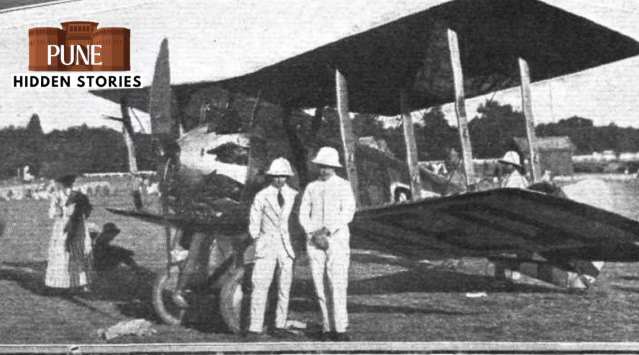
#Pune's first encounter with an aircraft... in 1919. Imagine the crowd's reaction!
https://t.co/voOY71Gzos
"On the afternoon of December 21, 1919, the people of Pune (then Poona) witnessed a great novelty. That Sunday, thousands of residents saw an aeroplane in action for the first time, leaving them thrilled, mesmerised and enraptured with this flying machine – although it had the capacity to accommodate just two people."
there can't be a better tribute to Asha Bhosle than this!🙏
Listen to Amol Palekar who talks about Asha ji's professionalism and dedication to her work.
I never thought I’d live to see Donald Trump talking about bombing another country with Messi and Suarez in the background 😭
2026 is not a real year, nothing is real anymore.