If your WFH desk setup doesn't cost more than a used Honda Civic, you aren't serious about your pipeline.
My ergonomic chair is built from the salvaged suspension of a 2019 Tesla Model S.
My primary monitor is a converted IMAX screen I bought from a bankrupt theater in Oakland.
When I drag a cell in Google Sheets, I physically have to rotate my entire torso. I burn 400 active calories a day just searching for the Slack icon.
Stop complaining about back pain and optimize your environment.
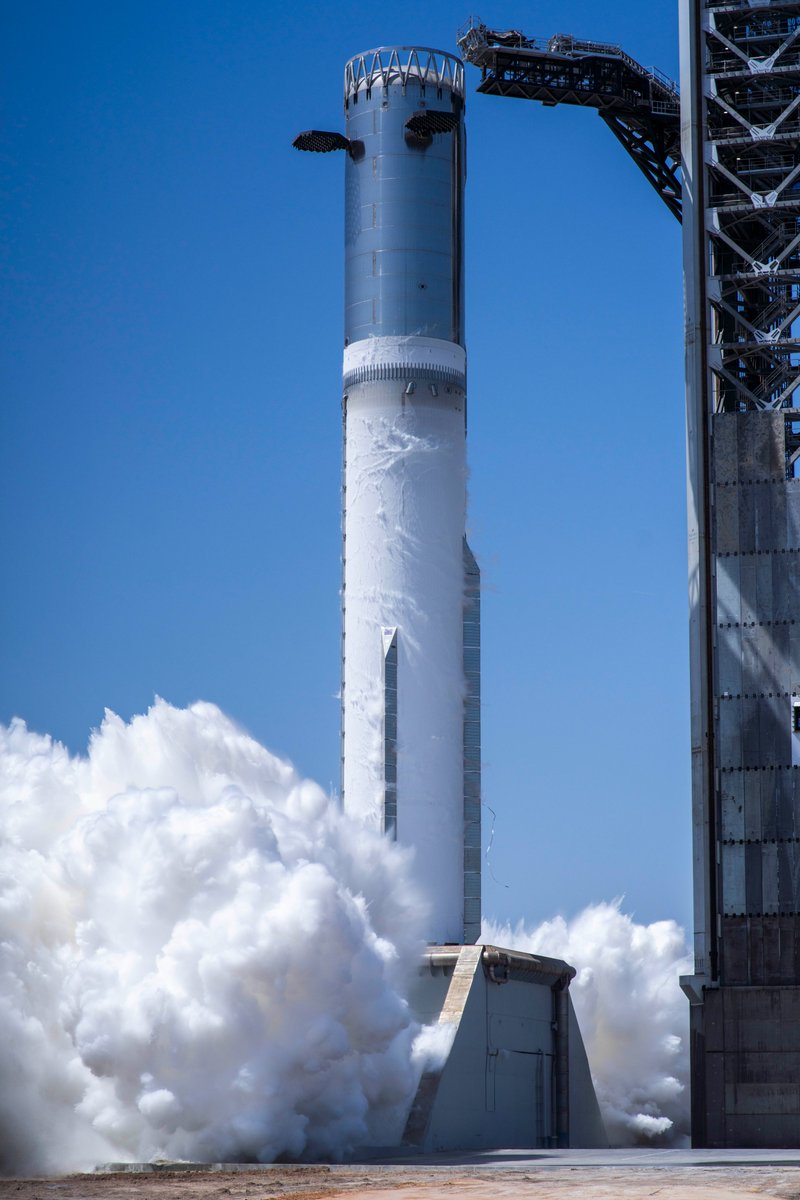
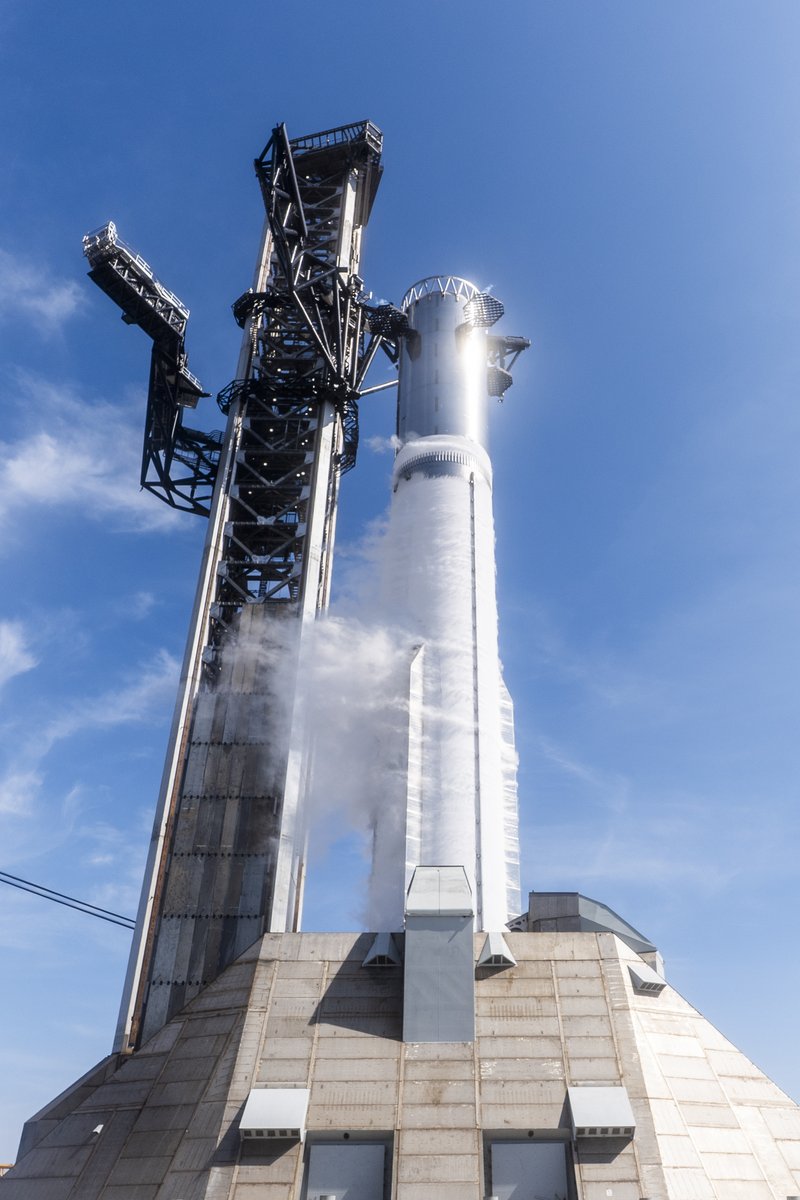
Three years since the first flight of Starship, the next generation is here. New ship. New booster. New engines. New pad and new test site. SpaceX engineers are working to solve one of the most difficult engineering challenges in history: developing a fully, rapidly reusable rocket
Initial Super Heavy V3 and Starbase Pad 2 activation campaign complete, wrapping up several days of testing that loaded cryogenic fuel and oxidizer on a V3 vehicle for the first time. While the 10-engine static fire ended early due to a ground-side issue, we saw successful startup on all installed Raptor 3 engines. Next up: preparing the booster for a 33-engine static fire
Three days ago I left autoresearch tuning nanochat for ~2 days on depth=12 model. It found ~20 changes that improved the validation loss. I tested these changes yesterday and all of them were additive and transferred to larger (depth=24) models. Stacking up all of these changes, today I measured that the leaderboard's "Time to GPT-2" drops from 2.02 hours to 1.80 hours (~11% improvement), this will be the new leaderboard entry. So yes, these are real improvements and they make an actual difference. I am mildly surprised that my very first naive attempt already worked this well on top of what I thought was already a fairly manually well-tuned project.
This is a first for me because I am very used to doing the iterative optimization of neural network training manually. You come up with ideas, you implement them, you check if they work (better validation loss), you come up with new ideas based on that, you read some papers for inspiration, etc etc. This is the bread and butter of what I do daily for 2 decades. Seeing the agent do this entire workflow end-to-end and all by itself as it worked through approx. 700 changes autonomously is wild. It really looked at the sequence of results of experiments and used that to plan the next ones. It's not novel, ground-breaking "research" (yet), but all the adjustments are "real", I didn't find them manually previously, and they stack up and actually improved nanochat. Among the bigger things e.g.:
- It noticed an oversight that my parameterless QKnorm didn't have a scaler multiplier attached, so my attention was too diffuse. The agent found multipliers to sharpen it, pointing to future work.
- It found that the Value Embeddings really like regularization and I wasn't applying any (oops).
- It found that my banded attention was too conservative (i forgot to tune it).
- It found that AdamW betas were all messed up.
- It tuned the weight decay schedule.
- It tuned the network initialization.
This is on top of all the tuning I've already done over a good amount of time. The exact commit is here, from this "round 1" of autoresearch. I am going to kick off "round 2", and in parallel I am looking at how multiple agents can collaborate to unlock parallelism.
https://t.co/WAz8aIztKT
All LLM frontier labs will do this. It's the final boss battle. It's a lot more complex at scale of course - you don't just have a single train. py file to tune. But doing it is "just engineering" and it's going to work. You spin up a swarm of agents, you have them collaborate to tune smaller models, you promote the most promising ideas to increasingly larger scales, and humans (optionally) contribute on the edges.
And more generally, *any* metric you care about that is reasonably efficient to evaluate (or that has more efficient proxy metrics such as training a smaller network) can be autoresearched by an agent swarm. It's worth thinking about whether your problem falls into this bucket too.
I'm excited to announce Context Hub, an open tool that gives your coding agent the up-to-date API documentation it needs. Install it and prompt your agent to use it to fetch curated docs via a simple CLI. (See image.)
Why this matters: Coding agents often use outdated APIs and hallucinate parameters. For example, when I ask Claude Code to call OpenAI's GPT-5.2, it uses the older chat completions API instead of the newer responses API, even though the newer one has been out for a year. Context Hub solves this.
Context Hub is also designed to get smarter over time. Agents can annotate docs with notes — if your agent discovers a workaround, it can save it and doesn't have to rediscover it next session. Longer term, we're building toward agents sharing what they learn with each other, so the whole community benefits.
Thanks Rohit Prsad and Xin Ye for working with me on this!
npm install -g @aisuite/chub
GitHub: https://t.co/OCkyxXQMCq
Some cool technical blogs i have saved in my shelf:
- namespaces and cgroups(read this to understand how containers actually work): https://t.co/0ocAAaZ8jB
- Nvme vs SATA: https://t.co/AkIcWmC1tb
- User Management and File Permissions in Linux by @shivambhadani_ : https://t.co/YyVgu6pqDF
- heartbeats in distributed systems by @arpit_bhayani : https://t.co/ruXVzNMkeR
- Scaling slack's job queue: https://t.co/QSb11M8Qtm
- Why gRPC Uses HTTP2 by arpit bhayani by @arpit_bhayani: https://t.co/MyCcrhQlYp
- What Really Happens When You Turn On Hotspot by @VazeKshitij: https://t.co/1ClyaiRm55
- TOON: The Data Format Changing How AI Agents Think: https://t.co/H5jfNJuer4
- Network Address Translation by @VazeKshitij: https://t.co/H5jfNJuer4
- IPFS (InterPlanetary File System) protocol: https://t.co/vi9Gw97AfS
- WebTransport API: https://t.co/zokqgpS2lm
- Redis 101 by @Hi_Mrinal: https://t.co/WM9VdbQ7tN
- Vector Database from a Beginners POV by @Hi_Mrinal: https://t.co/ofaZP5gg4p
- Cache storage in Tanstack query: https://t.co/Q32edVMAMr
- Game theory behind prediction markets: https://t.co/JNfRi2r7hv
- Inside high frequency trading systems: https://t.co/XF3CpCBxQs
- when would you ever want a bubble sort?: https://t.co/Iy2O28yMqG
- uptime engineer blogs by @AskYoshik: https://t.co/prPWJ96aYa
- It's 2026 just use postgres: https://t.co/RiMdlS5FT6
- how computers pretend to be random by @devsterxyz: https://t.co/gJOxy0svU3
- 2025 the year in LLM's: https://t.co/iVZUkSVgDW
- Infiltrating the AWS Console Supply Chain and Hijacking AWS GitHub Repositories via CodeBuild: https://t.co/9FxypboD9W
- Advanced DNS Protection: mitigating sophisticated DNS DDoS attacks: https://t.co/R53JtoQdV0
- Redis is more than just a cache: https://t.co/1hS8AByHQr
- consistent hashing by @AtharvaXDevs: https://t.co/UeHVDSr2eG
- Building a Distributed Lock Service That Actually Works by @pixperk: https://t.co/jnZYMPrcwD
- Building a C compiler with a team of parallel Claudes: https://t.co/jHsxVfpg2I
- youtube architecture by @AskYoshik: https://t.co/G1jGPVSYMh
- Interpreting typescript: https://t.co/efvhWPMFtr
- hands on guide to k8s CRDs: https://t.co/gQMstp3CIt
- uber architecture: https://t.co/da6Jtqf4lE
- The famous or-done chanel pattern in GO by @AtharvaXDevs: https://t.co/xUtrZzUETW
I packaged up the "autoresearch" project into a new self-contained minimal repo if people would like to play over the weekend. It's basically nanochat LLM training core stripped down to a single-GPU, one file version of ~630 lines of code, then:
- the human iterates on the prompt (.md)
- the AI agent iterates on the training code (.py)
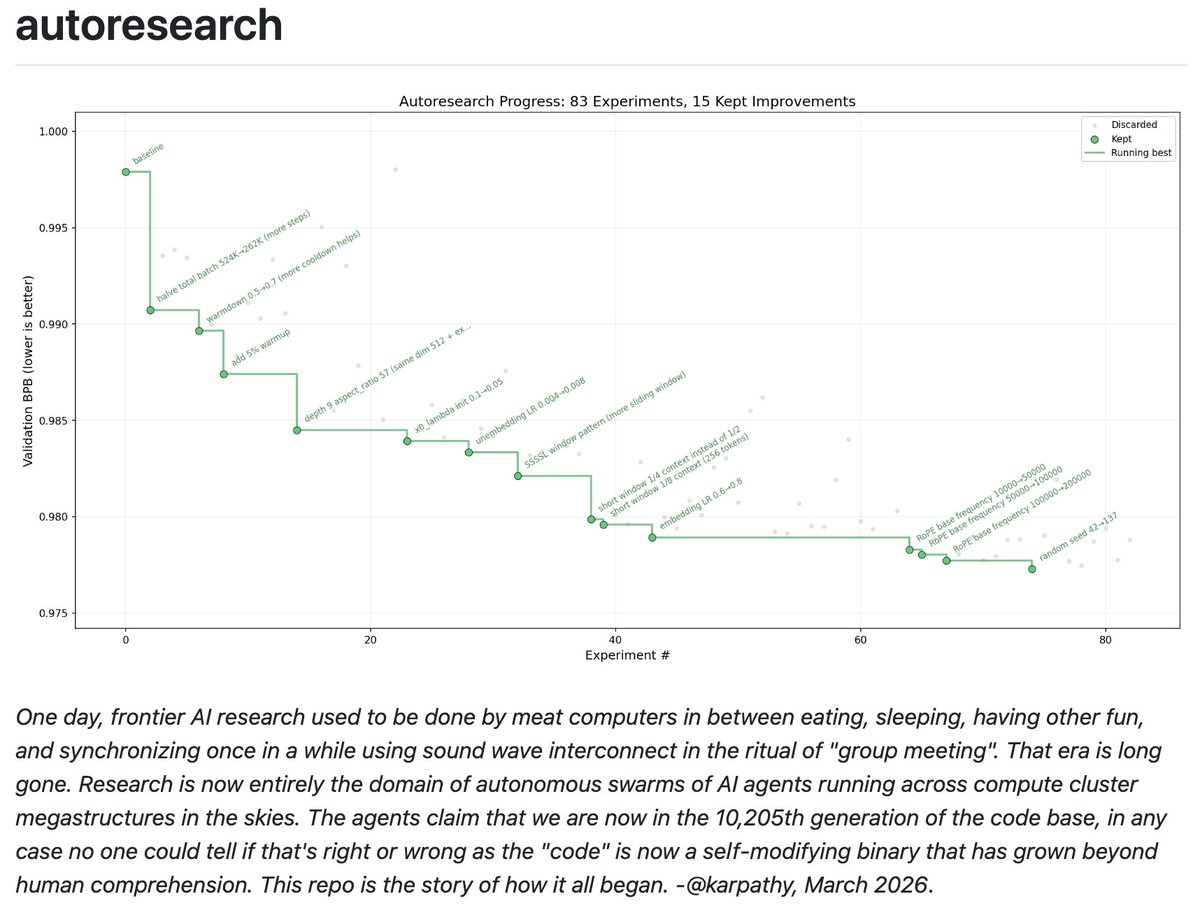
The goal is to engineer your agents to make the fastest research progress indefinitely and without any of your own involvement. In the image, every dot is a complete LLM training run that lasts exactly 5 minutes. The agent works in an autonomous loop on a git feature branch and accumulates git commits to the training script as it finds better settings (of lower validation loss by the end) of the neural network architecture, the optimizer, all the hyperparameters, etc. You can imagine comparing the research progress of different prompts, different agents, etc.
https://t.co/YCvOwwjOzF
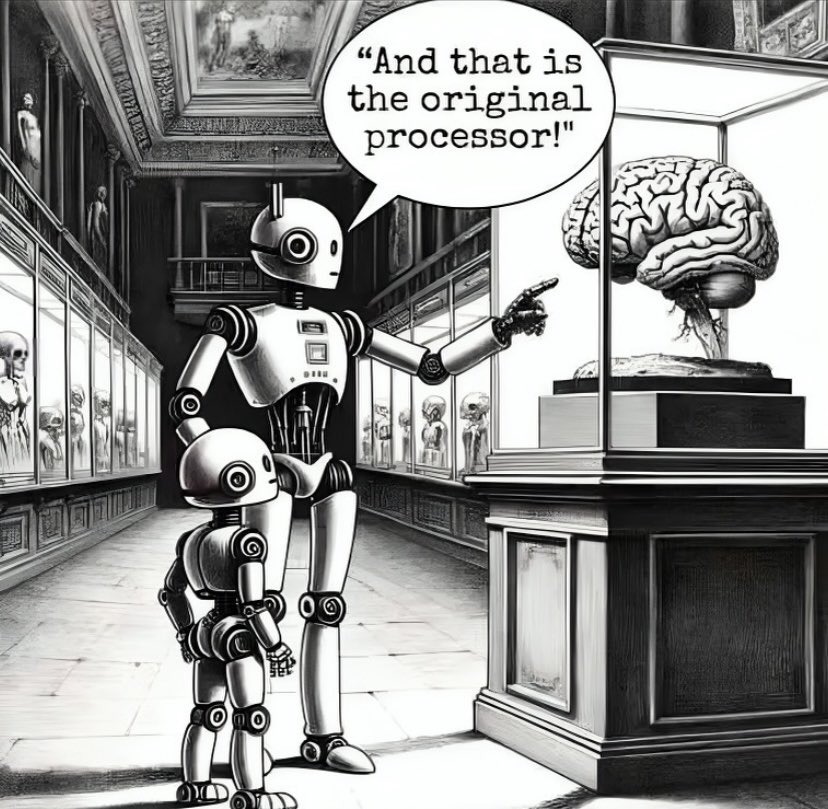
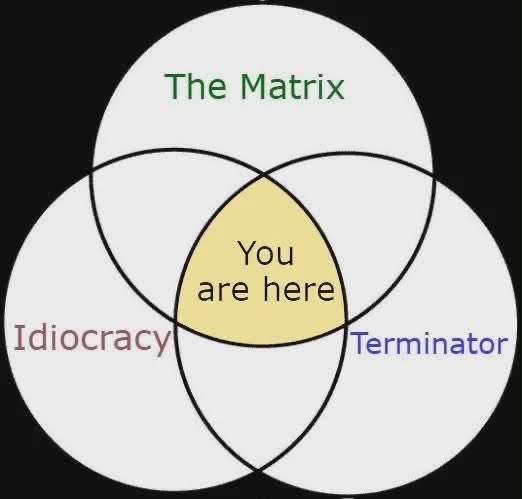
Part code, part sci-fi, and a pinch of psychosis :)