Supporters van andere clubs in Belgie en het buitenland, steun ons en laten we tenminste proberen de zaken alsnog te doen veranderen
Supporters d'autres clubs en Belgique et à l'étranger, soutenez-nous et essayons au moins de faire changer les choses
#RWDM
https://t.co/6HBmhUHSMr
Waarom Bert Engelaar van ABVV gelijk heeft. Ik neem u even mee in de onderhandelingsnota asiel & migratie van januari die bijna afgeklopt is. In 10 punten. Een draadje!
In tijden van opvangcrisis hebben we nood aan alle vormen van opvang. Zeker LOI’s die menselijker en goedkoper zijn @mattivandemaele 👇
https://t.co/1IeJyCSOjY
Hoe 'ik kan niet helpen' van @Nicole_demoor toch eerder 'ik wil niet helpen' blijkt te zijn. Er zijn bedden maar die wil ze blijkbaar niet inzetten. #menselijkheid https://t.co/Ih0dhBPEQY
Breaking News: Dozens kidnapped for Ransom in Kufra, Libya.
Naima Jamal is among dozens of victims of Libya’s modern slave trade.
Naima Jamal, a 20-year-old Ethiopian woman from Oromia, was abducted shortly after her arrival in Libya in May 2024. Since then, her family has been subjected to enormous demands from human traffickers, their calls laden with threats and cruelty, their ransom demands rise and shift with each passing week. The latest demand: $6,000 for her release.
This morning, the traffickers sent a video of Naima being tortured. The footage, which her family received with horror, shows the unimaginable brutality of Libya’s trafficking networks. Naima is not alone. In another image sent alongside the video, over 50 other victims can be seen, their bodies and spirits shackled, awaiting to be auctioned like commodities in a market that has no place in humanity but thrives in Libya, a nation where the echoes of its ancient slave trade still roar loud and unbroken.
“This is the reality of Libya today,” writes activist and survivor David Yambio in response to this atrocity. “It is not enough to call it chaotic or lawless; that would be too kind. Libya is a machine built to grind Black bodies into dust. The auctions today carry the same cold calculations as those centuries ago: a man reduced to the strength of his arms, a woman to the curve of her back, a child to the potential of their years.”
Naima’s present situation is one of many. Libya has become a graveyard for Black migrants, a place where the dehumanization of Blackness is neither hidden nor condemned. Traffickers operate openly, fueled by impunity and the complicity of systems that turn a blind eye to this horror. And the world, Yambio reminds us, looks the other way:
“Libya is Europe’s shadow, the unspoken truth of its migration policy—a hell constructed by Arab racism and fueled by European indifference. They call it border control, but it is cruelty dressed in bureaucracy.”
The $6,000 ransom demanded for Naima is not just a price for her life; it is a price for the silence of a global community that allows this horror to happen to the black child. And yet, for many, this is not survival, it is a cycle of endless suffering.
Naima’s fate, and that of the 50 other victims in Kufra, remains uncertain. Their cries are met with indifference by those who could intervene but choose not to. Meanwhile, their families are left to battle with the impossible, raising the funds demanded by traffickers or risking the loss of their loved ones forever.
The world must confront the uncomfortable truth: the slave trade is alive and thriving in Libya. It thrives in the silence of nations, in the shadows of complicit systems, and in the unchecked racism that dehumanizes Black lives. Naima’s story, as Yambio writes, is not an anomaly, it is the legacy of a history that refuses to end.
X1
Aan de federale onderhandelaars die willen besparen op opvang: de problemen die veroorzaakt worden door dakloosheid kosten de maatschappij achteraf veel meer geld.👇
https://t.co/XjbOKOvxZS
De onderhandelingsnota (bijzonder slecht stuk trouwens) staat vol met maatregelen die legale migratie (bvb gezinshereniging) wil inperken en maatregelen die zullen zorgen voor meer onwettig verblijf. Gevangenissen in Kosovo bouwen gaat “illegale migratie niet stoppen”
Amai wat een slecht stuk. Altijd dezelfde opengrenzenadepten aan het woord.
Legale migratie is nodig, illegale migratie moet stoppen.
Als je links bent en echt inzit met democratie en mensenrechten, kan je die illegale migratie onmogelijk blijven verdedigen. Illegale migratie is onmenselijk en is de kerosinetank voor extreemrechts in het Westen. Genoeg is genoeg.
https://t.co/CgZV5Gdq3H
Opvang afbouwen, kinderen (opnieuw) opsluiten in gesloten centra en ook ronduit naïeve, dure en onhaalbare grapjes zoals gevangenissen bouwen in "landen zoals Kosovo." Hopelijk gaan Vooruit en anderen dit niet zomaar slikken.
https://t.co/RlMcdu8R12
Grenscontroles, kinderen opsluiten, gevangenissen in het buitenland, invallen in huizen,... De laatste restjes menselijkheid in het asielbeleid sneuvelen met Arizona. De voorstellen op tafel zijn weerzinwekkend.
‼️‼️ Nieuw 154-pagina @hrw rapport documenteert (opnieuw) hoe 🇮🇱 op grootschalige wijze.. :
✅Oorlogsmisdaden
✅Misdaden tegen de menselijkheid
✅Etnische zuivering
.. pleegt in #Gaza#Sancties en #wapenembargo broodnodig, ook door 🇧🇪 & 🇪🇺, aldus HRW.
https://t.co/68MHilNjBI
#ECREWeekly Updates on 🇪🇺 External Partners:
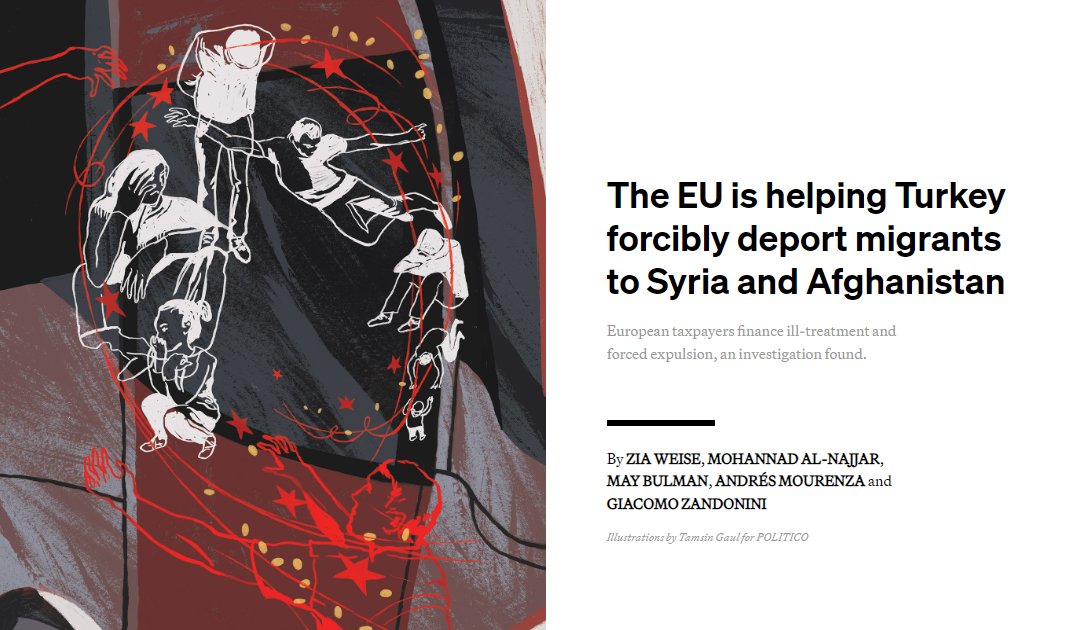
➡️🇪🇺 accused of funding forced deportations from 🇹🇷
➡️🇪🇺 Commission President calls for development of ‘return hubs’
➡️🇪🇬 & 🇹🇳 reportedly reluctant to co-operate with 🇪🇺 on migration deals; 🇱🇾 showing more ‘commitment”
➡️NGOs denounce 🇹🇳 as ‘not a safe place’ for disembarking rescued people & call for end of 🇪🇺-🇹🇳 migration co-operation
➡️More than 300,000 people flee into 🇸🇾 from 🇱🇧
🔗https://t.co/uHhZJ01mME
Great piece by @Politico@LHreports exposing how #Turkey uses @EU_Commission's funds to forcibly return to #Afghanistan & #Syria.
@EU_NEAR's complete lack of basic due diligence & human rights monitoring leads EU tax payer money to fund grave violations.
https://t.co/UmcBzaJwsm
Nooit zal ik meewerken aan een systeem dat ouders via de school ‘verklikt’ omdat ze geen Nederlands kunnen.
Stimuleren, motiveren: ja.
Sanctioneren en de school in een rol duwen van signaleren: nooit.
Onderwijs is een hefboom, geen controle-apparaat.
Na de piek in het aantal asielaanvragen van 2015 werd de opvangcapaciteit afgebouwd. Hierdoor kwamen we in een crisis terecht. We zouden moeten leren uit de fouten van het verleden. Dat het EU migratiepact zal zorgen voor 2/3 minder asielaanvragen is goochelen met cijfers. (2/2)
Terwijl ons land meer dan 7.000 keer veroordeeld werd voor het niet bieden van opvang en mensen hierdoor op straat moeten overleven, pleit de Moor voor een afbouw van het opvangnetwerk. Er is net nood aan een buffercapaciteit voor schommelingen. (1/2)
https://t.co/lp0GsPM9qm