🚨NOW: Rep. Thomas Massie just stood on the House floor and named what every politician in DC has spent 58 years pretending did not happen
The USS Liberty. June 8, 1967.
34 dead American sailors. 174 wounded. Over 70% casualty rate on a virtually unarmed US ship.
25 minutes of Israeli jets, Israeli rockets, Israeli 30mm cannon fire, and ISRAELI NAPALM ON THE BRIDGE. Then Israeli torpedoes. Then Israel machine-gunned the lifeboats.
MASSIE: "They were intent on leaving no survivor."
Then the part nobody wants you to think about: the Saratoga and the America launched planes to help. The planes were RECALLED. The crew sat there bleeding for 17 hours.
Dean Rusk. Richard Helms. Admiral Moaner. The chief counsel of the Court of Inquiry himself. None of them believed the "mistaken identity" story.
And now you understand exactly why the entire DC machine and Israel lobby has spent the last year trying to primary this man out of existence.
You are not allowed to say the quiet part. He said it anyway.
Honor the crew. https://t.co/XuDLeFF4gJ.
D-Day was one of the most monumental days in the history of mankind.
Don’t take my word for it, watch this video from Andy Rooney, who saw it with his own eyes.
Share it with everyone you know, especially your kids.
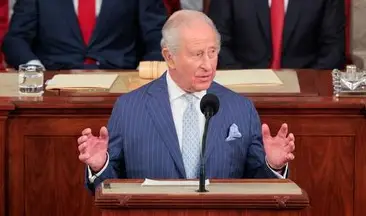
#reyCarlosIII#DiscursoAnteElCongreso
Acabo de ver el discurso. Me pareció excelente. No es que apoye a la monarquía. Quizás la monarquía es una reliquia histórica. Pero eso es tema para los británicos. Sí tengo que decir que admiro la elegancia en la palabra, la clase, la altura. No siempre son evidentes en este lado del Atlántico. El rey habló hoy con elocuencia, respetando la dignidad del lugar, del momento, de su condición, de quienes le escuchaban. Y no faltaron los toques de buen humor en su discurso. Buen ejemplo que pudiera emular todo el que tenga un foro. A mi me cansa, es más, me repugna, la vulgaridad, la poca clase, la mediocridad intelectual que predomina hoy en la vida pública.
Someone could go to school for 4 years and study aerospace engineering, then get a PhD with a dissertation related to orbital mechanics, and some instagram influencer who watched a youtube video will be like "actually that guy is wrong" on a topic related to space travel and people will believe them.
I'm not sure how we got here, but I hope we go back to a society where credibility is earned with rigorous training in the associated field, not by a popularity contest.
Edgar Mitchell, Apollo 14 astronaut and one of 12 men to walk on the moon, when asked what the experience did for him —
“You develop an instant global consciousness, a people orientation, an intense dissatisfaction with the state of the world, and a compulsion to do something about it. From out there on the moon, international politics look so petty. You want to grab a politician by the scruff of the neck and drag him a quarter of a million miles out and say, ‘Look at that, you son of a bitch.’”
Mehdi Hasan: “The word I would use is kakistocracy. This is a government by the worst people. Donald Trump has surrounded himself with amoral, immoral, ignorant, corrupt people. And in each of those categories, the most immoral, the most amoral, the most ignorant, the most corrupt”
Anne Applebaum is correct. Under Trump, America is on its way to becoming every bit the failed fascist authoritarian state that Hungary is under Viktor Orbán. JD Vance is in Hungary to support Orbán and take notes in how Orbán's rigging Hungary's election.
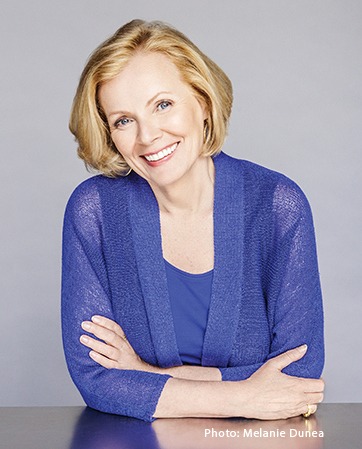
JFK had Theodore Sorensen (“Ask not what your country can do for you…”), Reagan had Peggy Noonan (“slipped the surly bonds of earth to touch the face of God”), Bush had David Frum (“Axis of Evil”), and Obama had Jon Favreau (“Yes we can.”).
All presidential speechwriters who helped craft speeches that entered world history.
Speechwriters matter. When an important message must be delivered to a nation and to the world, it has to be conveyed with the right political substance, at the appropriate level for a president, and in a way that can be remembered.
Speeches are particularly important when a nation must be brought together, when support for a cause must be built. That is why such speeches carry a certain sense of solemnity. And it is also why they are preserved for posterity.
When the Space Shuttle Challenger exploded just 73 seconds after launch in 1986, it shocked the American nation. Peggy Noonan wrote President Reagan’s address — a speech that comforted, encouraged, and honoured the fallen astronauts — and which was delivered as only a statesman could.
And that brings me to today.
A few days ago, Donald Trump was due to address the American nation. The United States is at war. In such moments, a president speaks to the nation and to the world — typically at the outset of a conflict. Yet more than a month has passed.
I set out to find the speech, to see how it had actually been written. But on the White House website, there are no speeches to be found — only short, stilted video clips from various events.
There are no written records for the history books.
Why does this matter? Because it illustrates something fundamental: the absence of a coherent articulation of vision and strategy.
It is precisely through speeches that leaders communicate their plans and direction. Trump’s “speeches”, by contrast, are often little more than a stream of words without a clear thread.
This week’s address on Iran could have been different. I have found video clips and a transcript via the Associated Press, but not the speech as a coherent, official document.
Writing a speech is a collective process. The central message and its significance are defined first, before the text is drafted, refined, and aligned.
That is how it has traditionally been done in the United States.
Or rather, that is how it used to be done.
Today, it is not even clear who writes Trump’s speeches. What is clear is that they rarely convey a consistent message.
And that is the point: when the speeches themselves are absent — or lack structure and coherence — it suggests the absence of a clearly communicated vision.
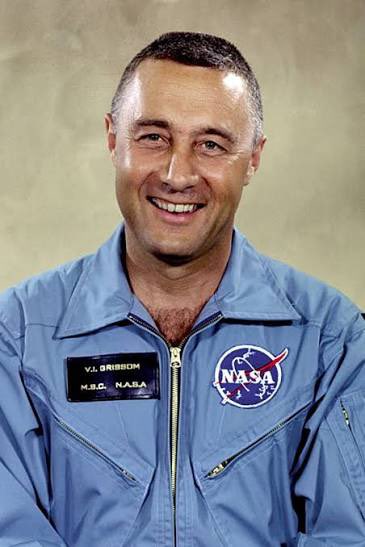
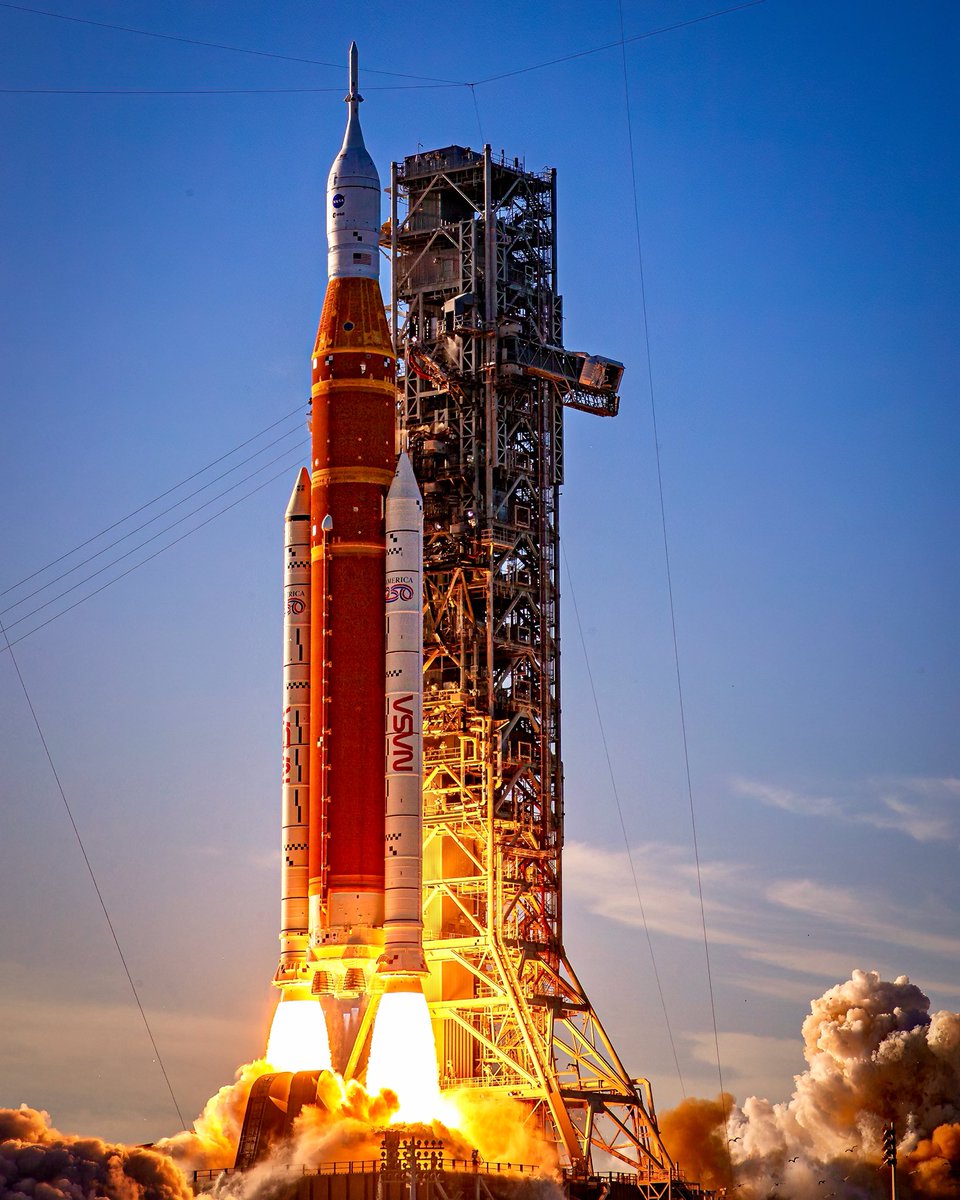
Two days after the Artemis II launch, we remember Gus Grissom, born on this day 100 years ago in the tiny town of Mitchell, IN.
He perished on January 27, 1967 during the pre-launch test of Apollo I. Due to his seniority, he would have likely been our first man on the moon.
Seeing a lot of tweets that show people don’t realize everything Artemis 2 is doing, including calculating slingshot trajectories with no margin for error, was already done in 1968 and repeated multiple times afterward, including in 1970 when they had to recalculate and execute a new trajectory 150,000 miles from Earth with engines that weren’t designed for it because part of the spacecraft had exploded. All of this was done with computers that had 100,000 times less memory and 1,000 times less processing power than an iPhone. It’s great that it’s being done again, but the real mind blowing thing is that the exact same thing was done 58 years ago with far less technology.
This is the shot you can’t get from the press site. This camera was sitting a few football fields from the SLS rocket at Pad 39B for days before launch, baking in the Florida sun, surviving rain, humidity, and whatever else the Cape threw at it. No photographer behind the viewfinder. Just a camera, a sound trigger, and a bet.
The way pad remotes work: you set your camera up days in advance, dial in your composition, lock everything down, and walk away. You don’t touch it again until after the launch. The shutter fires on sound activation
with a @MiopsTrigger smart+ trigger. With SLS, the four RS-25 engines ignite six seconds before the solid rocket boosters, so the camera is already firing before the vehicle even leaves the pad. You get home, pull the card, and find out if you nailed it or if a bird landed on your lens two days ago and left your a present and you got 400 photos of soemthing crappy.
There’s no formula for protecting your gear this close. Some photographers build wooden boxes with doors that pop open. Some use plastic bags and tape. Some do plastic or metal barn door rigs on hinges. I tend to leave mine open just in plastic rain covers because boxes limit my composition and setup time, but that means your cameras are more exposed to the elements and whatever energy and debris comes off the pad. You’re basically gambling a camera body every time you set one.
That’s what I love about this genre. There’s no playbook. You make it up as you go. Every time is an adventure.
📸 credit: me for @SuperclusterHQ - Artemis II pad remote | ~1,000 ft from Pad 39B | Kennedy Space Center
You need to be vocabulary maxxing because there are some thoughts you'll only have if you have the words for them. Nietzsche: "We have only the particular thought for the words that are present in our minds." Knowing more words means giving more clay to your mind to sculpt ideas
🚨 White House Press Secretary Karoline Leavitt today:
“Our nation was founded, almost 250 years ago, on Judeo-Christian values.”
The Treaty of Tripoli. 1797. Signed by Founding Father John Adams. Ratified unanimously by the Senate:
“The Government of the United States of America is not, in any sense, founded on the Christian religion.”
Thomas Jefferson — who wrote the Declaration of Independence — was a deist who literally cut the miracles out of his Bible.
James Madison — the father of the Constitution — explicitly warned against the “diabolical hell conceived principle of persecution” by state religion.
The First Amendment’s opening words:
“Congress shall make no law respecting an establishment of religion.”
They put it first.