📍Gorkha🇳🇵
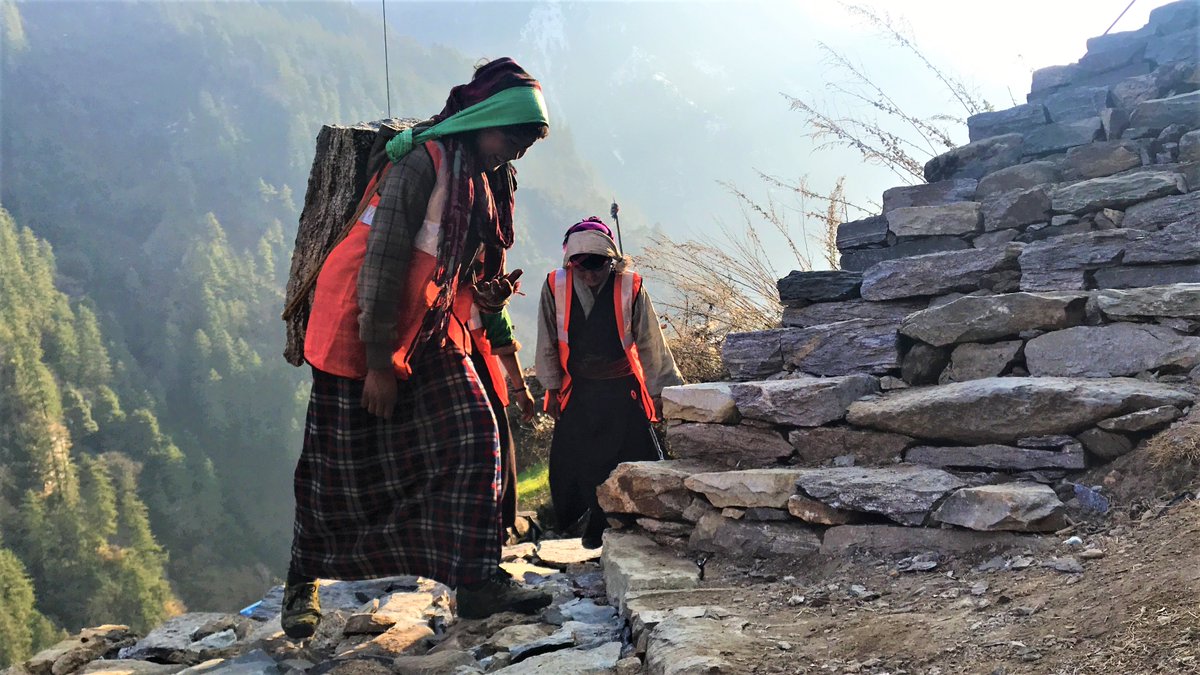
In the high mountains of #Chumling, #Ranagaun & #Dorjung, women masons walk two hours everyday to work.👩🏭🚧
Here, @WFP reconstructed 8.5 km of trails, benefiting 1,844 ppl w/improved livelihoods & easy access to markets, schools & health posts.
Thank you, Germany🇩🇪.
Precision and Recall are confusing initially🤔
The TP, TF notations don't do a favor while trying to understand them intuitively. I never could remember them until I understood the concept.
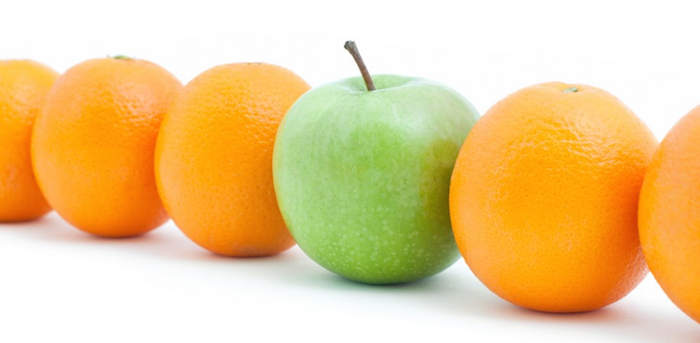
So let's talk about them in terms of picking apples and oranges🍎🍊, because why not! 👇
I have 5 copies of Machine Learning Bookcamp
To win one:
🔸 Follow me
🔸 Retweet this tweet
Winners selected randomly. Results announced on Wednesday
ML Bookcamp - Learn machine learning by doing projects
🔗 https://t.co/m4IrQc7hle
@ManningBooks
@haltakov Formulation :
b= the distance between two cameras
f= focal length of camera,
d= disparity:
D = Distance of point in real world,
->D = b*f/d
4/4
@haltakov 1. Both capture the images.
2. we will find the location of the front-car in both of the images.
-> we need object detection here.
3. We match the object in both the images (stereo matching)
4. compute the disparity measure
5. use disparity to estimate the distance.
3/4
Machine Learning Interview Question #13 🤖🧠🧐
We talked about using CNNs to detect objects. Now imagine we have a self-driving car driving around.
❓ How can we estimate the distance to a detected object (for example a car)❓
Answer in the replies. Read the rules 👇
@haltakov While formulating this solution, I just figured out the flaw :).
How to decide the patch size because objects may have different aspect ratios.
3/3
@haltakov So, in general, we can apply CNN with many patches of the given images and CNN should classify each patch as :
either object or maybe background and each patch itself gives the bounding box of the object.
2/3
Machine Learning Interview Question #12 🤖🧠🧐
We talked about CNNs so let's use one of them now...
❓ How can you use a CNN to detect the presence and the location (bounding box) of a specific object in an image (for example car)?❓
Answer in the replies. Read the rules 👇
@chuston1776 @svpino At the same time, the loss function with smaller batch sizes will give unstable landscapes in each iteration. In this way, it is easier to escape those sharp minima.
4/4
@chuston1776 @svpino One intuition I have is - When it comes to using Large batch size, the shape of the loss function will remain consistent over the batches. This consistency is not good. Because this won't allow us to escape or so to say use other possible landscapes in the error surface.
3/4