Lately, BLR & many other Indian cities seem to be overflowing with Western-style food joints. Ancient texts state: Yasya Deshasya Yo Jantuḥ. The medicine & food for a person must come from the exact same land they inhabit.
Our gut microbiome is populated by bacteria that co-evolved with local flora. Our bodies carry genetic adaptations shaped by what our ancestors ate for 1000s of yrs, influencing how efficiently we produce certain digestive enzymes (for example, lactase for dairy).
Swapping local food habits for Western 1s creates low-grade gut inflammation & microbiome disruption in many people.
Mehdi Hasan was 30 years old in 2009 when he called non-Muslims ‘animals with diseased minds.’
He was so extreme that he even attacked ‘dog and music lovers’, since dogs and music are haram in Islam. He also compared homosexuals to pedophiles.
He only apologized a decade later, because the video leaked.
Mehdi claims he has totally changed, which I find hard to believe given his actions and the fact that he practices Twelver Shia Islam, where lying (Taqiyya) is completely allowed.
Mehdi hates when this video goes viral. It would be a shame if it did.
Been talking to several young, energetic guys who are super thirsty to jump into manufacturing.
One thing I see across the board: they’re completely obsessed with the company name, the brand, the pitch deck, and making everything look pretty.
Product? Not decided.
Marketing plan? Zero.
Price points? No clue.
But the logo and name? They’ve spent weeks on it.
Guys, don’t get hung up on that early.
If you have the right product, one that actually solves a real pain, at the right price, with solid service, you can literally brand it “Ghatiya”, “Bakwaas” “Ghadha” and it will still sell like hotcakes.
I’m not judging, I’ve been there. Used to stress over colours, taglines, and perfect names… only to realise way too late that it’s the product that matters.
Focus on solving problems first. The brand builds itself later.
People don’t buy the name.
They buy what you deliver.
This moron has the guts to preach for protection of minorities in other places while minorities are killed, tortured and jailed for blasphemy everyday in his own country…
There is such a brouhaha about narrative warfare these days. I am one of those who keep banging on about it.
I remember when ChatGPT had newly arrived a few years back. I kept dabbling with it, probing what biases it carried when it came to India, our history, Dharma.
I would argue with it, sometimes even try to gaslight it, to get it to accept, or at least consider, the versions of our past apart from the ones it treated as ultimate truths.
One of those things you just do out of frustration. It was pointless.. and I knew that. A model only knows what it has been fed and trained on.
When it comes to India, what it was fed is mostly colonial-era and Marxist historiography, our past as read and curated by people who neither lived it nor loved it.
For most of our lives the narrative war was fought in places we could at least see. Textbooks, newspaper columns, university departments, the framing of a film.
You could see the distortion, name it, argue back, win a round here and there. What has changed now is that the next generation will not meet its history in any of those places first.
It will ask a chatbot, which will answer in one confident voice, the same answer to everyone, drawn from whatever happened to sit in its training data. There is no place for consequential rebuttal or debates. Whoever's sources make it into the corpus will win, quietly and at a scale no op-ed can ever reach.
What frightened me was that our sources were absent or just scant. So much of what we are has come down as oral tradition, and the little that exists in writing, our manuscripts and inscriptions, is barely online, rotting instead in damp and neglect while we lose it generation by generation.
The most powerful AI tools humanity has built are learning who we were from everything except the record we left ourselves.
This is the real narrative front that we are losing. Not the daily shouting on the timeline, but what gets digitised and fed to increasingly sentient machines.
The only fix had to be upstream — exactly the work the good folks at @midf_org have taken on, and the reason I jumped when I came across them few days back.
They are building a searchable, India-hosted home for our manuscripts.
While the originals will stay with the families and mutts who have guarded them for centuries, MIDF supplies the searchability that finally makes the text readable by a machine. Their prototype 'Smriti' has catalogued crores of pages in four months.
This is a monumental work that MIDF has undertaken, owed to a civilisation we have inherited and are bound to pass on. The funding they need for this is way less when compared to the significance of this work.
This is the least we could do if we care about our history and our future. If we care about narrative warfare even a fraction as much as you post about it, this is the front that decides it, and this is where to put our money.
Let's back them.
You can read about their work in this deep dive by @dikshayadav_ in @SwarajyaMag.
@midf_org@porwalpoo8@yogiraj_arun@Shreyas_Mysuru@sudarshanhs@RahulDewanV2
https://t.co/q3CCAYCBZu
The province retained its primacy longer than Venice or Florence. Ita bankers made and unmade empires, it was the seat of British power for 100 yrs, till the late 1960s Calcutta was the entrepot of urbanism between Hormuz and Malacca.
The decline has been jarring...
As an Indian woman from Muslim heritage, I write this rebuttal with the clarity and directness that comes from living the reality @Ilhan only tweets about from afar. Ilhan Omar’s claim that India has reached the “eighth stage of genocide” against Muslims is not analysis. It is reckless, fact-free propaganda that insults every one of us who actually live here, work here, raise families here, and exercise our rights every single day.
If there were even the beginning of genocide, our population would not have exploded. In 1951, Muslims were about 9.8% of India. By 2011, we were 14.2%. Today we are estimated around 14.5–15%, heading toward 18% by 2050 according to Pew projections. From roughly 35 million in 1951 to over 200 million now. Absolute numbers have multiplied nearly six-fold while the country’s overall population grew far slower in percentage terms. Genocide does not produce the world’s largest Muslim-minority population that keeps growing faster than the national average for decades. It produces mass graves and fleeing refugees. We have neither.
We vote in every election in the world’s largest democracy. We contest seats, win them, become MPs, ministers, judges, IAS officers, doctors, engineers, and business leaders. Three Presidents of India have been Muslim. We serve in the armed forces and police. We own businesses, run hospitals, produce films, and dominate segments of entertainment and sports. This is not the signature of a community facing extermination.
We are thriving and prospering — with real data and real lives. Yes, like every large community, we have internal challenges — lower average literacy and educational enrollment in some metrics, pockets of poverty, and the need for better skilling. But the narrative of uniform victimhood is a lie told by people who have never walked through a Muslim-dominated area in Mumbai, Hyderabad, Lucknow, or Kerala and seen the middle class, the professionals, the entrepreneurs, and the young women studying medicine and engineering.
Prominent Indian Muslims — from business (Wipro’s Azim Premji built one of India’s largest companies), to cinema (generations of stars and directors), to sports, academia, and medicine — show what is possible when talent meets opportunity in a free society. Millions of ordinary Muslim families have moved from villages to cities, from informal work to formal jobs, from one generation of limited schooling to the next pursuing professional degrees. That is prosperity in motion, not persecution.
We enjoy specific rights and accommodations that Hindus as a group do not. This is the part Omar and her echo chamber never mention. Indian Muslims operate under a parallel personal law system for marriage, divorce, inheritance, and maintenance rooted in Sharia. Hindus do not.
After independence, Hindu personal law was comprehensively reformed and codified into a uniform framework (Hindu Marriage Act, Hindu Succession Act, etc.). Muslims retained the right to follow their own religious laws — including provisions for polygamy (up to four wives) and differential inheritance rules that the Hindu majority surrendered decades ago.
We also have constitutional minority protections under Articles 29 and 30 that allow us to establish and administer our own educational institutions with significant autonomy — rights the Hindu majority does not claim as a group because it is not classified as a minority. The Waqf Act gives Muslim institutions unique control over vast religious and charitable properties in a manner unparalleled for any other community.
In short: the Indian state has gone out of its way, through personal laws and minority safeguards, to preserve and accommodate Muslim religious and cultural identity in ways it has not extended equivalently to the Hindu majority. These are not “equal rights” in every narrow sense — they are deliberate accommodations that give us more space to live according to our traditions than the majority community receives under the same Constitution.
As a woman from Muslim heritage in India, I have the full protection of the Indian Constitution plus the framework of personal law. The criminalization of instant triple talaq in 2019 removed a specific vulnerability that existed under uncodified practice. I can study, work, vote, travel, criticize the government, wear what I choose (or not), and practice my faith openly — all while living in a country where my community’s population share has steadily risen for 75 years.
@Ilhan Omar’s “eighth stage of genocide” rhetoric is not solidarity. It is the lazy export of American culture-war talking points onto a country and a people she does not understand. It erases the agency of 200+ million Indian Muslims who are neither cowering nor waiting for rescue from Washington. It cheapens the word “genocide” while real atrocities happen elsewhere.
Stop peddling foreign fantasies about our lives. We are here. We are visible. We are voting. We are building. And we reject your narrative with the facts of our own existence. That is the view from inside — not from a podium in the United States.
For four thousand years, the Indian subcontinent was the centre of world trade. Sumerian tablets record Indian ships reaching Mesopotamia in the third millennium BC. Rome ran a permanent trade deficit with India. By 1600, Surat was the richest port on earth.
Then, within a single lifetime, India lost its maritime supremacy almost entirely.
The conventional explanation is that Europe arrived with superior ships and weapons. It is a comforting story and it is largely wrong. The deeper cause was internal.
Indian commerce was extraordinarily sophisticated. Surat's leading merchant, the Jain financier Virji Vora, was reputedly the richest man in the world; the East India Company borrowed from him. Merchants of every religion and origin traded together because the system rested on two foundations: religious toleration, established by Akbar, and predictable, low-tariffs. Customs duties were around five per cent. Contracts were honoured. Trust was the real currency.
There was one structural weakness. In Venice, Amsterdam and London, the state and the merchant class shared an interest in trade and invested in it together. In Mughal India, the ruling elite was indifferent to commerce. Merchants financed the state; the state never encouraged merchants.
When Aurangzeb became hostile, merchants had no protection. Religious toleration was abandoned. Temples were destroyed, punitive taxes on non-Muslims reimposed, the Sikh Guru executed. Forty years of war followed. East India Company imports from India fell ninety per cent in seven years. Eight thousand merchants abandoned Surat in a single exodus.
They relocated, many of them to an insignificant island Britain had received as a royal wedding dowry, because it offered the security and toleration the Mughal state had destroyed. It also offered English Common Law. Within a generation Bombay was the commercial capital of India. The Wadia family built the Royal Navy's finest ships there. The Tata dynasty traces its origins to this migration.
Europe did not defeat Indian commerce. It inherited it, by providing the conditions Indian merchants needed and their own rulers had thrown away.
This is not an argument about colonialism. It is an argument about something more fundamental, and it is the thread running through all three of my books on maritime trade. The second ‘The Millennium Maritime Trade Revolution’ is subtitled ‘How Asia Lost Maritime Supremacy.’ It is hardly ever lost to a stronger rival but when a society stops valuing the openness, toleration and commercial purpose that made it great. Portugal did it. The Dutch Republic did it. Britain, in the 20th century, did it too.
The conditions of prosperity are always a choice. And they can be unmade by a single generation that comes to value something else more.
Link to the full Substack essay with sources is below.
Saaras is purpose-built electric mobility for controlled movement across large workspaces, managed environments and walking-only spaces.
Indian engineering. MSME built. Women-led manufacturing teams.
Made by Indians. Made for India. Made in India.
Proof in motion.
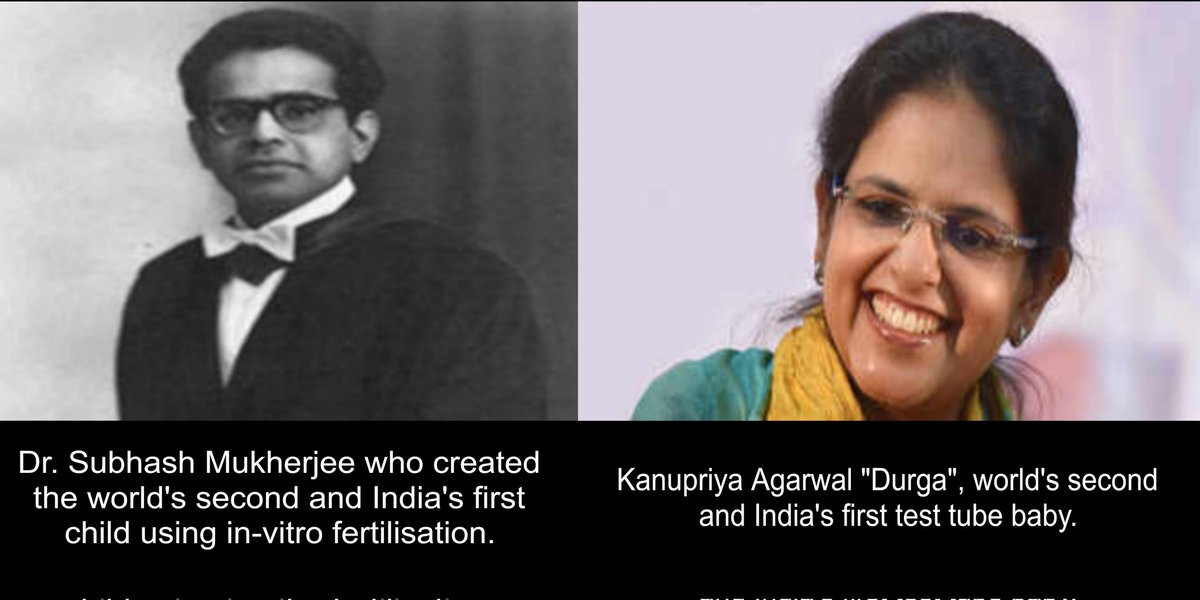
■ The Doctor Who Created Life, Only to End His Own: India’s Tragic Scientific Story. On October 3, 1978, in a small nursing home in southern Calcutta, a baby girl named Kanupriya Agarwal affectionately called “Durga” was born. She was India’s first child conceived through in-vitro fertilization (IVF) and the world’s second, arriving approximately 67–70 days after Louise Brown, the first IVF baby, in the UK on July 25, 1978.
■At the center of this achievement was Dr. Subhash Mukherjee, a physician and endocrinologist working at Kolkata’s Nil Ratan Sircar Medical College. He collaborated with cryobiologist Sunit Mukherji and gynecologist Dr. Saroj Kanti Bhattacharya. Using rudimentary laboratory facilities and limited resources, the team successfully performed IVF.
■His approach differed notably from the early British work by Patrick Steptoe and Robert Edwards, who initially relied on natural menstrual cycles for single-egg retrieval. He pioneered the use of gonadotropins (such as human menopausal gonadotropin) to stimulate the ovaries and produce multiple eggs, an innovation that later became the global standard in IVF protocols. Even more remarkably, his team cryopreserved an eight-cell embryo (frozen for about 53 days in this case) and transferred it, resulting in a live birth. This is widely recognized as the world’s first successful pregnancy and birth from a frozen embryo, a milestone replicated in the West several years later.
■Rather than celebration, his announcement faced intense skepticism and institutional hostility. The West Bengal government formed an inquiry committee dominated by specialists outside reproductive biology including a radio-astronomer/radiophysicist (chair), a nuclear physicist, a gynecologist, and a neurophysiologist. The committee subjected him to interrogations and ultimately dismissed his claims as unproven or bogus. He was barred from presenting his work at international conferences, denied permissions to publish formally in scientific journals and subjected to transfers, including one to the Regional Institute of Ophthalmology, far removed from his field of expertise.
■Isolated, professionally ostracized, and under immense psychological strain, he died by suicide in 1981, at his Kolkata residence at the age of 50.
■For years afterward, credit for India’s first IVF baby was attributed to the Mumbai team led by Dr. T.C. Anand Kumar and Dr. Indira Hinduja, whose baby Harsha was born in 1986 and was the first extensively documented case at the time.
■However, in 1997, Dr. Anand Kumar examined Mukherjee’s preserved handwritten notes, lab records, and spoke with the parents of Kanupriya Agarwal. Convinced of their authenticity, he publicly acknowledged Mukhopadhyay’s priority at a national conference and later published a paper titled “Architect of India’s First Test Tube Baby: Dr. Subhash Mukerjee” in Current Science. This act of scientific integrity corrected the historical record.
■By the early 2000s, ICMR and other bodies formally recognized Dr. Mukherjee’s contributions. His name was added to the Dictionary of Medical Biography, and a bust honoring him now stands at Nil Ratan Sircar Medical College in Kolkata. Kanupriya Agarwal (Durga) has herself spoken publicly about his pioneering role.
■Dr. Subhas Mukherjee's story remains a poignant chapter in the history of Indian science, one of remarkable ingenuity under constraints, followed by tragic institutional failure, and eventual posthumous vindication. His work helped lay the foundation for the millions of IVF births that have occurred worldwide since.
■Today marks the 45th anniversary of Dr. Mukherjee's passing. #OnThisDay 1981, India lost a visionary who achieved what the world’s leading centers had only just begun to explore yet was failed by the very system that should have celebrated him. His legacy endures in every IVF family, a reminder of the price sometimes paid by those ahead of their time.
A few bakchods on Indian Twitter decided to talk about Chinese caste system in their free time, and managed to rattle the mighty Chinese empire 😂😂
You nameless, faceless people, 🫡