Academics, a foggy afternoon makes the next one even foggier. It starts at lunch.
Your afternoon goes foggy, so you push the real work to the evening. The evening runs late, you sleep less, you eat too late, and the next day the fog shows up even earlier.
You blame your discipline, and that doesn't really help.
Eat a lighter lunch, keep a bottle on your desk, do the hard stuff in the morning. That's systems thinking one oh one.
More of this at https://t.co/3QvDDKVif9
Silicon Brain's advice for the next 10 years.
Shamelessly stolen from some random tweet. Wholeheartedly agreed.
Working on something for a long period of time is increasingly rare, but it's also beautifully relaxing, even if hard. I'm sure someone smarter than me can explain the chemistry of it, but your brain's working hard on a single problem actually makes you enjoy life, instead of working hard to focus on 600 short-form videos, which just makes you angry and pissed off and want to scream to the void. And the satisfaction you get from having completed that something... Yeah, it's a little bit different than having watched 600 staged skits of fake life, all engineered for your attention and ad revenue share.
Boom: https://t.co/KHL0wxRvwS
so many threads here it's impossible to keep up
- e.g. some job-related evaluators are somewhere in the future, so when writing a paper you're not deceiving them. literally impossible. they do not make the rules
- when writing a paper to a venue that 100% absolutely requires a mandatory disclaimer, yes include a minimal concise one
- when writing a paper to a venue that merely "strongly recommends" a disclaimer, i'd probably leave out. i think it's a fad that will die soon.
Can work for some, but if you want to do a PhD, dropping out is the worst possible thing to do, just for testing, for some future uncertainties.
Positions are rare. You will grow up, your expenses will grow up, life will happen, and it is just an increasingly tiny chance that you will find the will to return to do it.
Academics make excuses before they submit a paper. It protects the ego and lowers the odds.
Self-handicapping is thinking you can't get it accepted and then coming up with excuses. When the rejection comes, you get to say you didn't do your best anyway.
You're protecting your ego at the cost of your actual success.
Be honest, you've done this. When I realised it, I was like, oh God, I've been doing this for years.
More of this at https://t.co/3QvDDKVif9
@Fred834567 I'm not claiming to be anything world-class, but I am a full professor, through fully open calls and no inside gaming.
I didn't get my PhD rights before doing a couple of years of extra bridge studies (or whatever they're called) because my grades were so low.
Heh
I'm enjoying a week of three brutal funding application rejects 😃
And still I'm in an oddly positive mood.
I keep telling others and myself that if you are to enjoy academia, you better learn to ride the reject wave because, for instance, with funding, we're talking about abysmal accept rates (with the bigger ones, probably somewhere around 10%). The smaller ones: they are a lot of work and you can't really fund too many people with that.
Before I turn this into a rant about funding, I'll just say that if you manage to stay on board, it's a wonderful wonderful journey of self-discovery and hopefully also some knowledge discovery. But above all, a career where you can genuinely shape it to your own liking.
A short and simple how-to: https://t.co/58Wwi9Tub3
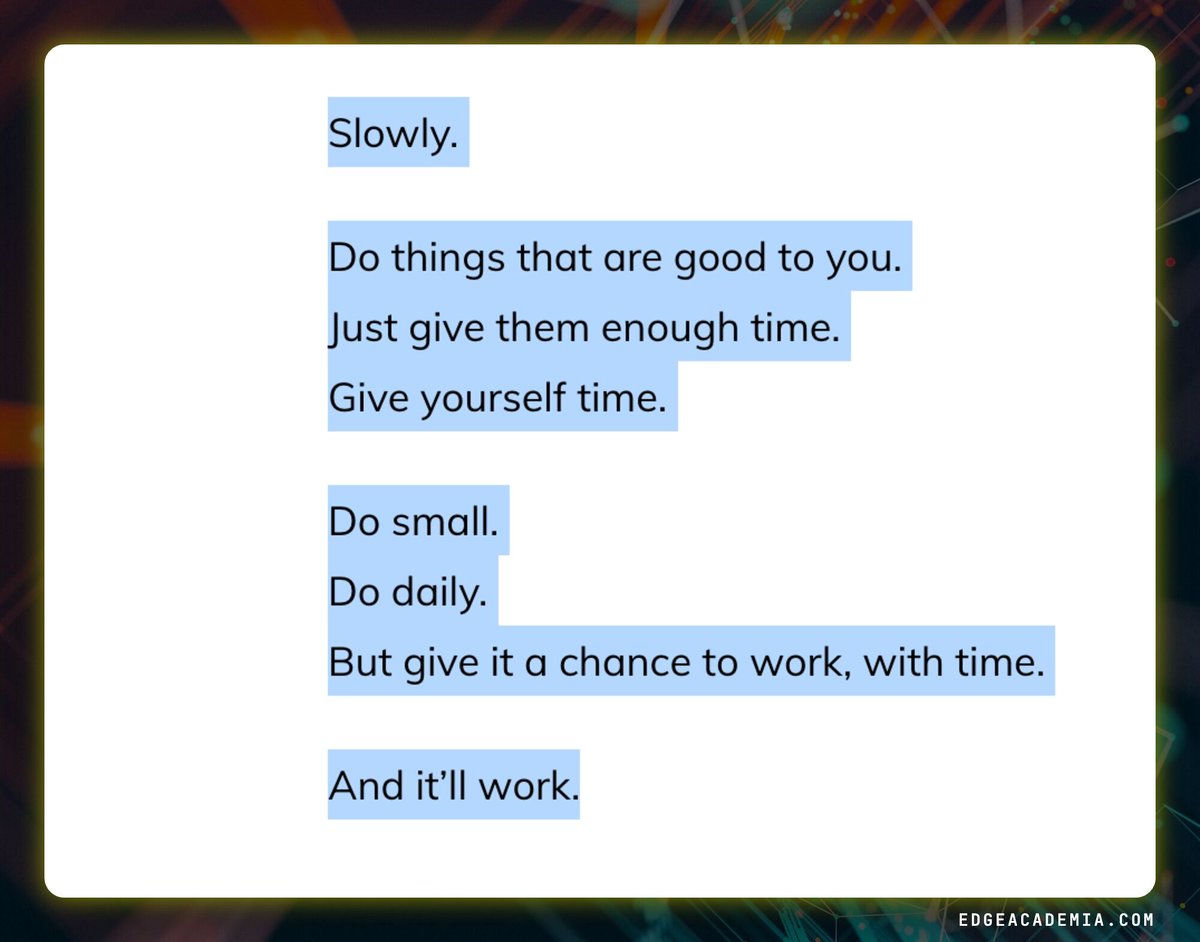
Got called out by a bunch of teenagers a week ago... Which was fun, and made me thing how you don't have to do much per day if it's consistent. A few paragraphs. A few minutes of exercise. Reading half a paper per day.
Just consistently.
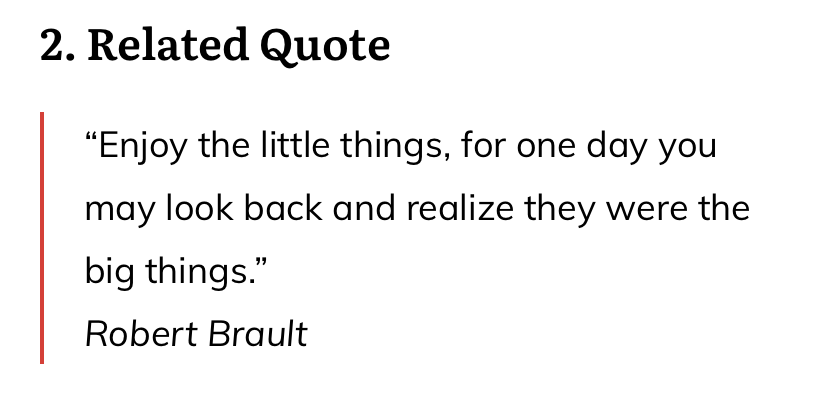
It's crazy how hard it is to notice such small progress. Almost as crazy as how far you can go by just doing that.
Just one step is hard to notice.
Which is why we don't take it.
Measuring backward is critical. Not one day, but one week, month, year.
But also that's hard to do if you never take toll. Writing your progress somewhere, or even just thinking about it is a pretty cool idea to make sure you notice how much you're moving.
Why bother?
Because moving makes you happy.
It really does.
https://t.co/EV1m2kEKq6
@Quasilocal Meh. Pretty sure we both know that we're not going to be changing our minds about this 😅
Happy to let time tell what happens to AI disclosures but for the time being I can totally personally see how they can harm the author
@hayounggjung on point two: Claude Code in right hands makes less mistakes than an average researcher given a dataset, RStudio, and endless googling of e.g. "how to do stats"
i guess the real issue is that one cannot validate, at all...
The odds are against every academic sending a paper or a grant. You can still improve them.
The odds are against me too, every time I send a grant application or a paper. Hard work alone won't get everything accepted. That's just the reality.
You can probably improve those odds if you do your very best whenever you can. One step toward that is noticing when you're coming up with excuses just to protect your ego.
More of this at https://t.co/3QvDDKVif9
Academics, you're probably writing your most important paper at the slowest hour of your day.
For most of us it's three in the afternoon, once the email and the meetings are finally out of the way. By then your brain is foggy.
Just turn it around. Write the draft in the morning before you even open your email, and do the email, the admin and the meetings after lunch.
Same day, same hours. Just shuffle the order of things.
More of this at https://t.co/3QvDDKVif9
I think it's pretty common to not realize how good things really are when it's so easy to just focus on all the crap that is not going okay
And in academia everything is just a big shit show of people judging you, rejecting you, criticizing your ideas
It is critically important that you learn to find positive aspects about your work and find the people who appreciate what you do. That's the way to enjoy your life
It's so easy to find all the negatives
https://t.co/CMbdV5fGbC
Some of my own mentors looked down on other fields because they didn't understand them.
Thank God I went and explored what those other researchers were doing. Now I can appreciate their work, and I can work with them without being scared of it.
Exploring other fields also makes you the connector, the academic who knows which people and which research areas to bring together in a grant or a paper. People remember that.
More of this at https://t.co/3QvDDKVif9
My CV is not good enough. If you're an academic, you've probably said it to yourself.
You probably have only a handful of phrases like that, on replay in your head. I don't have a chance there anyway. Our work is not good enough.
When you recognise one, stop. Stop instantly. Give yourself a pause and ask why you have these pessimistic thoughts.
More of this at https://t.co/3QvDDKVif9