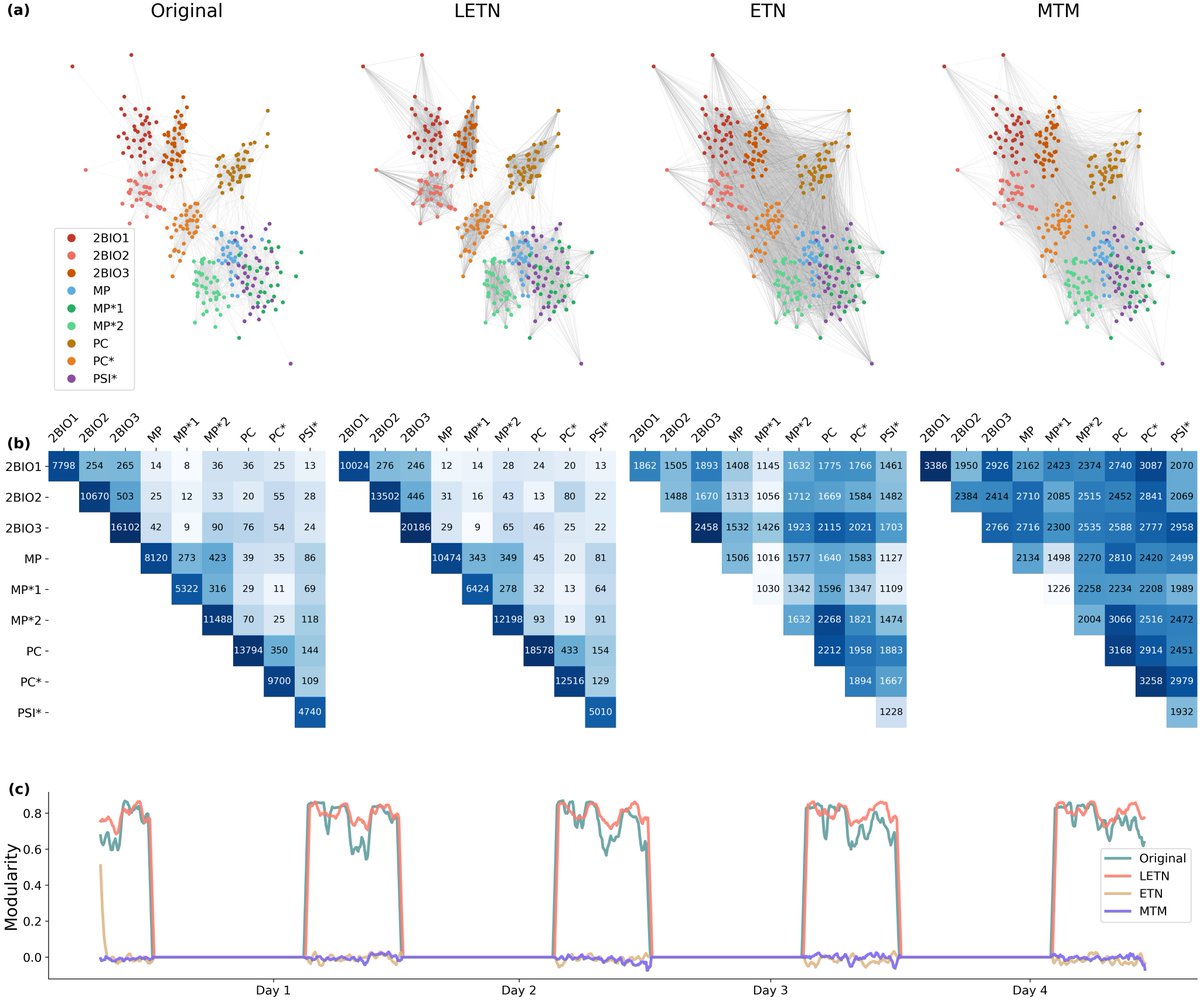
📢 New preprint out!
Mobility data are used to study human behavior, but biases in population representativeness can affect downstream analyses.
We introduce BePop, a framework to calibrate mobile phone GPS data not only demographically, but also behaviorally.
🧵👇
📢⏰ Very happy to share a new article published in the Journal of Quantitative Criminology having as 1st author @AriadnaAlbors, brilliant PhD student co-advised w/@mtizzoni. Open access link: https://t.co/1djINZEghf. Congrats to Ariadna for her first publication! Some info ⬇️
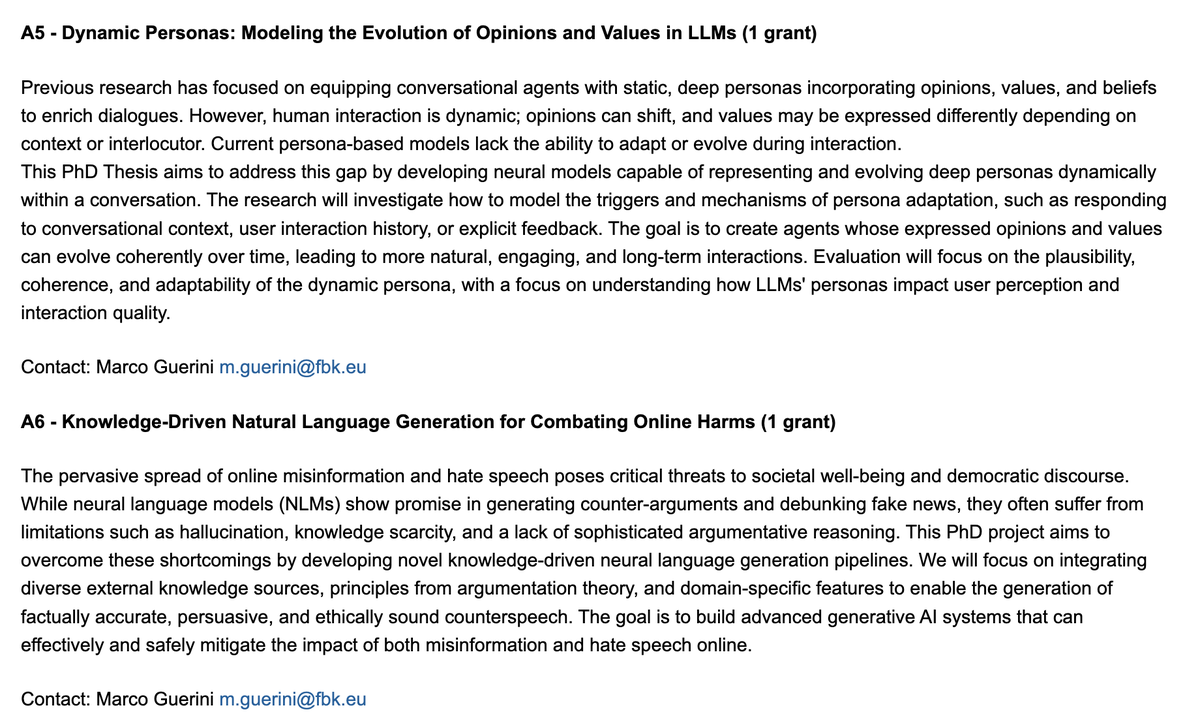
📢 Do you want to join our group? We opened **two** calls for a fully funded PhD. Details are in the image and at the following links.
Calls: https://t.co/9cQNmnLTsE
PhD Details: https://t.co/61OhXBrd6a
Deadline: August 22nd, 2025, hrs. 04:00 PM (CEST)
We introduce a real-time method to infer individual unemployment using GPS trajectories and survey data. By analyzing mobility patterns of ~1 million individuals before and after job loss we reveal a sustained contraction in exploration that deepens with time since job loss.
🚀Job loss disrupts individuals’ mobility and their exploratory patterns🚀
Thanks to a great collaboration with @denadai2, @marcotonin, @brulepri and @LucchiniLorenzo our latest study is finally out in iScience!
https://t.co/CZmx1asG2b
We present Epydemix: open-source python package for all stages of epidemic modelling: from models' definition to their calibration via ABC methods. Website: https://t.co/xcTCl1XgeY. Paper: https://t.co/oWnRoGkPvm. High level summary: https://t.co/g8UZaIXLXy
*Permanent* position in Applied Mathematics at City. We are - of course - particularly interested in profiles in Computational Social Science, Network Science, Data Science, and related fields. The application deadline is June 1st.
https://t.co/qbJlphoVqj
Prevedere i movimenti umani è cruciale ma l’IA fatica quando usciamo dalla routine
Una ricerca @FBK_research - @CNRsocial_ su @PNASNews propone algoritmo che unisce intelligenza individuale e collettiva per anticipare anche gli spostamenti “imprevedibili”
https://t.co/xBB8nIkA4x
Faithfulness of GNN explanations isn’t one-size-fits-all🧢
Our last @iclr_conf paper breaks it down across:
1. Evaluation metrics
2. Model implementations
3. OOD generalisation
w: @AntonioLonga94@looselycorrect@andrea_whatever
1/5
Happy to see our work, "Socioeconomic disparities in mobility behavior during the COVID-19 pandemic in developing countries", out in EPJ Data Science "Data for the Wellbeing of Most Vulnerable".
https://t.co/QhO19RM6mL
🙏to the editors and the amazing team for the hard work!
New @NatureHumBehav paper tracks mobility to reveal surprisingly long-distance dependencies between businesses. These insights could improve policy to bolster neighborhood economies and help business owners see how closures elsewhere might impact them
@estebanmoro@takayabe_0505
📣 New preprint out 🚨
"Predicting human cooperation: sensitizing drift-diffusion model to interaction and external stimuli" 👥
Co-authored with @L_Ferrarotti and in collab with @brulepri and @ricgallotti
Check it out on arXiv : https://t.co/02s6Y2GTkn
🎉 Our work "SMOSE: Sparse Mixture of Shallow Experts for Interpretable Reinforcement Learning in Continuous Control Tasks" has been accepted by AAAI 2025! #AAAI2025
paper: https://t.co/6nBahjMLmn
with @L_Ferrarotti, @brulepri, @gih82
🧵1/6
We are hiring a postdoc at my group (SUNLab) @NUnetsi. Interested in working on multidisciplinary problems like segregation, health, or economic growth from the perspective of Social Urban Networks? Contact me if you are interested. Please share it! https://t.co/yIVu1eXKav
🚨🚨New wp alert! We use machine learning to predict mafia infiltration in local governments in 🇮🇹 + we study the impact of EU funds on infiltration risk.
Great econ-crim collab with @Giammacco and @mlemoglie 🔥///
Check thread below for an excellent overview ⬇️⬇️⬇️