My recent work (with co-authors @ruth_baker@PhilipMaini and Tommaso Lorenzi) studying the impact of volume-filling effects on the speed of cell invasion into extracellular matrix is now published in Studies in Applied Mathematics!
Read it here: https://t.co/kZt5XFIAsJ
Our work using diffusive properties to characterise new liquid crystal phases in DNA is out in APL Materials now - it also includes computationally efficient methods to calculate pairwise correlation functions.
https://t.co/dKepZLtJdl
@PaulHAMabels @3rdTryTessa @emvdg Dit is natuurlijk sofisme ten top: scheiding van kerk en staat heeft historisch gezien bij de grote denkers beide kanten op gewerkt. Iets met Locke bijvoorbeeld? Uw verdieping kan nét wat dieper 😉
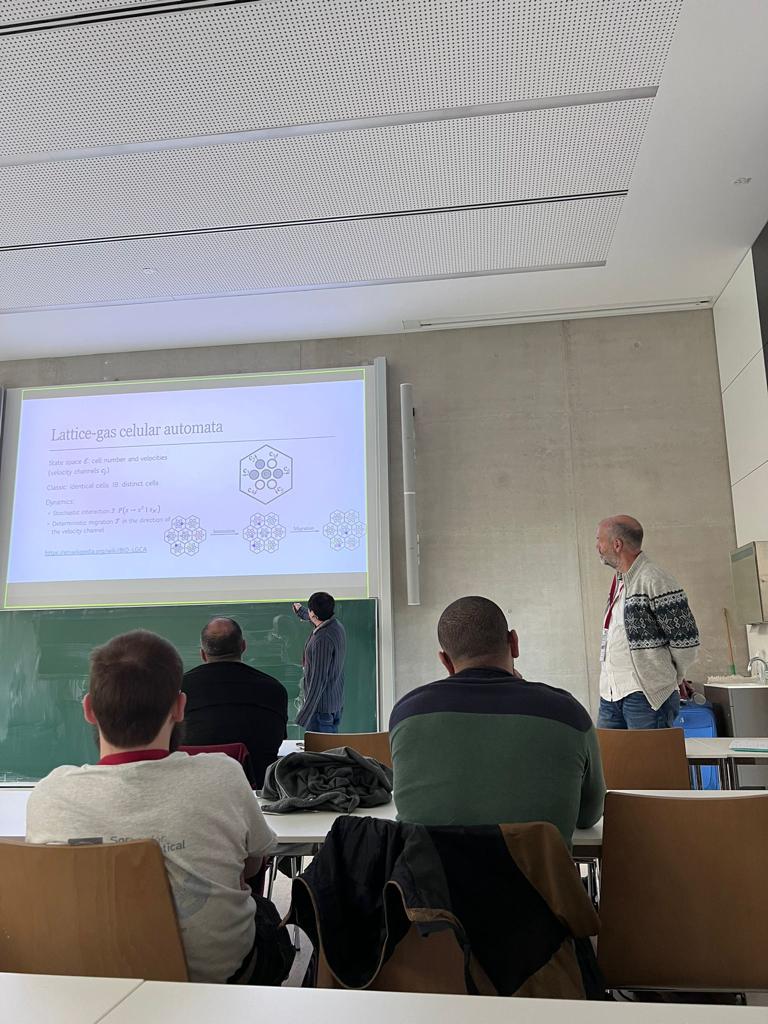
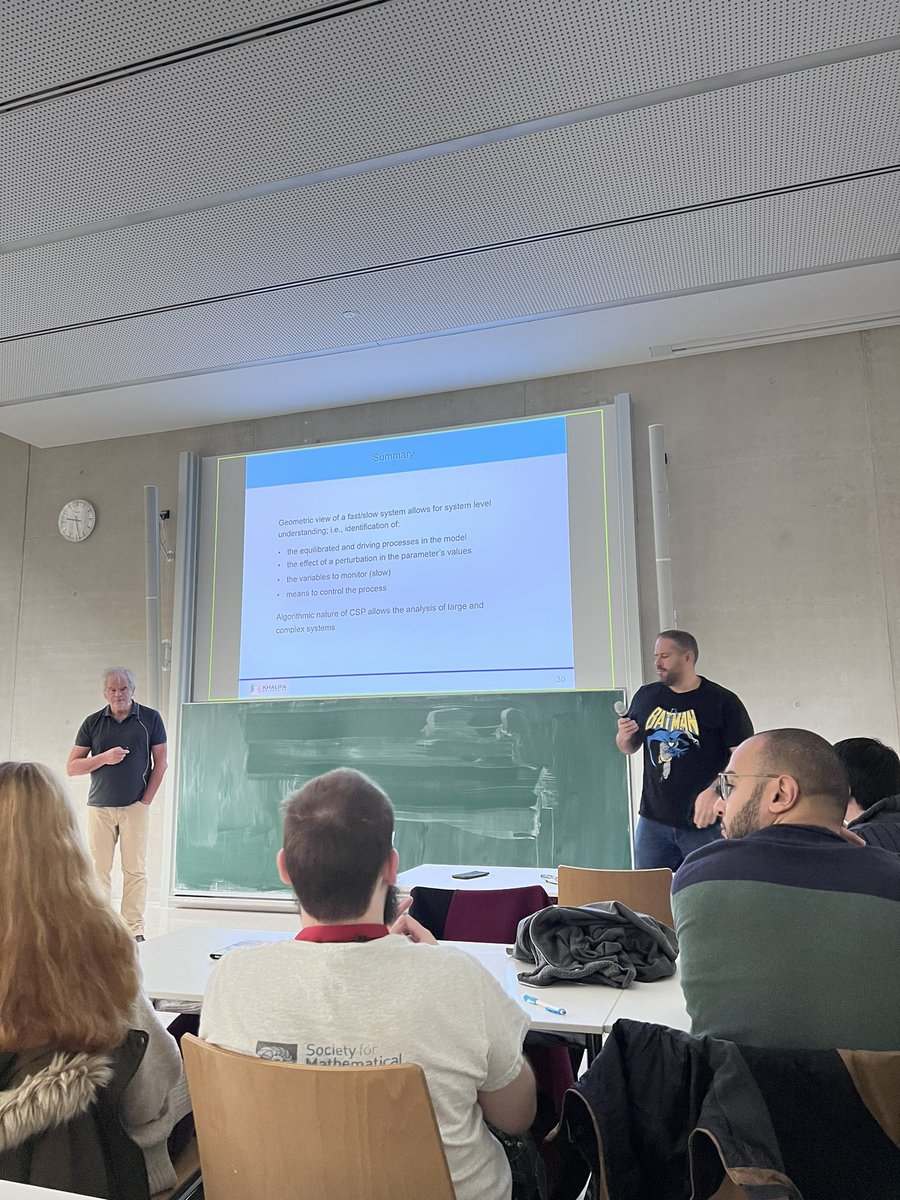
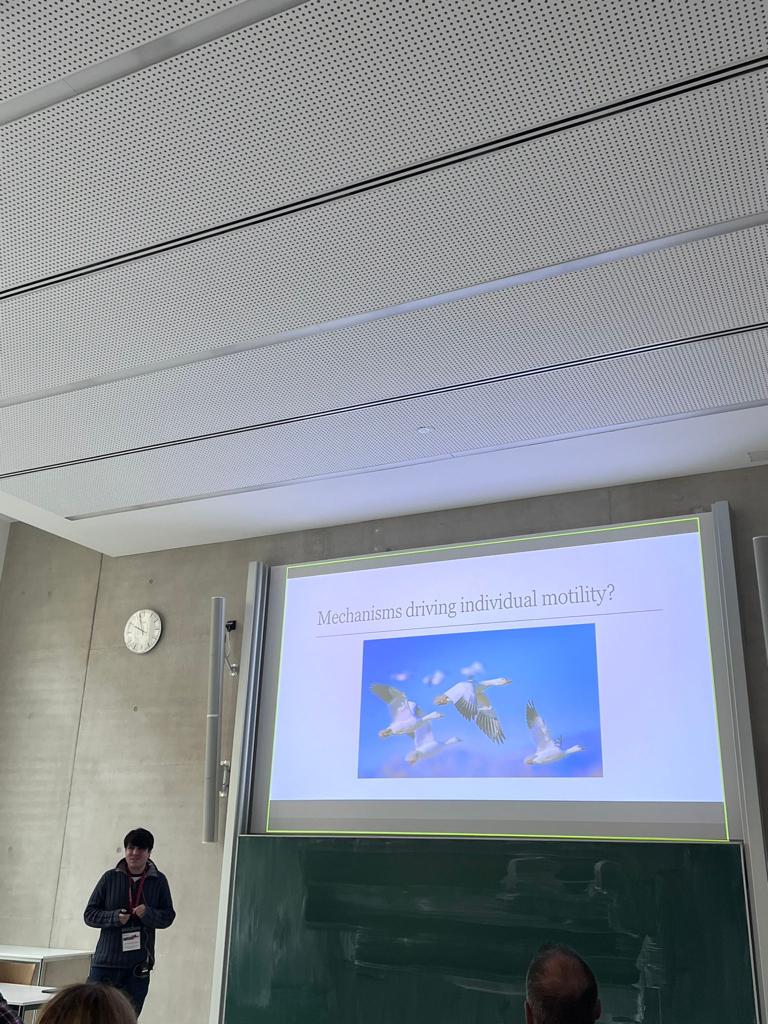
Today was our Mini-Symposium regarding the combination of machine learning and mechanistic modeling organized with Andreas Deutsch. Excellent talks by @CBigarre, @simonmape, Dimitris Goussis and Josue Manik Sedeno! Thanks a lot @ecmtb2022 organizers for the great conference!
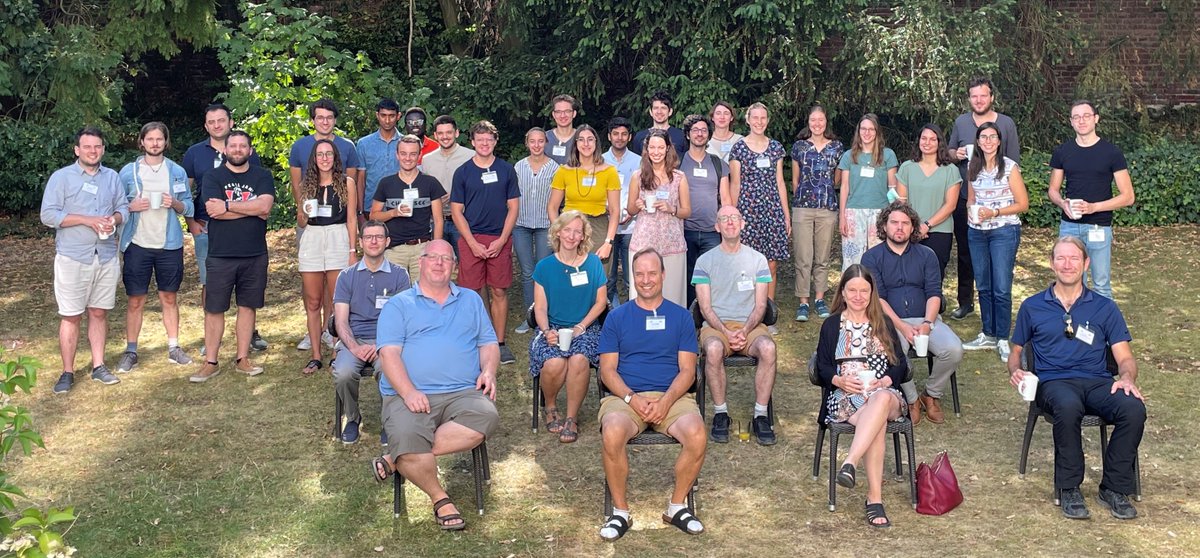
Very much enjoyed this 🌞summer school at @HCM_Bonn!
👩🏫Amazing lectures on stochastic models and inference; 👩🎓awesome contributed presentations; 🔧practical tool sessions; 🎇great discussions sparking up insights and coops; 👥inspiring panels; 🏃♀️fun hikes.
https://t.co/SmkE3TTBny
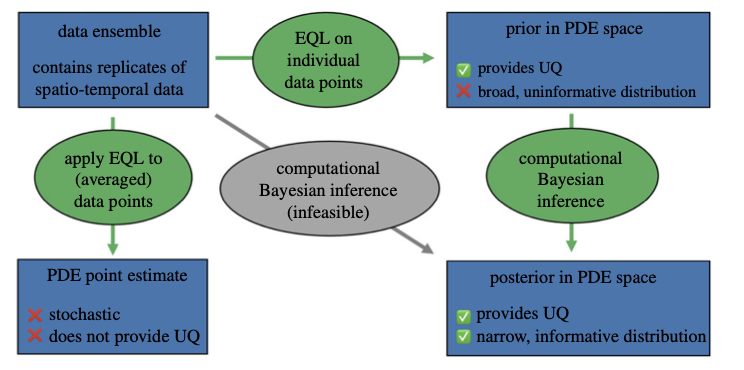
Very pleased to share my first paper "Bayesian uncertainty quantification for data-driven equation learning" with @ruth_baker and @ProfMJSimpson!
https://t.co/99nrOmf2Vy
How do we combine noisy data with equation learning?A 🧵 (1/n)
By combining the data and PDE-FIND with Bayesian analysis, we open the door to inference in very large candidate to obtain a good model with rigorous uncertainty, while making computation feasible
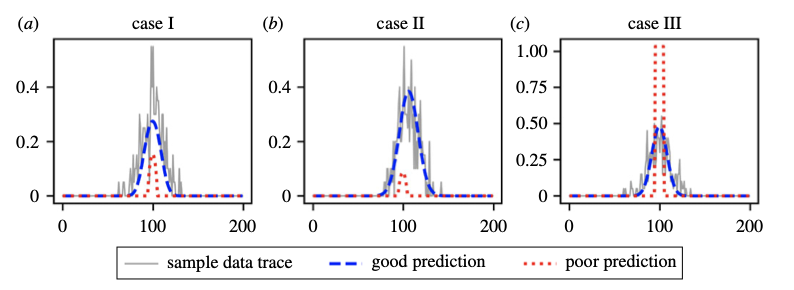
Thankfully, this uncertainty is only present in some parameters, meaning we are confident in at least a part of the model! Hence, we can use Bayesian methods to explore which other bits of the model should be included, and which not.
Using three test cases (unbiased motion, biased motion, and proliferation), we see that sometimes the algorithm will pick up a correct model, and sometimes it won’t!
To thrive as a Graduate Student you need to learn how to pose questions. But you also need an environment that gives you the tools to do that.
And you could do without having to exercise in your study (cum bedroom)
Simon Martina Perez describes his 1st Year as a PhD @OxUniMaths