Almost five months since I returned to Switzerland after a few years reporting in the US for @LeTemps, an intense, fascinating, and anxiety-inducing period. I hope that the US, which welcomed me so generously but mistreats so many others, will be fine.
https://t.co/2N4DGiJrKX
À lire ce discours du boss du New York Times sur l’impact de l’IA sur le journalisme. Pas rassurant du tout, pour les journalistes mais surtout pour les citoyens dépossédés d’une information fiable.
So @Axios has an explosive report claiming that Trump had a tense call with Netanyahu today and told him: "You’re fucking crazy. You’d be in prison if it weren’t for me. I’m saving your ass. Everybody hates you now. Everybody hates Israel because of this.”
Trump also accused Netanyahu of ingratitude since Trump had helped keep Netanyahu out of jail. At the heart of the matter was Trump’s frustration with Netanyahu not caving to his demands to cease bombing Lebanon, as Israel’s aggression risked jeopardizing Trump’s diplomacy with Iran.
The story has understandably been met with considerable skepticism. After all, there is a long and well-documented pattern of American presidents privately expressing anger and frustration with Israeli prime ministers while publicly standing shoulder-to-shoulder with them and continuing to support their policies.
Take Joe Biden as an example. In late December 2023, Axios reported that Biden’s frustration with Benjamin Netanyahu had become so intense that he abruptly ended a phone call with the Israeli leader, reportedly concluding the exchange with the terse remark: “This conversation is over.” Yet in practice, Biden remained firmly aligned with Israel’s conduct of the war in Gaza.
Two months later, NBC News reported that Biden had repeatedly referred to Netanyahu as an “asshole” in private conversations with aides and donors. But even as he vented his exasperation behind closed doors, Biden continued to arm Israel lavishly and shield it from mounting diplomatic and political pressure at the United Nations. The gap between private frustration and public policy could hardly have been more striking.
There are, however, a few important counterexamples—particularly from Trump’s second term—that suggest the Axios story is not entirely implausible. (Indeed, the report would have been far more difficult to believe had Axios claimed that Trump told Netanyahu, “Everybody loves you.”)
Read the full analysis on my Substack: https://t.co/SsS8s0gG6n
The Panama-flagged MSC SARISKA V was damaged in an explosion in Iraqi waters after unloading its cargo at the port of Umm Qasr, Iraq's Alsumaria News reports.
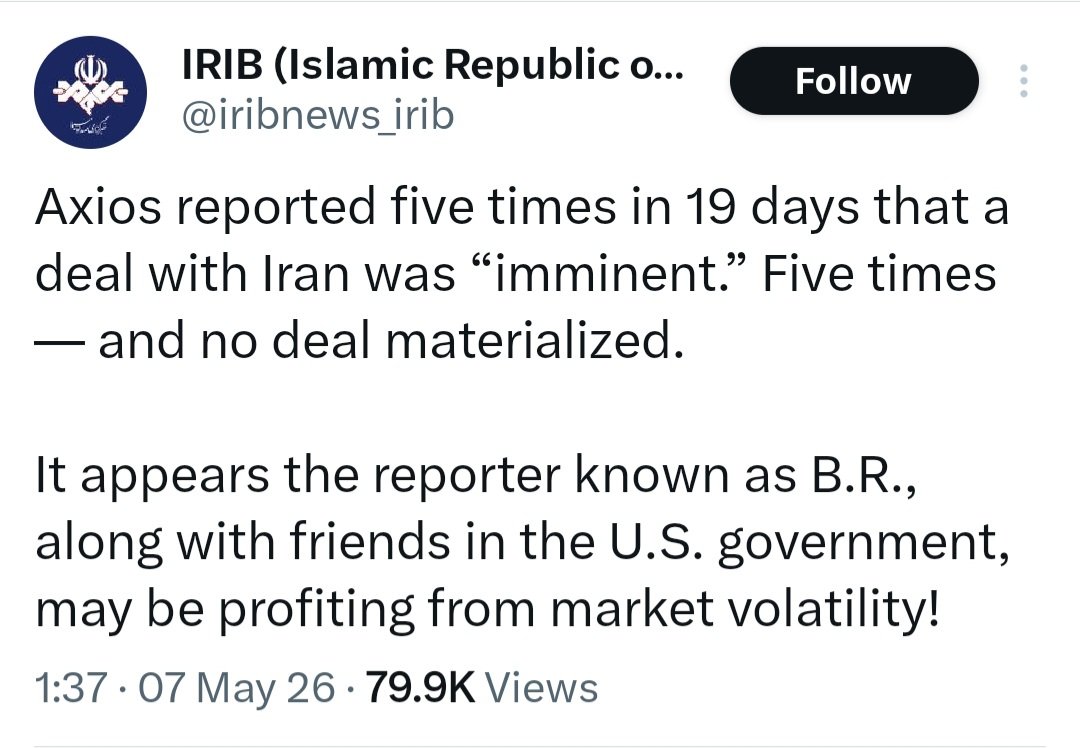
🚨This is a Lie! Axios didn't report even once over the last three weeks that a deal was "imminent". The Iranian regime, its state TV and its Bots and influence accounts on social media are pushing this lie. It's a regime propaganda campaign. Don't fall for it or amplify it
You may not like my pointing out that both Putin and Trump initiated wars of choice (in Ukraine & Iran respectively) where the costs have proven far greater than benefits for them and their country but that doesn't make it less true.
The sick individual who forced his way into the White House Correspondents’ Dinner last night with guns and knives is no hero. Period. Everyone with a platform has a duty to fight any attempt to dress him up as some kind of anti-establishment role model. He’s not. People like him need to be removed from society and given help. They do NOT need to be put on a pedestal. We need LESS violence in America, not MORE violence in America. I am thankful that President Trump, our nation’s leaders and the national press corps were unharmed.
Two vessels were attacked by IRGC this morning as they tried to pass outbound via SoH.
Some sources say there
The vessels report that they were not hailed on VHF.
Both vessels are chartered to MSC and tried to pass outbound with AIS switched off. Both turned on AIS at the time of the attack, probably at the order of the IRGC.
Key Takeaways:
1. No breakthrough: None of the core issues have been resolved. Iran is unlikely to enter negotiations as long as the naval blockade remains in place, nor is it expected to concede to the administration’s demands under current pressure.
2. Limited U.S. appetite for escalation: At the same time, Trump appears reluctant to return to active military confrontation. Notably, there is currently no clear deadline for the ultimatum, unlike in previous phases.
3. Pressure without payoff: The naval blockade is more likely to drive escalation than capitulation. It neither creates conditions for Iranian surrender nor advances a diplomatic resolution.
4. Strategic signaling: Above all, it appears that Trump may be preparing the ground for a unilateral de-escalation without formally relaunching the conflict. Faced with a choice between escalation and compromise, he has opted for now for delay.
5. The open question is how long the blockade can be sustained, given the underlying assumption that Iran will not back down.
The strain on the international system will only grow. Iran increasingly believes it can outlast the pressure, turning time into a strategic asset.
Bottom line: This is not a solution, it is a path toward deeper instability.
This is a strategy of delaying the inevitable rather than resolving the conflict.
For now, atleast this is still better than escalation without a clear endgame. The mediators have bought time, but without greater U.S. flexibility, diplomacy is unlikely to move forward, especially as Iran shows no willingness to retreat.
#IranWar
I'm sure Trump said this to his aides at some point. Why not? He's said everything else over the past month
I also think the ongoing American build-up in the region suggests he's not about to do it immediately. The most reliable indicator of "what will Trump do?" has been military deployments
At some point there will likely need to be either a deal or a coalition around Hormuz, but the idea that America is going to imminently walk away seems at odds with what's happening in reality https://t.co/cw7mlt5IyU
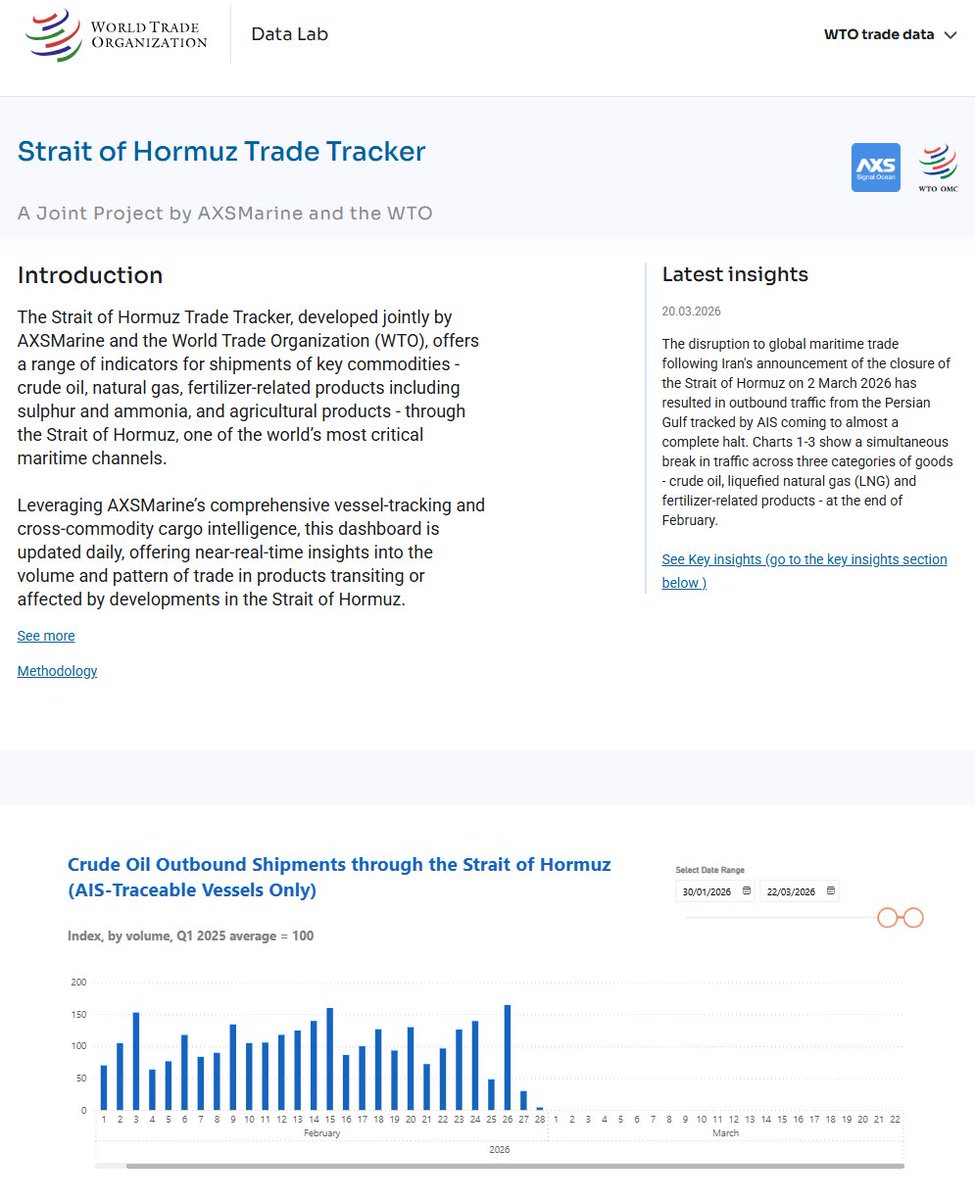
NEW: Visit the "Strait of Hormuz Trade Tracker" to monitor shipments of key commodities - crude oil, natural gas, fertilizer and agricultural products - through the Strait. Explore the WTO-AXSMarine dashboard here: https://t.co/XhcpaMcbqM
On peut détester Trump et vouloir la chute des Mollahs, détester Netanyahou et vouloir la sécurité d’Israël, détester la guerre et vouloir une Europe puissante, suivre les réseaux sociaux et utiliser son cerveau. Le simplisme est le socle sur lequel se dresse le totalitarisme.
Iran, as it fights the US and Israel, has flooded the skies with its cheap Shahed drones to overwhelm air defences and strike high-value targets.
John Reed explains why this unassuming weapon may just be the future of warfare. https://t.co/VufhHWiTkH?
.@qatarenergy President and CEO Saad Sherida Al-Kaabi says Iranian strikes damaged facilities responsible for 17% of #Qatar’s liquefied natural #gas export capacity, warning repairs could take three to five years. Speaking to #Reuters, he described the attack as unprecedented, noting that two #LNG trains and a gas-to-liquids facility were hit, forcing a prolonged disruption to output and raising concerns over #global supply.
March 19 (Reuters) - The Saudi port of Yanbu, one of two major remaining export routes for Gulf Arab oil after Iran effectively shut the Strait of Hormuz, has stopped oil loadings, two sources told Reuters on Thursday, after the Saudi defence ministry said it intercepted a ballistic missile over the city.
The ministry said earlier that a drone crashed at the SAMREF refinery, with damage assessment underway.
Oman’s constructive neutrality compels us to speak our mind to all in pursuit of peace. This article in the Economist seeks to contribute to a serious conversation about solutions.