I've spent some time figuring out how to integrate AI into my workflows to get more science, conservation, and nonprofit management done.
I've made a GitHub repo so that I can share what I'm learning, and hopefully learn from all of you!
https://t.co/JbGtDmVd7y
@thsottiaux The option to toggle on 5h limits would be appreciated across the board. I've had 'rogue processes' accidentally drain my weekly quota on Max plan within ~48h previously. The 5h limit is a user-facing safeguard for those who want it.
Researchers using a custom-calibrated @Tags4Wildlife SPLASH10 satellite tag documented a whale shark dive estimated at 1,978-2,527 m, extending the species' previously accepted depth limit by up to 599 m.
https://t.co/wO6sUQr34w
I am surprised that people are surprised this is how I prompt Claude.
Talk to Claude the way you would a coworker. There's no secret to prompting. There's no need to be overly scaffolded or prescriptive for most tasks -- give Claude a goal, and it will figure it out.
Back in the Sonnet 3.5 days, your prompt mattered a lot. Nowadays, it's much more important to communicate to the model:
1. What you want it to do
2. How much effort you want it to spend
3. How it should verify that it did the right thing
I've spent some time figuring out how to integrate AI into my workflows to get more science, conservation, and nonprofit management done.
I've made a GitHub repo so that I can share what I'm learning, and hopefully learn from all of you!
https://t.co/JbGtDmVd7y
These days you'd never send a draft manuscript to a co-author without running it through a spell checker first. They shouldn't have to fix your typos.
I think the same now goes for an AI review. Your co-authors shouldn't have to catch your basic calculation mistakes.
Before one of my drafts goes to anyone else, I run it through my own manuscript review: three AI models (currently Opus, Fable, and Astra via the Codex CLI) take turns reviewing it as a tough journal reviewer, and every number and citation gets re-checked. It's pretty harsh. (I should have called it Reviewer 2.)
I'm unlikely to agree with all of its critiques – I'm unlikely to agree with everything from human Reviewer 2 either – and it can be a bit extra with its ideas, but it usually catches some dumb error, or at least gives me something to think about.
How it works: https://t.co/RY7tcvlqtV
When I'm working interactively with Claude Code doing data analysis, in time-honoured tradition I find it really helpful to maintain a 'lab notebook'. I just can't be bothered writing it myself.
Instead, Claude writes down my verbatim inputs, results, decisions along the way, all the things, in a Markdown text file (along with graphs, etc.). Then, if things go awry, it's easy to walk back and see where we lost the plot.
If I'm working with Opus, I'll also use Fable and Astra subagents (the latter via the Codex CLI, directly from Claude Code) at key decision points to stress-test and improve the plan.
When it comes to writing down the actual final method, it's all there in the .md file, and not lost to compaction. That's why I externalise the AI memory in a .md file (in Obsidian) rather than relying on the built-in Claude or OpenAI memory functions.
See more details here: https://t.co/WX236Bcudz
Thanks! Hope it's useful – and if you've got any suggestions, I'd love to hear them. I've got a Max 20x plan... and another Max 20x plan... because yes hitting limits was an issue 😆. I've been playing whack-a-mole with token spend drains, but ultimately I do work the system hard.
This is definitely really useful. I ran it across my Claude Code setup (about 80 skills spanning marine biology and charity admin). The first pass found around 50 fixes, including dead links, outdated rules, and instructions written for older models. It's now part of my weekly system check-up:
https://t.co/1UXEhgCode
Small change, but "/claude-api prompt-audit" is now also "/checkup prompt-audit"
The name made it sound API-only, even though it always worked on your Claude Code setup. It checks your CLAUDE.md, skills and agents for instructions your model doesn't need anymore. Really useful!
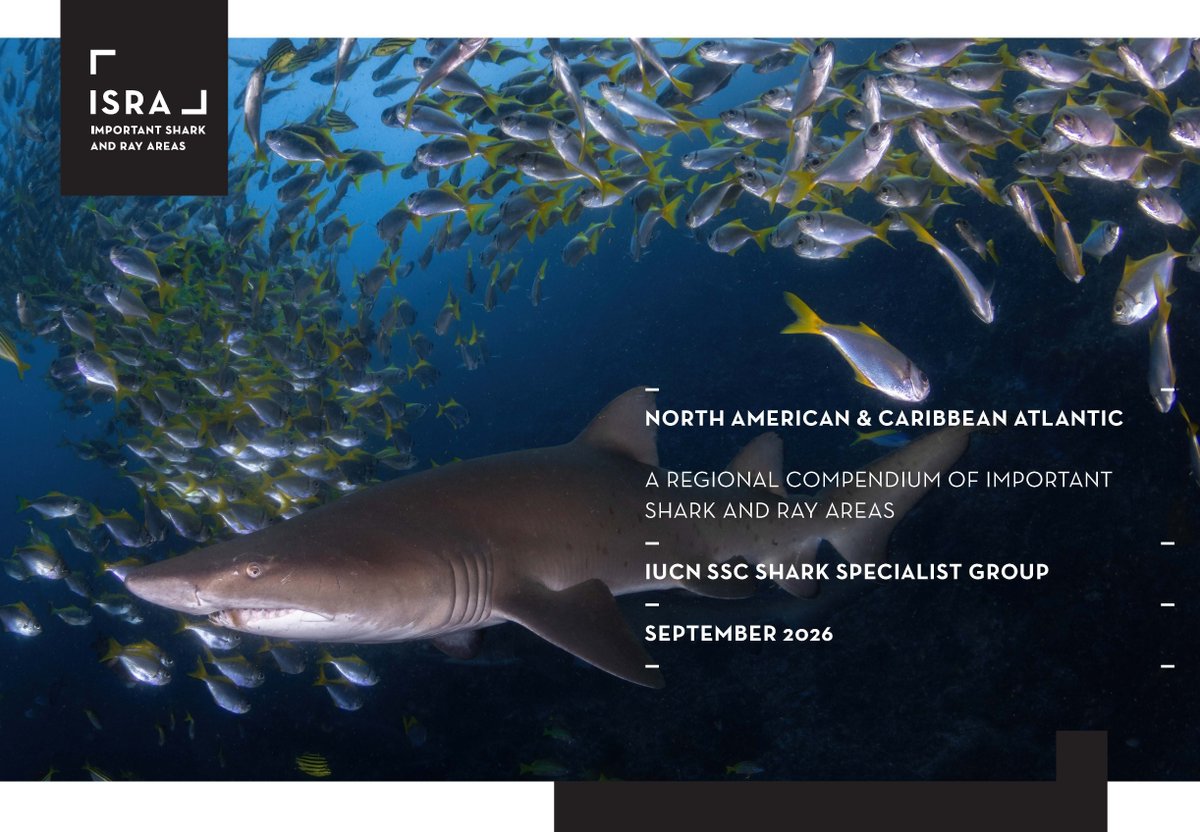
NEW PUBLICATION ALERT | 259 important shark, ray, and chimaera habitats mapped across North America and the Caribbean
New additions to the global ISRA eAtlas reveal major migration corridors, nursery grounds, and aggregation sites across Atlantic, Caribbean and Pacific waters.
New #BeyondJaws Episode Alert! Learning about whale sharks takes on a whole new meaning when you hear from someone who’s dedicated his career to studying them. @simonpierce, co-founder @MarineMegafauna, shares his journey about these gentle giants. https://t.co/wnNuBvZGJU
@bpennylane@WhaleSharkRocky@OCEARCH@BiopixelTV Great! If you take a photo of the left side of the shark, you can upload it to https://t.co/05Oom2fL3j for an ID 🫡. Have an amazing time!
🚨NUEVO ARTÍCULO CIENTÍFICO👉🏼 Local diver knowledge reveals decline in scalloped hammerhead sharks (Sphyrna lewini) at seamounts in the southwestern Gulf of California, by Katy Ayres el al.
📷: 1. @simonpierce en Galápagos / 2. Walter Pisco: cardumen de martillos, El Bajo, 2018.